
NEW YORK
New York was named in 1664 to honor James, Duke of York (later King James II), the brother of England’s King Charles II. Previously established by the Dutch as the colony of New Netherland and the city of New Amsterdam, the territory was seized by the English in 1664 (without a fight), who renamed it to secure their territory. During a brief period in 1673-1674, the Dutch retook the city and renamed it “New Orange” before it was permanently returned to the British.
KIRKWOOD
James P. Kirkwood was the civil engineer responsible for constructing the local railroad.
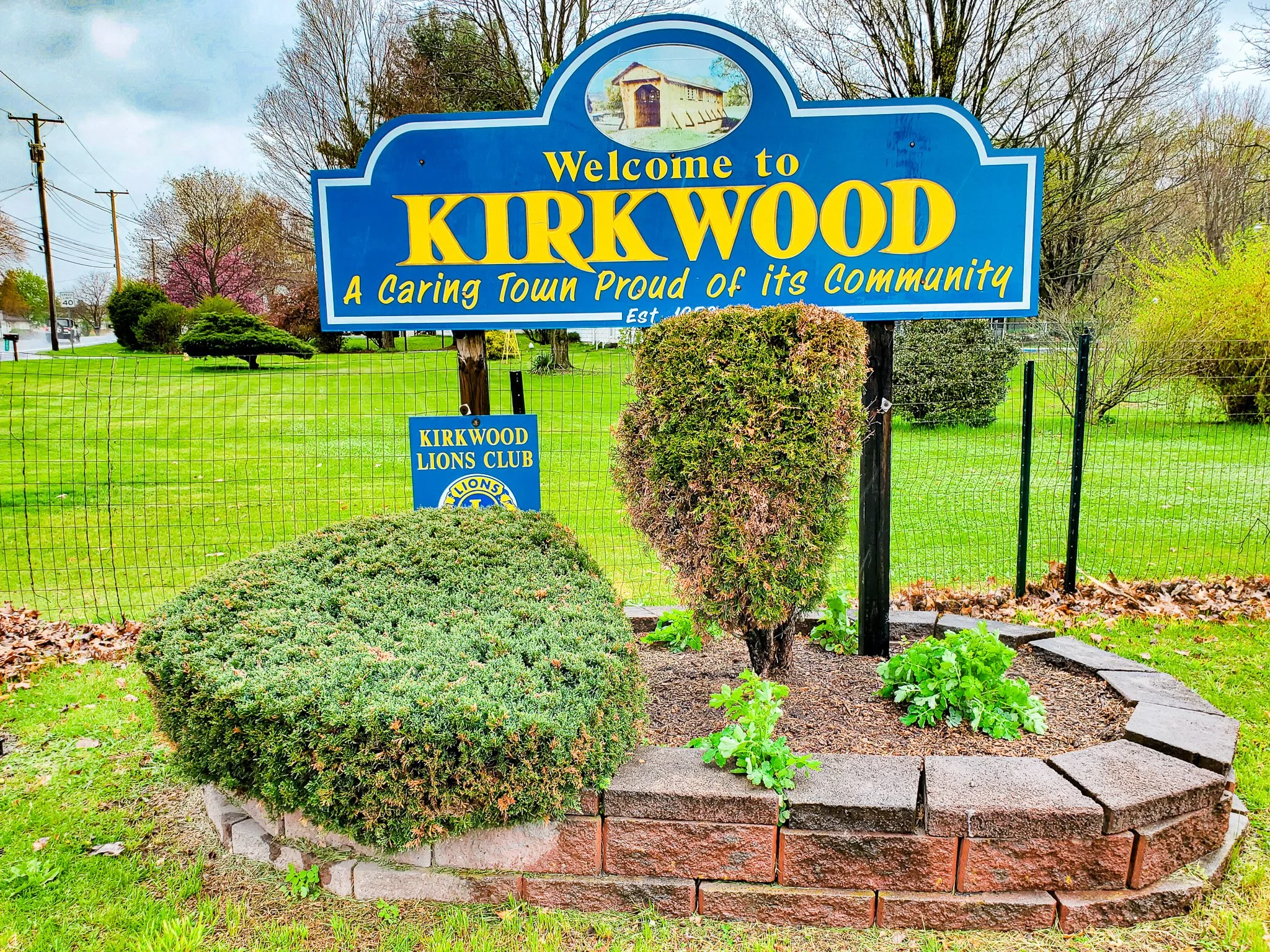
Welcome to Kirkwood Sign
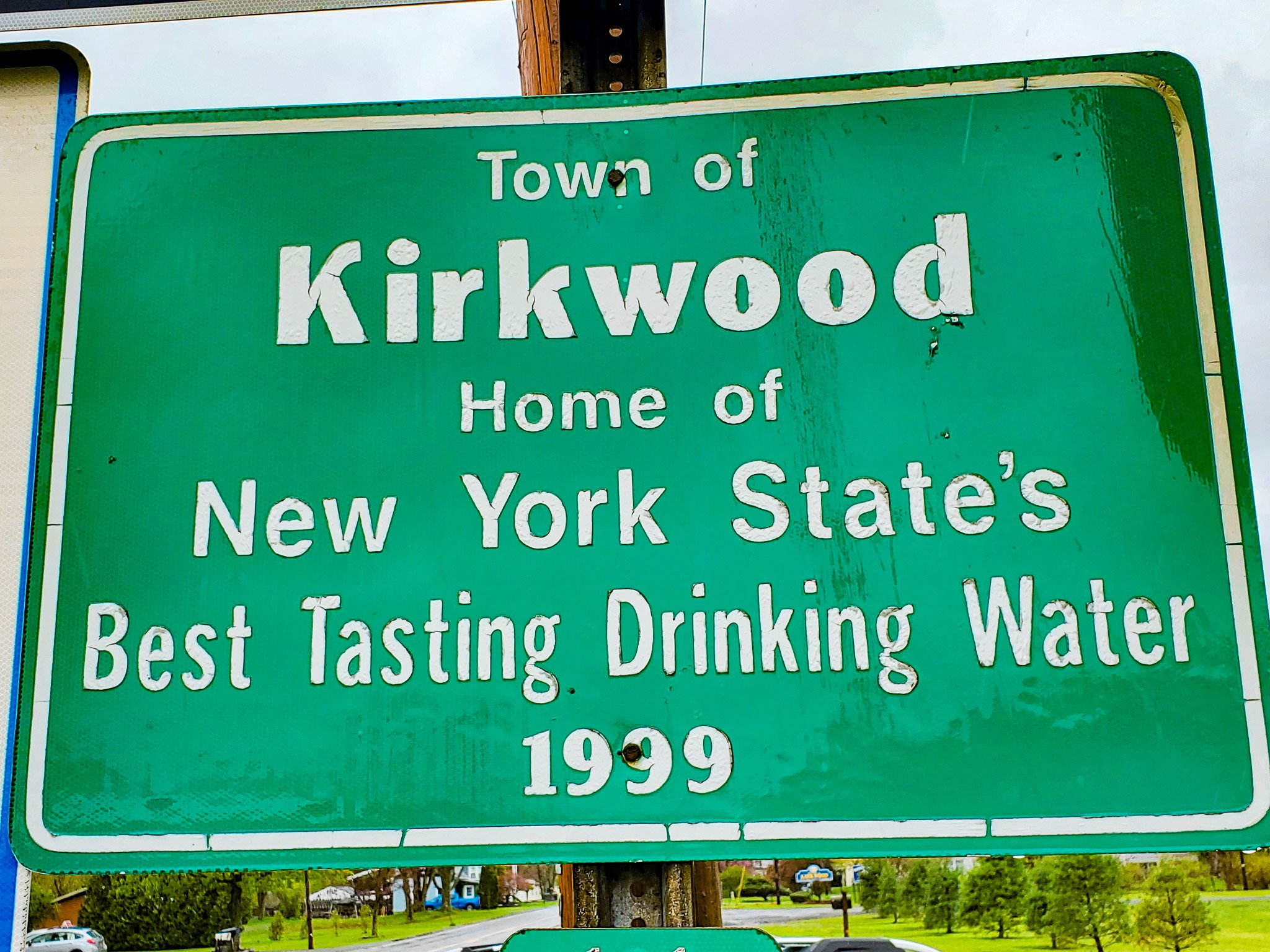
Kirkwood Welcome Sign
BINGHAMTON
Settled in the late 18th century, the city was named after William Bingham, a wealthy Philadelphian, who bought 10,000 acres of land in 1786. Known as “The Parlor City” because of the abundance of stately mansions, past products manufactured in Binghamton include cigars, shoes, and electronics (IBM was started here and the flight simulator was invented here). The original Dick’s Sporting Goods building (now closed) is on US 11 as you enter town. The town contains historic carousels and there is a bronze statue of Rod Serling in Recreation Park commemorating the episode "Walking Distance" (and a floor plaque) which featured a carousel and bandstand similar to those in Binghamton. There is also a mural (not visible from the street) on a building at 32 Cedar Street of Rod, and a permanent exhibit honoring him in the lobby of the downtown Broome County Forum Theater. Local museums include the Bundy Museum of History and Art and the Roberson Museum and Science Center and Planetarium. Sites of interest include the Ross Park Zoo, the Washington Street Bridge (a pin-connected lenticular through truss bridge built in 1886), the Square Deal Arch, and the Railroad Terminal Historic District. The NY State Inebriate Asylum in Binghamton was the first in the US to treat alcoholism as a disease. The 97 mile Chenango Canal (constructed between 1833-1836) connects Binghamton (the southern end) to the Erie Canal in Utica. The grave marker of the daughter of John Wilkes Booth is located in Glenwood Cemetery on Twining Street. The 1914 Marconi Radio test tower erected by radio pioneer Guglielmo Marconi is located at 69 Lewis Street. For local cuisine, try Spiedie and Rib Pit at 1268 W Front Street (US 11) for a spiedie. Be on the lookout for city chicken and meat pies as well, also local favorites.
Binghamton Welcome Sign
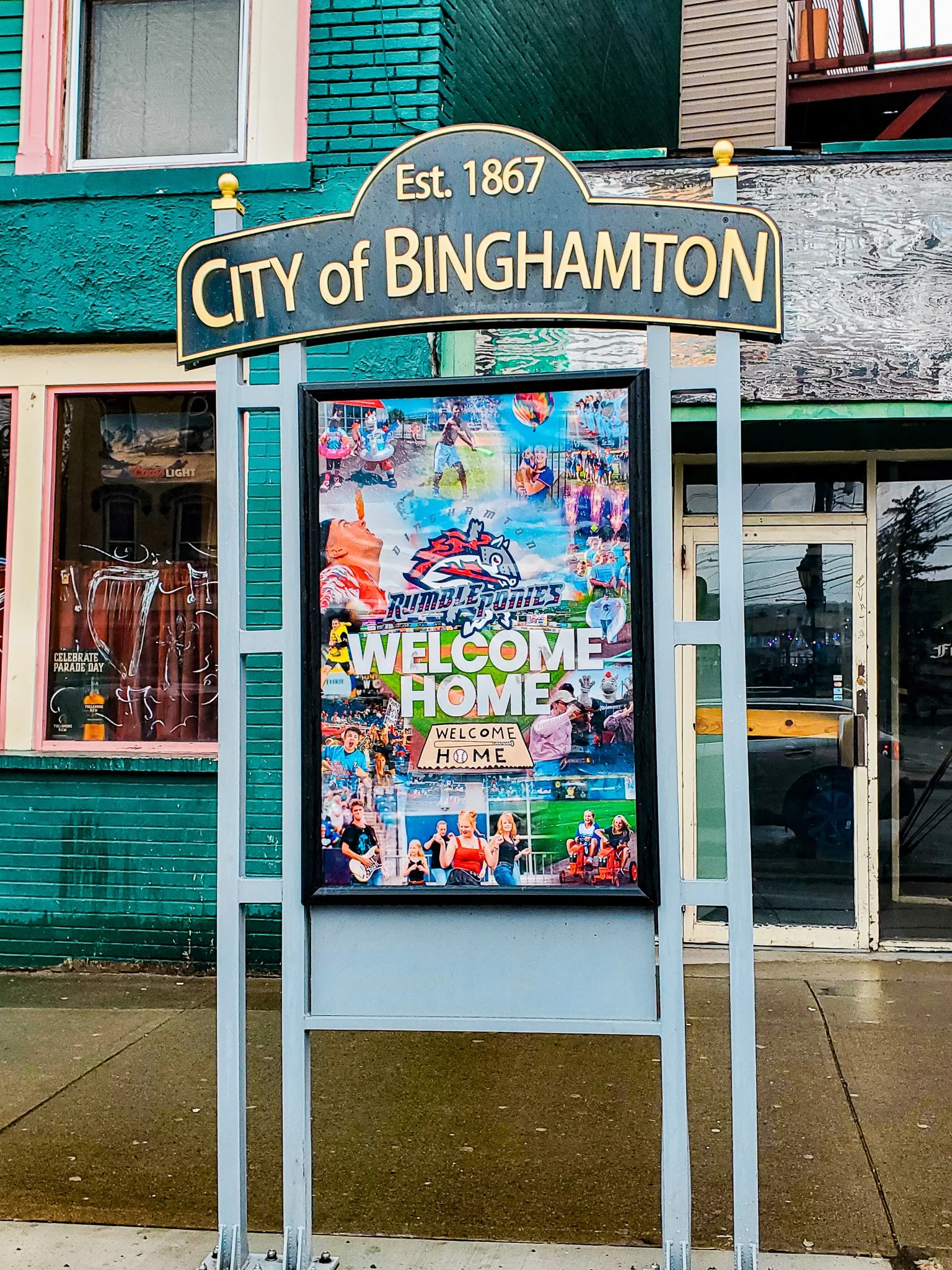
Binghamton Welcome Sign
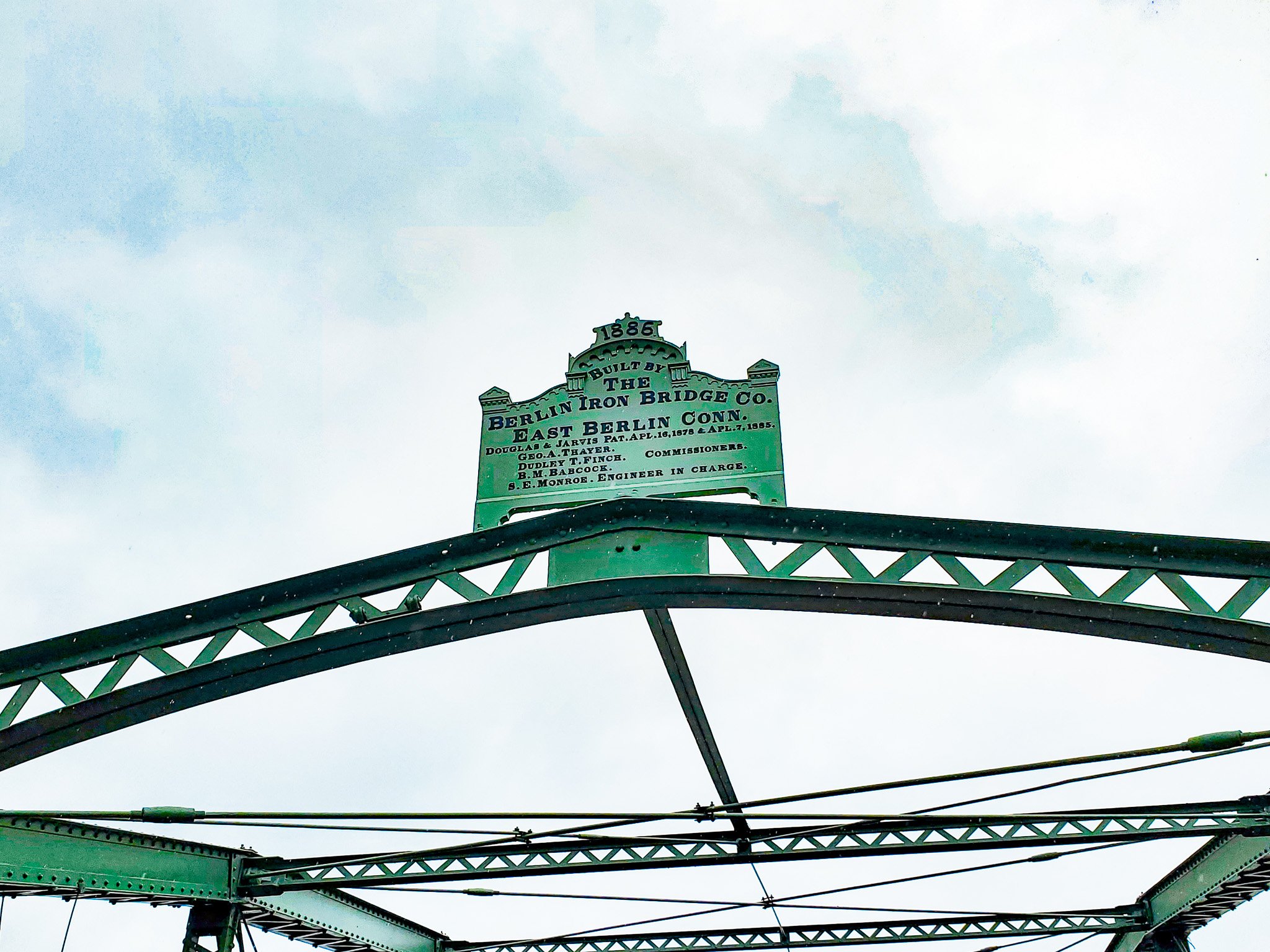
Binghamton Bridge
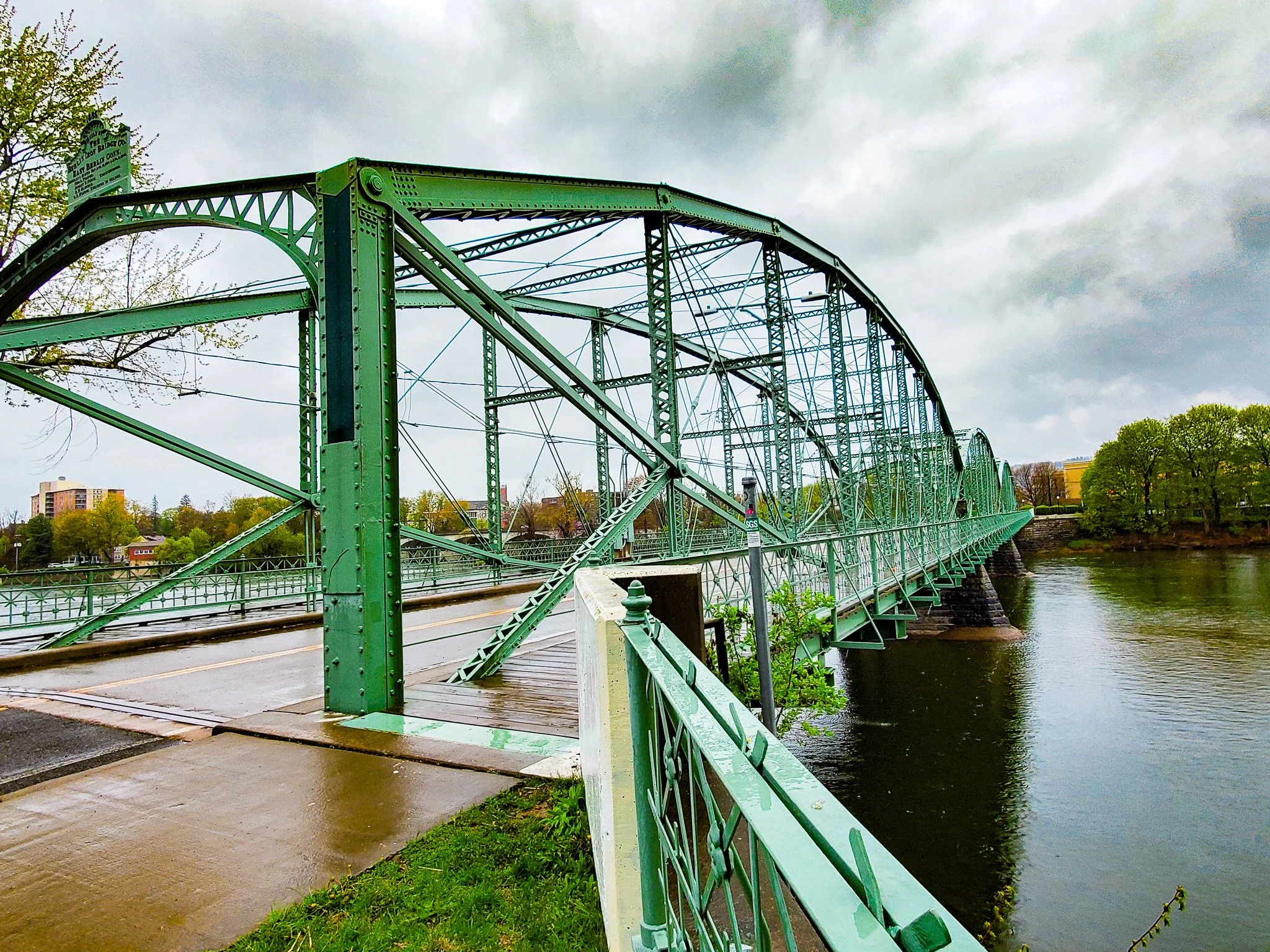
Binghamton Bridge
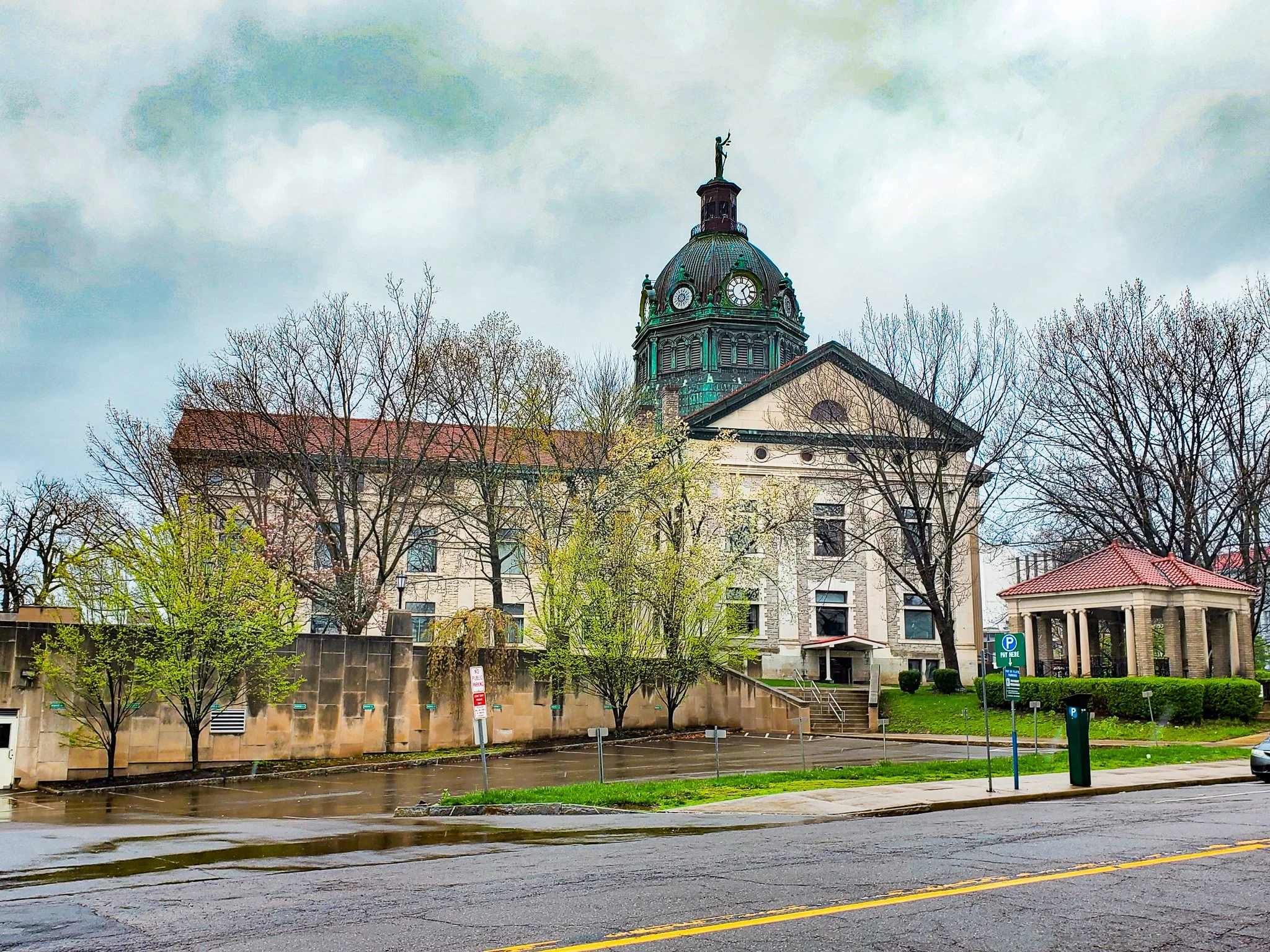
Binghamton Public Building
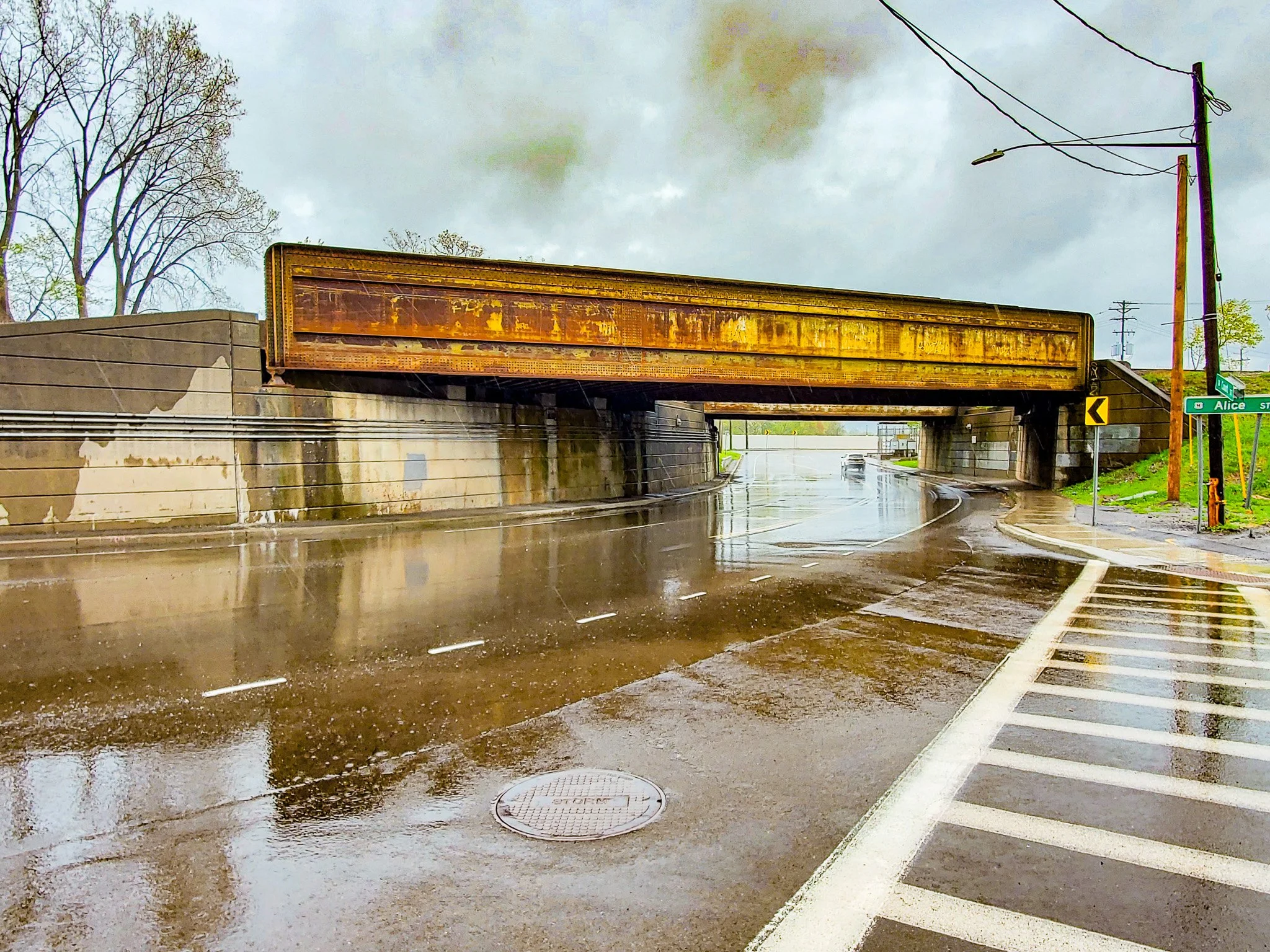
Bridge in Binghamton
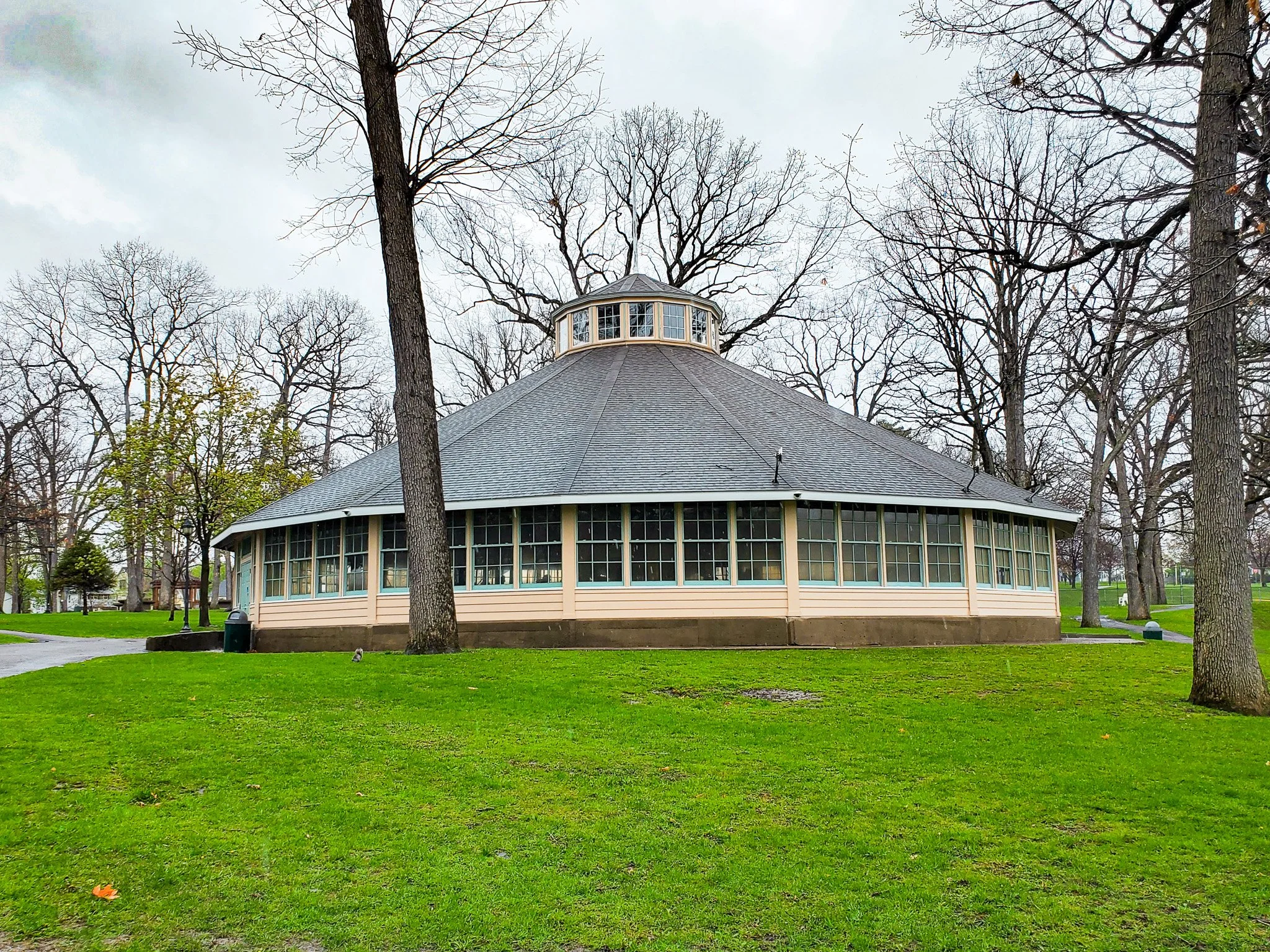
Carousel Building
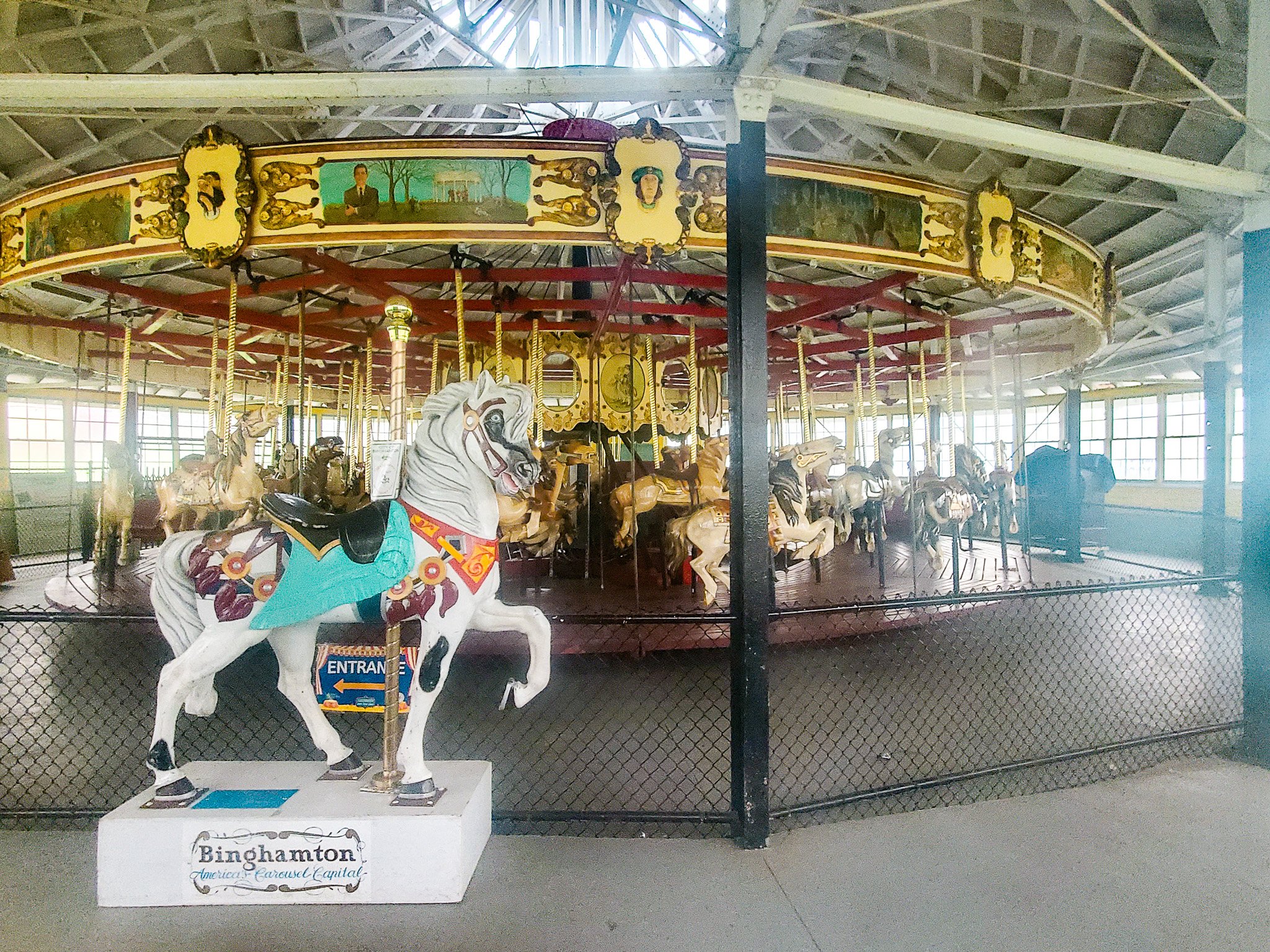
Carousel Building

Dick's Sporting Goods Original Store
Lackawanna Trail Postcard
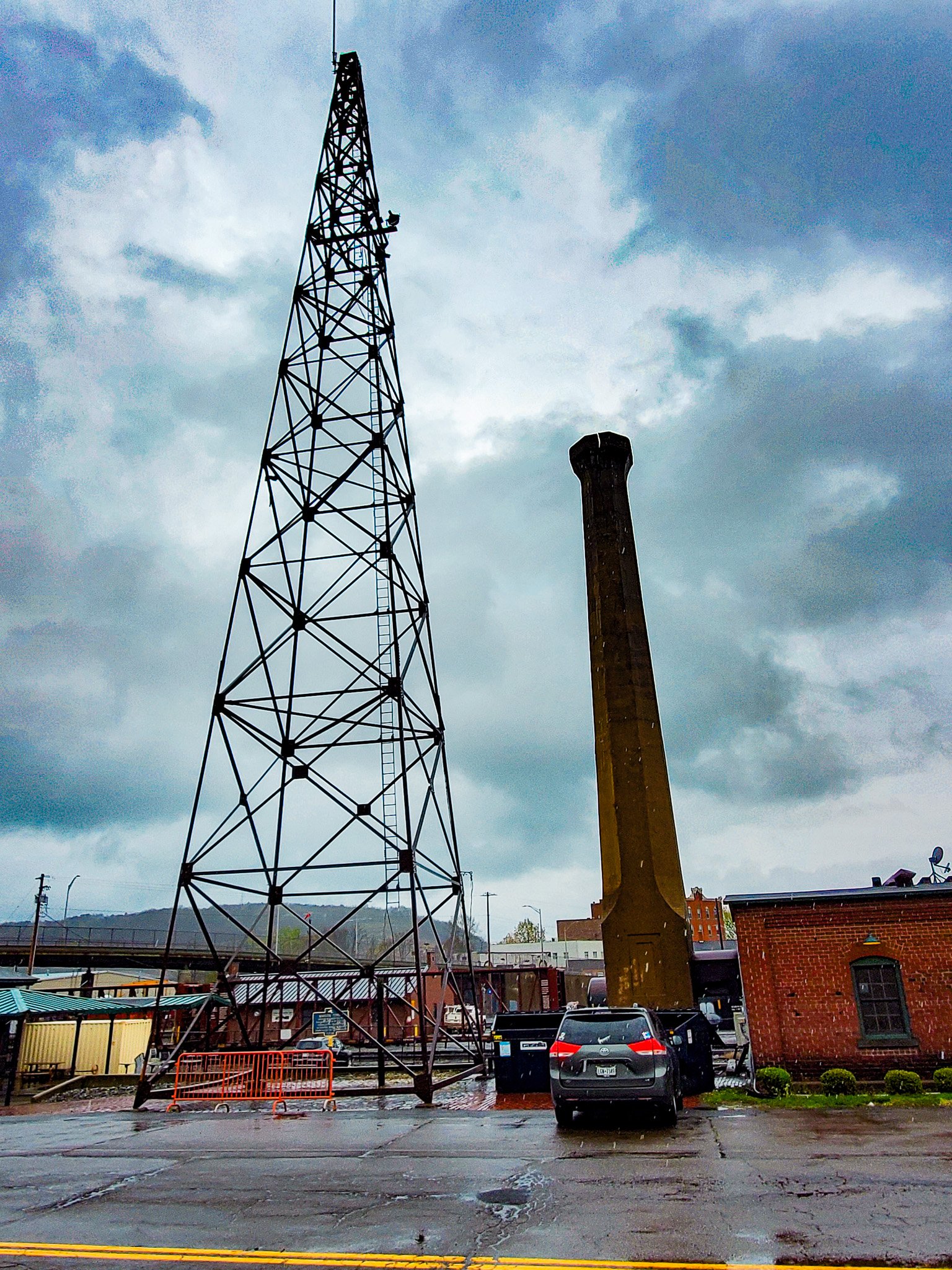
Marconi Radio Steel Tower
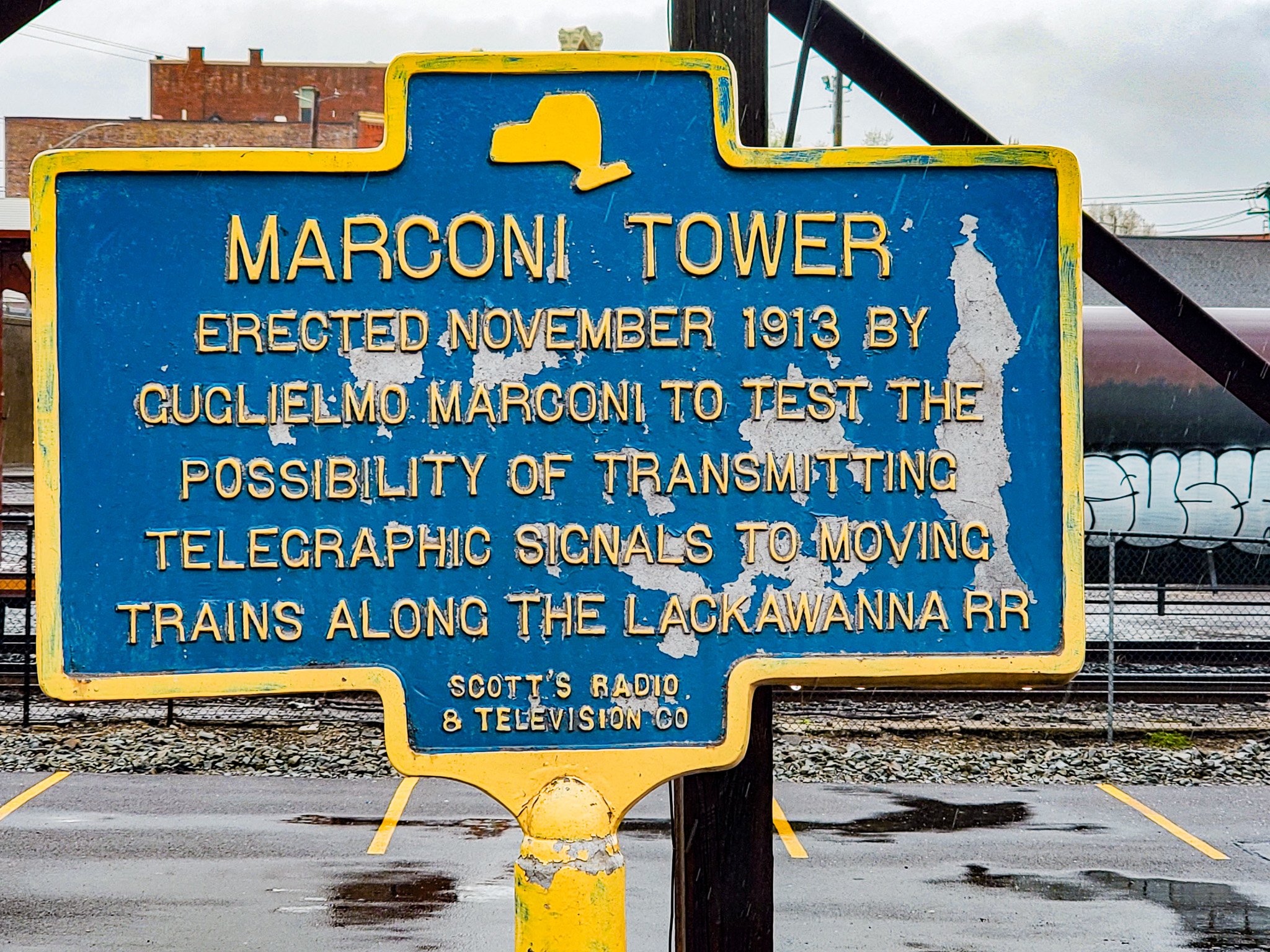
Marconi Tower Marker
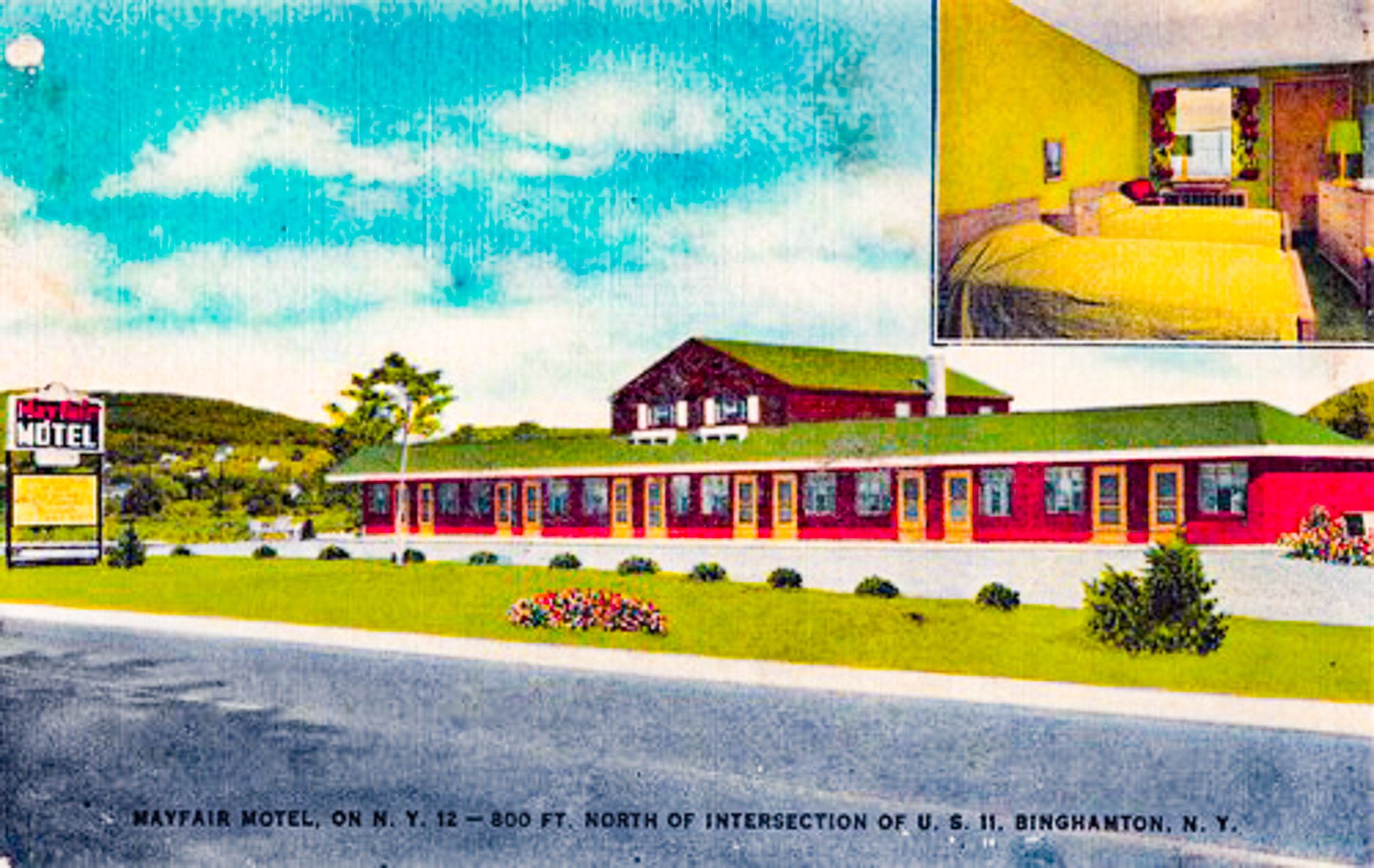
Mayfair Hotel Postcard
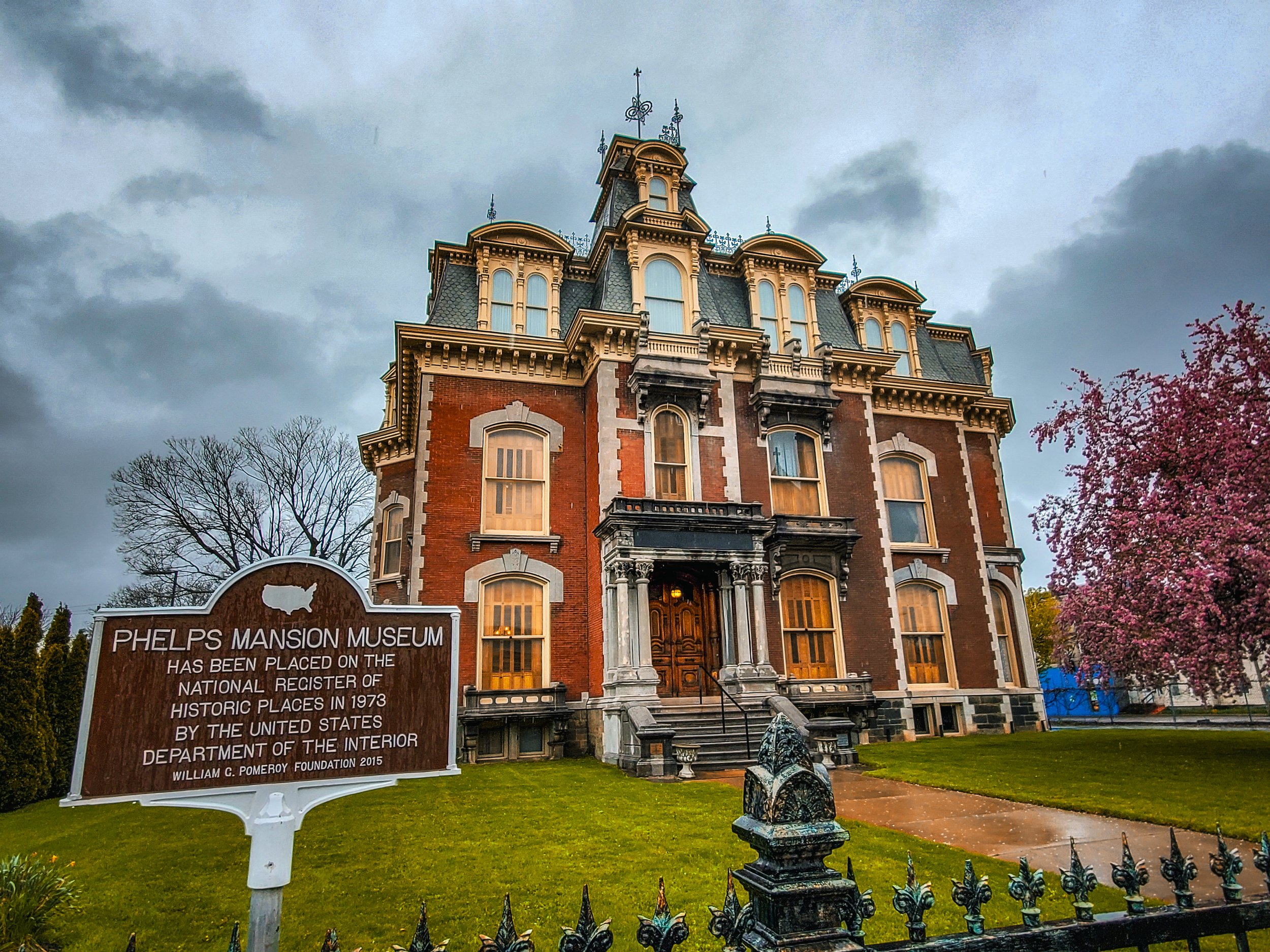
Phelps Mansion Museum
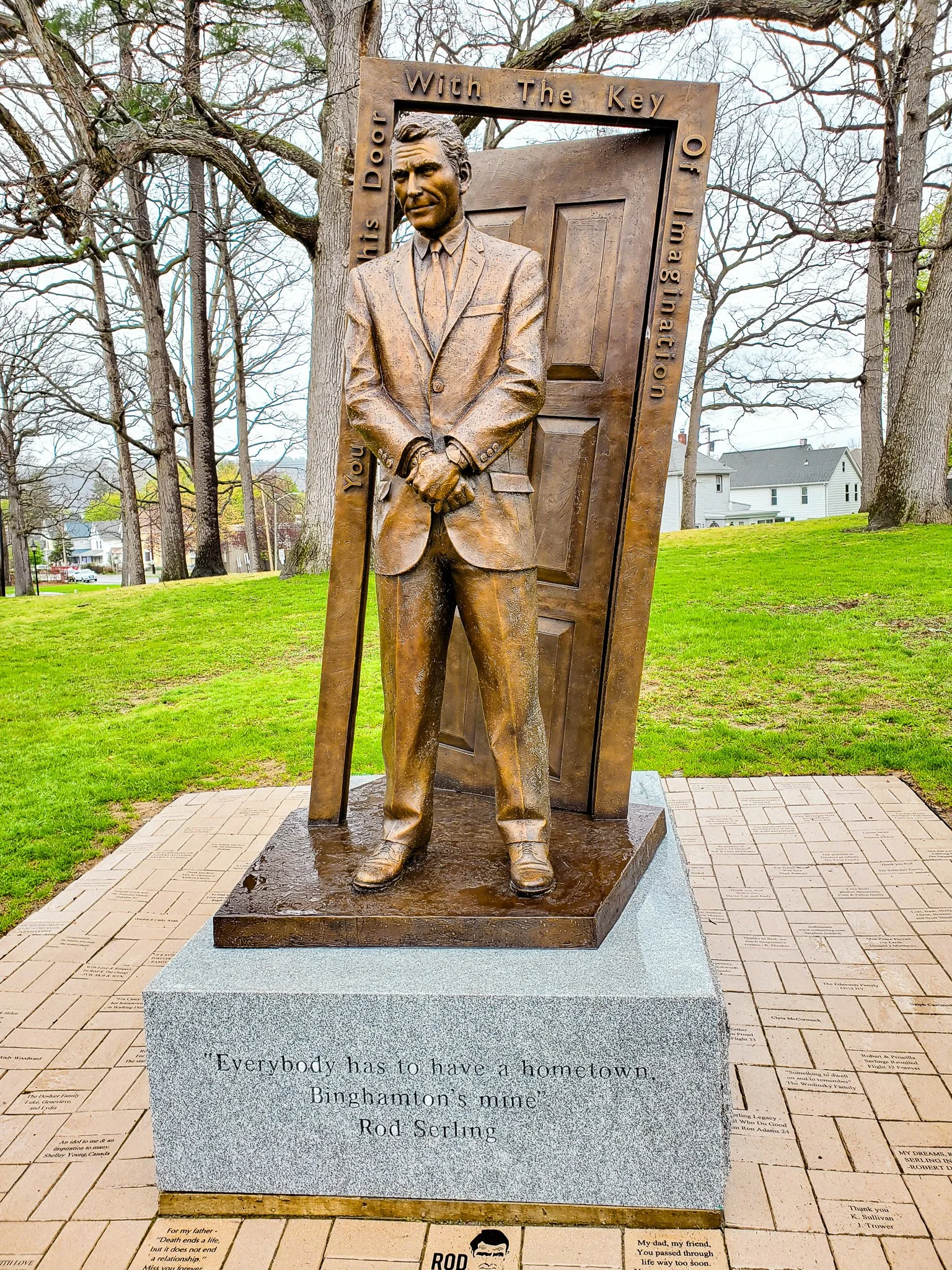
Rod Serling Statue
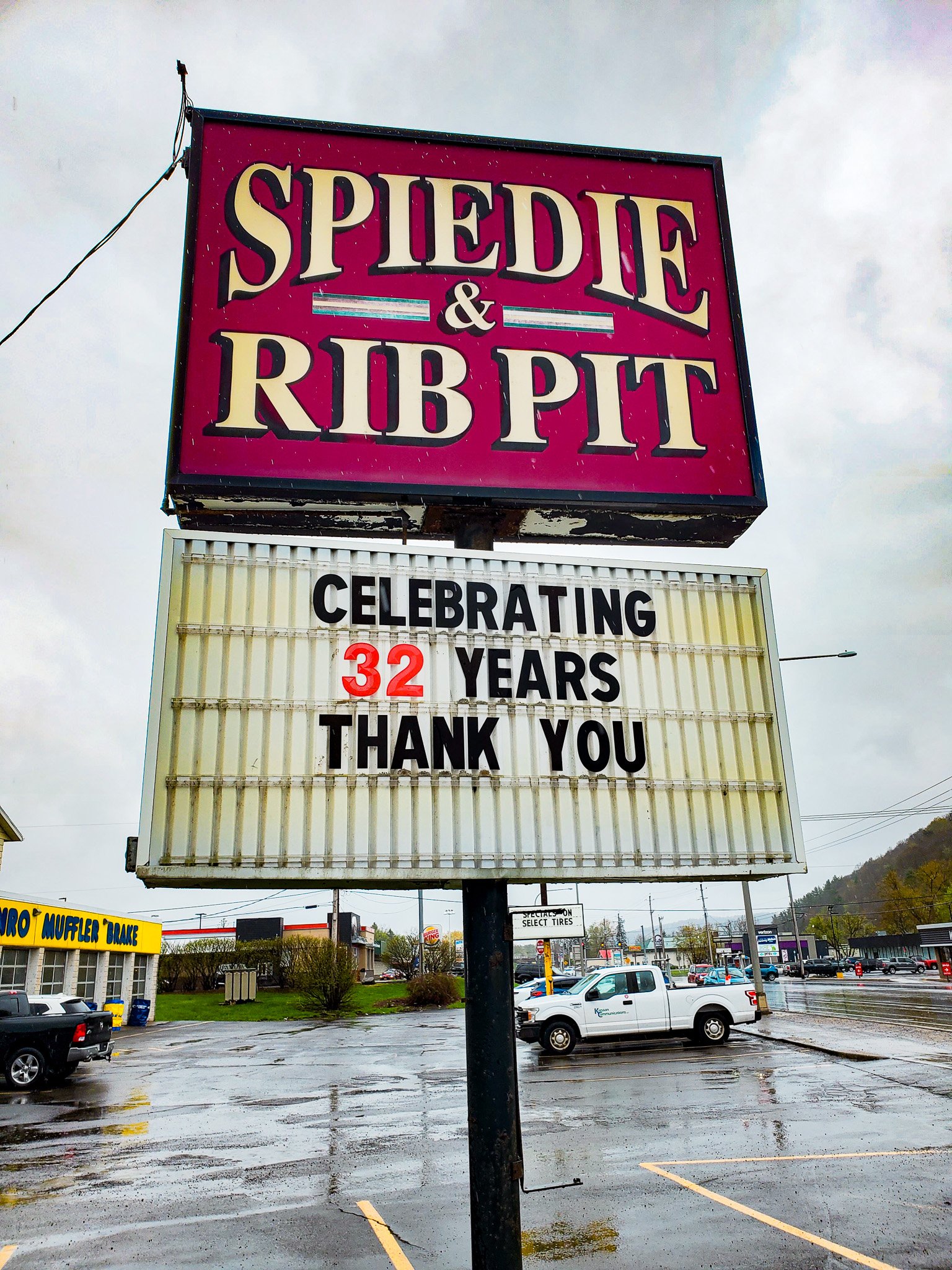
Spiedie & Rib Pit
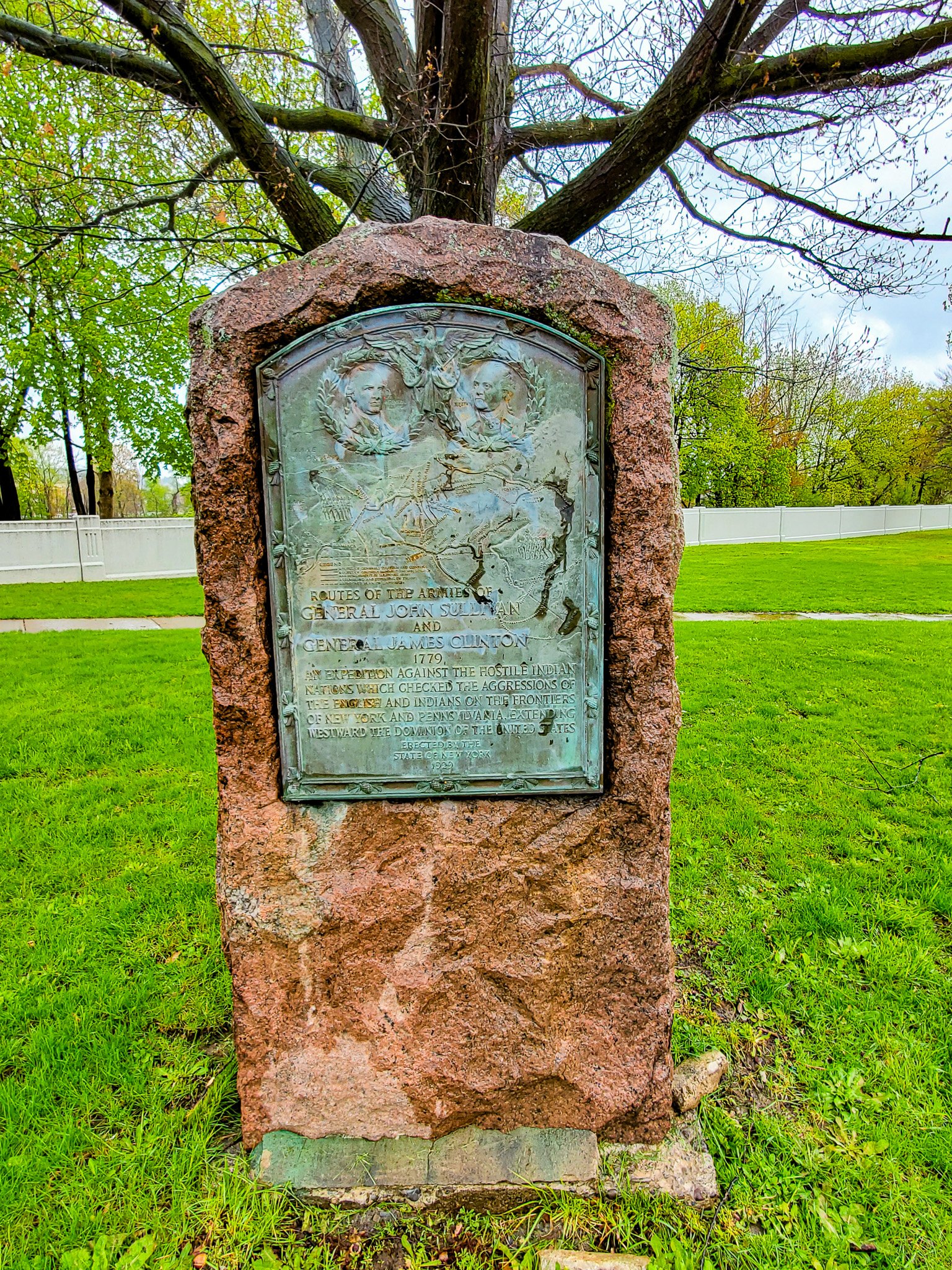
Sullivan and Clinton Monument
DICKINSON
Named after Daniel S Dickinson, US Senator from 1844-1851, the Chenango Canal runs through town.
CHENANGO
Chenango is an Oneida word meaning “large bull-thistle”.
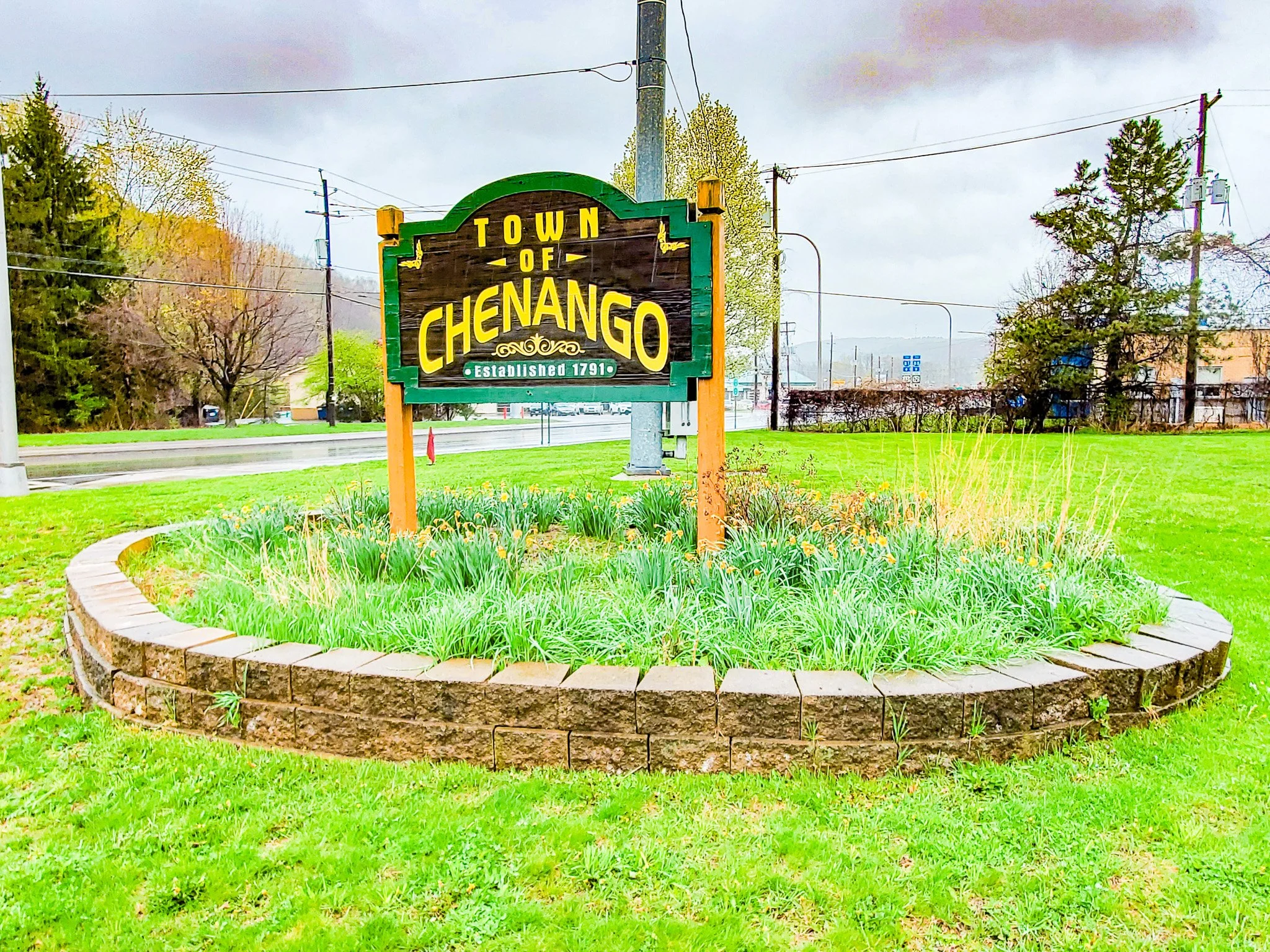
Welcome to Chenango Sign
WHITNEY POINT
Located on the banks of the Otselic River, the town was settled around 1791 and named after early developers Thomas and William Whitney. The Whitney Automobile Company, opened in 1902, produced an automobile that was clocked at 25 mph. Their growing business was snuffed by the Ford Motor Company as they began producing cars in July 1903 and the Whitney company folded in August 1903. The historic Hotel Griffin building houses Aiello’s Restaurant, a local favorite since 1982. Sparky’s Pub and Grill is located inside the historic Oakland Hotel, built on Main Street in 1899.
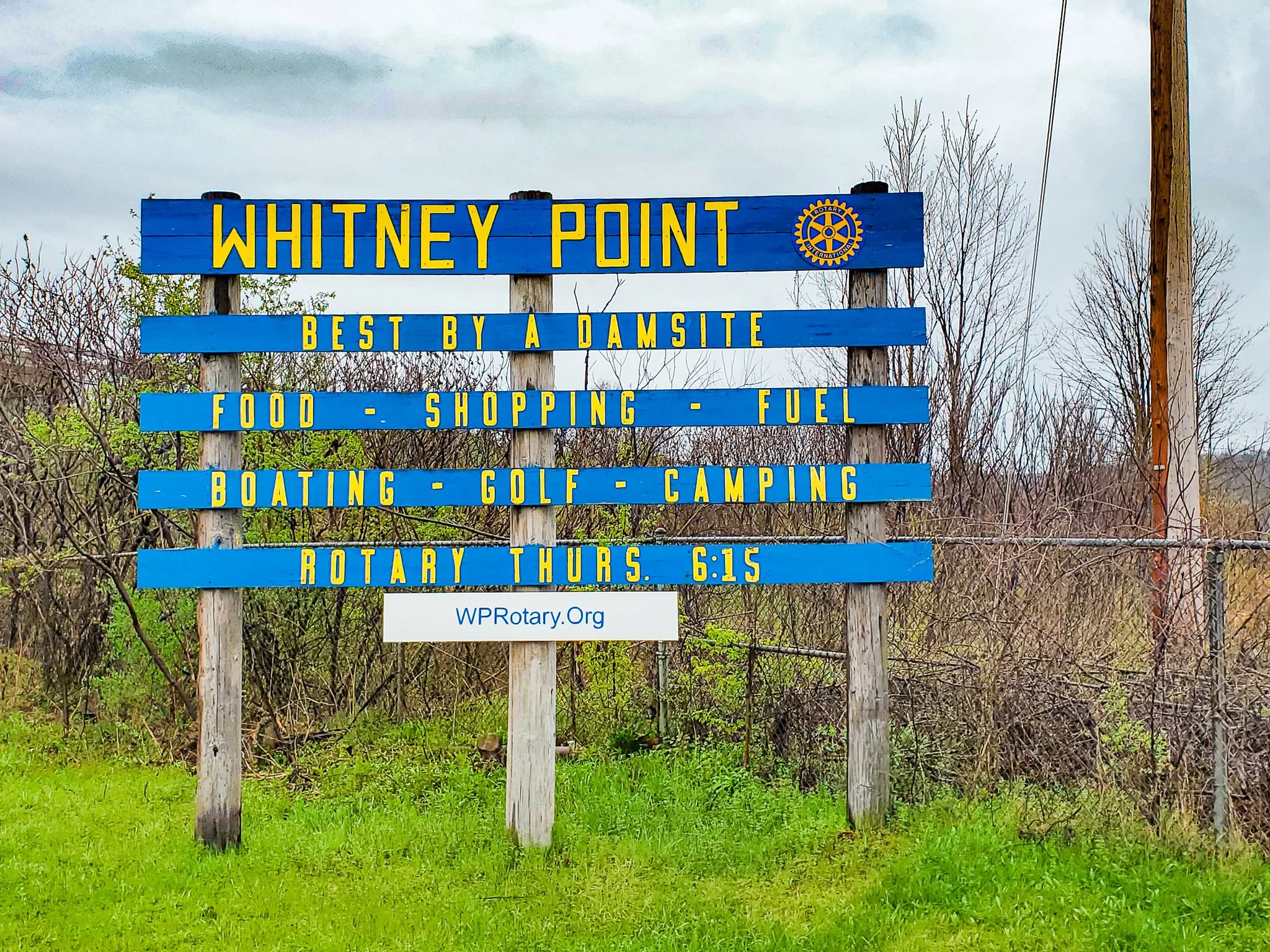
Welcome to Whitney Point Sign
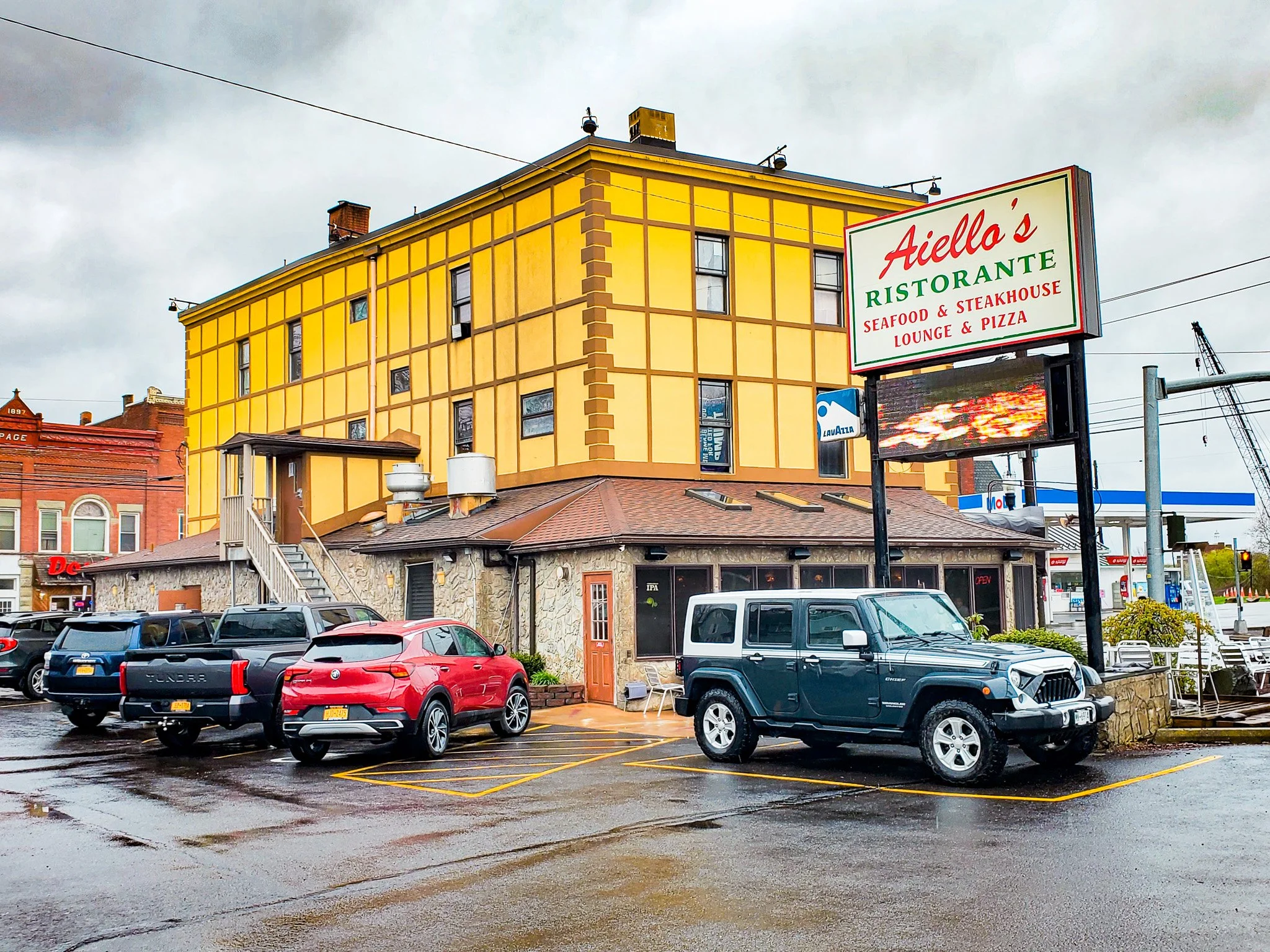
Aiellos Restaurant
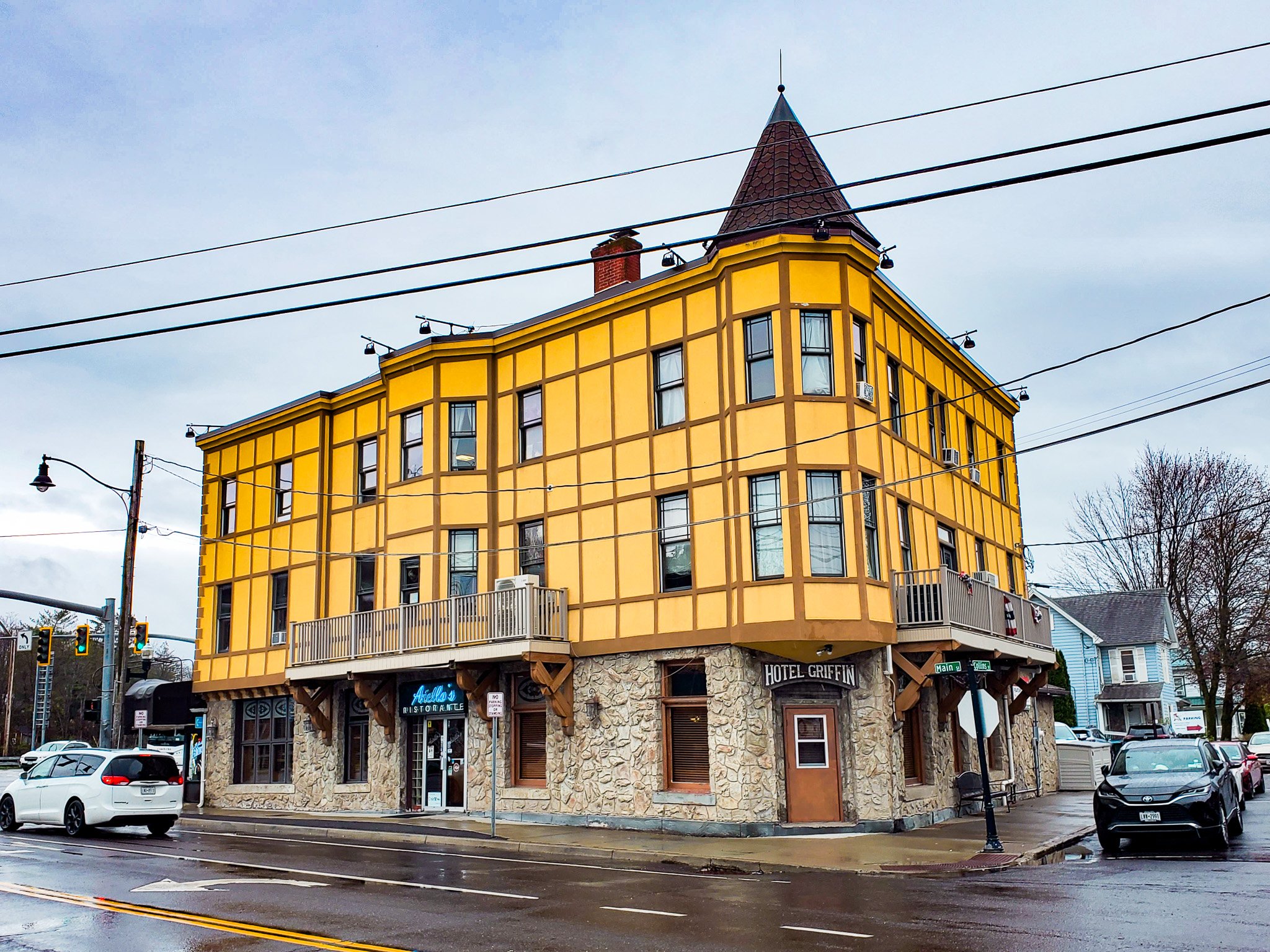
Aiellos Restaurant
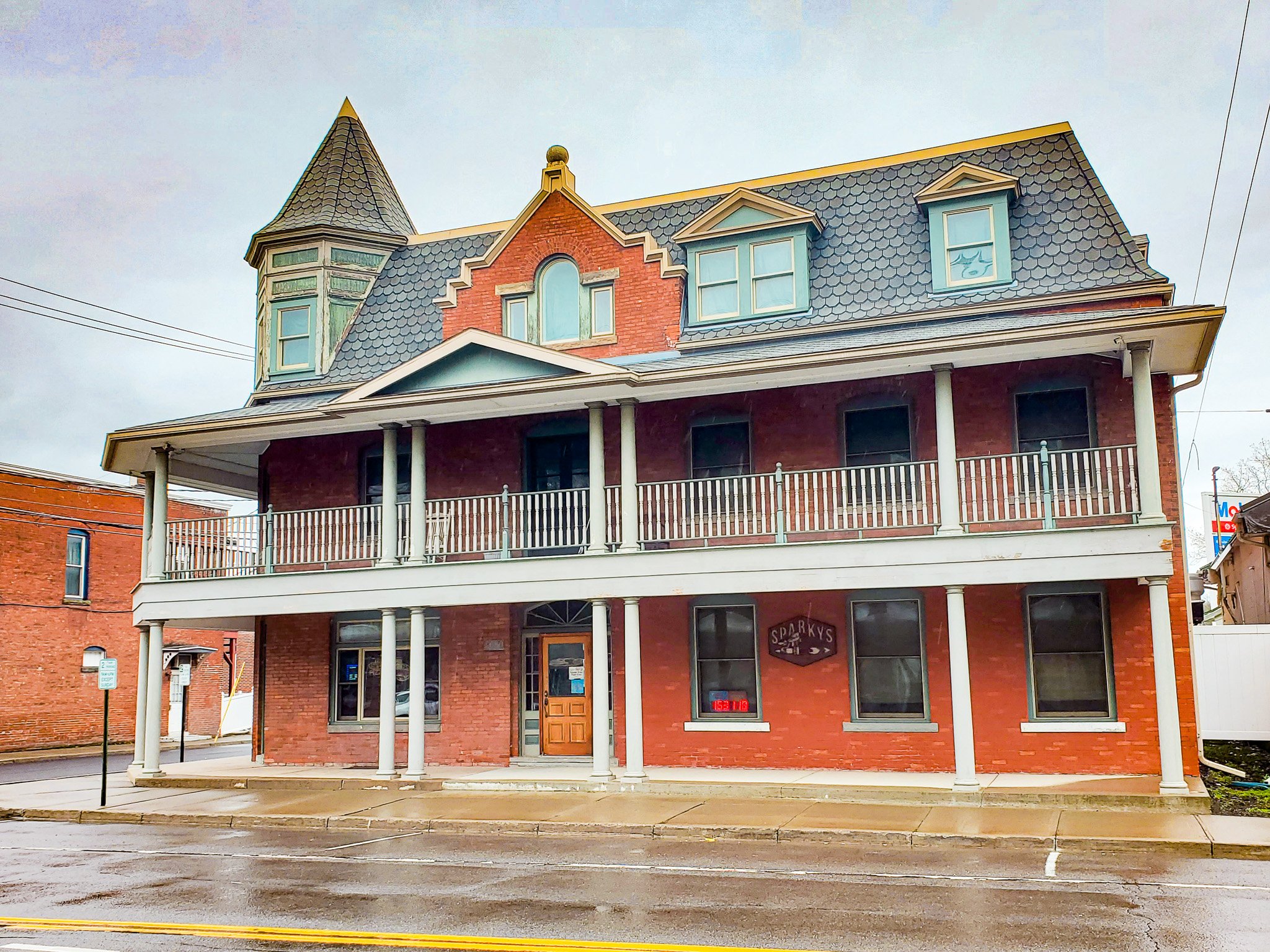
Oakland Hotel (1899)
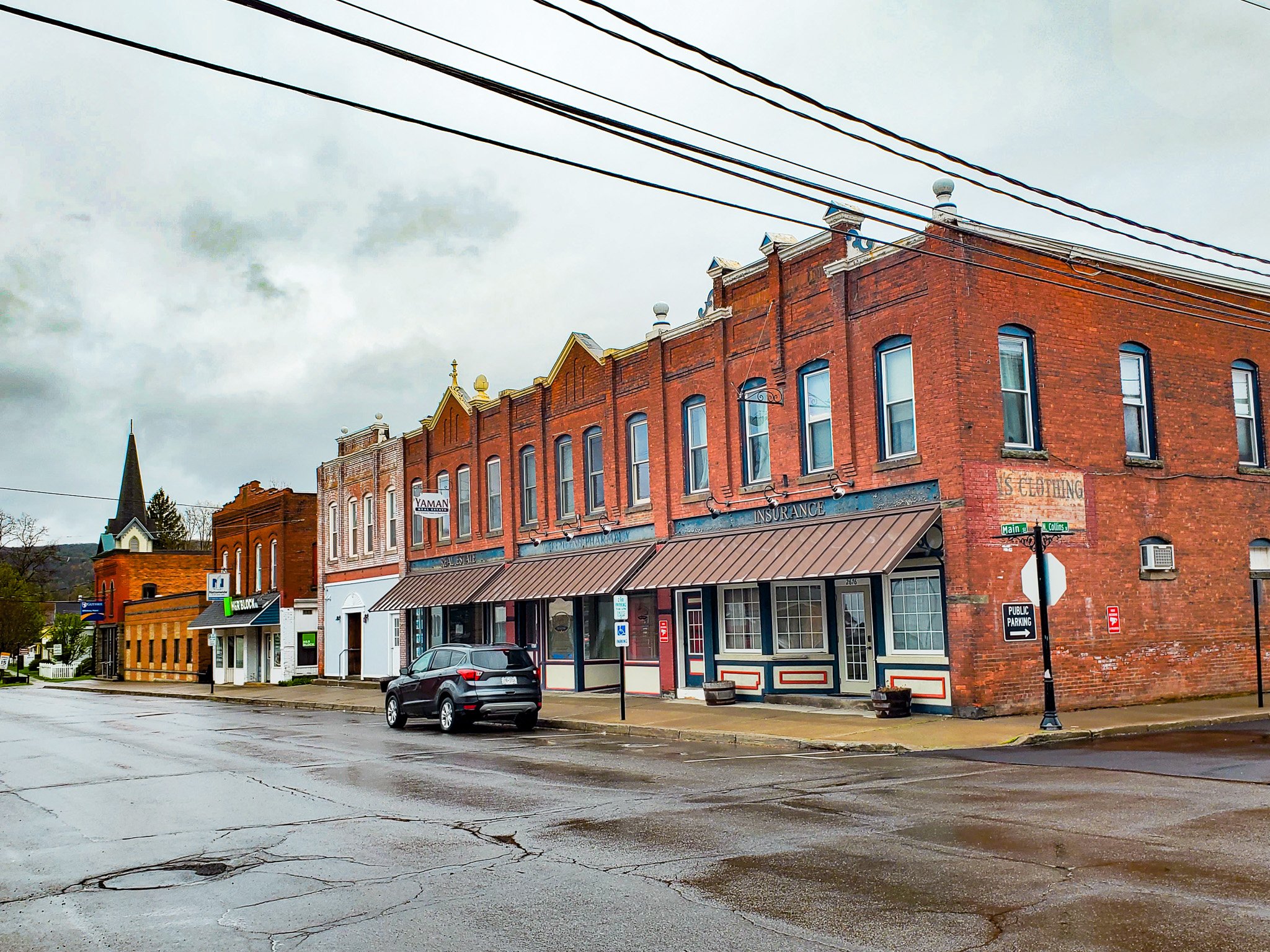
Downtown Whitney Point
LISLE
Named after the French city, it is home to the Riverview Diner on US 11.
MARATHON
Marathon is along the banks of the Tioughnioga (from the Iroquoian word meaning “forks of the river” or “meeting of waters”) River, and within the bounds of the former Central New York Military Tract, which was a large area of land set aside in central New York to compensate New York soldiers after their service in the Revolutionary War. On July 3, 1790, Revolutionary War veterans drew for lots in the Military Tract, which consisted of 28 townships with 100 lots of 600 acres in each lot. The original townships were predominately named after famous Greek and Romans. Towns that were formed later were typically named after towns in the New England states, officers in the Revolutionary War, or members of the Continental Congress. Marathon is home to the annual Central New York Maple Festival every spring and the annual 1890 Union Fair in September. The Brink's Tavern founded in 1799 became the Three Bear Inn after a prior owner hung 3 bearskins over the railing and the name changed.
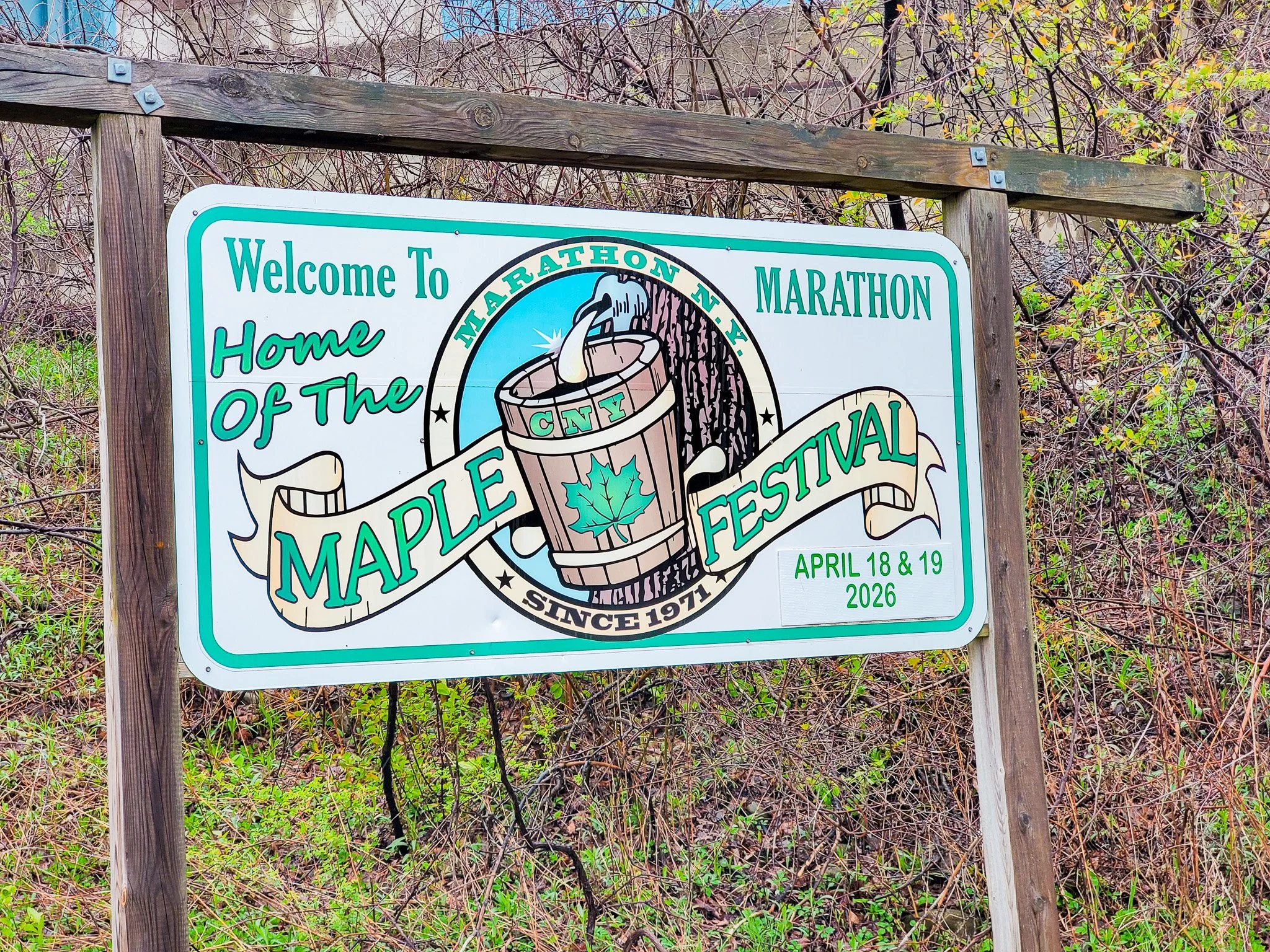
Welcome to Marathon Sign
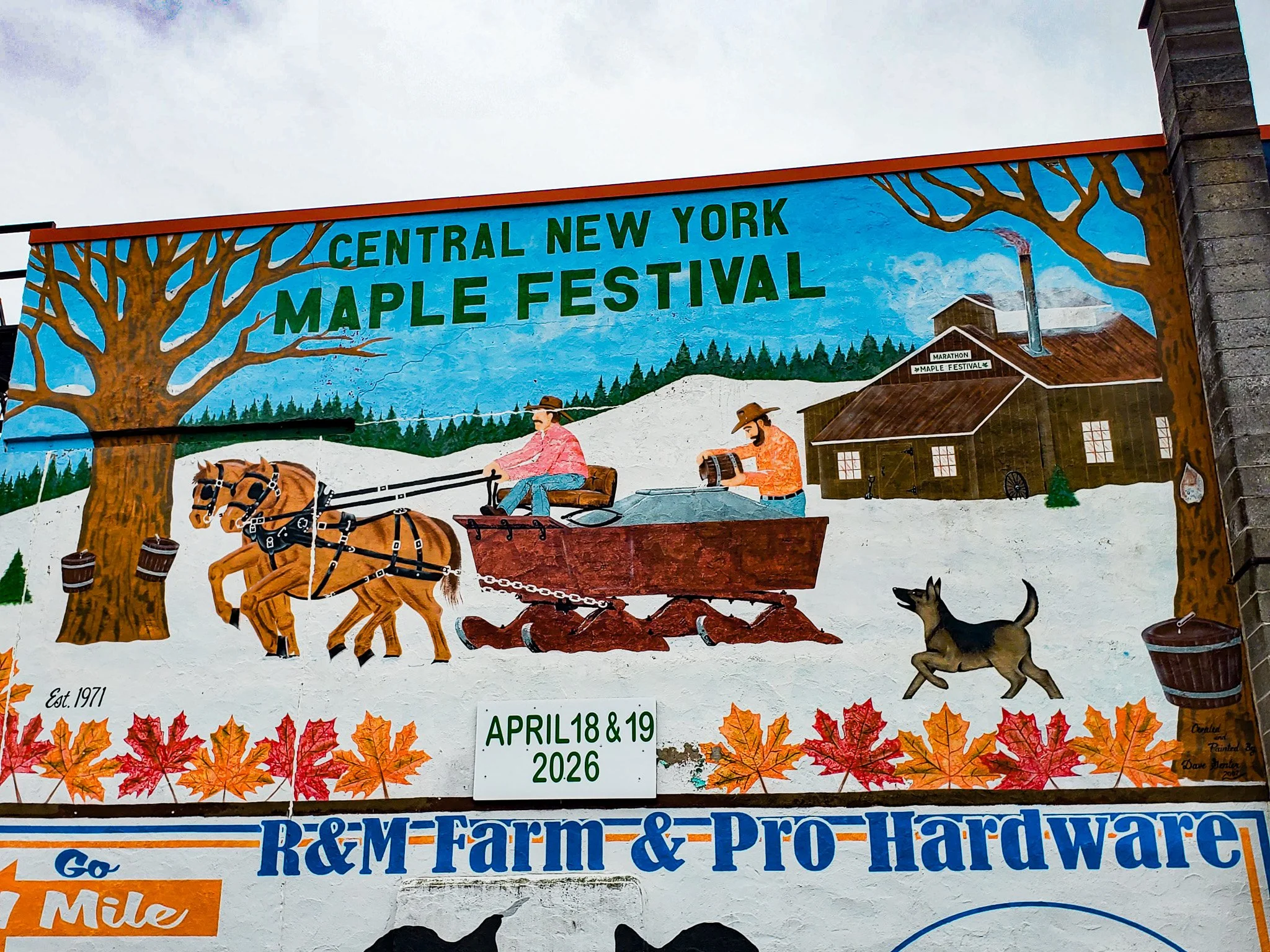
Maple Festival Mural
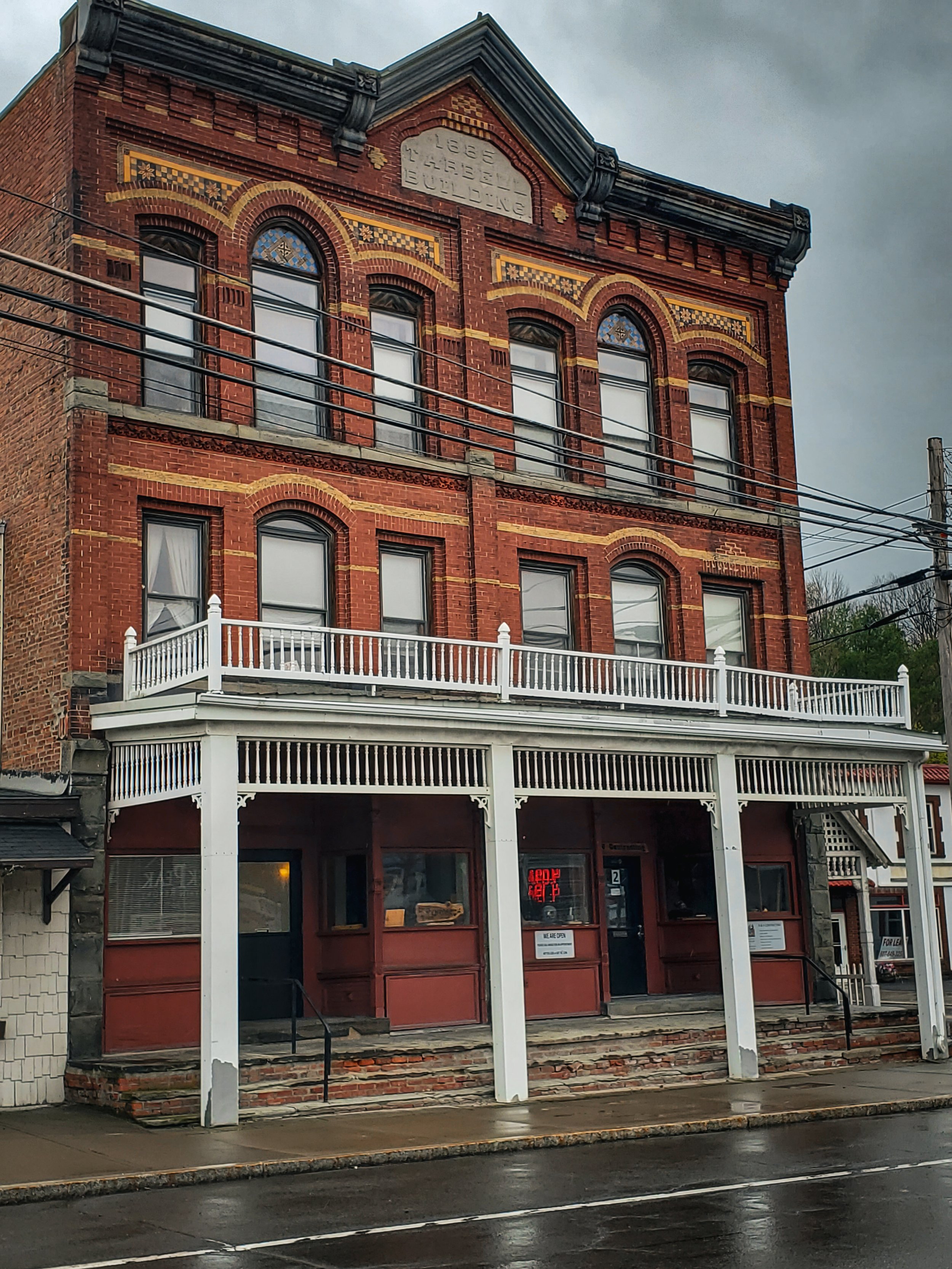
Old 1865 Building
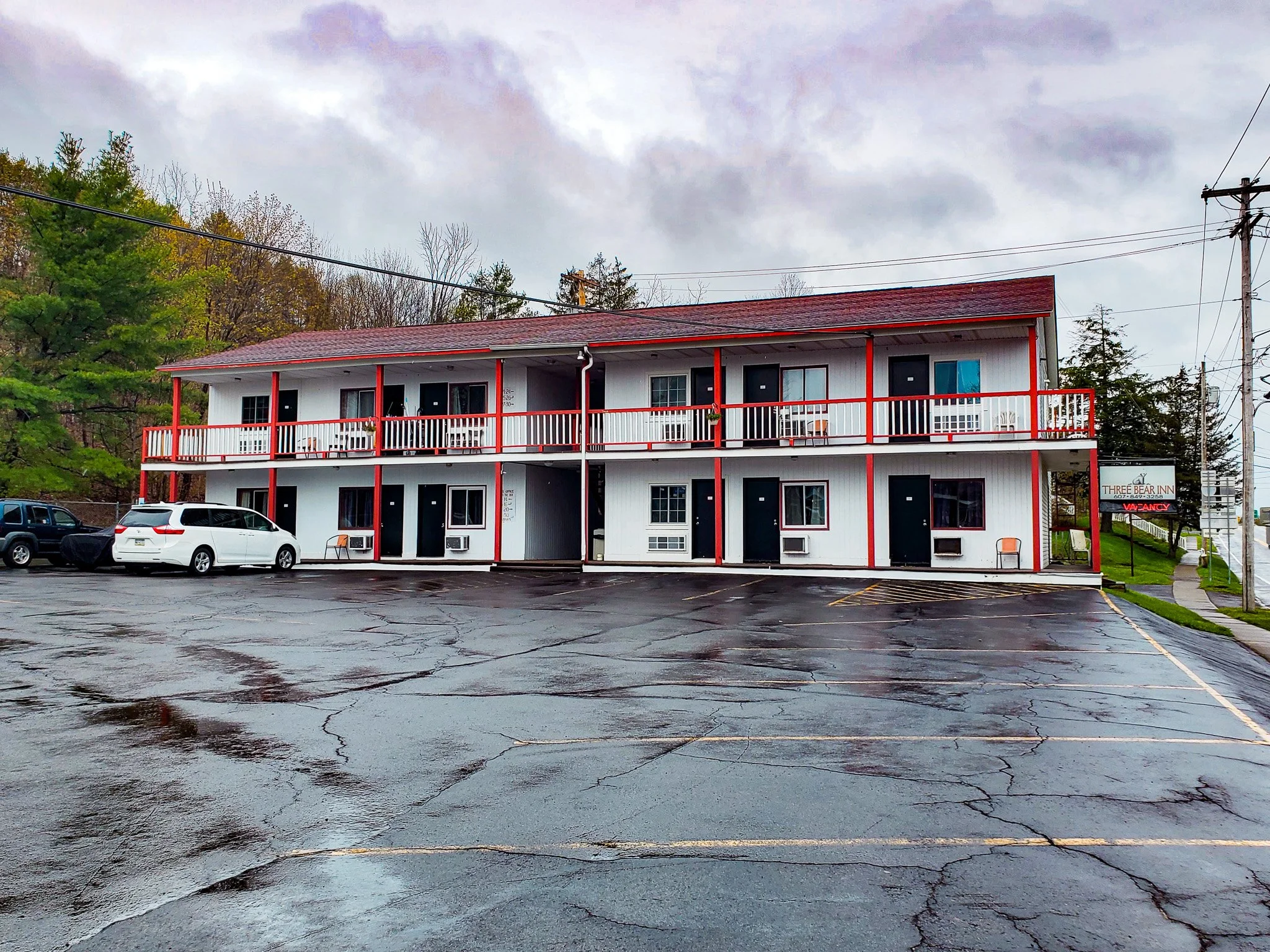
Three Bear Inn
CORTLAND
As per the convention with land within the Central New York Military Tract, Cortland (settled in 1791) was named for Pierre Van Cortlandt, first Lieutenant Governor of New York. Cortland is called “The Crown City” due to its location on a plain surrounded by 7 valleys. The SUNY-Cortland has a smoke-breathing dragon mascot on campus at 17 Lankler Drive. The Brockway Motor Company made trucks in Cortland, prior to being taken over by Mack Trucks in 1956, and Smith Corona typewriters were originally made in Cortland. There is an historic downtown that includes the 1890 House Museum and Center for Victorian Arts, the Burnham-Dunlap Octagon house and the CNY LIving History Center (which is 3 different museums). The Port Watson Street Bridge on US 11 into Cortland is a polygonal Warren through truss bridge built in 1933 and rehabilitated in 1995.
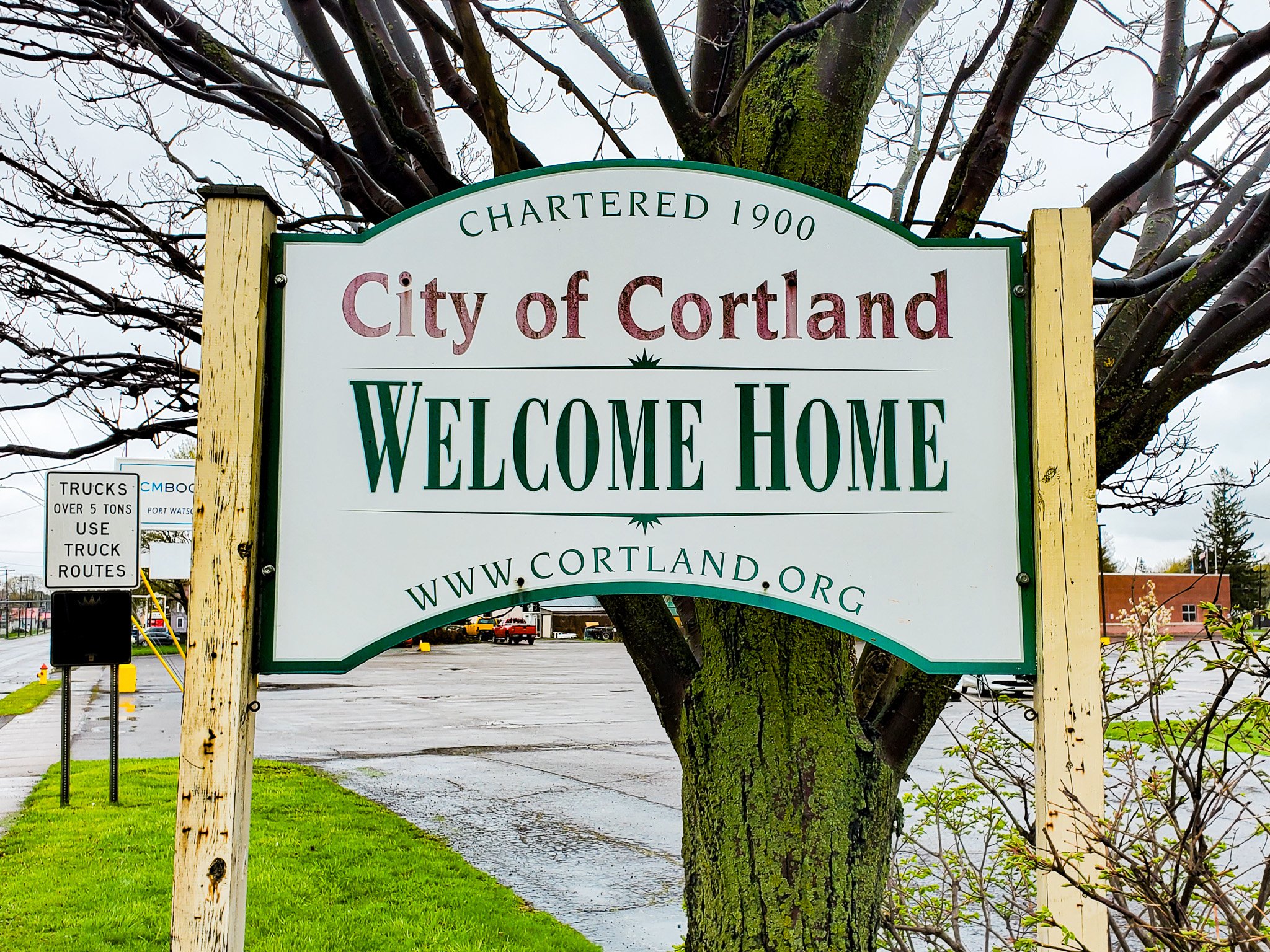
Welcome to Cortland Sign
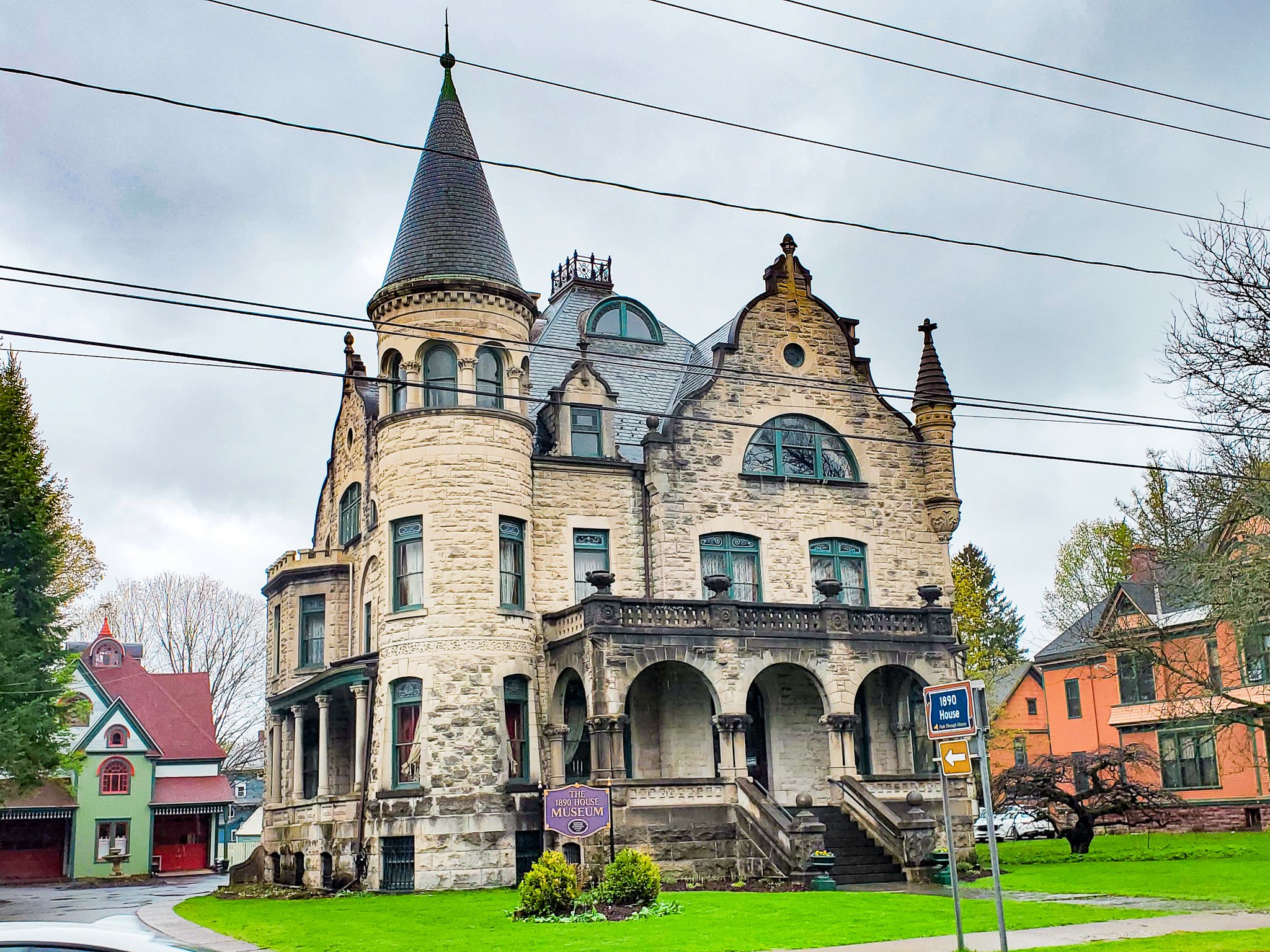
1890 House Limestone Mansion
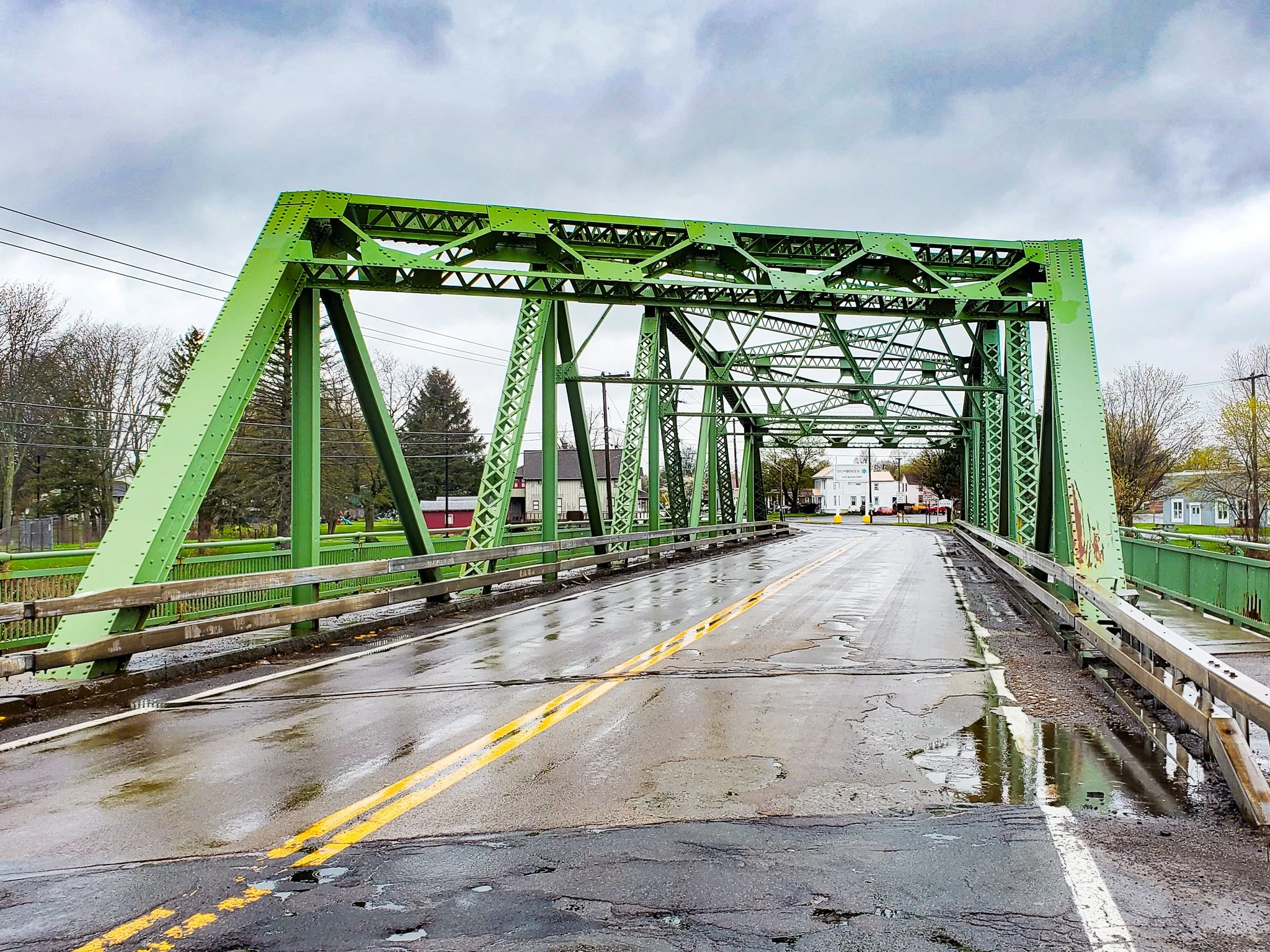
Bridge at Cortland
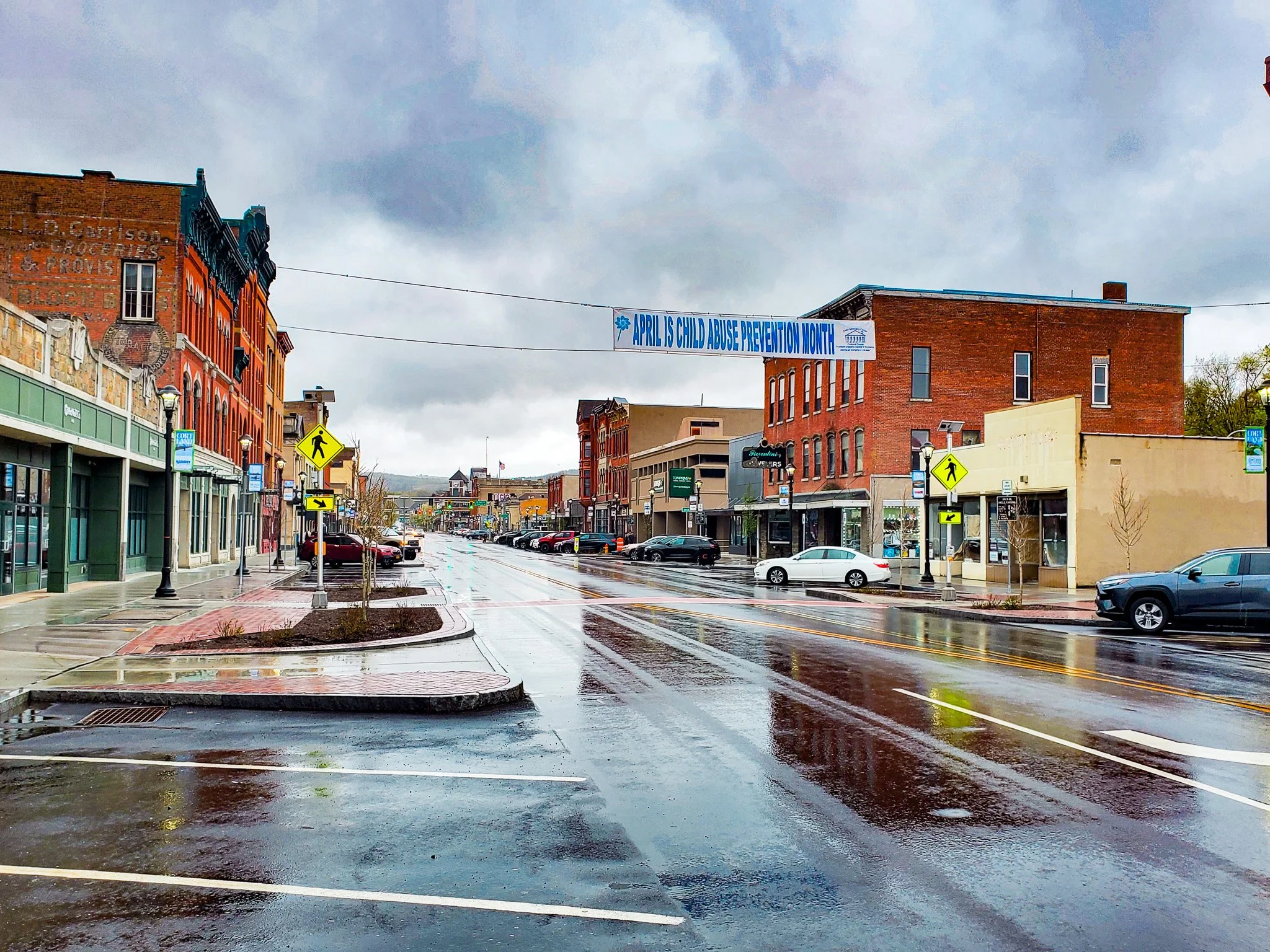
Main Street
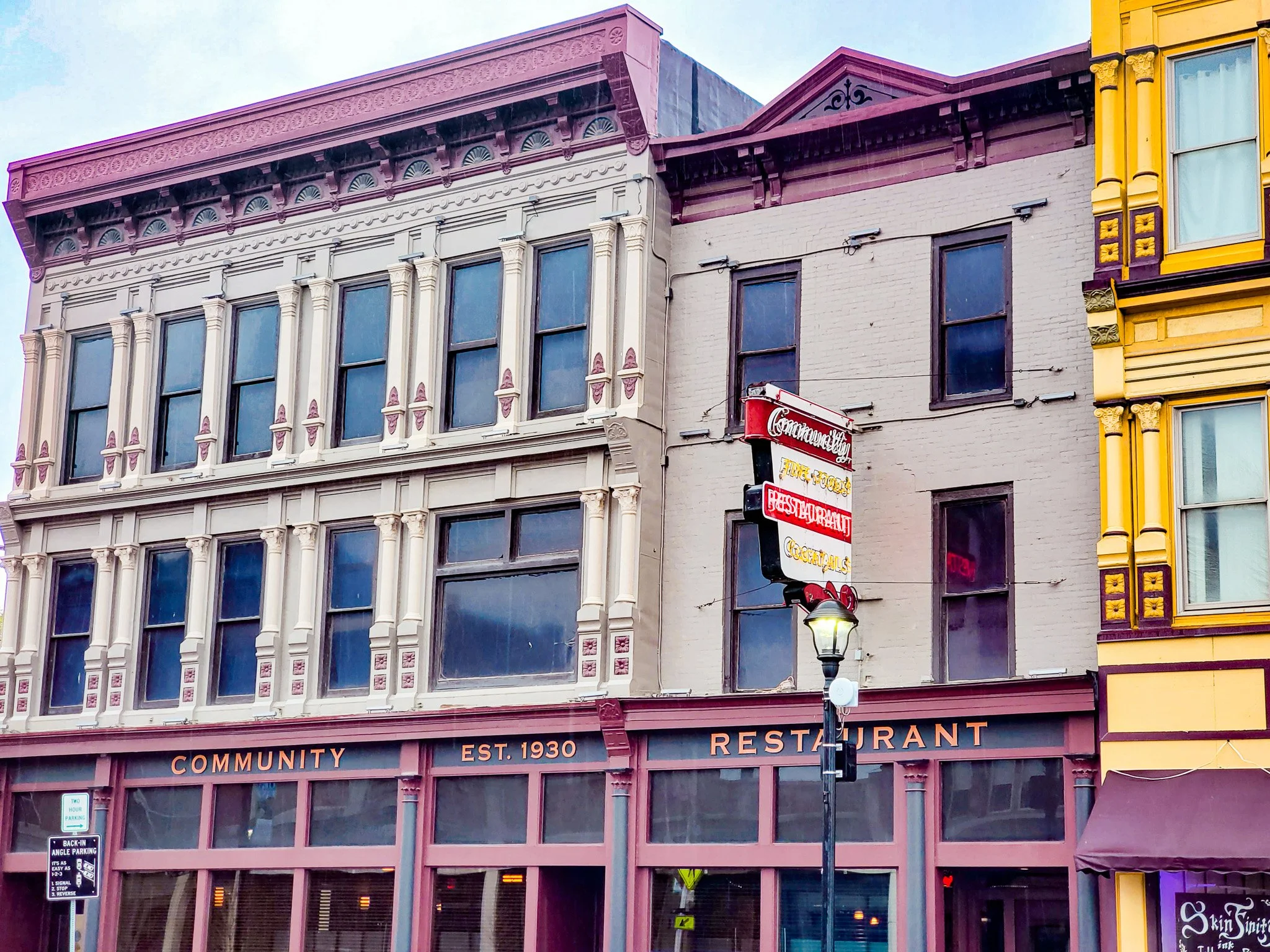
Downtown Old Building
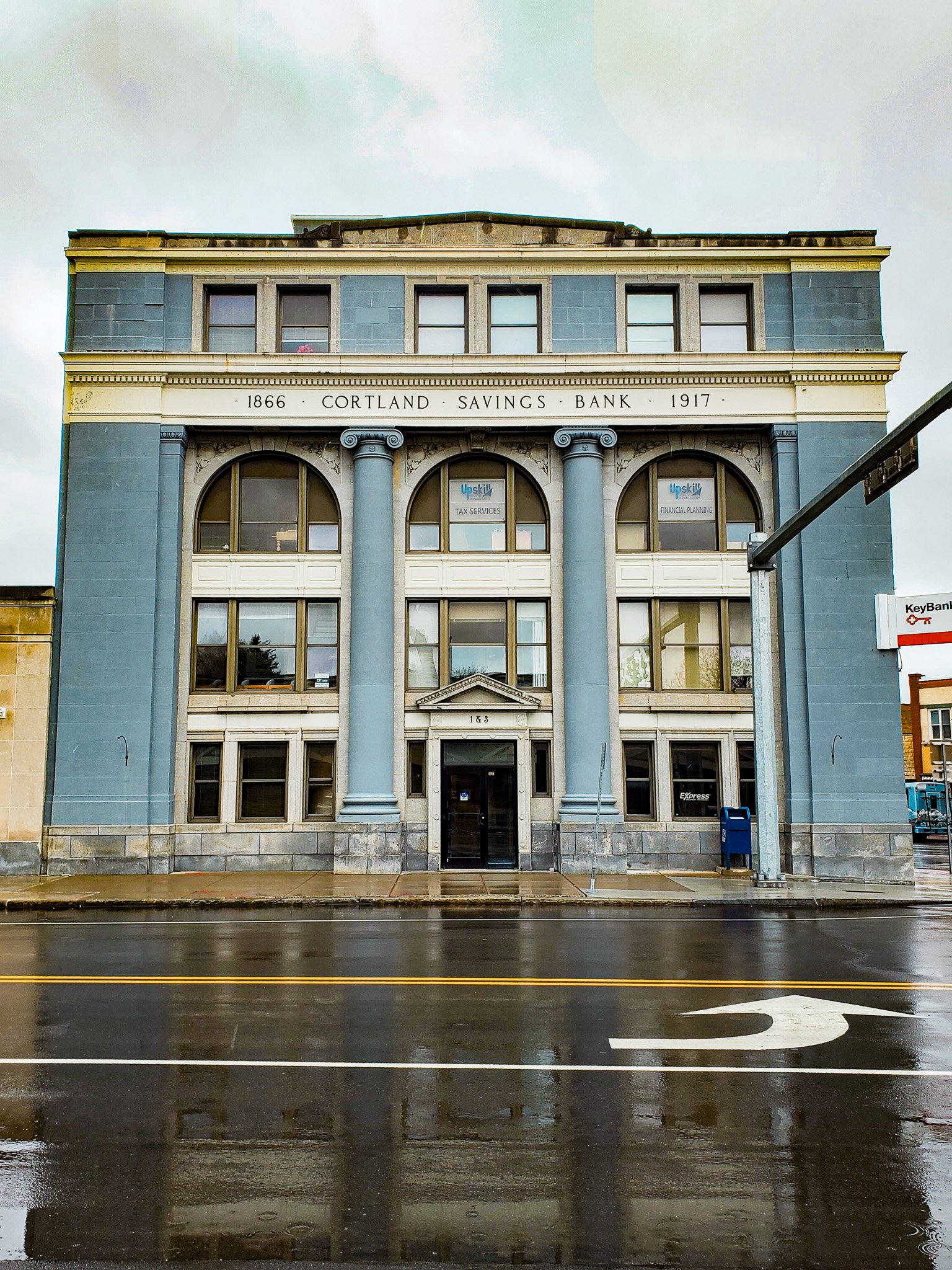
Cortland Savings Bank
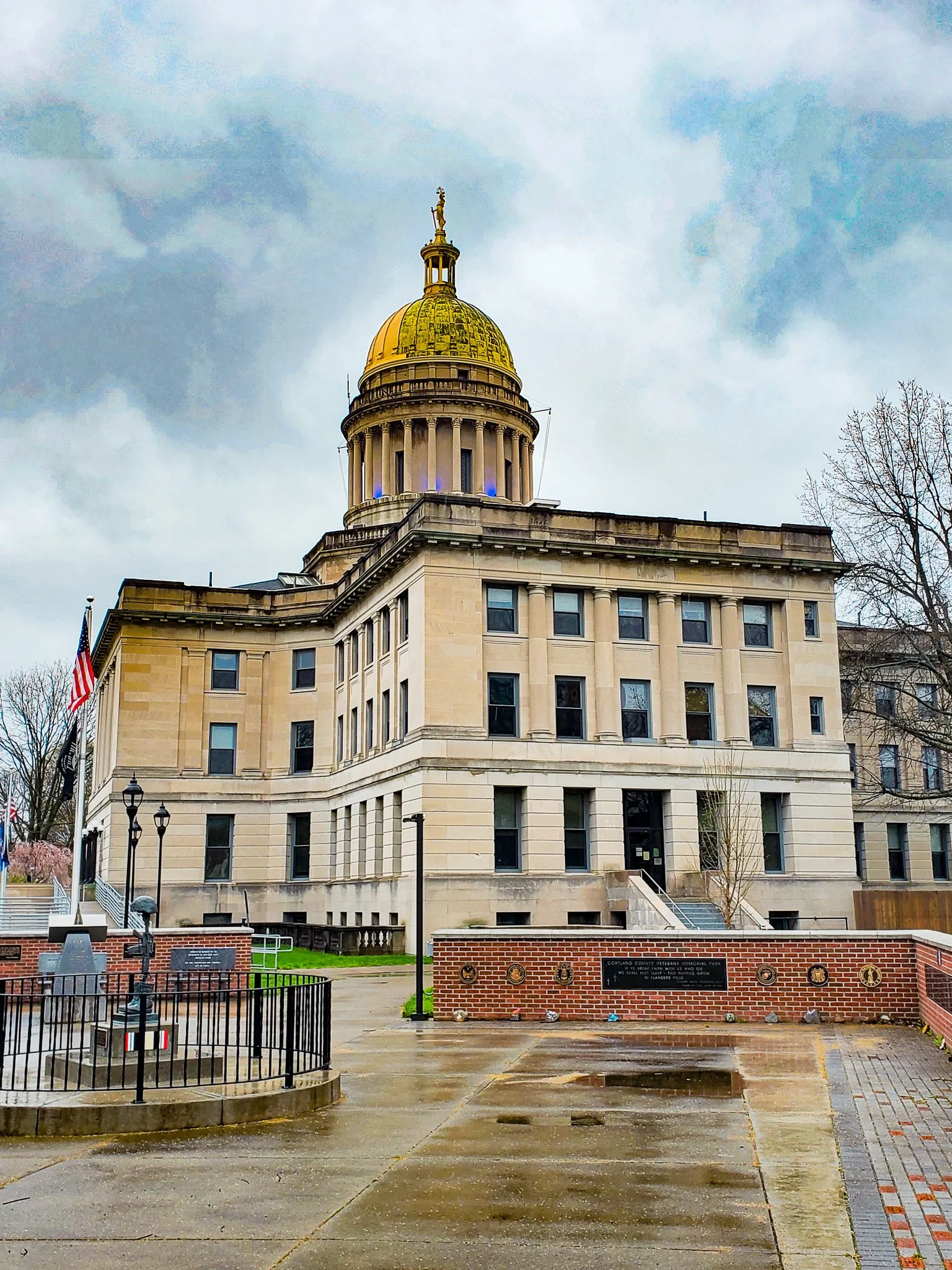
Courthouse Building
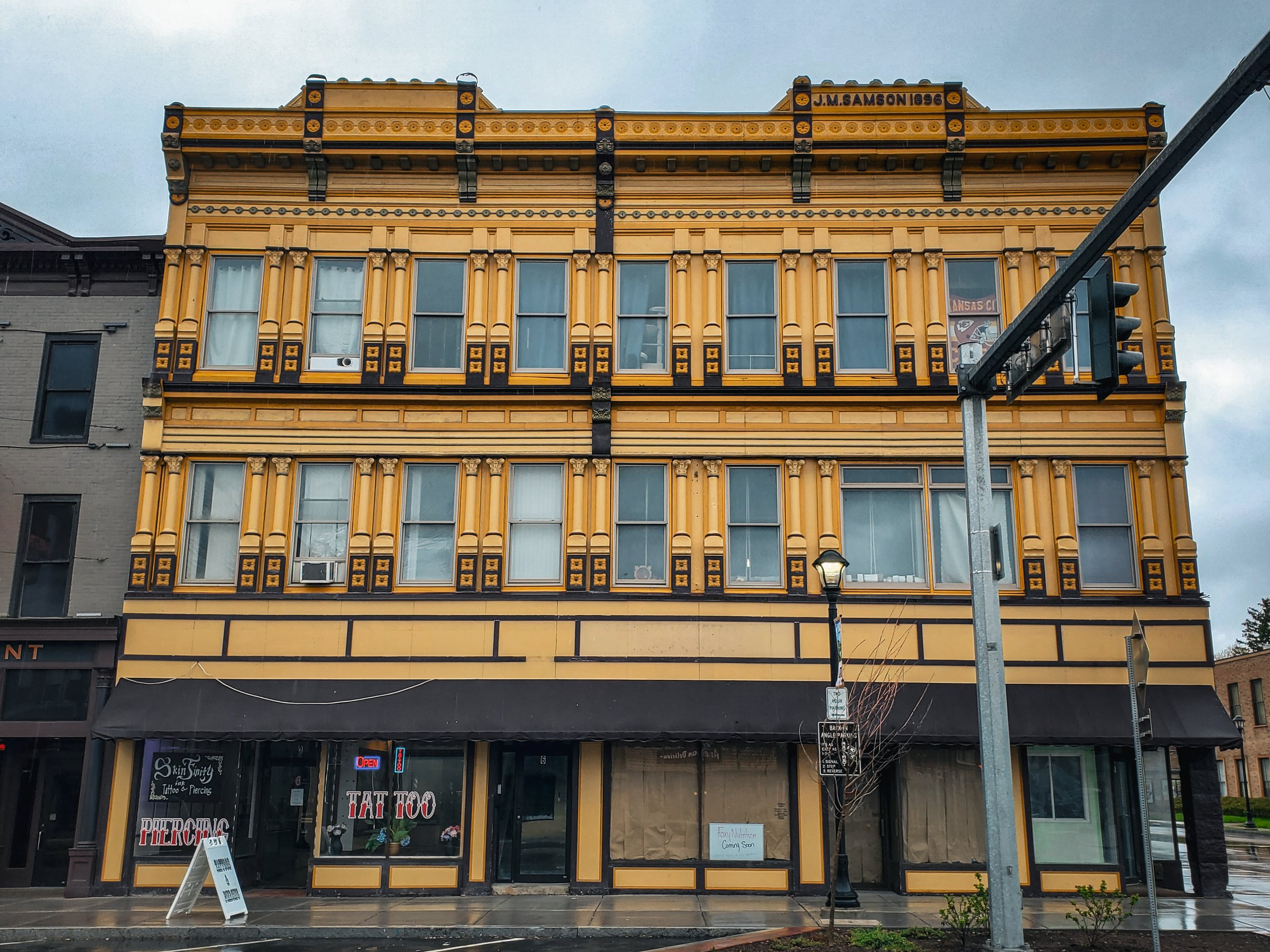
Downtown Old Building
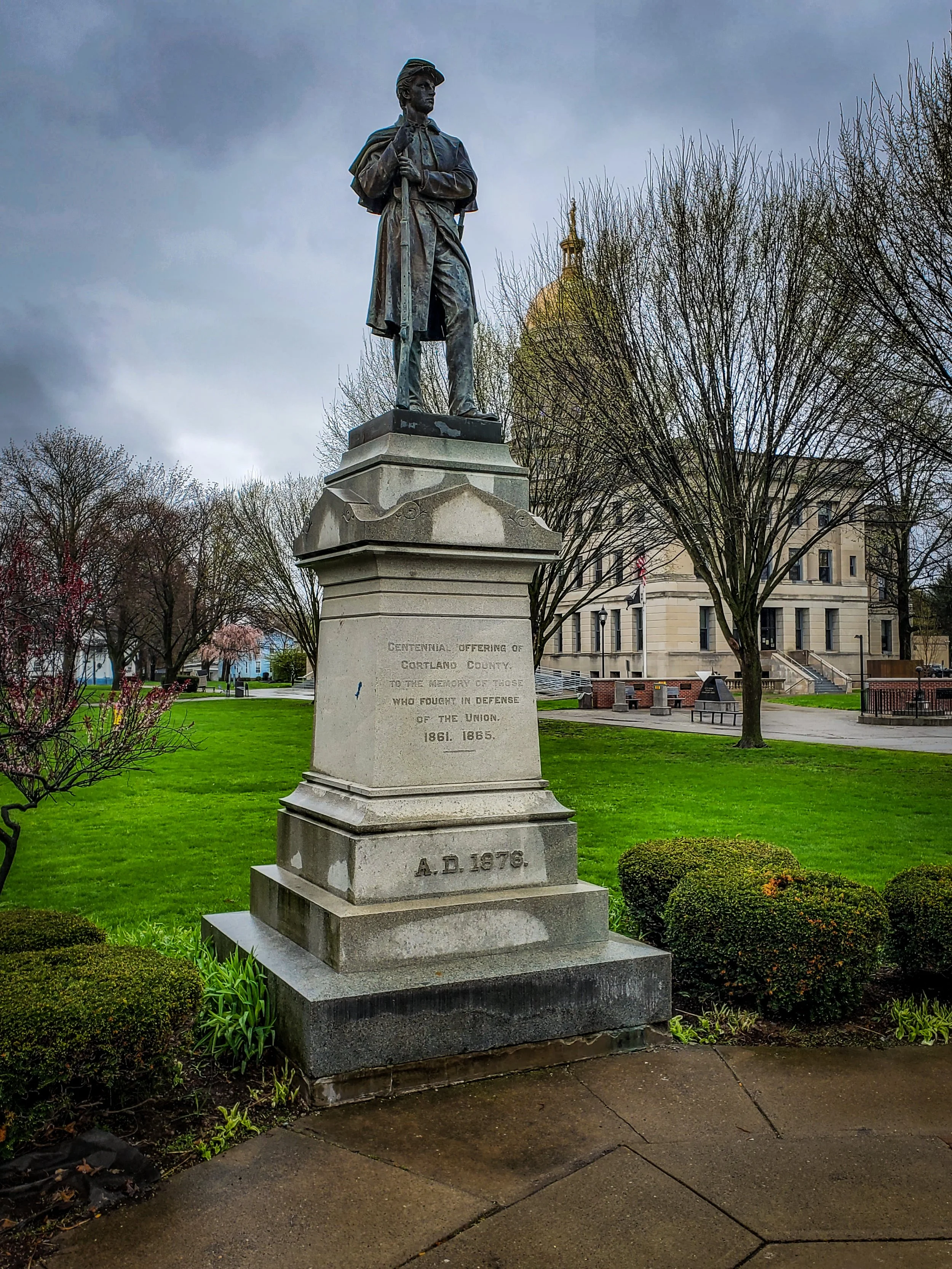
Union Memorial

World Trade Center Memorial
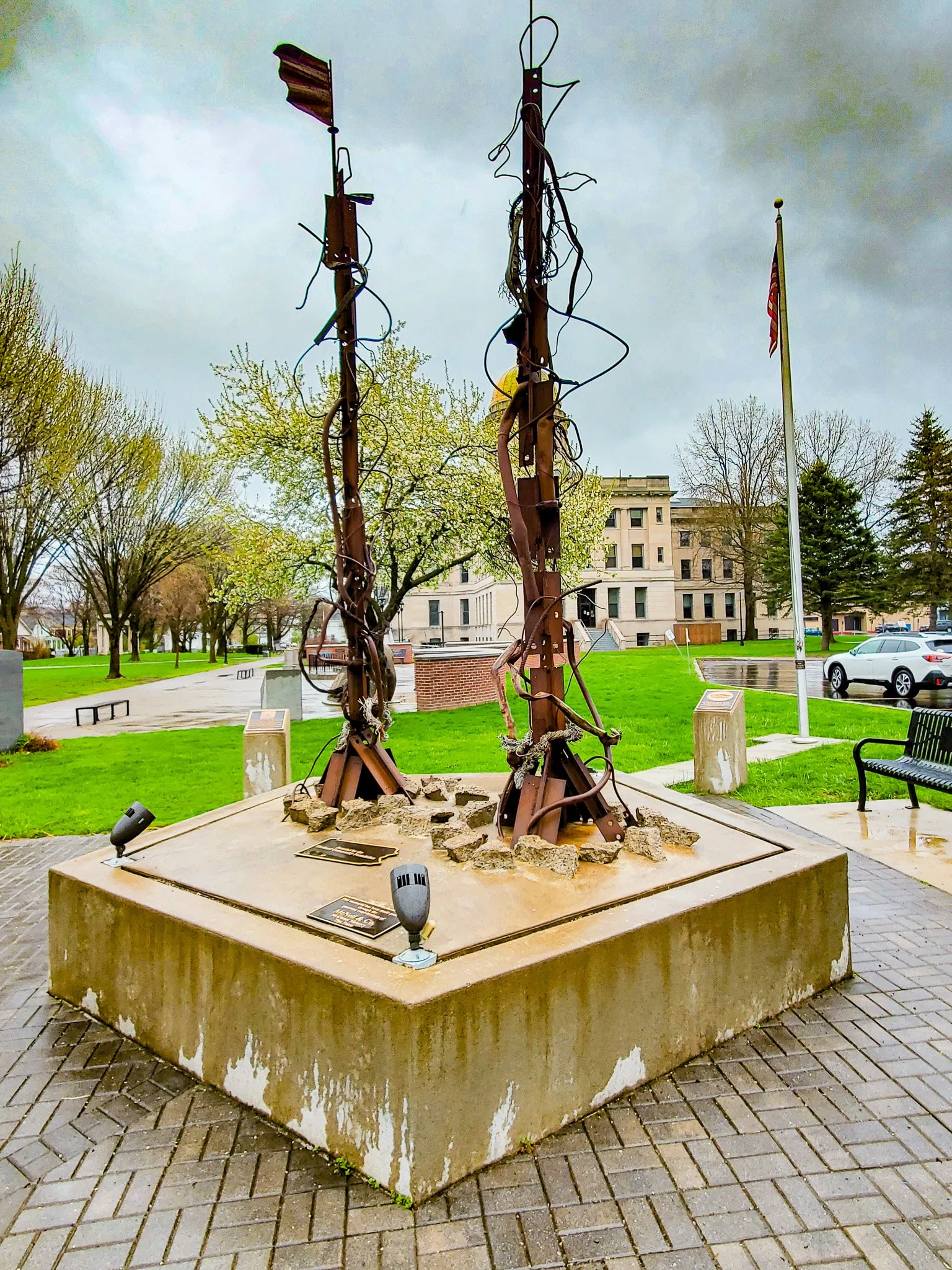
World Trade Center Memorial
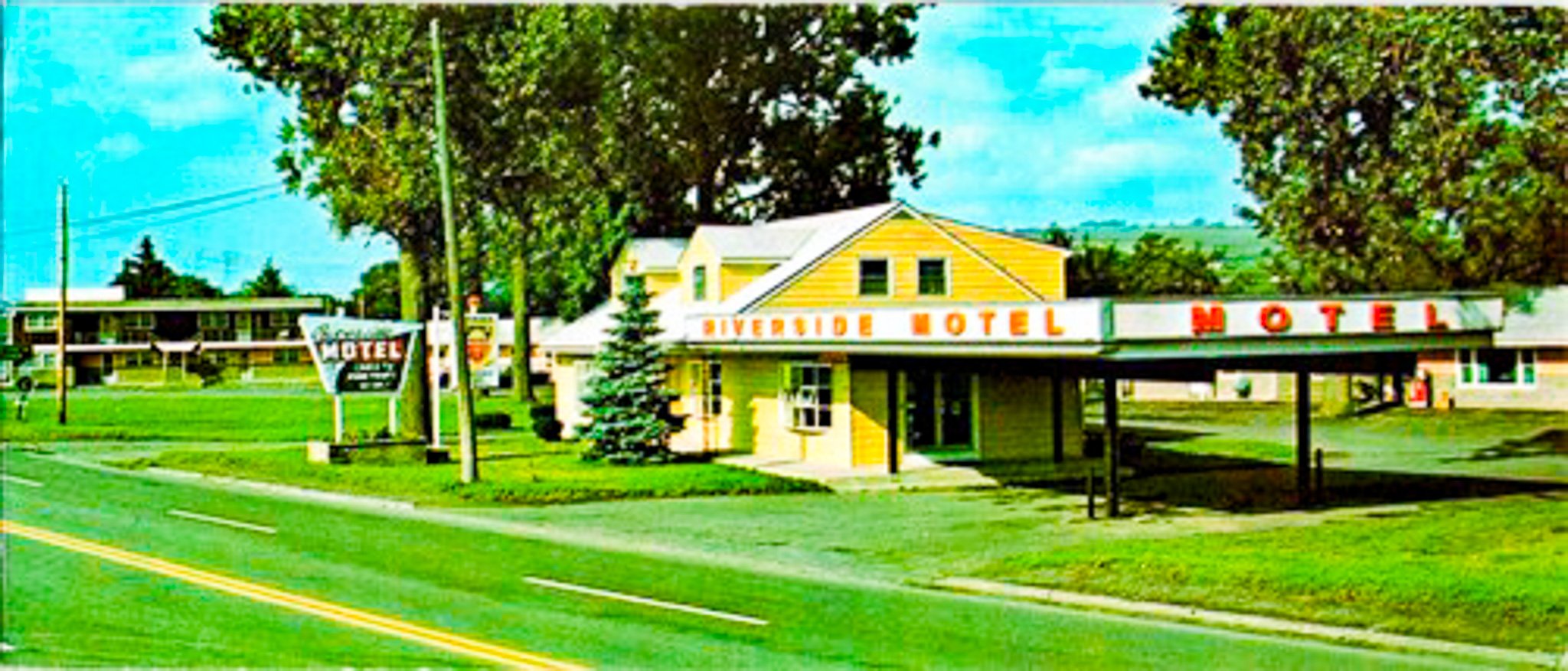
Riverside Motel Postcard
HOMER
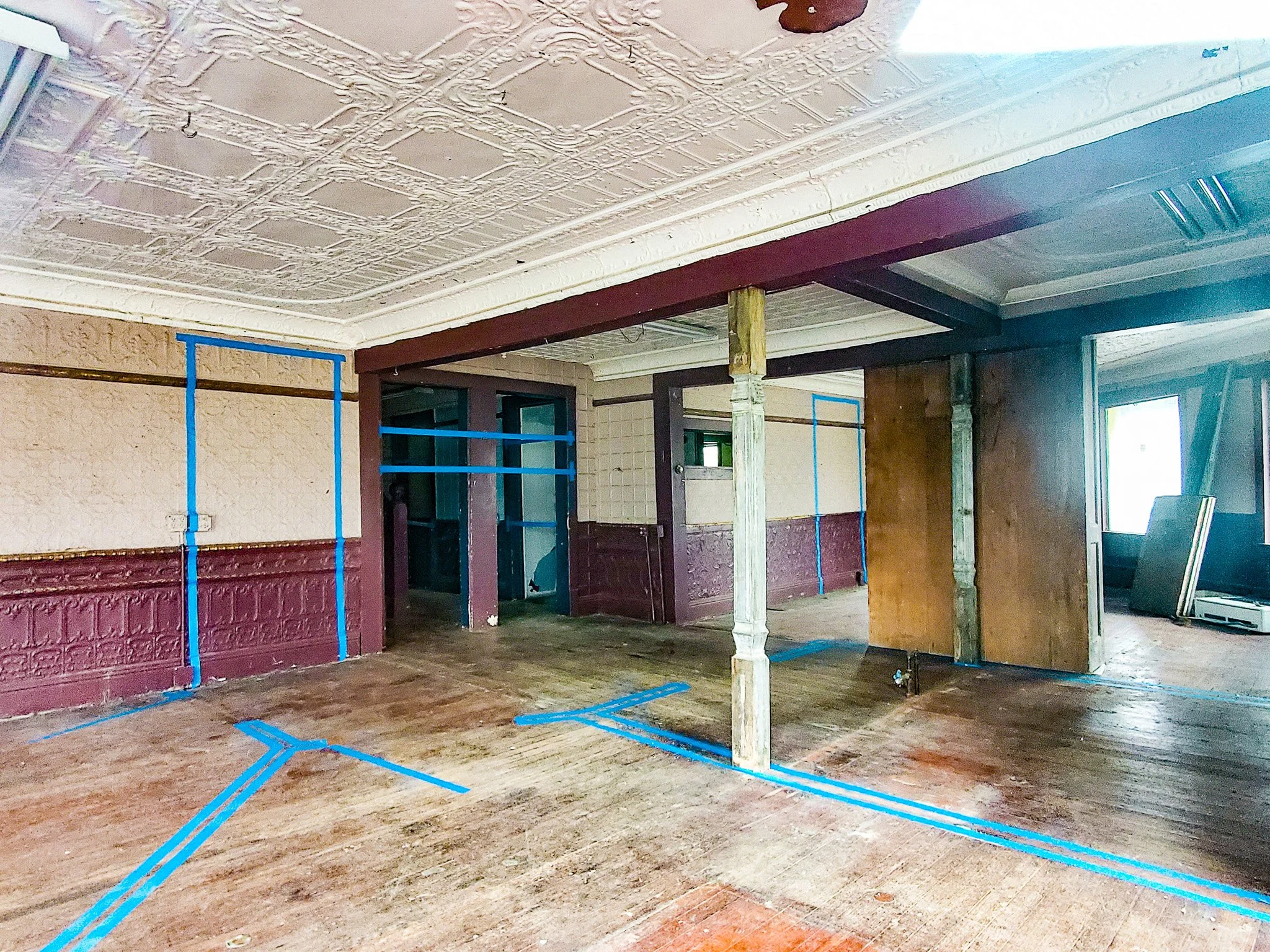
Named after the ancient Greek poet and settled in 1791, Homer contains the Old Homer Village Historic District and Homeville Museum as well as the Center for the Arts of Homer and the octagonal Circus House built between 1902 and 1905 for the great circus showman named Sig Sautelle. In the Homer Men and Boy’s Store (since 1951) on S Main Street is a bigger-than-life pair of jeans on a half-mannequin. Homer also boasts three significant bridges over the Tioughnioga River: the Water, Wall, and Pine Streets Lenticular Truss Bridges built in 1881.
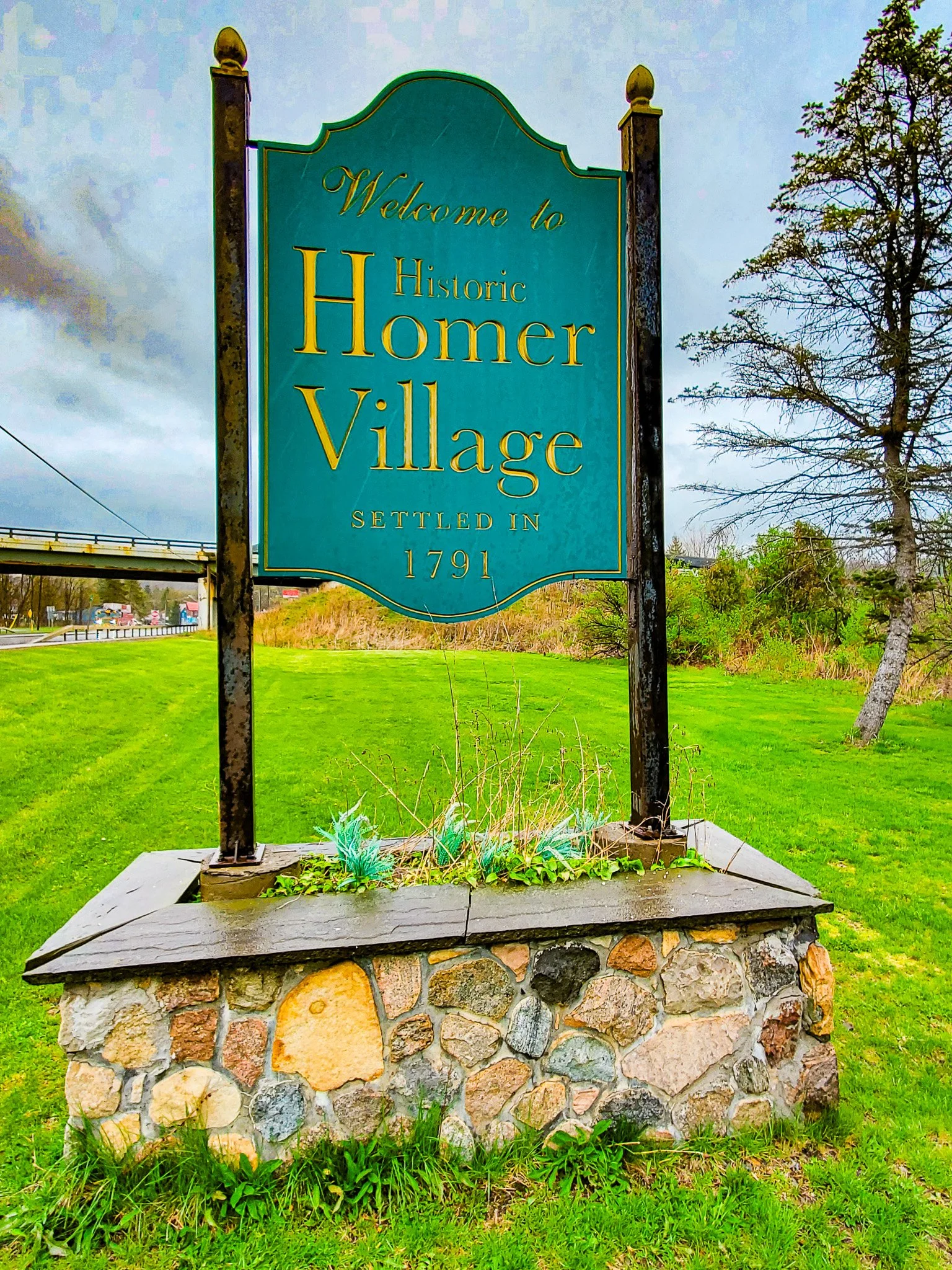
Welcome to Homer Sign
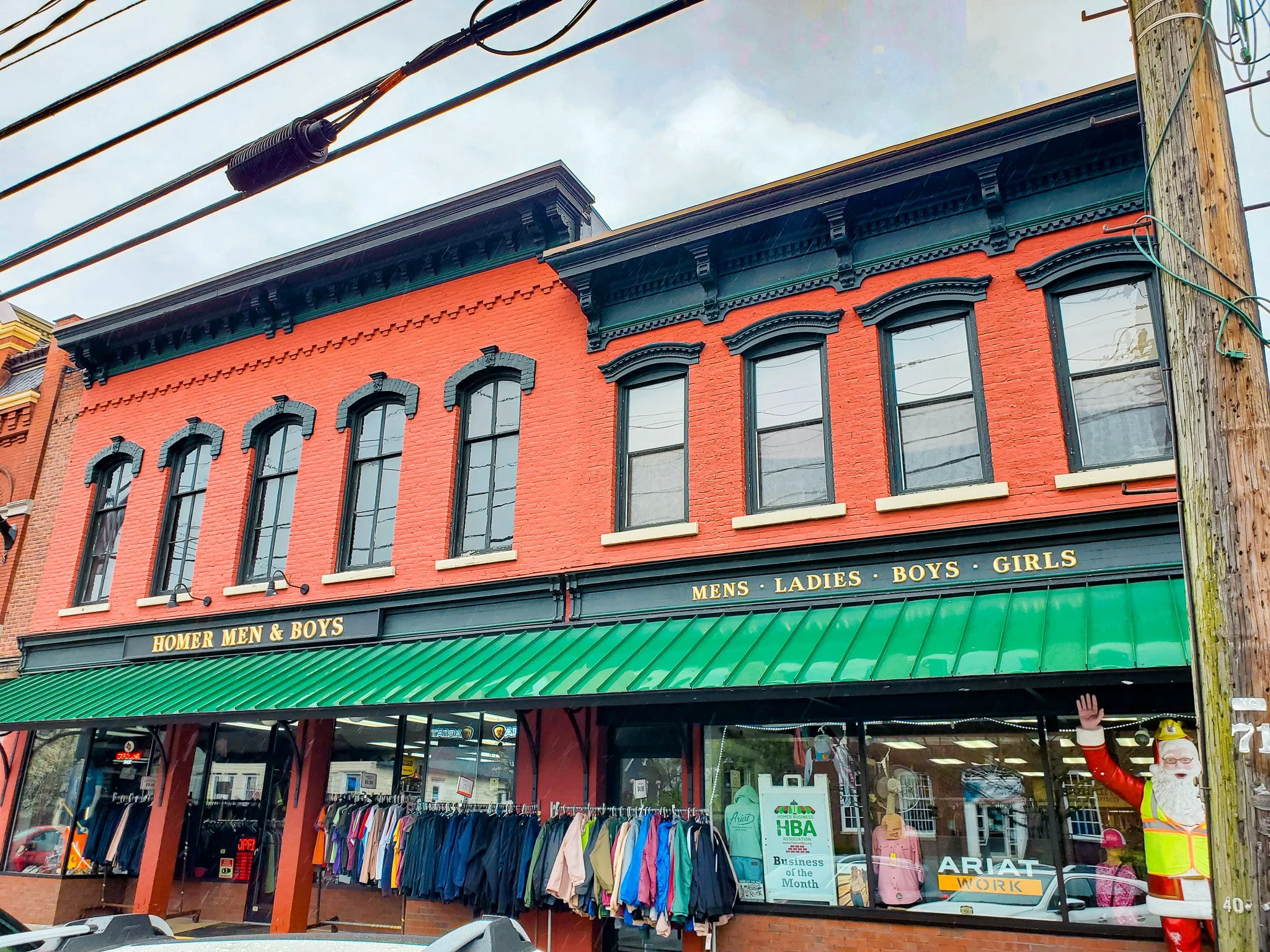
Homer Men and Boys Store
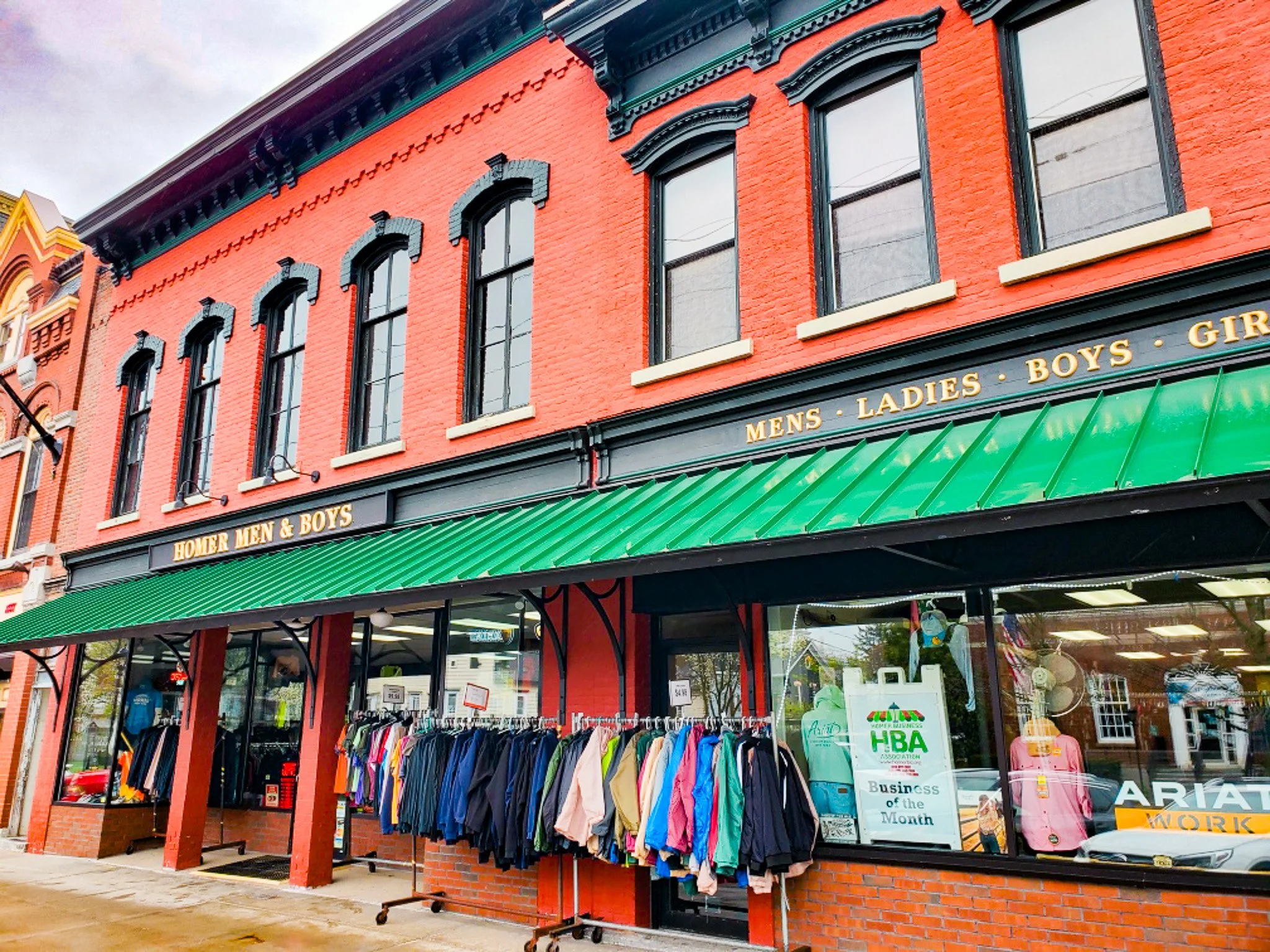
Homer Men and Boys Store
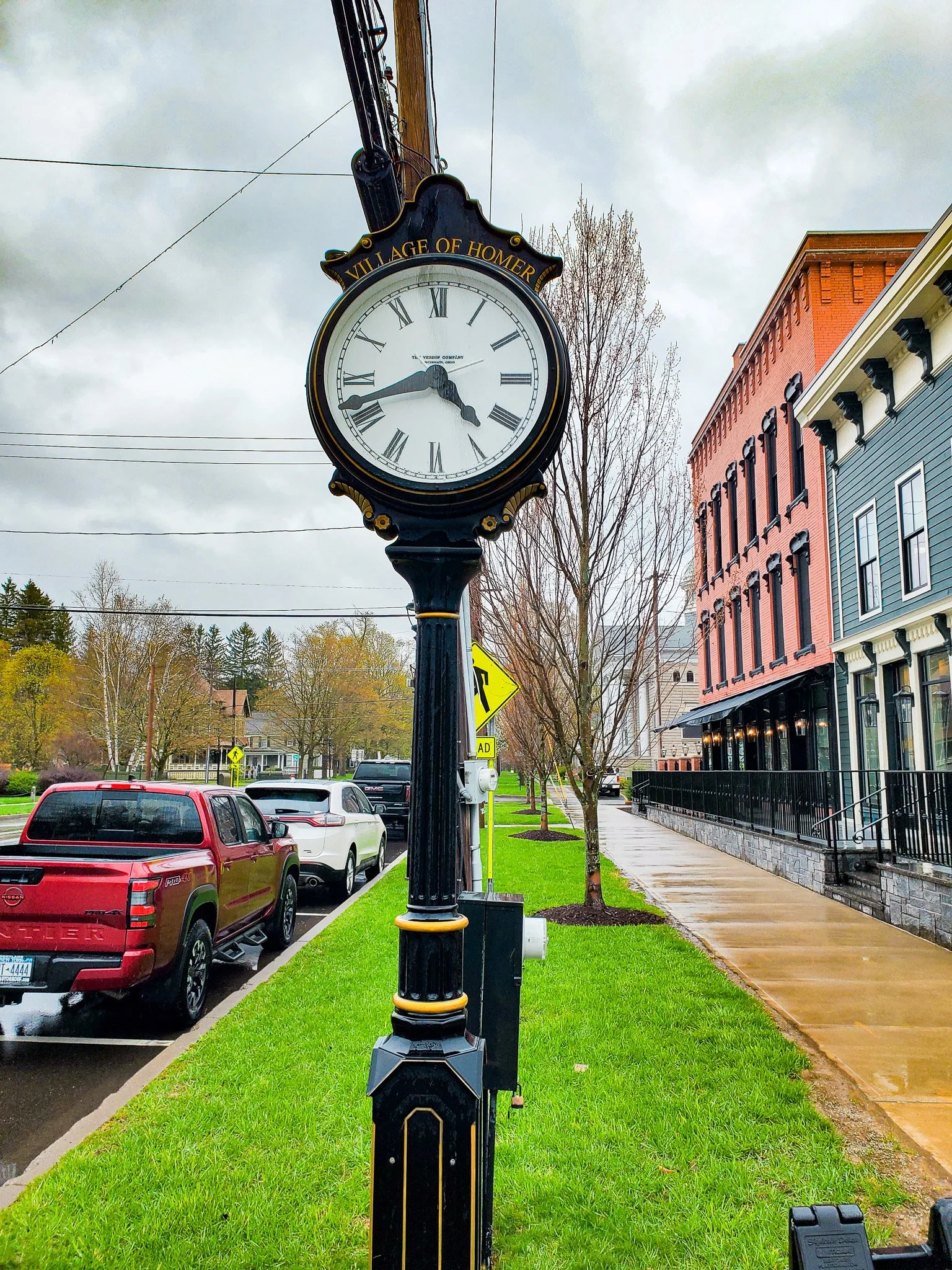
Downtown Clock

Sig Sautelle House
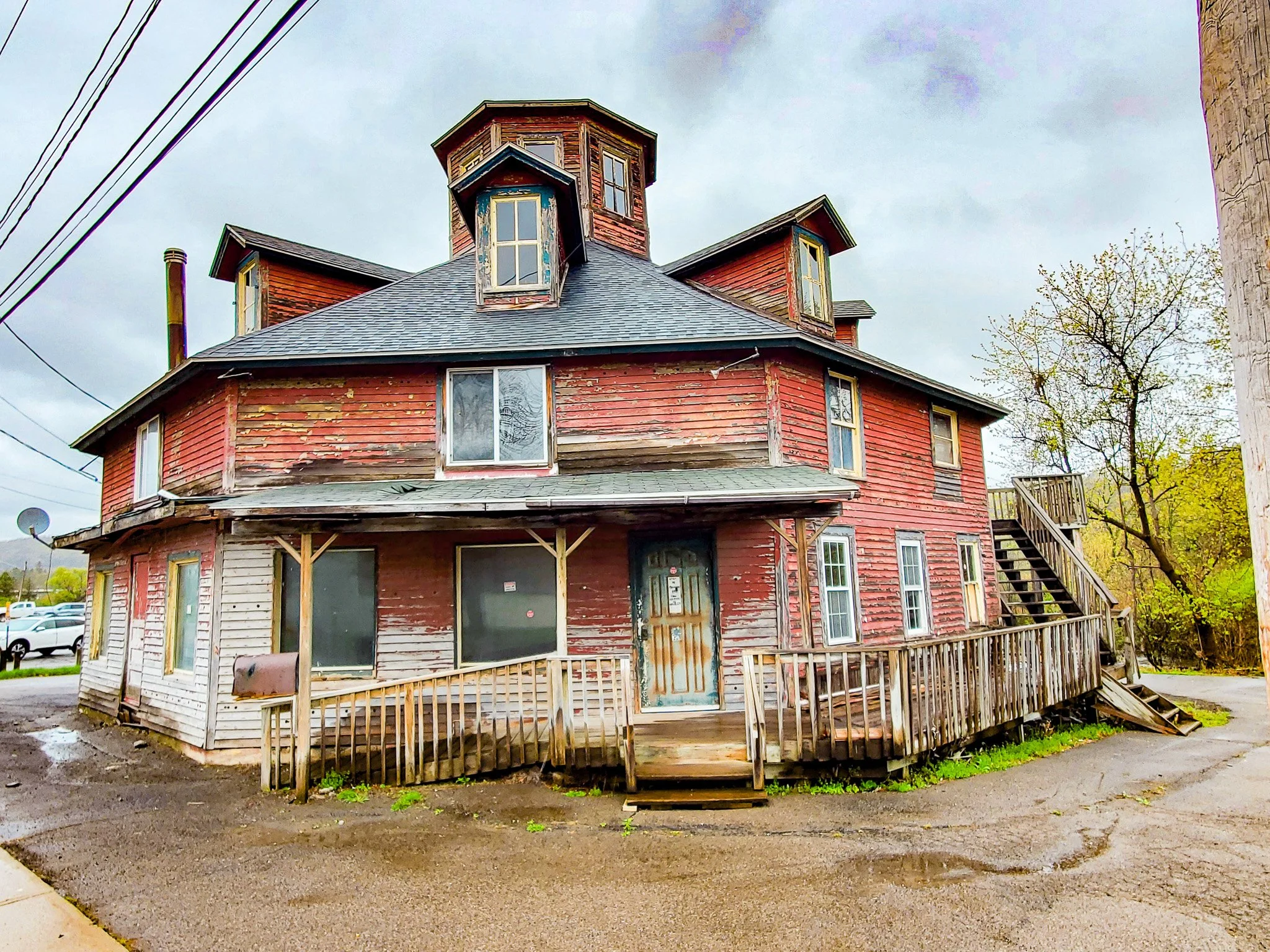
Sig Sautelle House
Sig Sautelle House
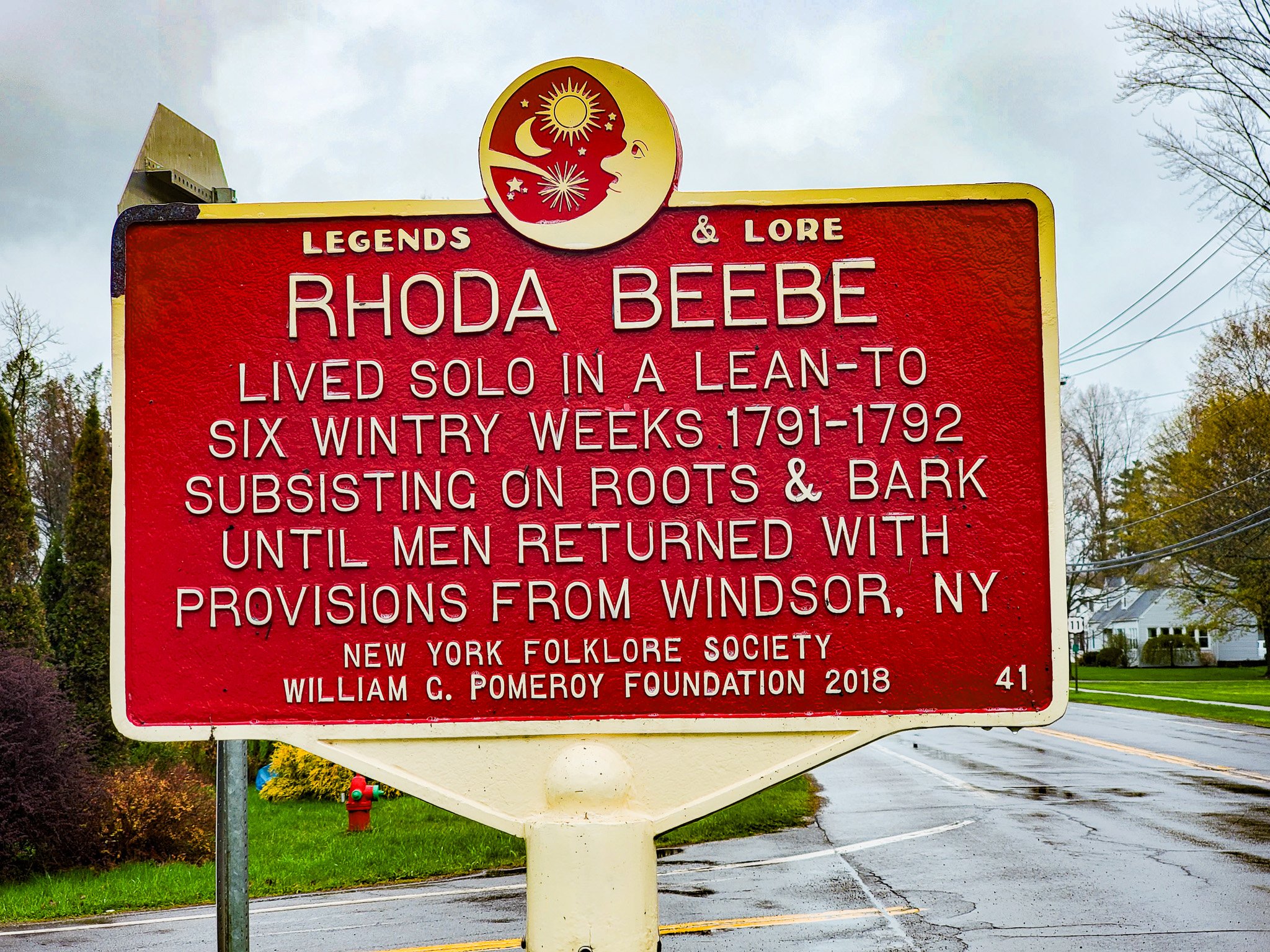
Rhoda Beebe Marker
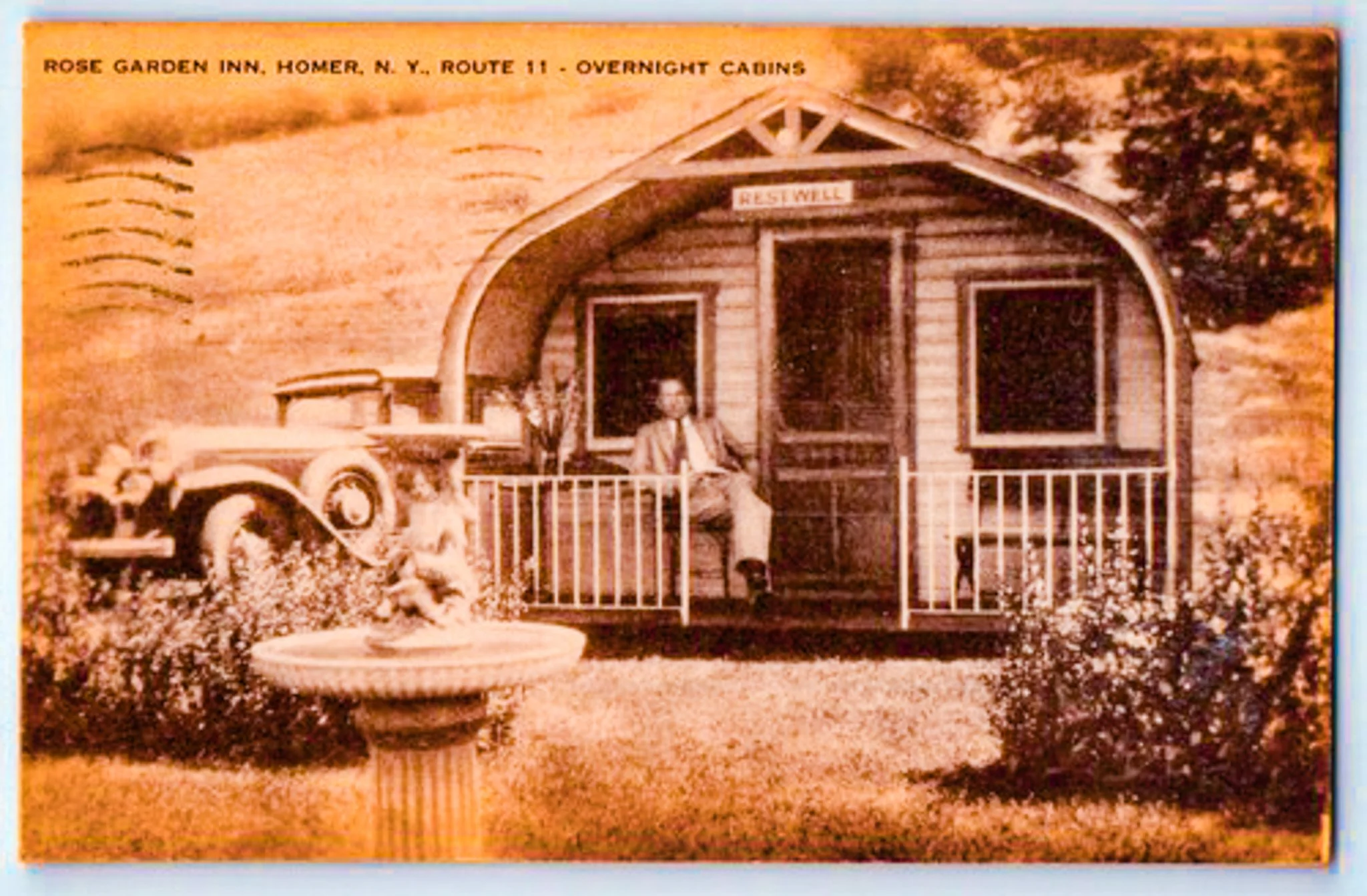
Rose Garden Inn Postcard
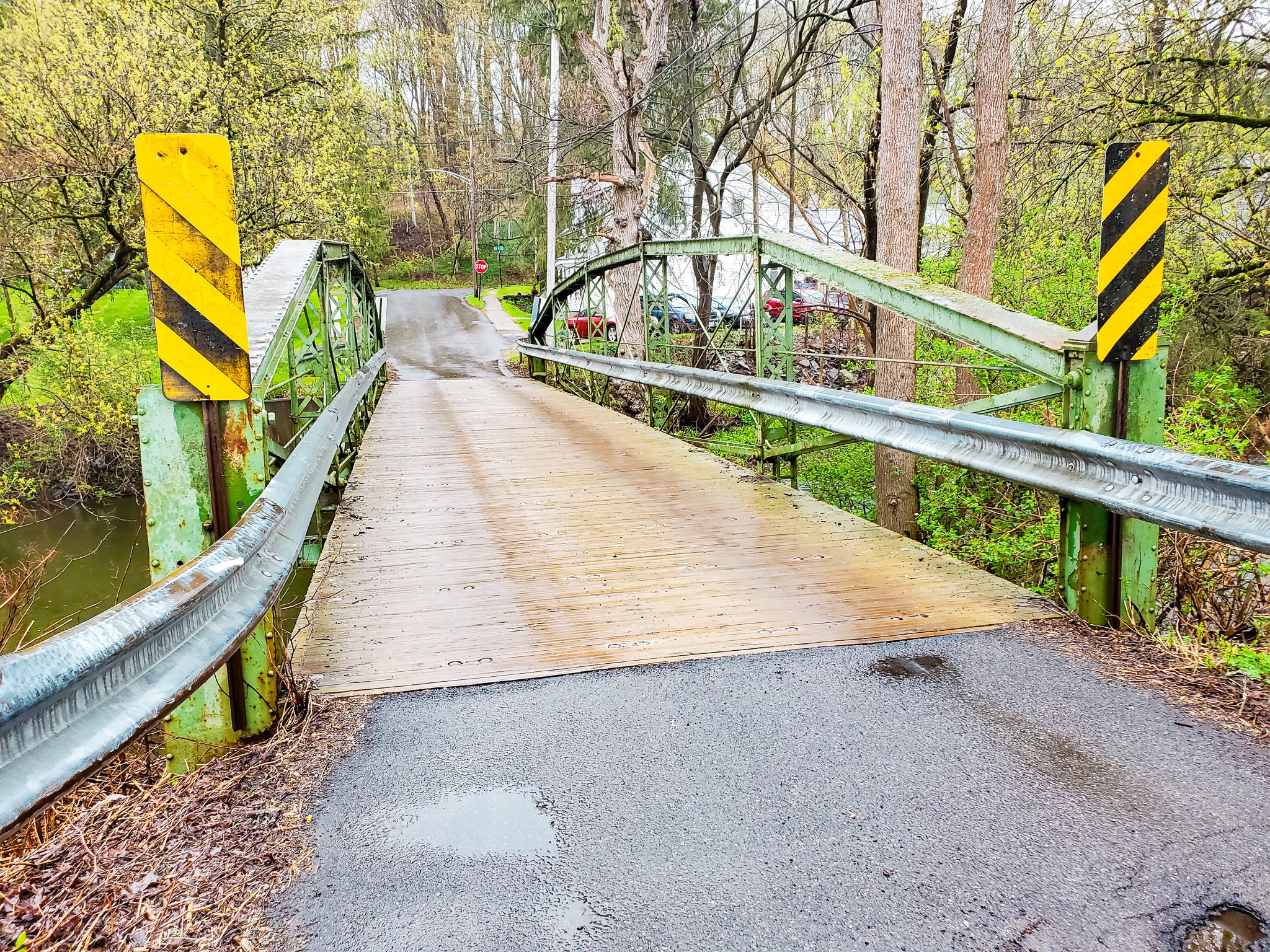
Water Street Bridge
TULLY
Settled in 1796, the town was named for the Roman orator Marcus Tullius Cicero and houses the Flourish Farm Cafe for breakfast and lunch.
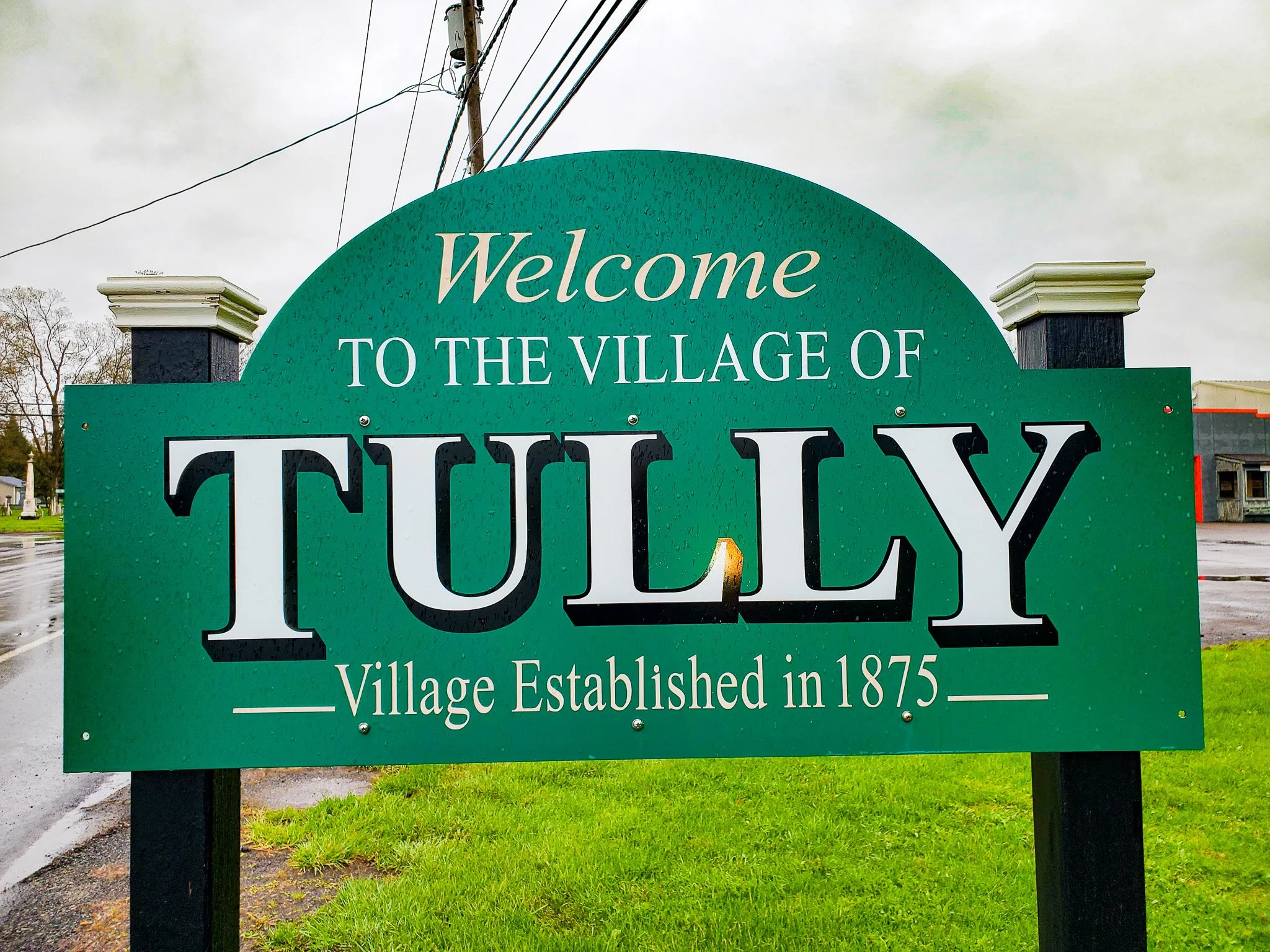
Welcome to Tully Sign
LAFAYETTE
Named after the Marquis de LaFayette, US 20 crosses US 11 in LaFayette. This makes the eighth east-west national highway to have crossed US 11 since Louisiana (US-90, 80, 70, 60, 50 40, 30, and now 20). US 10 originally ran from Detroit to Seattle, but lost much of its length when new interstates were built. Today the eastern terminus of US 10 is in Bay City Michigan and western terminus is West Fargo, North Dakota so US 10 does not cross US 11. The Beak and Skiff Apple Orchards just west of town on US 20 is a renowned fifth generation family-owned orchard established in 1911 that features over 300,000 apple trees, a bakery, the 1911 Established Distillery, General Store, and guest properties.
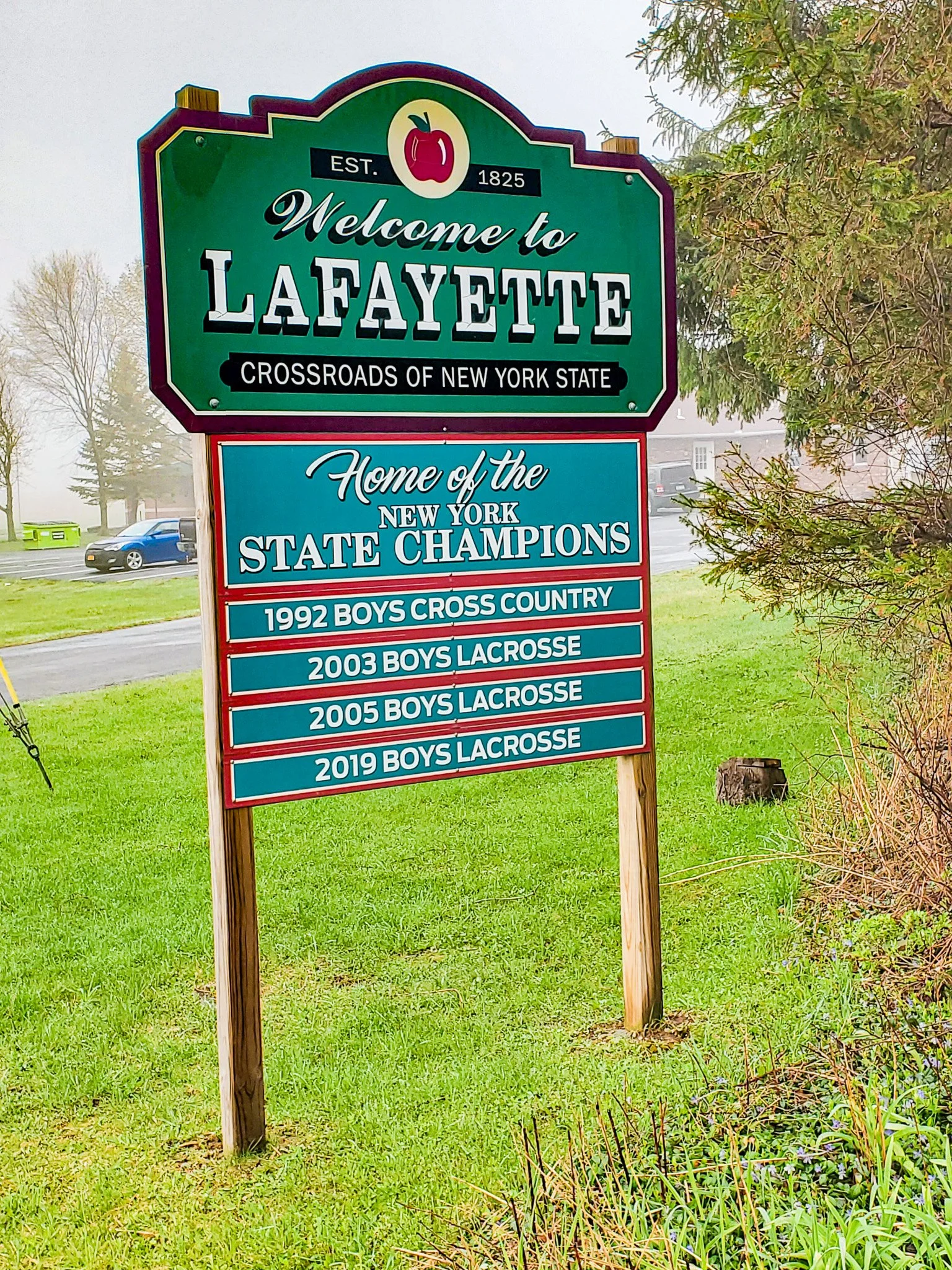
Welcome to Lafayette Sign
ONONDAGA NATION
US 11 passes briefly though the Onondaga Nation, a sovereign indigenous nation that is a member of the Haudenosaunee Confederacy and which lies in the middle of the Haudenosaunee territory. The Haudenosaunee (translated to the “People of the Longhouse”) is an alliance of native nations also referred to as the Iroquois or the Six Nation Confederacy and consists of the Mohawk, Oneida, Onondaga, Cayuga, Seneca, and Tuscarora nations. Community services include operating a 1900 seat hockey/lacrosse arena located on US 11.
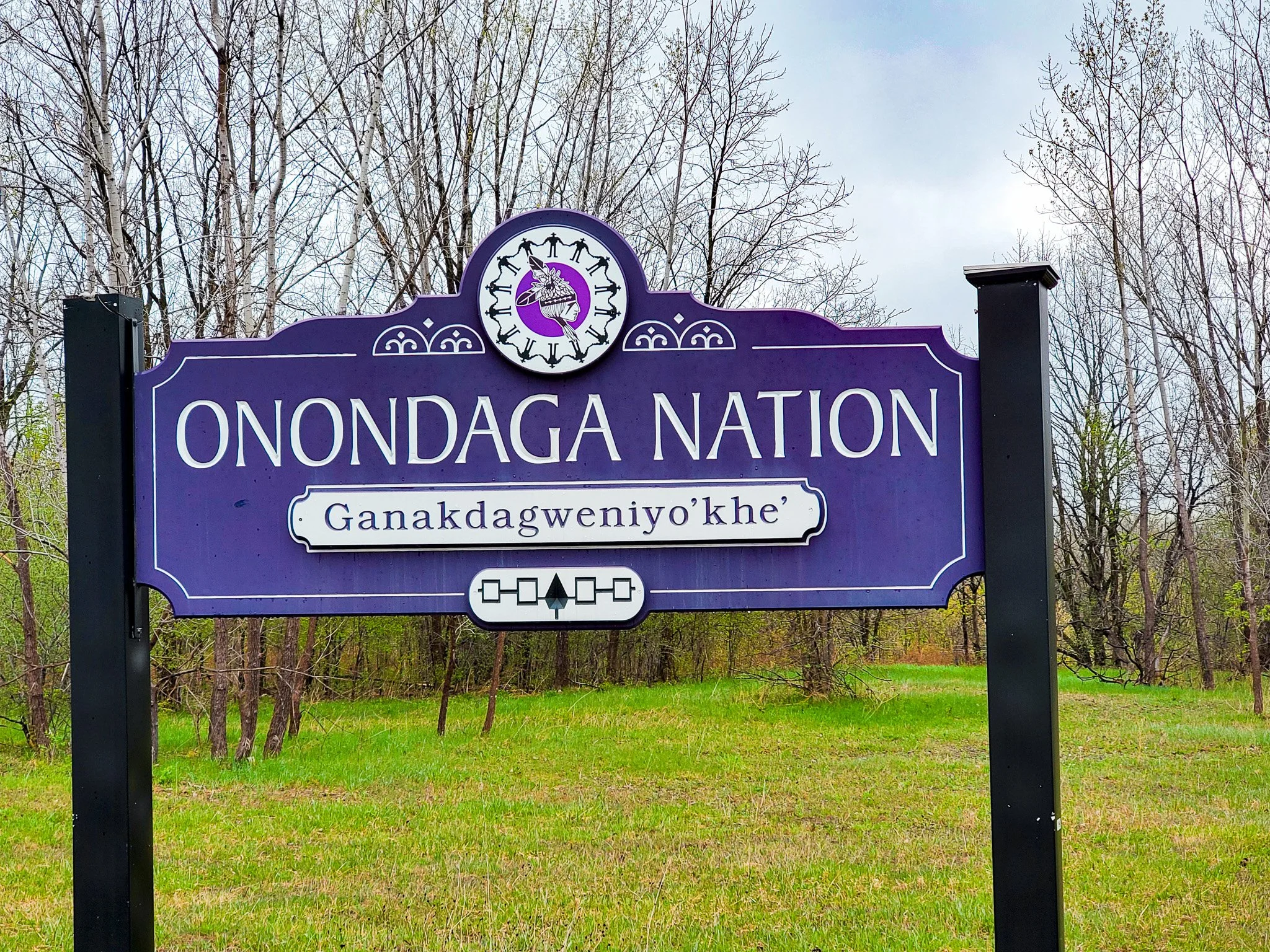
Onondaga Nation Welcome Sign
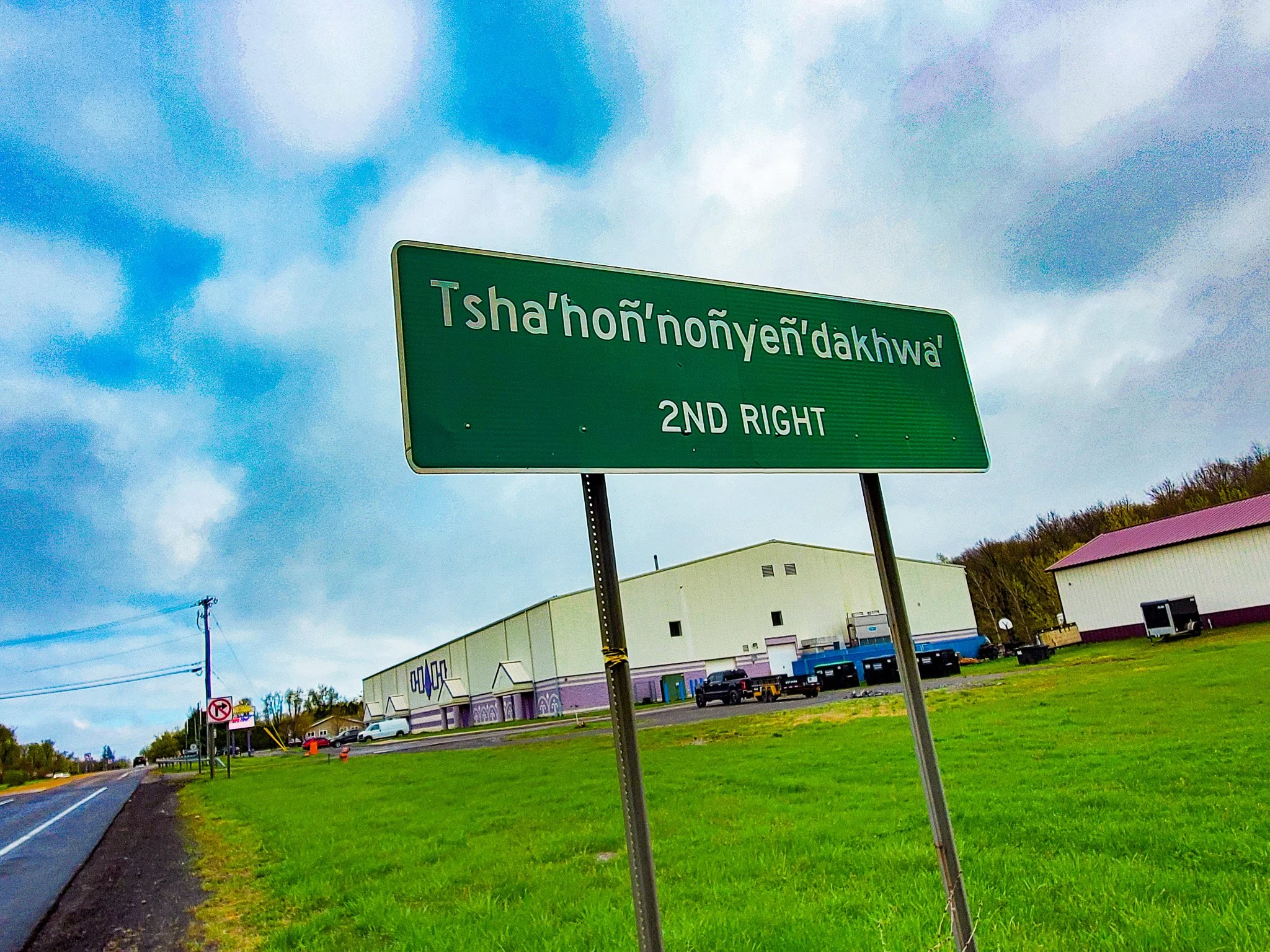
Onondaga Nation Sign
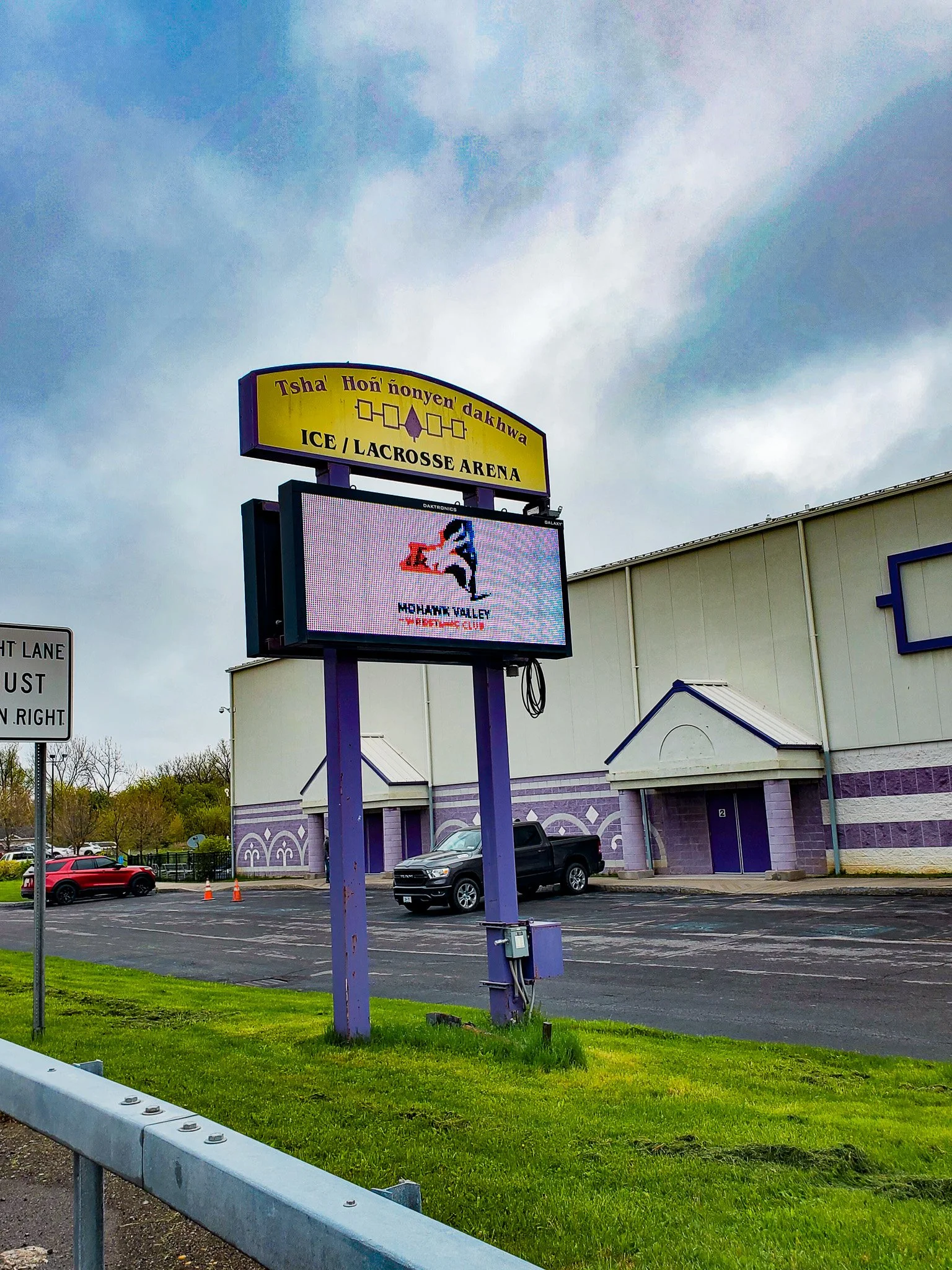
Sports Complex
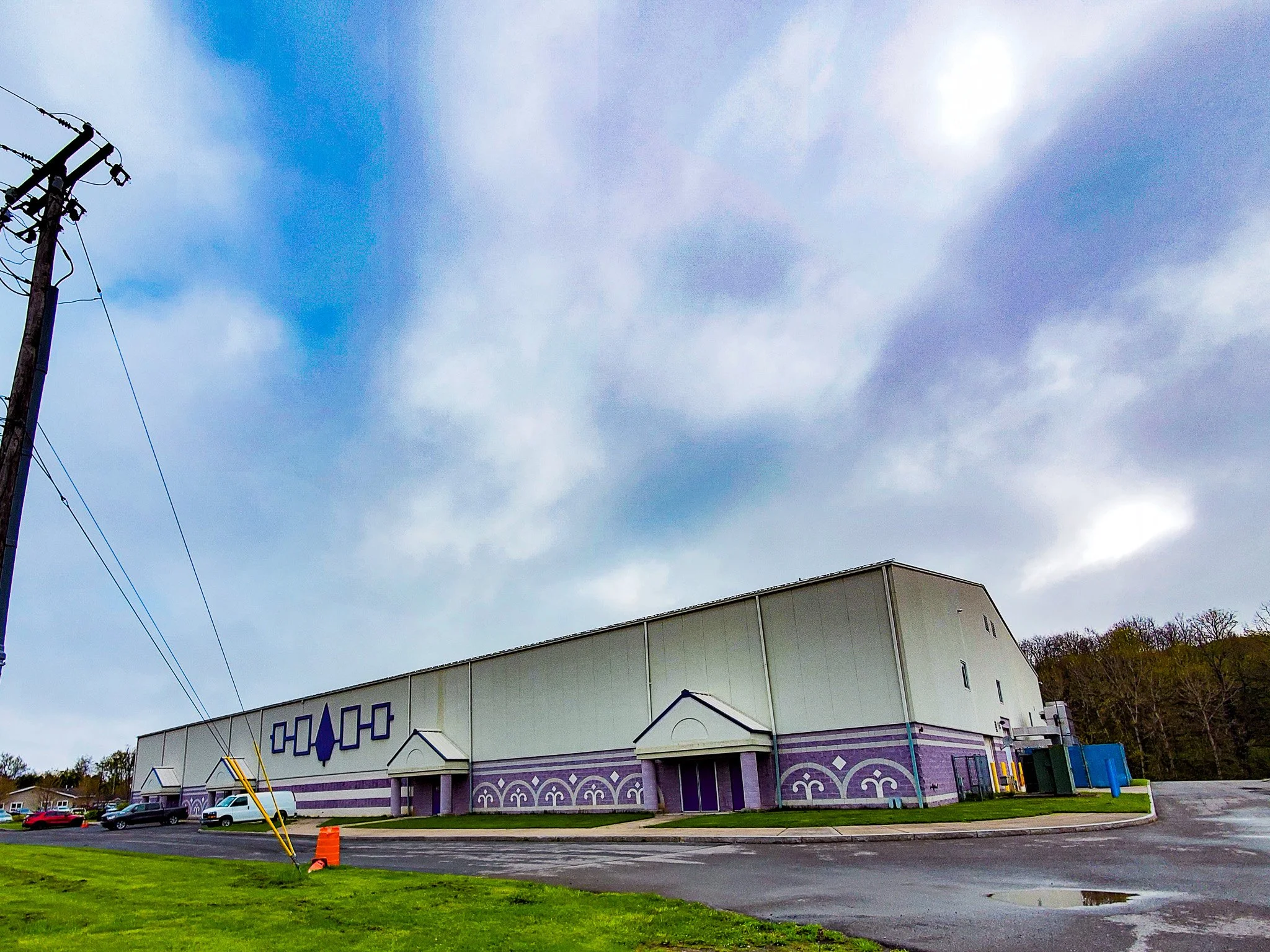
Sports Complex
NEDROW
Nedrow is the reverse spelling (an anadrome) of the founder’s name, “Worden”.
SYRACUSE
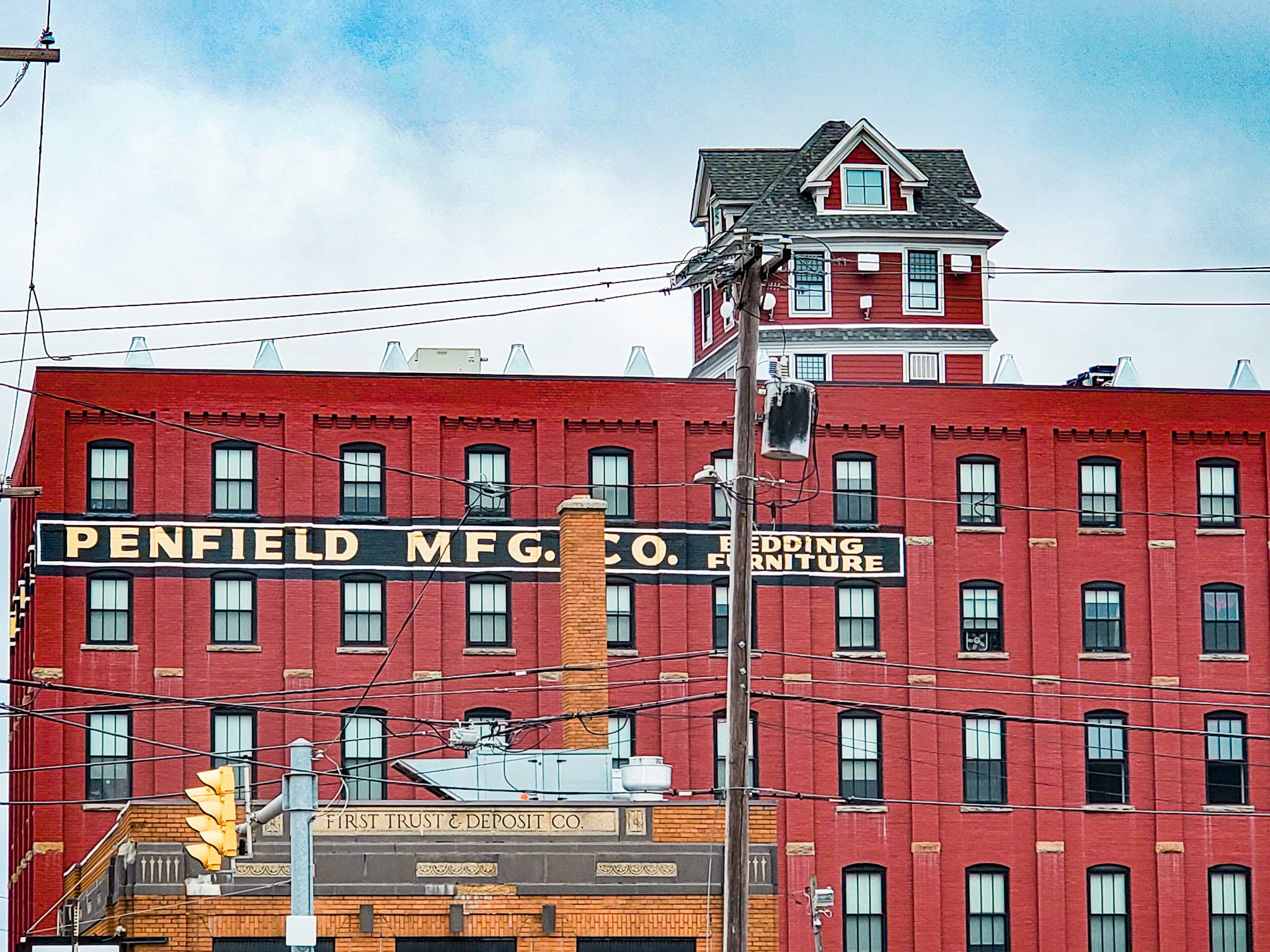
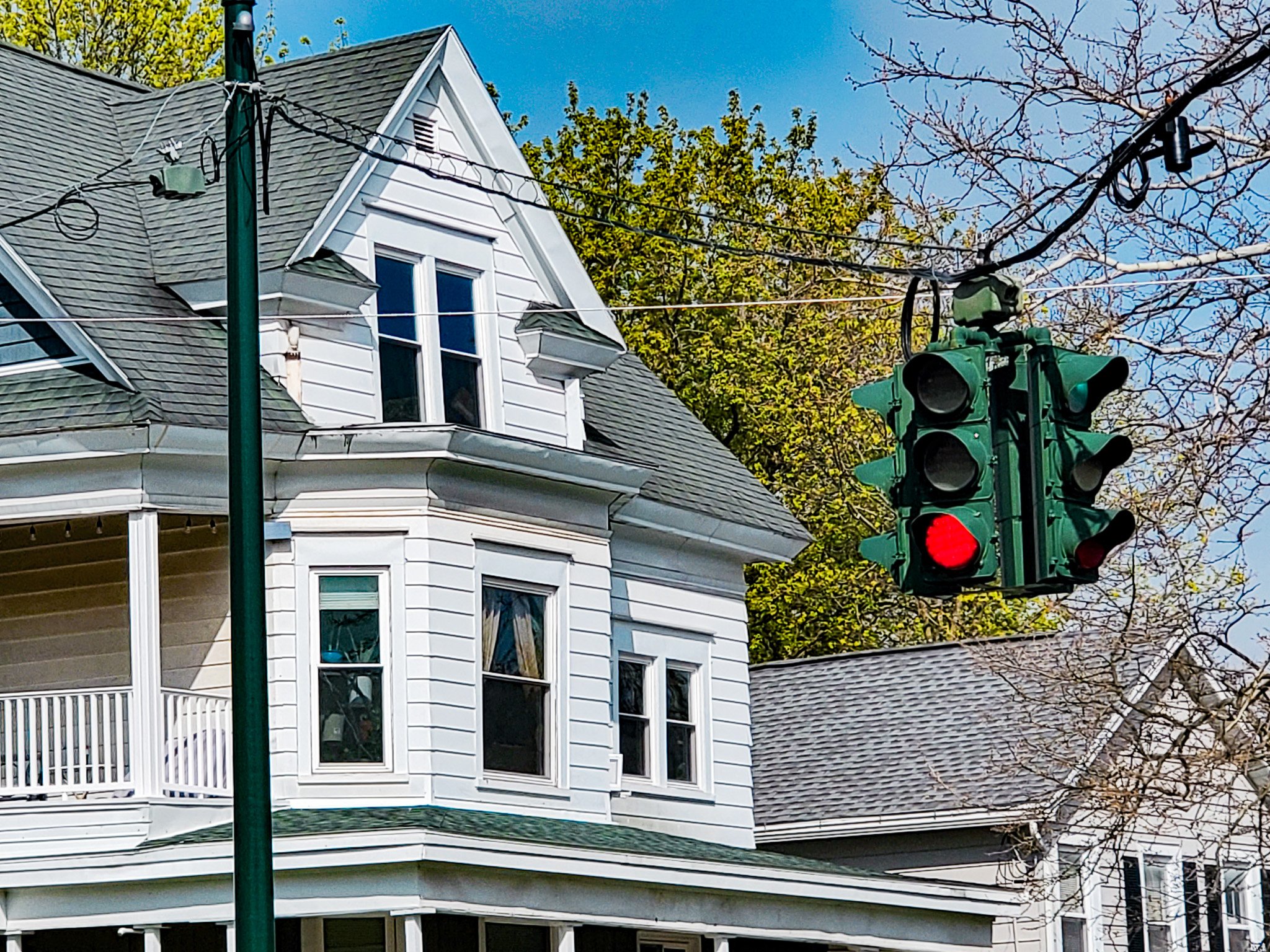
The city was named after Syracuse Sicily in 1820, and the village was chartered under that name in 1825. Syracuse is called “The Salt City” because of the history of salt production there. It is a key crossroads for the Erie Canal, completed in 1825 and the first navigable waterway to connect the Great Lakes with the Atlantic Ocean. Syracuse is home to Syracuse University as well as many historic sites including the Niagara Mohawk Building, Erie Canal Museum, Everson Museum of Art, and Armory Square, a revitalized industrial area in the city A seven foot tin man (which supposedly inspired Ozzy Osbourne to write “Iron Man”) is located downtown inside the Onondaga Historical Association Museum. At 1710 North Salina Street atop the closed Penfield Mfg Company is a Victorian house (shell). A statue of Abraham Lincoln, reading on horseback, is located on the Syracuse University campus on Forestry Drive. Syracuse was home to the Franklin Automobile Company and the Century Motor Vehicle Company, and to the Smith Corona typewriter company. The Tipperary Hill Heritage Memorial celebrates the only “green over red” traffic light in the nation, and along with the “Tree of 40 Fruit” on the Syracuse University campus and the “24 Second Shot Clock Monument”, should not be missed.
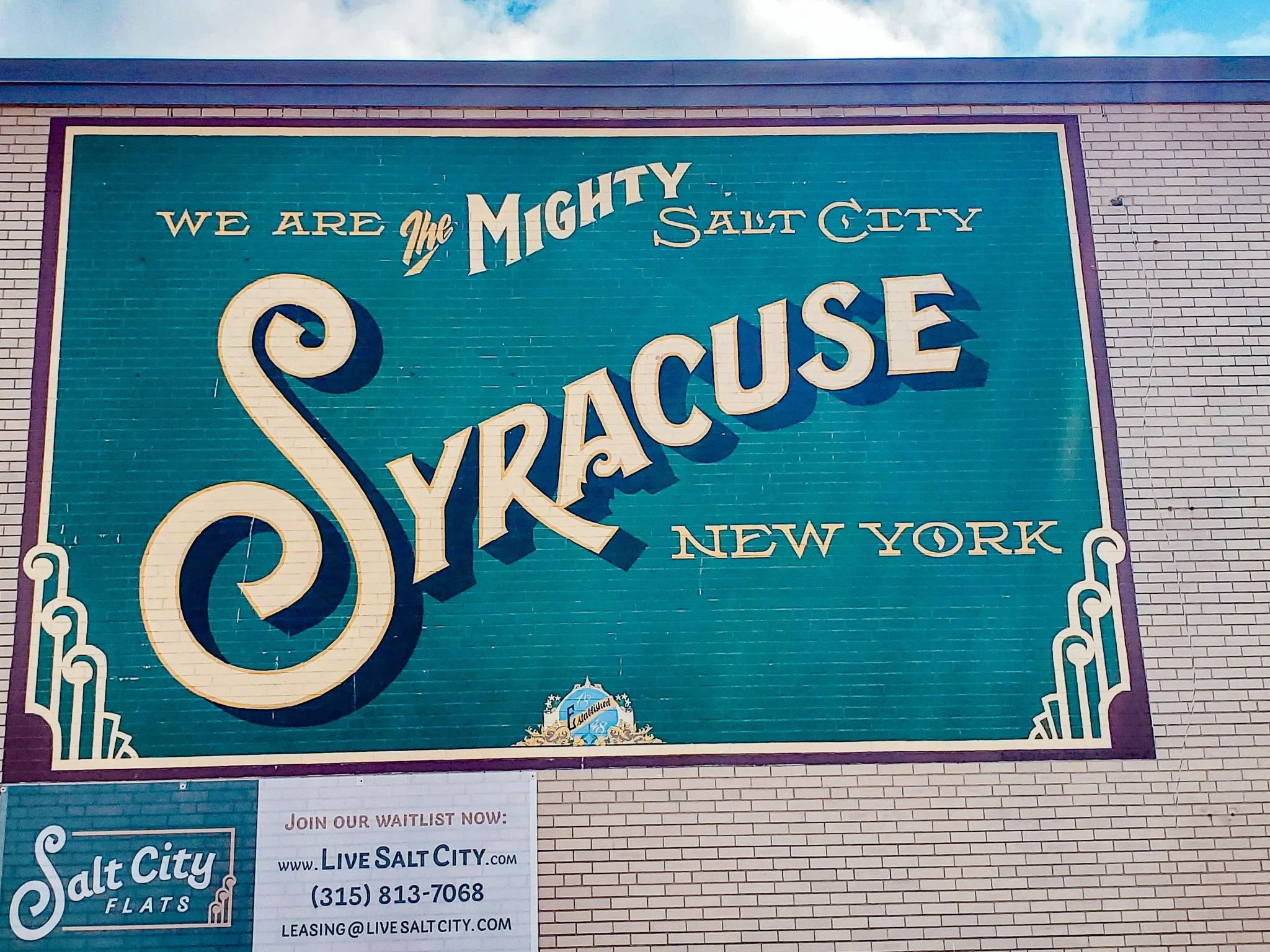
Syracuse Mural
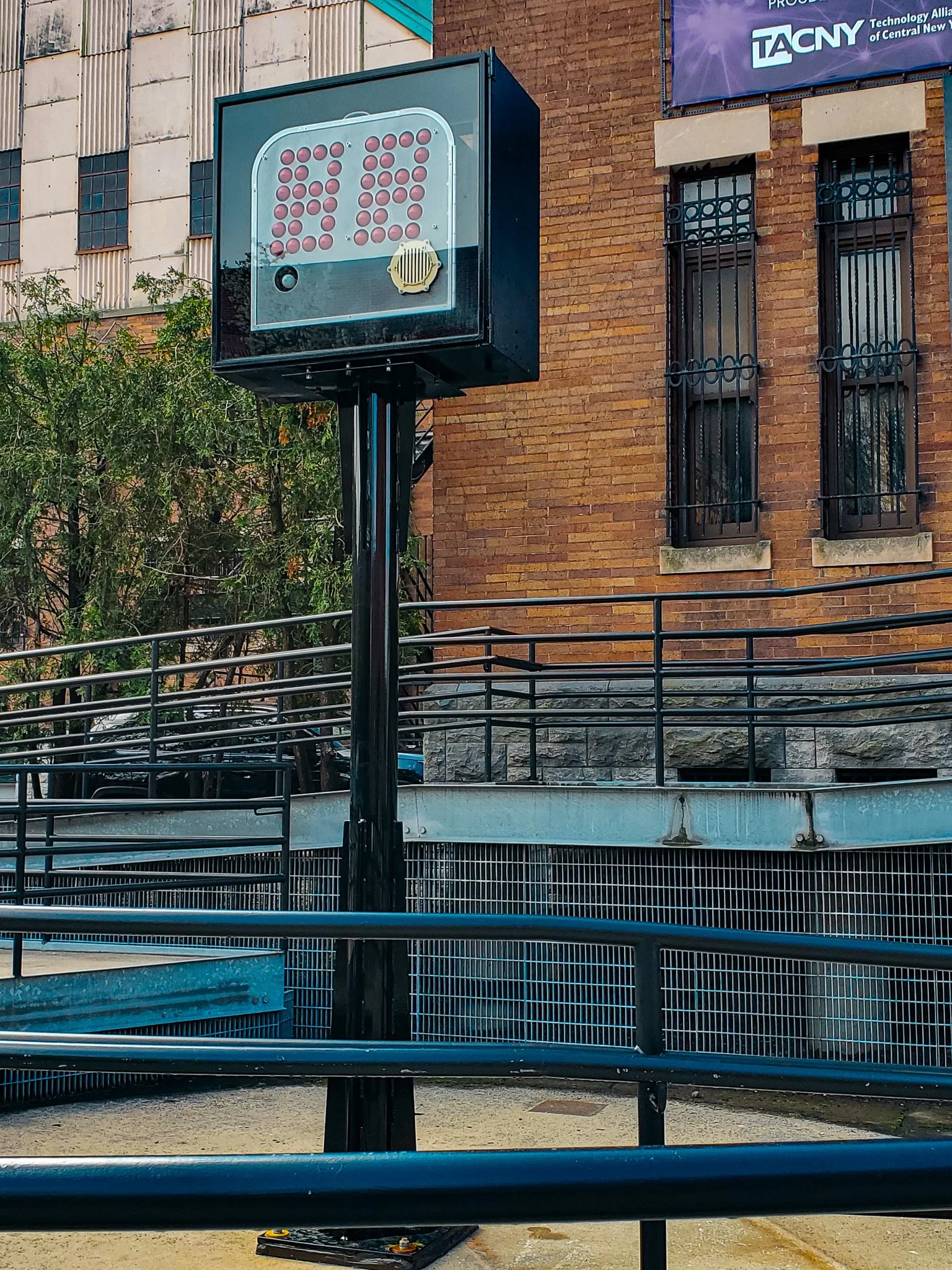
Shot Clock Memorial
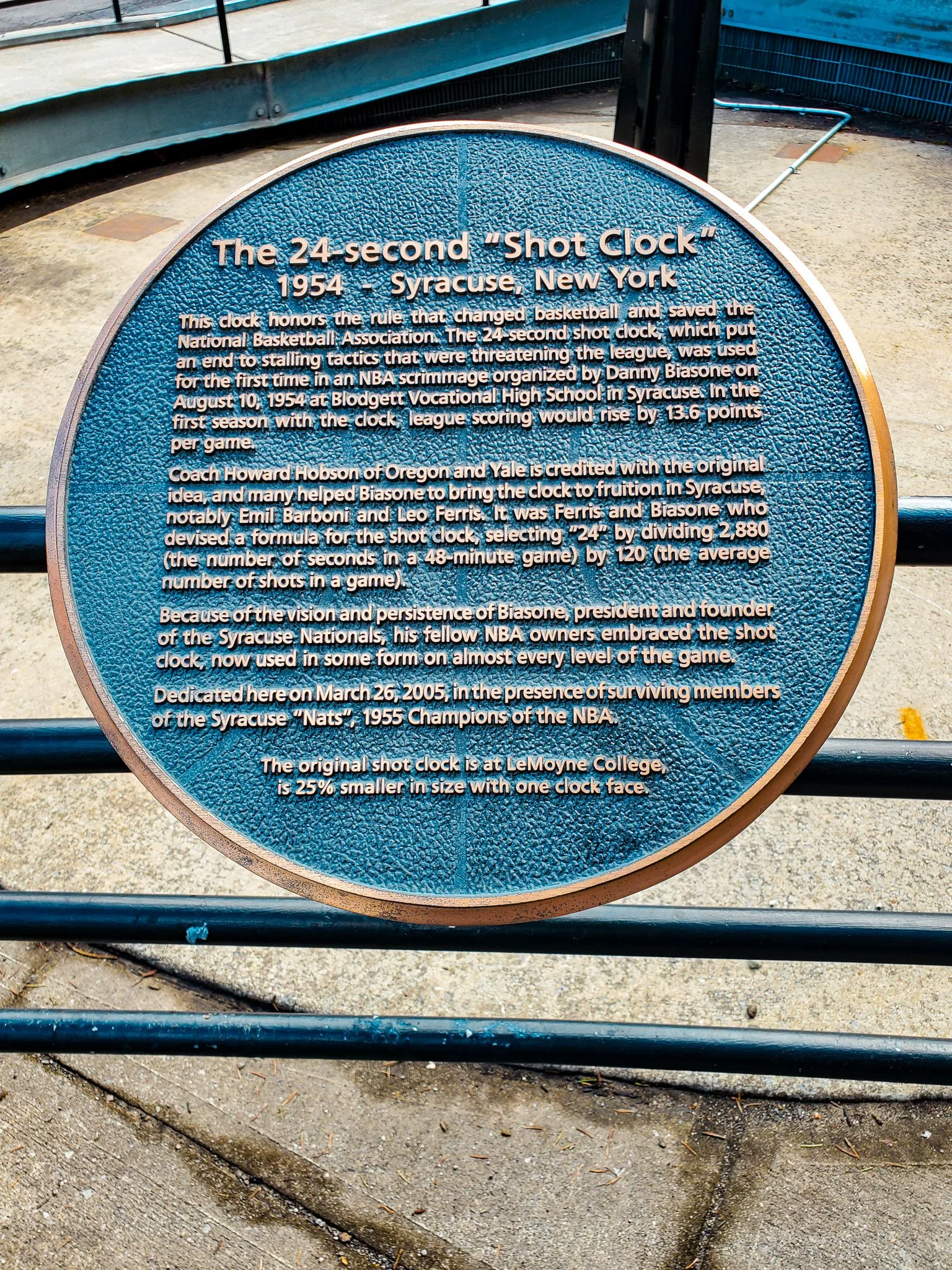
Shot Clock Memorial
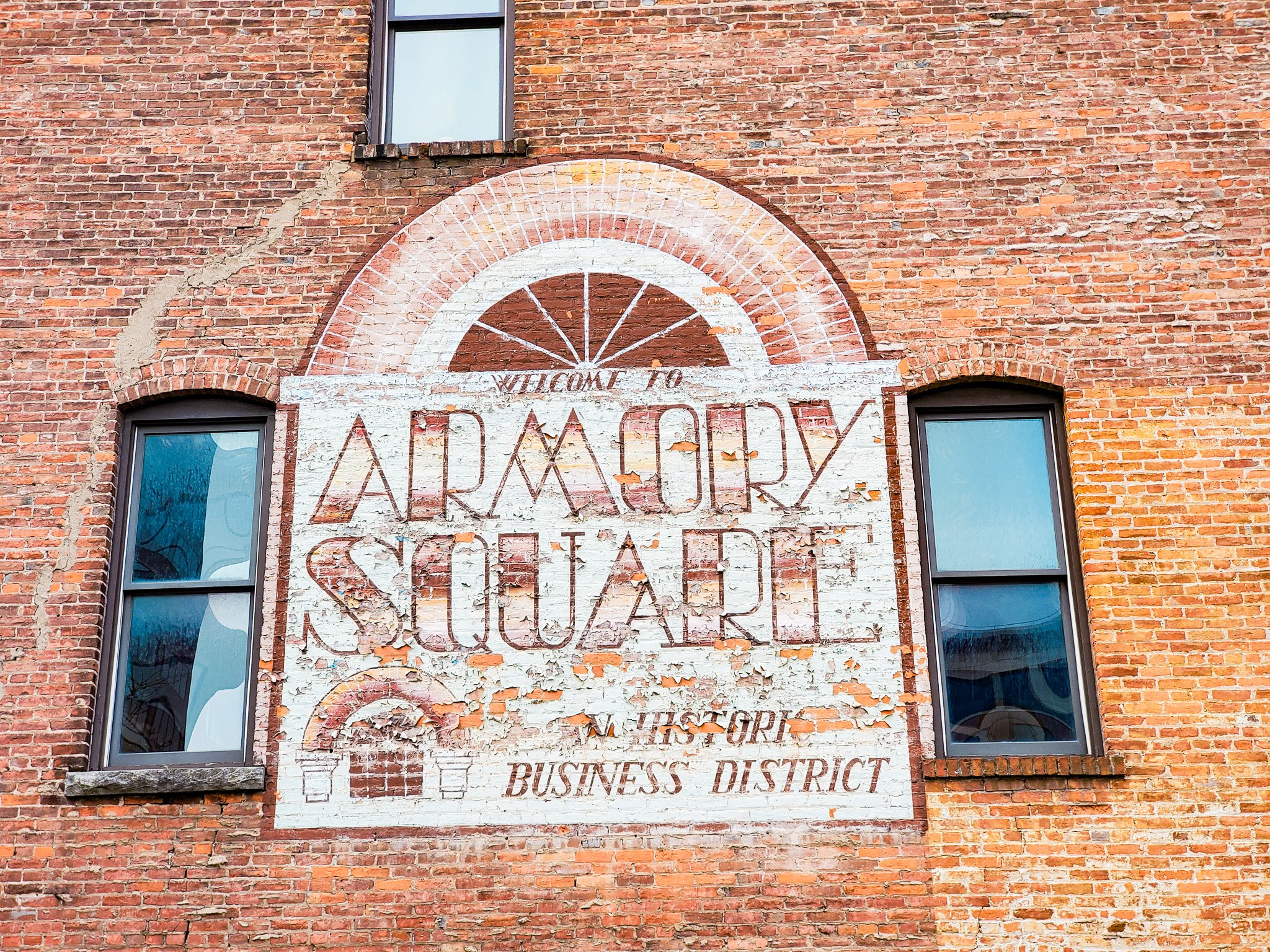
Armory Square Mural
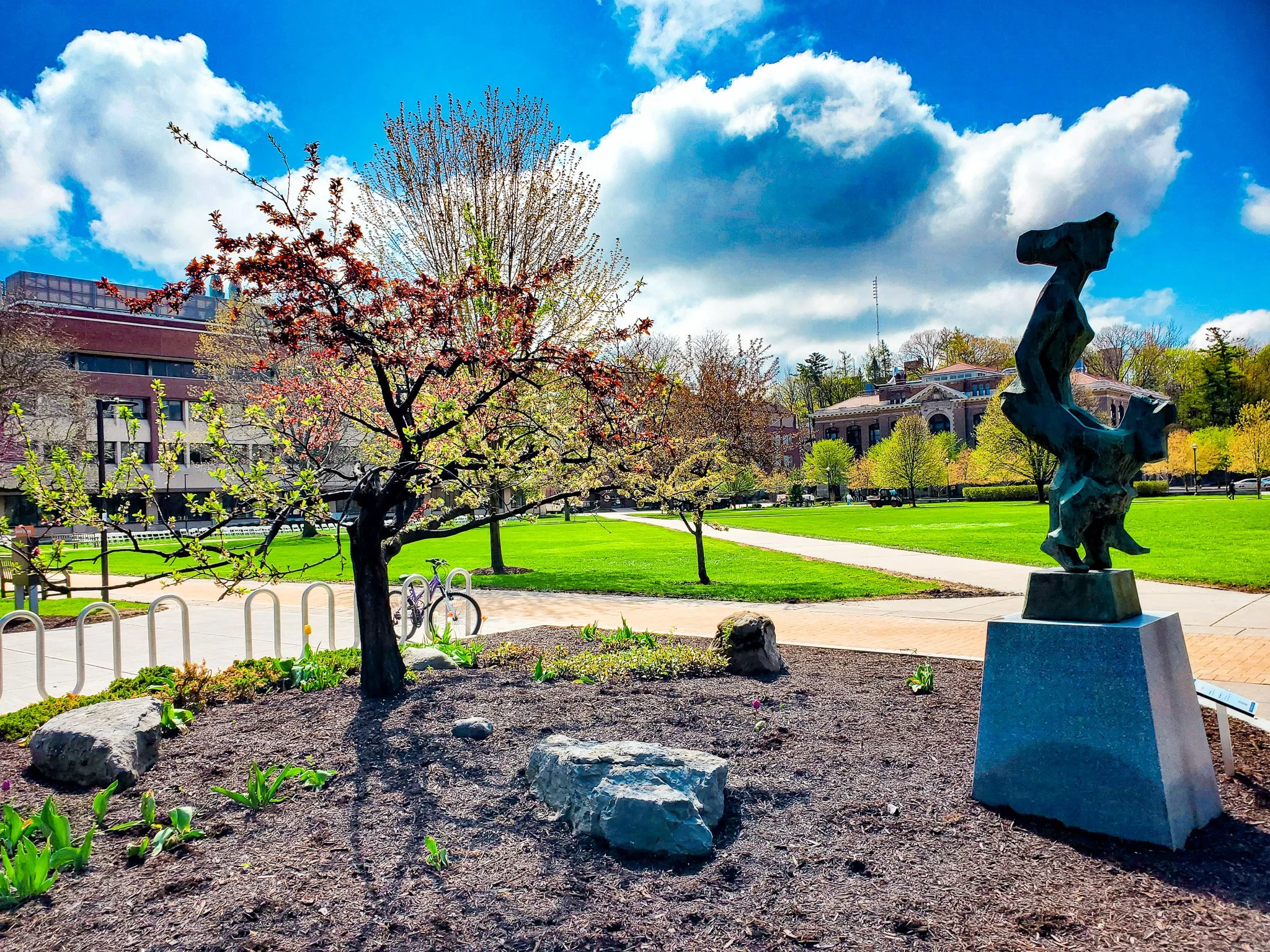
Forty Fruit Tree
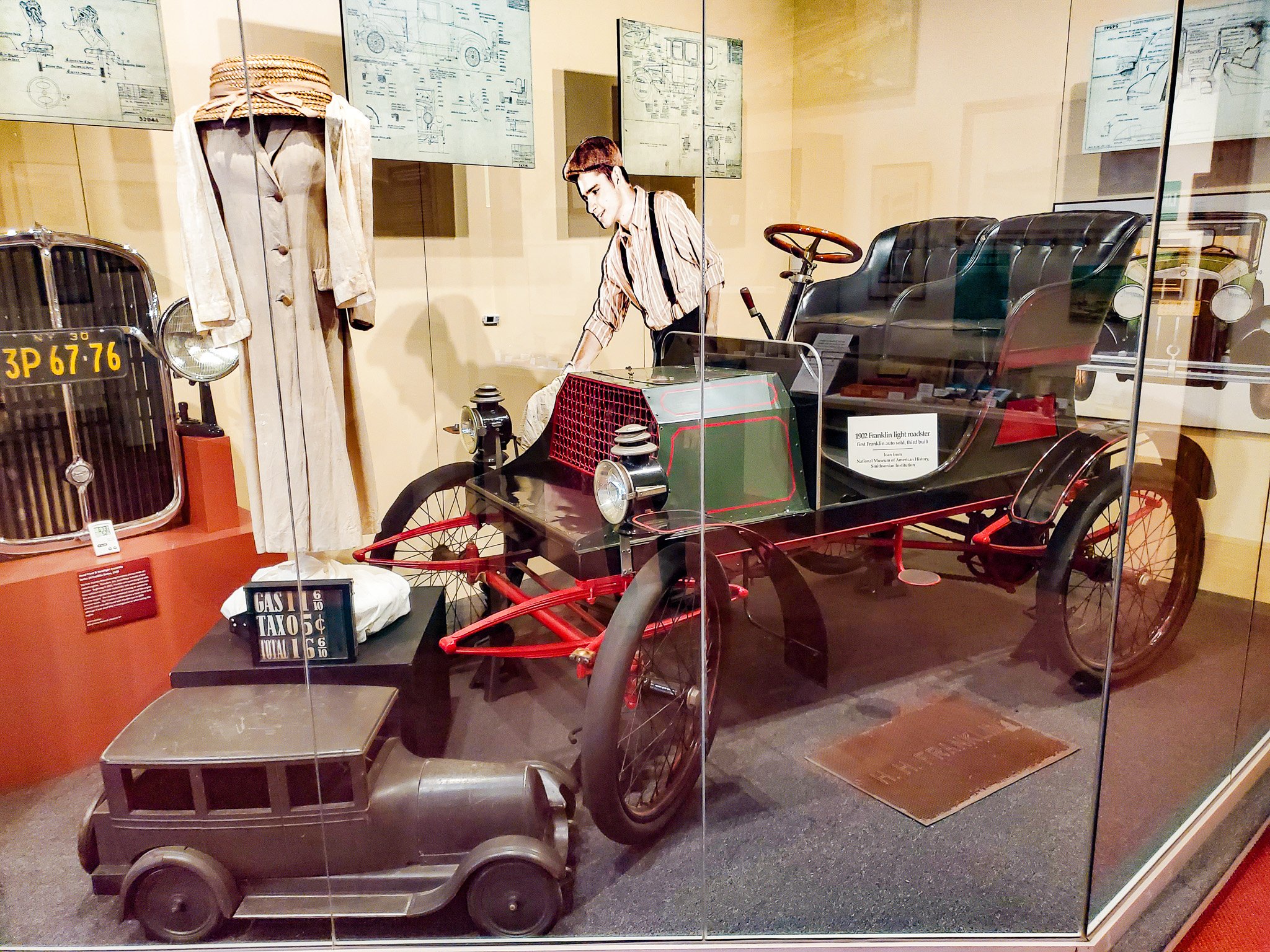
Franklin Auto at Museum
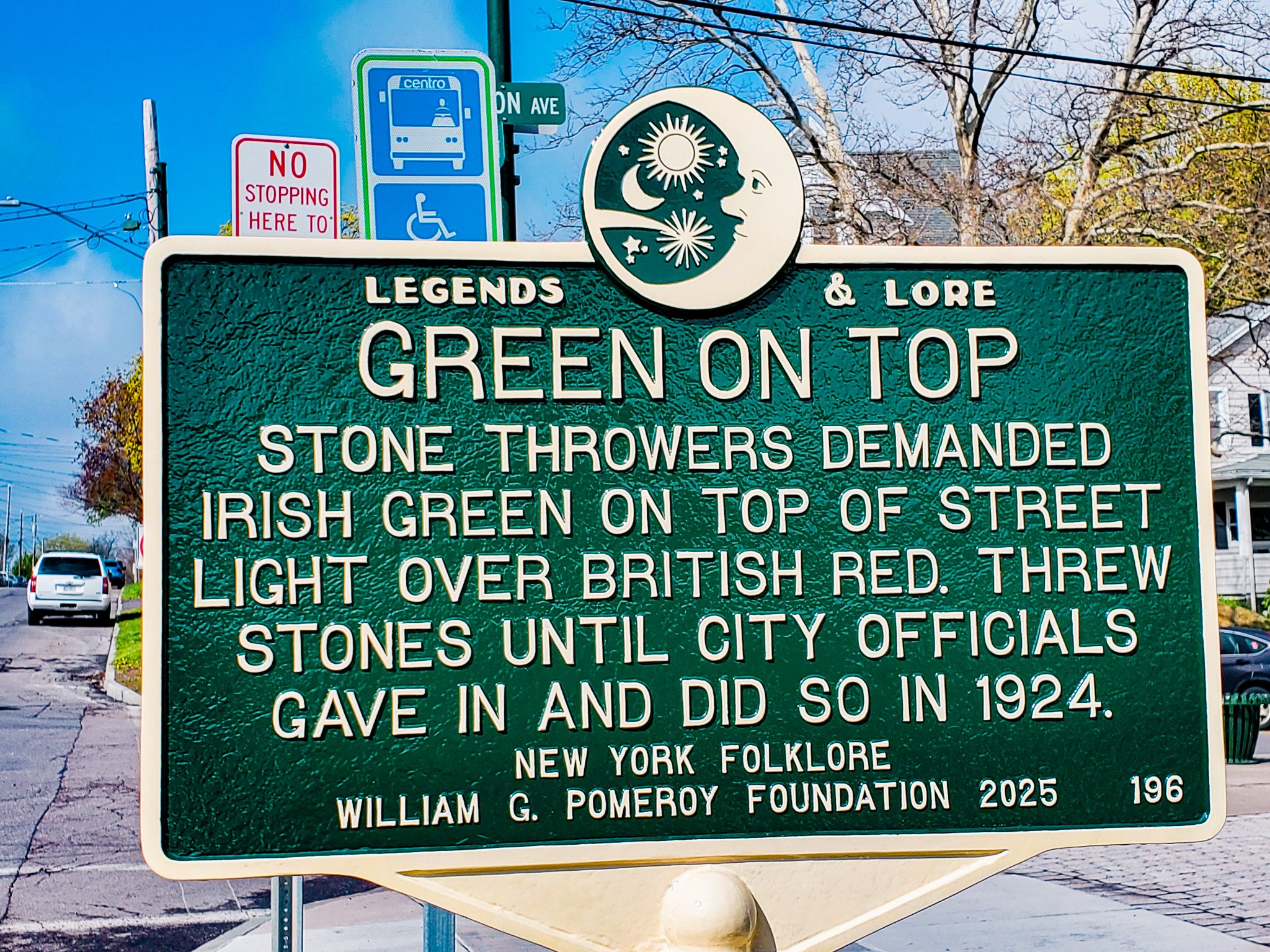
Green on Top Marker
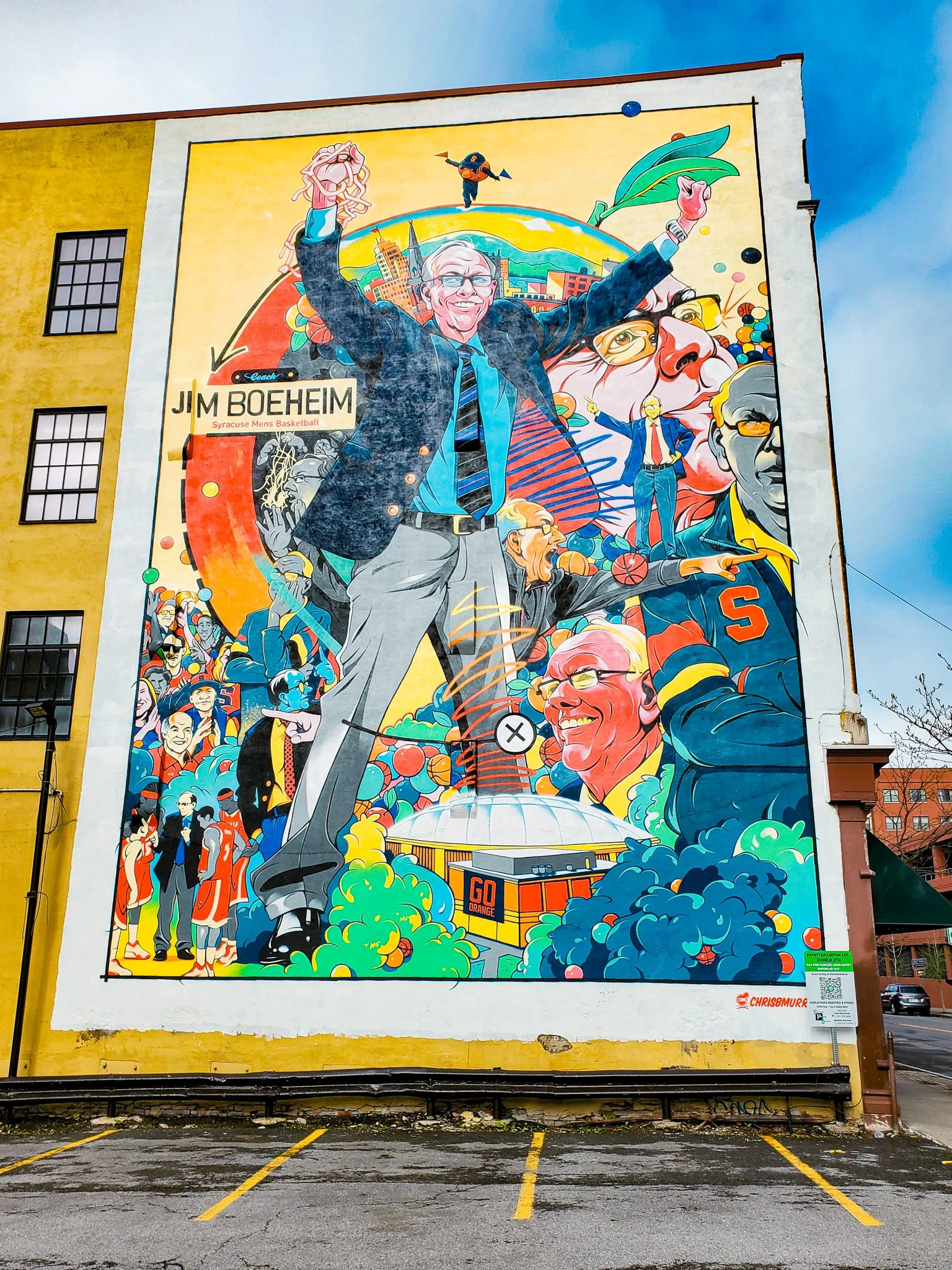
Jim Boeheim Mural
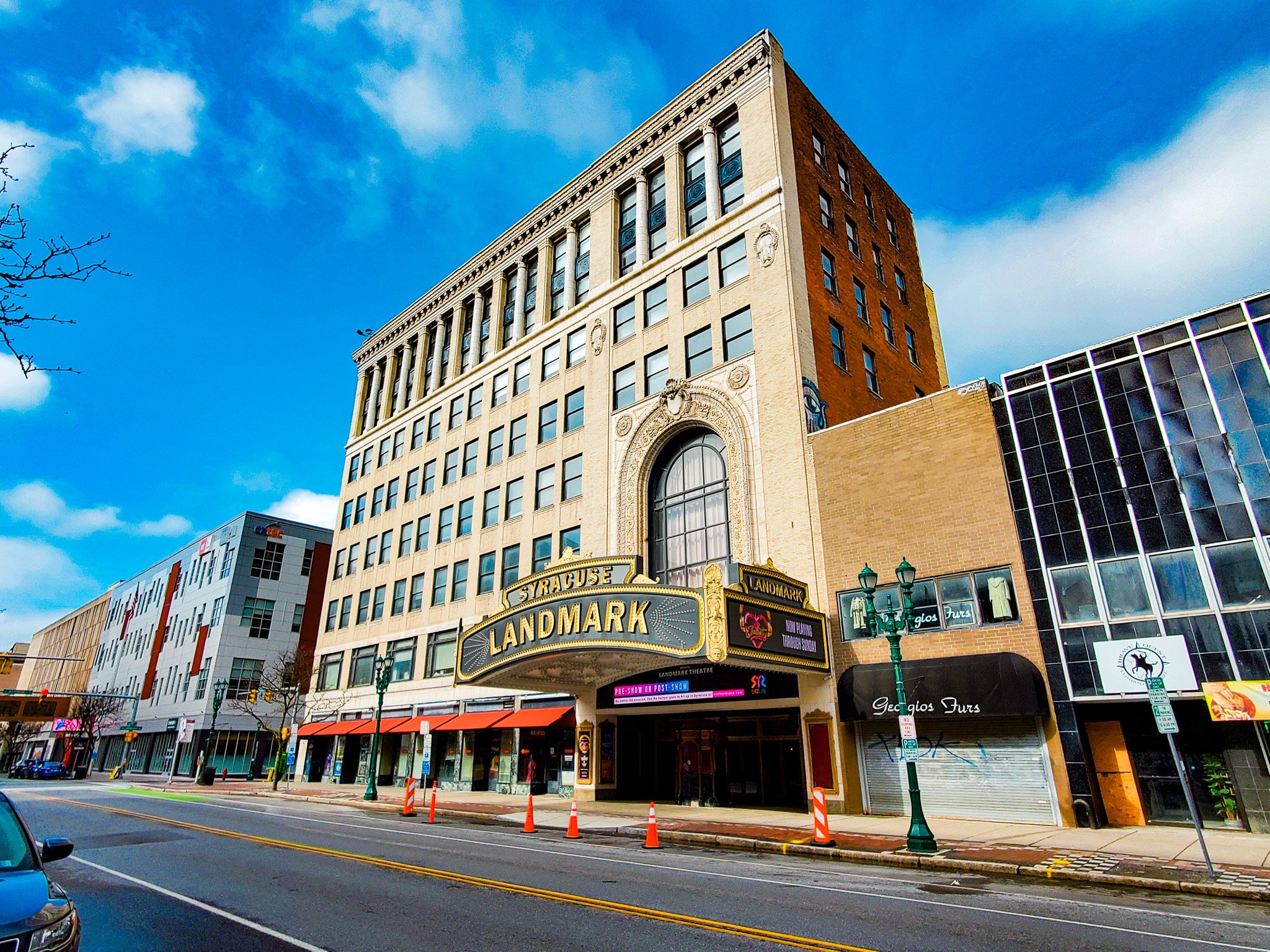
Landmark Theater
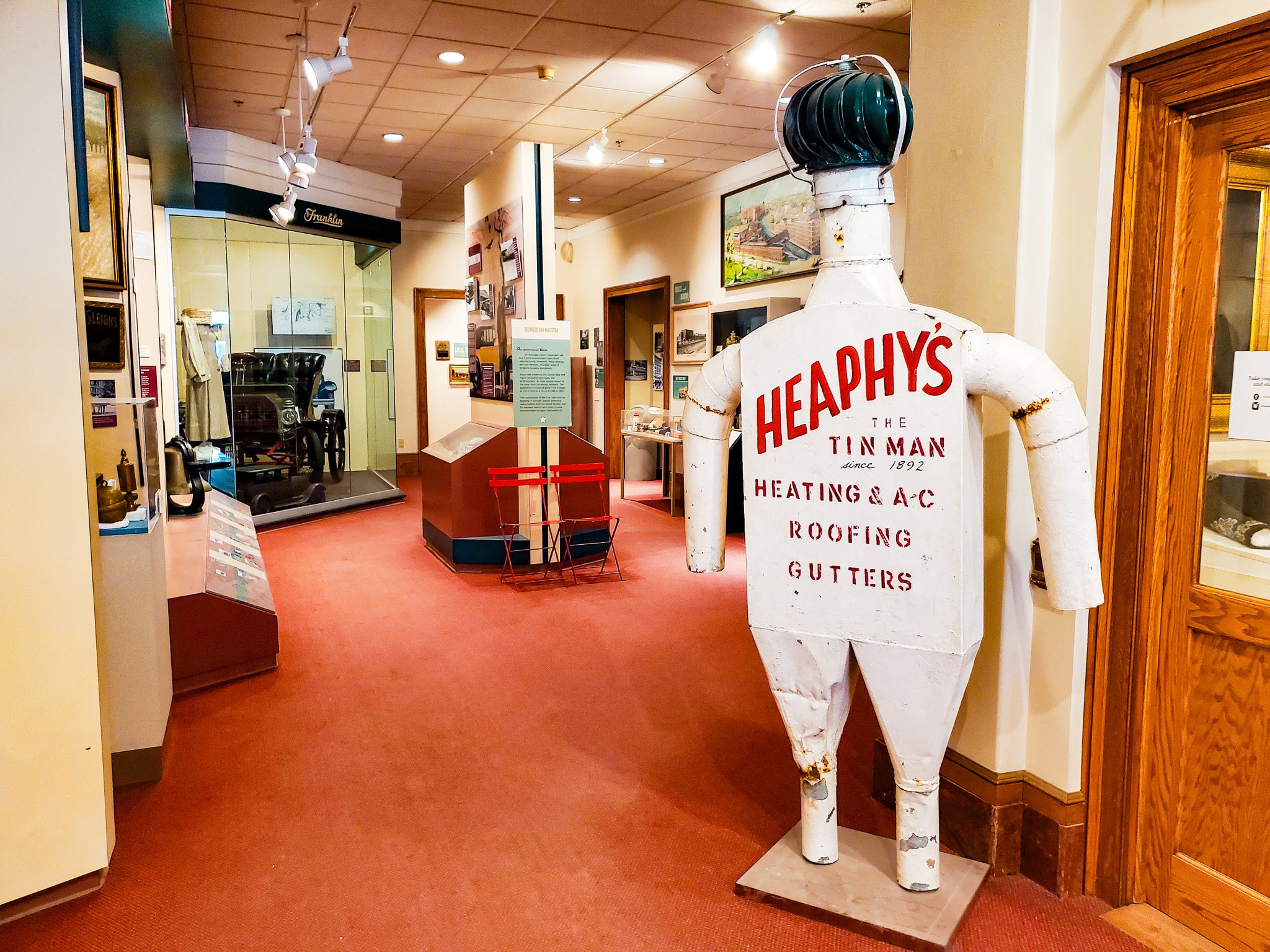
Tin Man at Museum
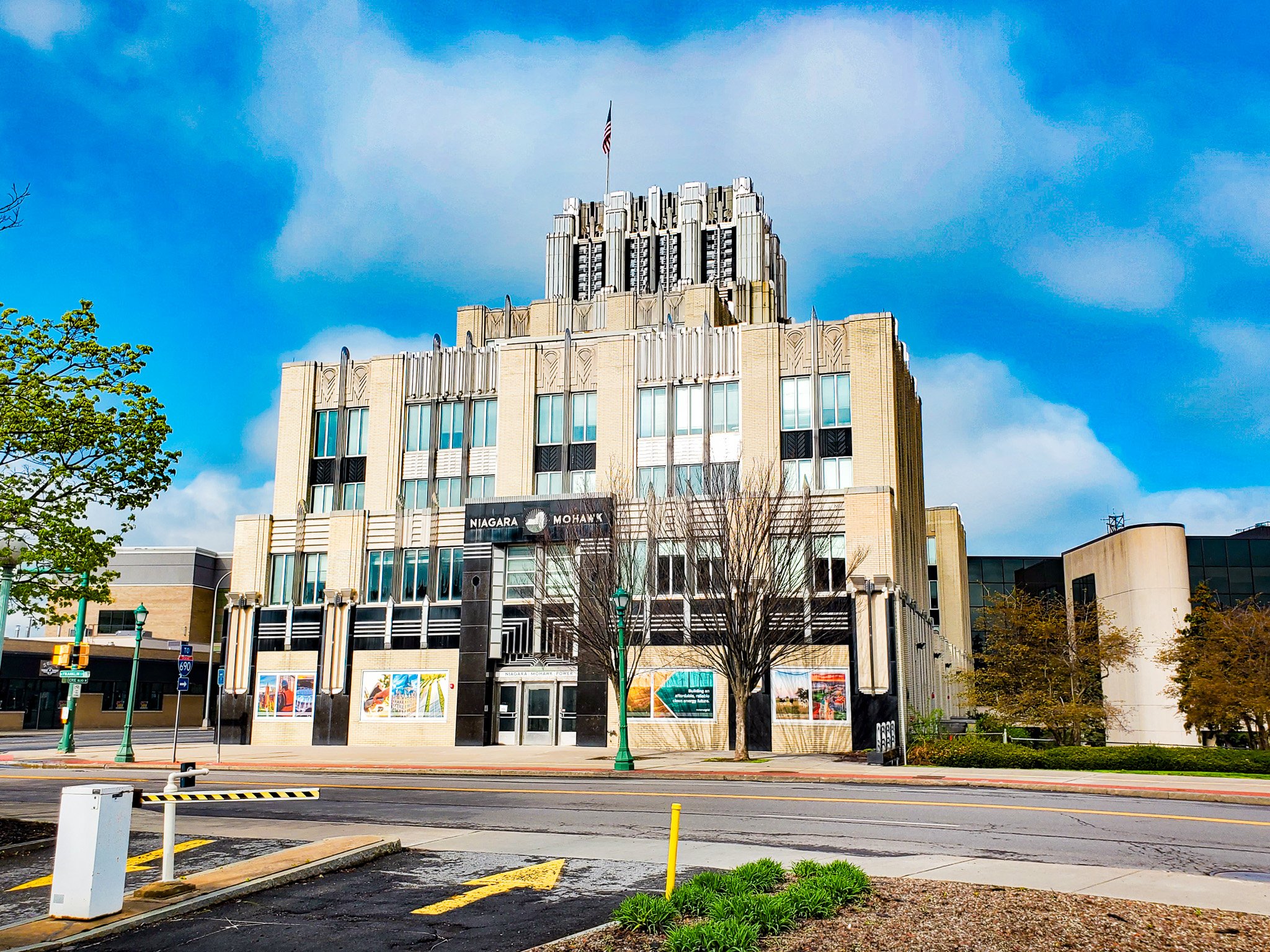
Niagara Mohawk Building
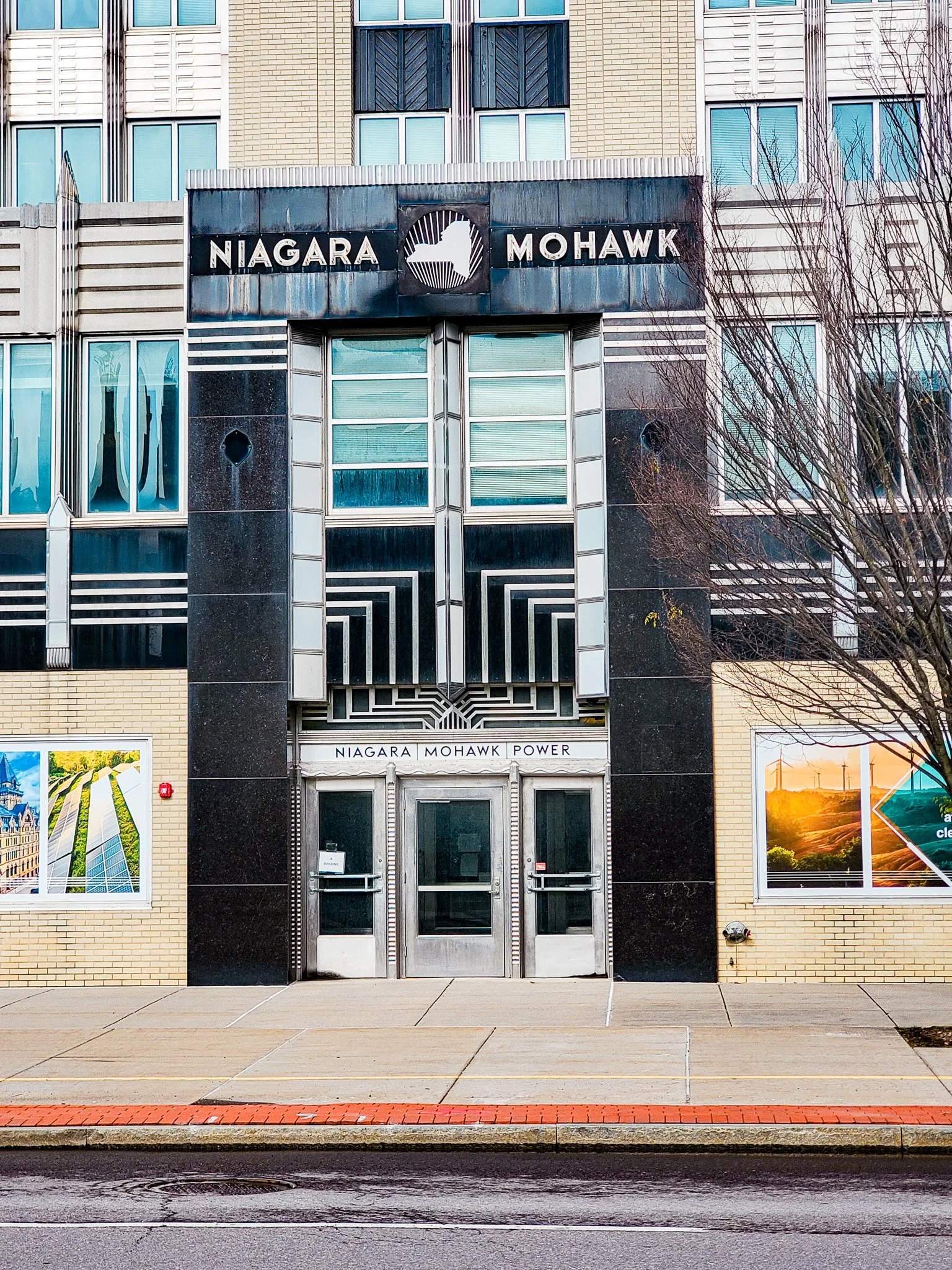
Niagara Mohawk Building
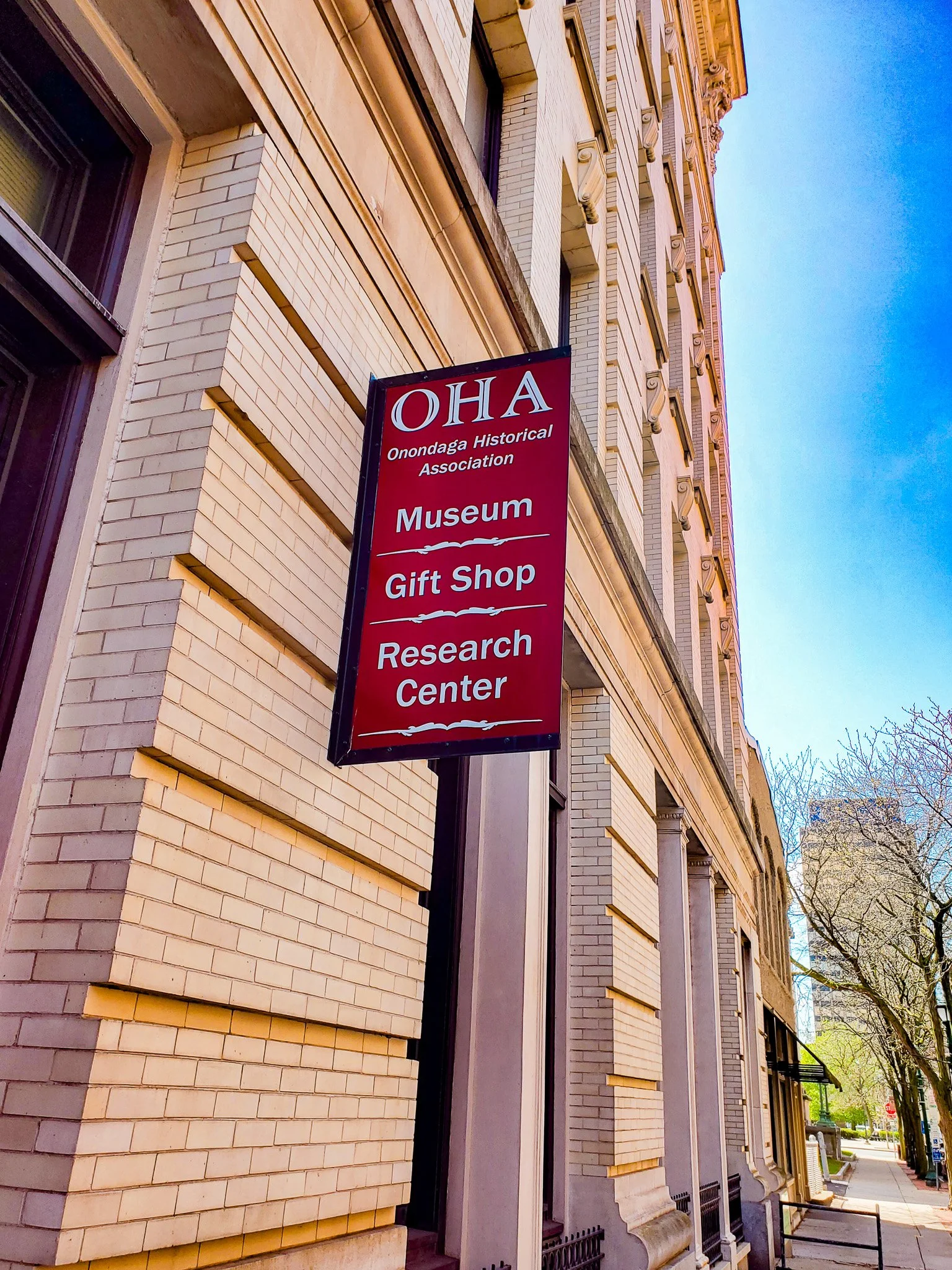
Onandaga Historical Association Museum
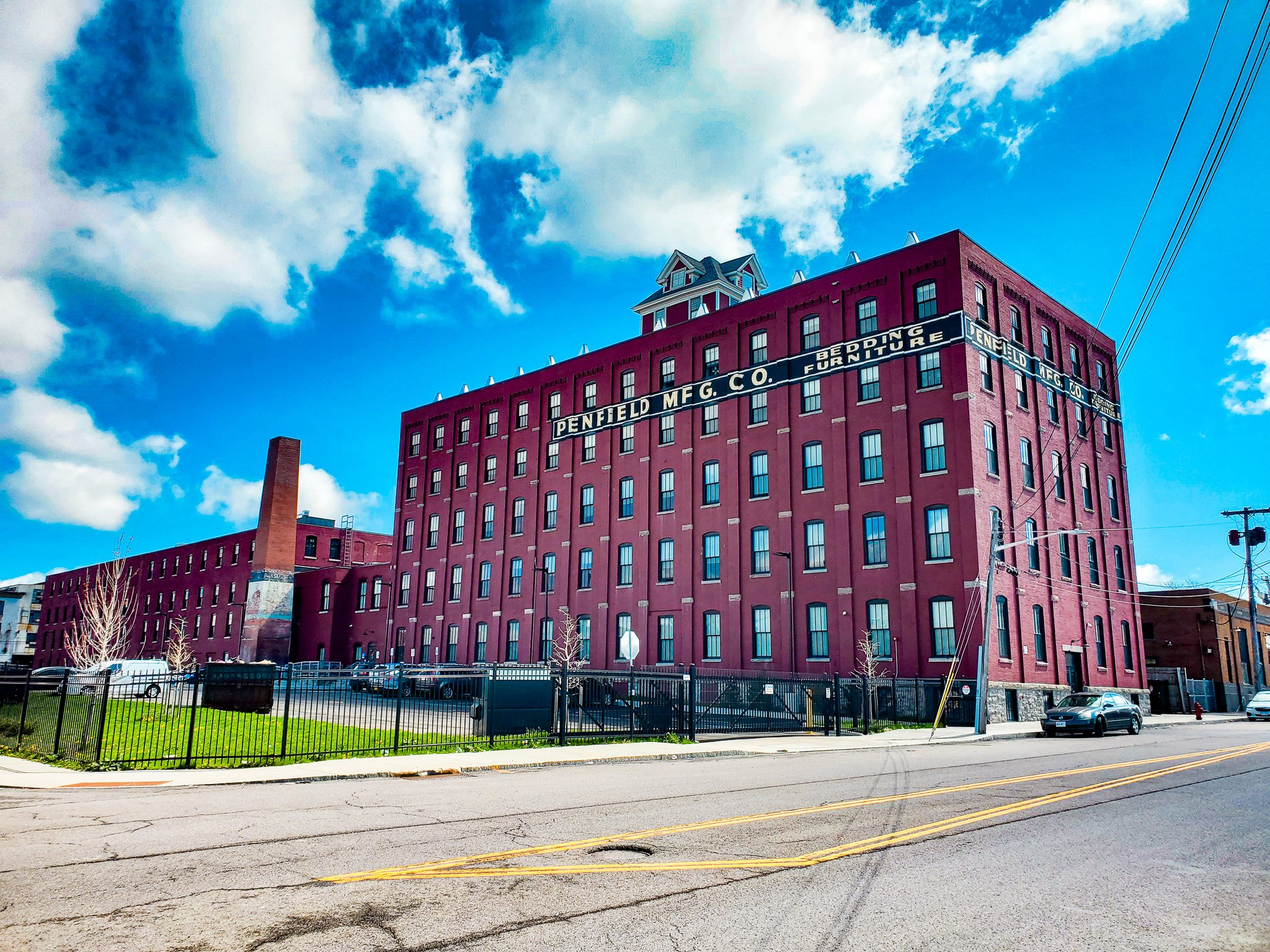
Penfield Building
Penfield Building

Penfield Building
Plank Road Company Box at Museum
Plank Road Marker
Red on Bottom Traffic Light
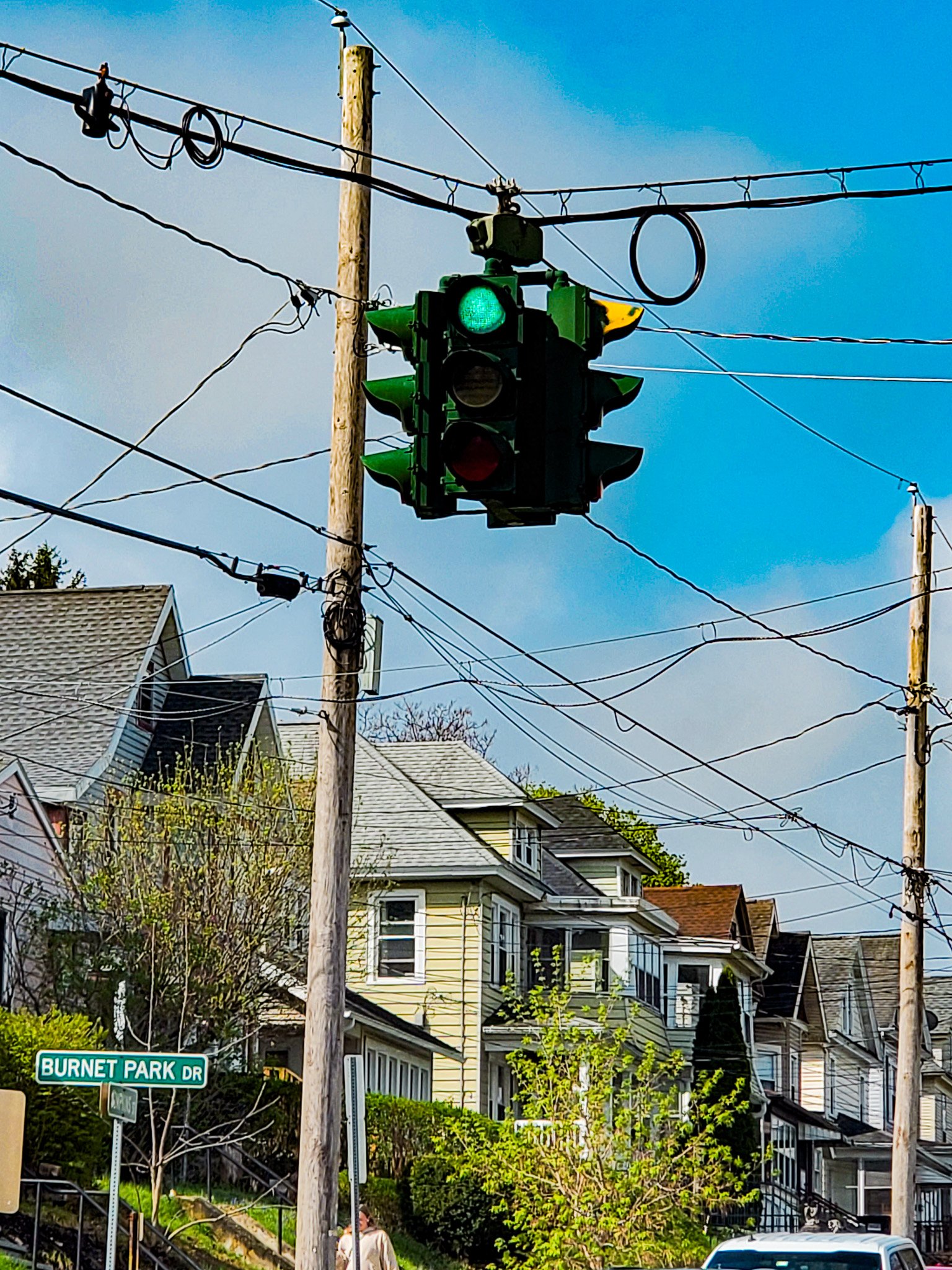
Green on Top Traffic Light
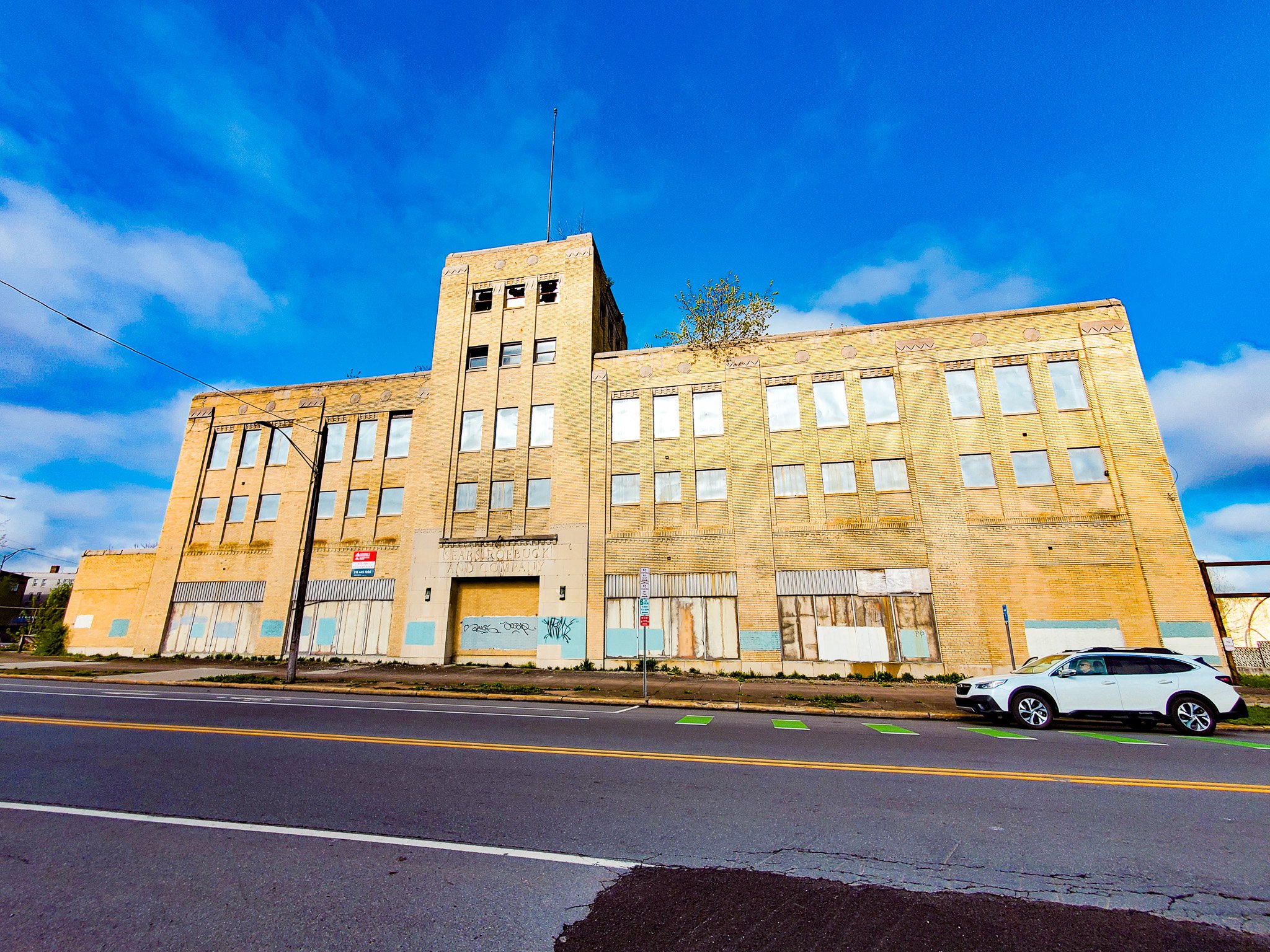
Sears Roebuck Building
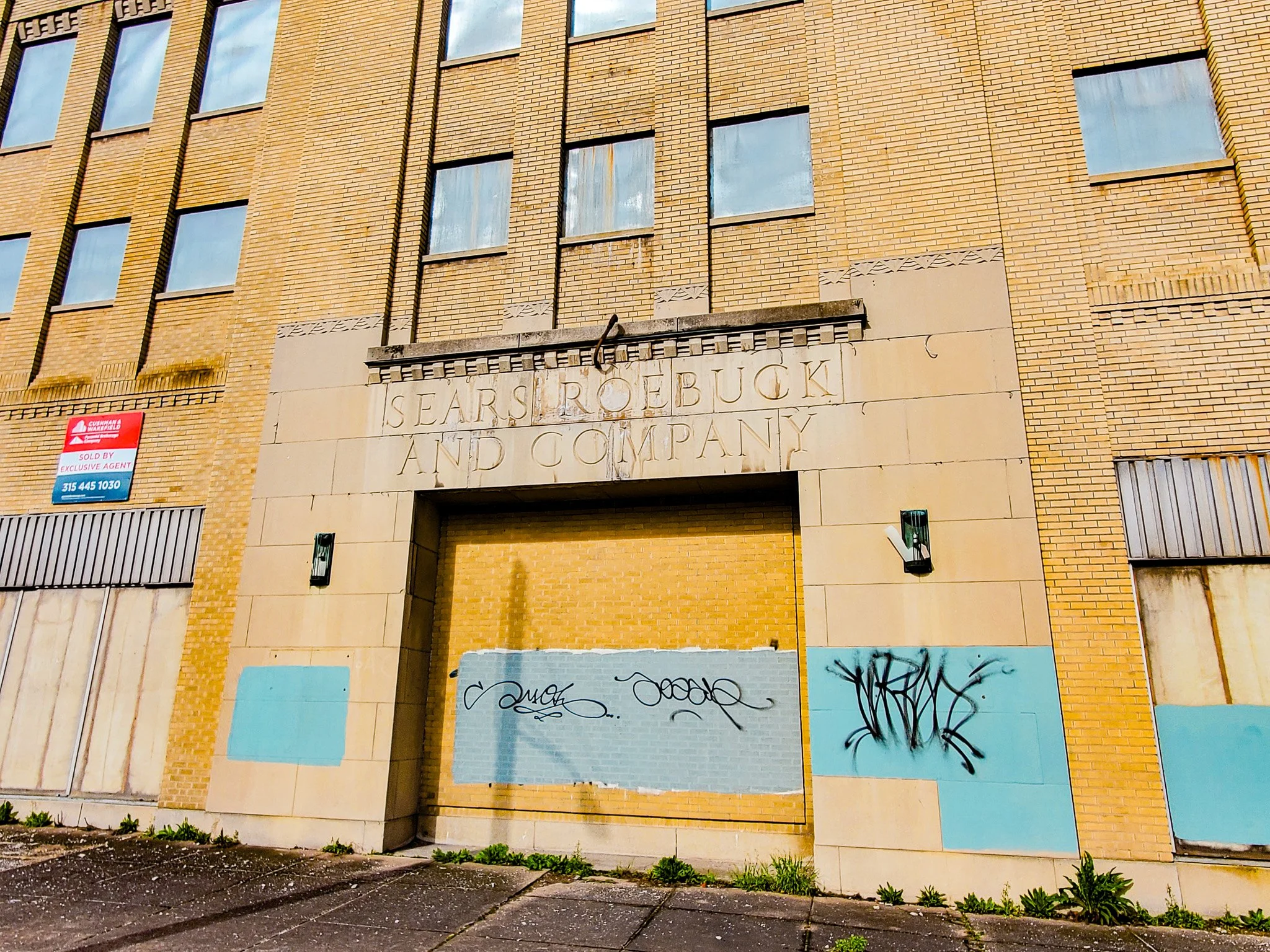
Sears Roebuck Building
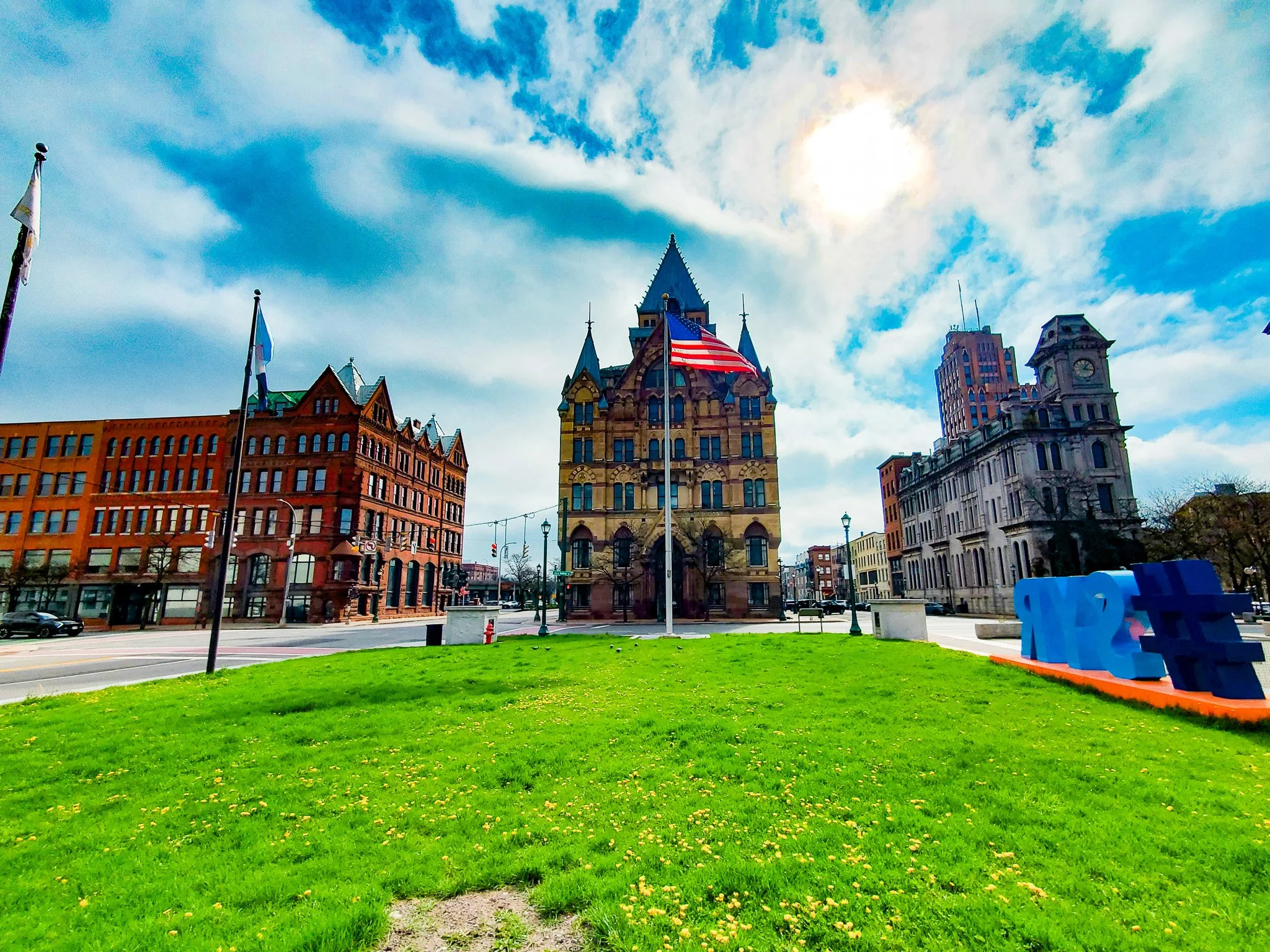
Downtown Syracuse
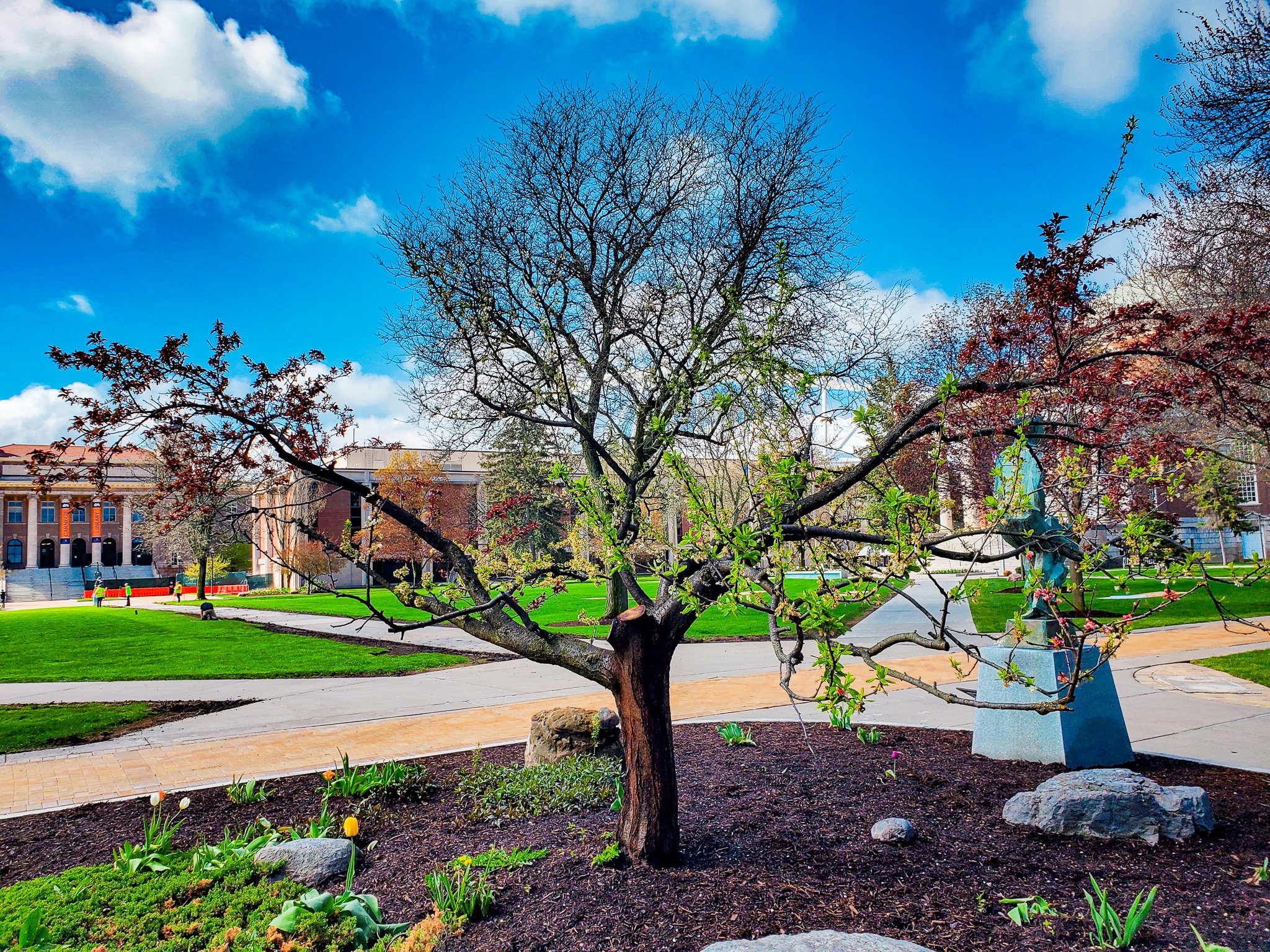
Forty Fruit Tree

Statue at Green on Top Traffic Light
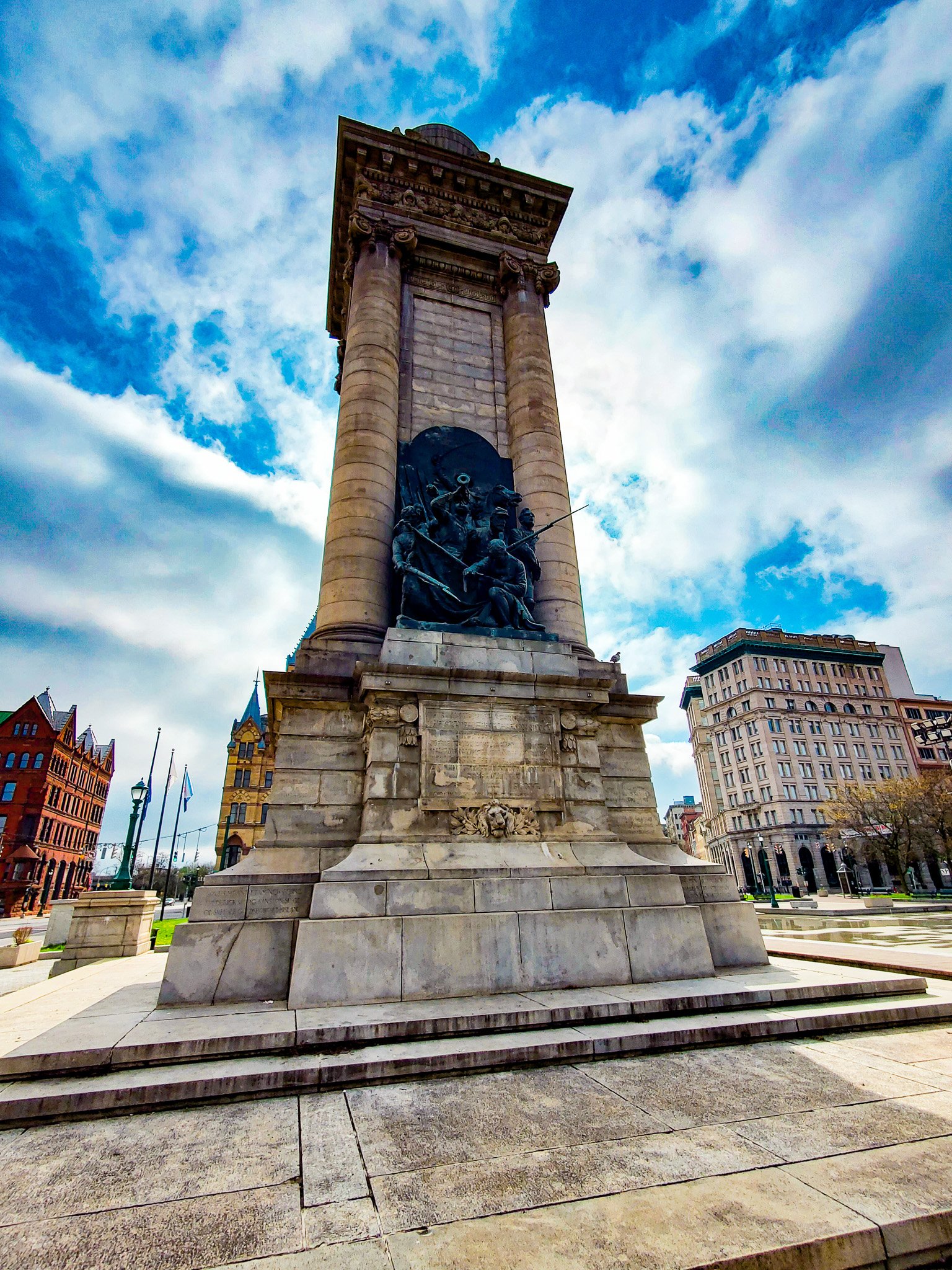
War Memorial
SALINA
The name was applied to a village in 1798 based on the “saline” or salt works in the area.
NORTH SYRACUSE
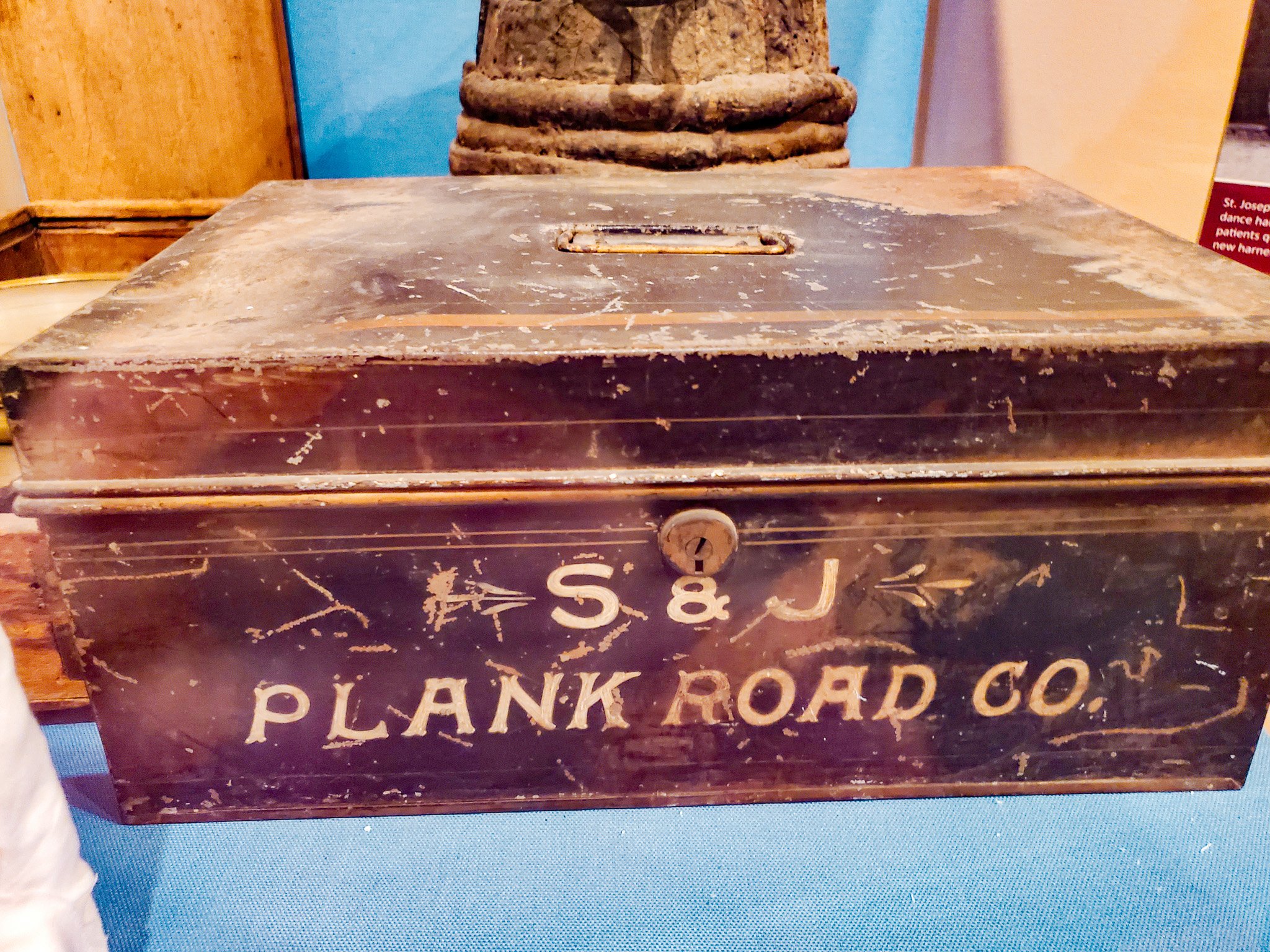
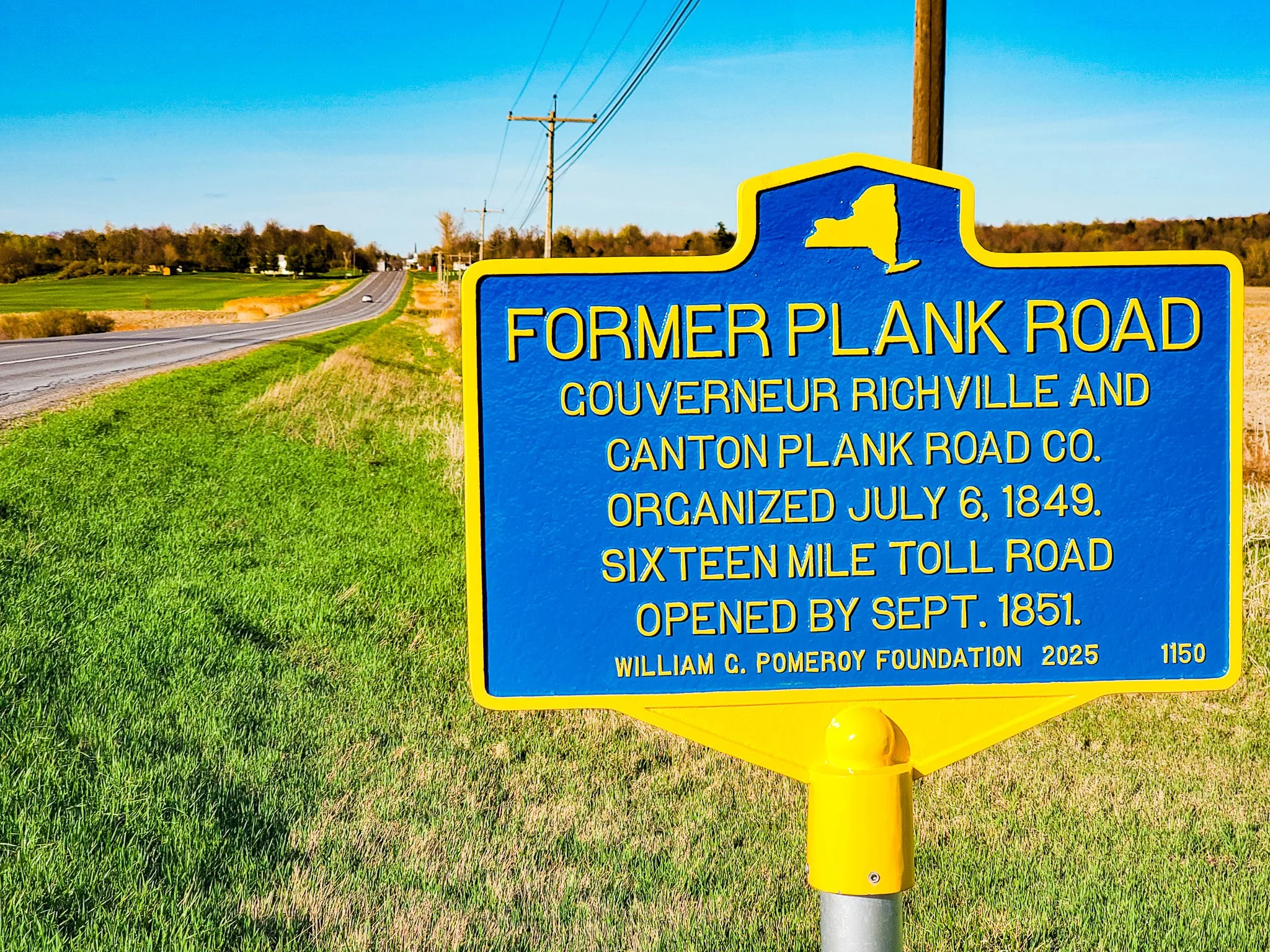
The first Plank Road in the United States was built from North Syracuse to Central Square, a distance of 16 miles, to transport salt and other goods. Toll Road Park features a small museum dedicated to the historic road. Geddes Bakery on US 11 has been making their famous “half moon cookies” since 1957 and the Big Dip has been serving ice cream since 1955.
CICERO
The village continues the naming convention of famous Romans and the Cicero Historical Society maintains three buildings including an 1800’s one room log house.
BREWERTON
The town grew from Fort Brewerton, built in 1759 to defend the passage between Oneida Port and Albany. The fort was named after George Brewerton, a British officer in the French and Indian War and is commemorated at the Fort Brewerton Block House Museum. The current steel truss bridge over the Oneida River in Brewerton was built in 1932 and is scheduled for replacement with the first “gussetless truss” design in New York State.
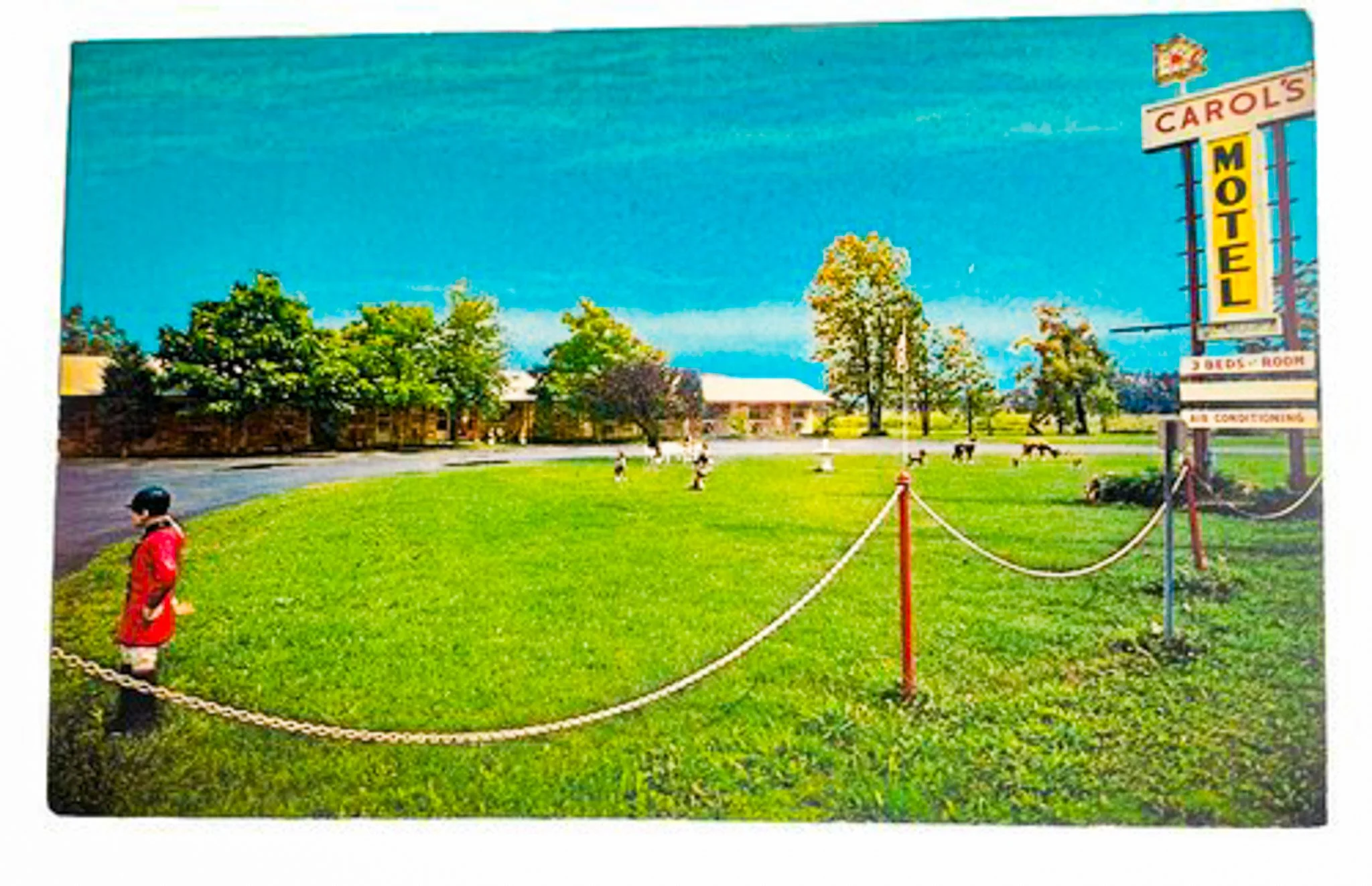
Carols Motel Postcard
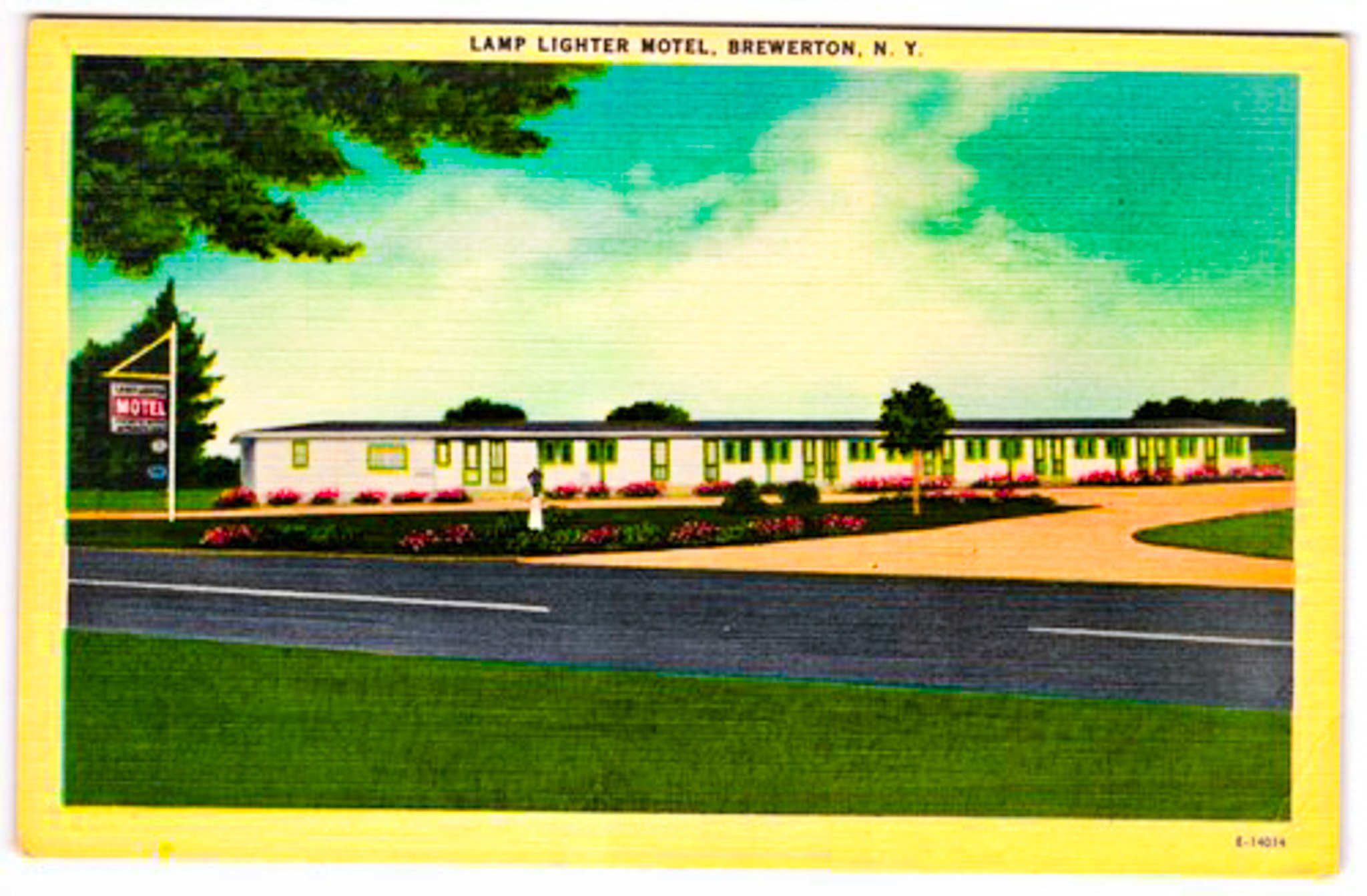
Lamplighter Motel Postcard
HASTINGS
The town was named after Hastings Curtiss, prominent citizen and member of the State Assembly in 1824.
CENTRAL SQUARE
Incorporated in 1890, the village was a convergence of early trails and later a significant junction for railroads, commemorated by the Central Square Railroad Museum and the Central Square Station Museum.
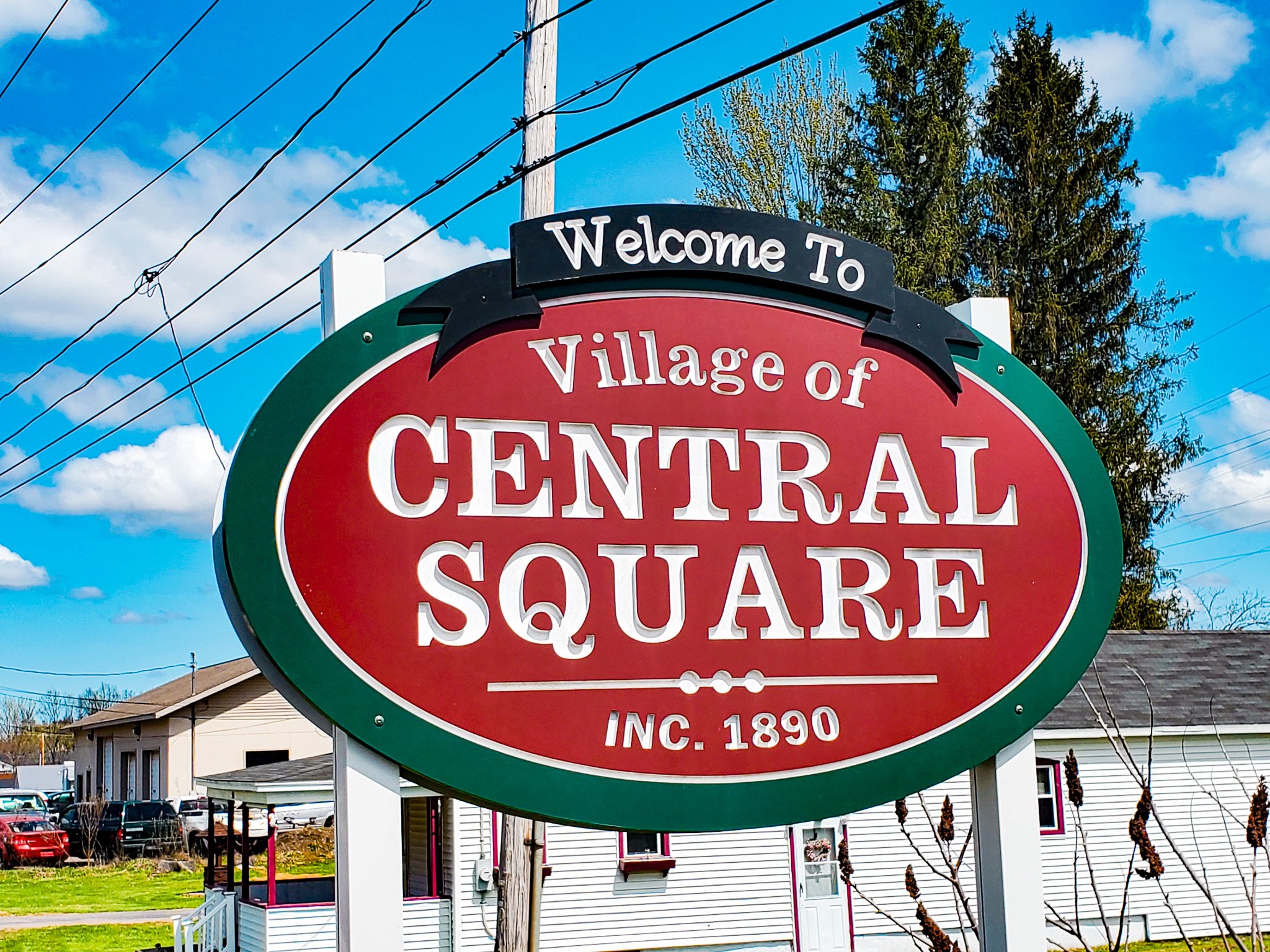
Welcome to Central Square Sign
MEXICO
Mexico, just to the west of US 11, is the home of Grandma Brown’s Baked Beans, founded by Lulu Brown in 1937 (closed since 2021).
RICHLAND
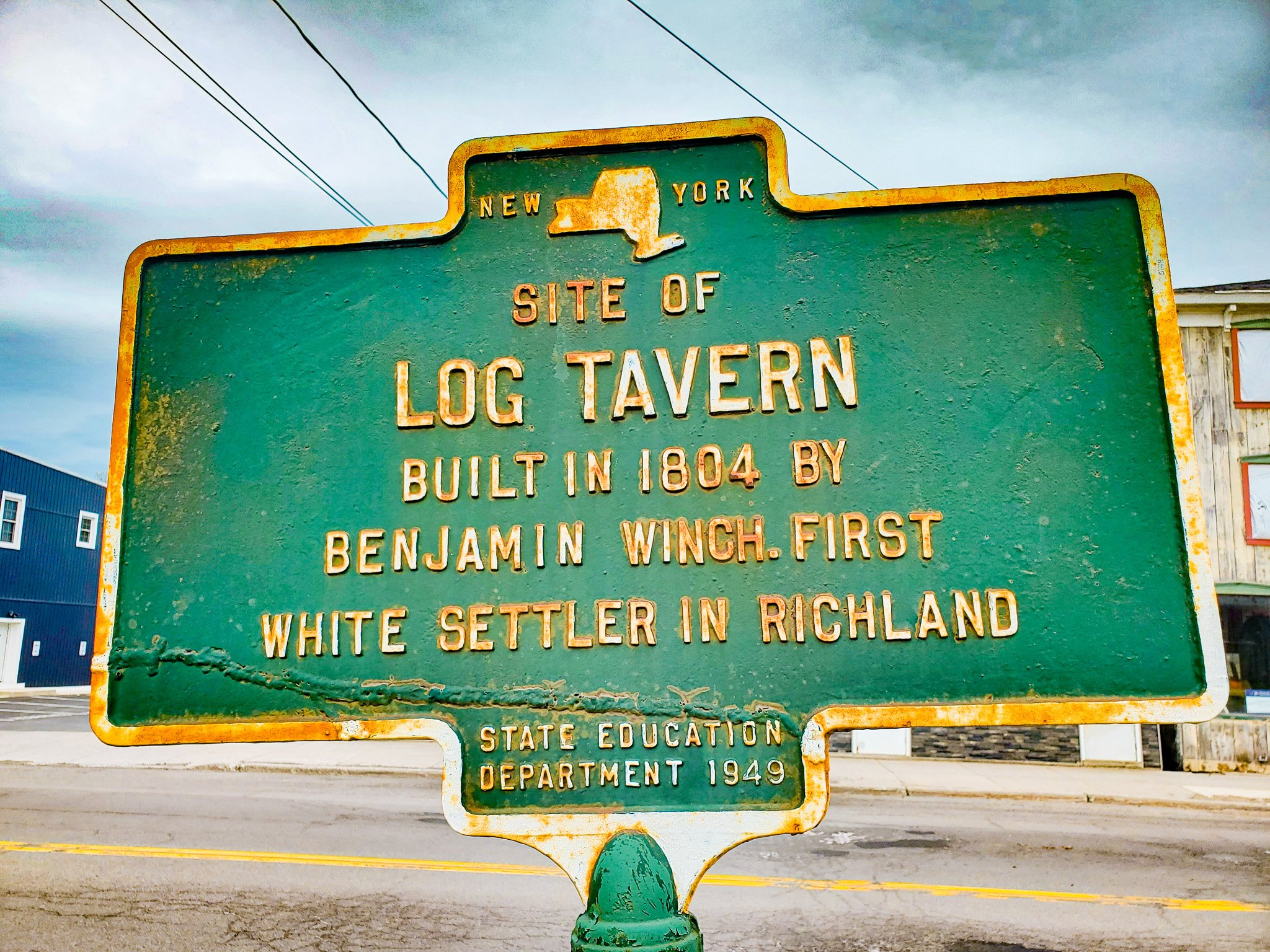
Founded in 1801, Richland is home to the Half Shire Historical Society (“half’shire” referring to the 1816 split of Oswego County into two county seats–Oswego and Pulaski).
PULASKI
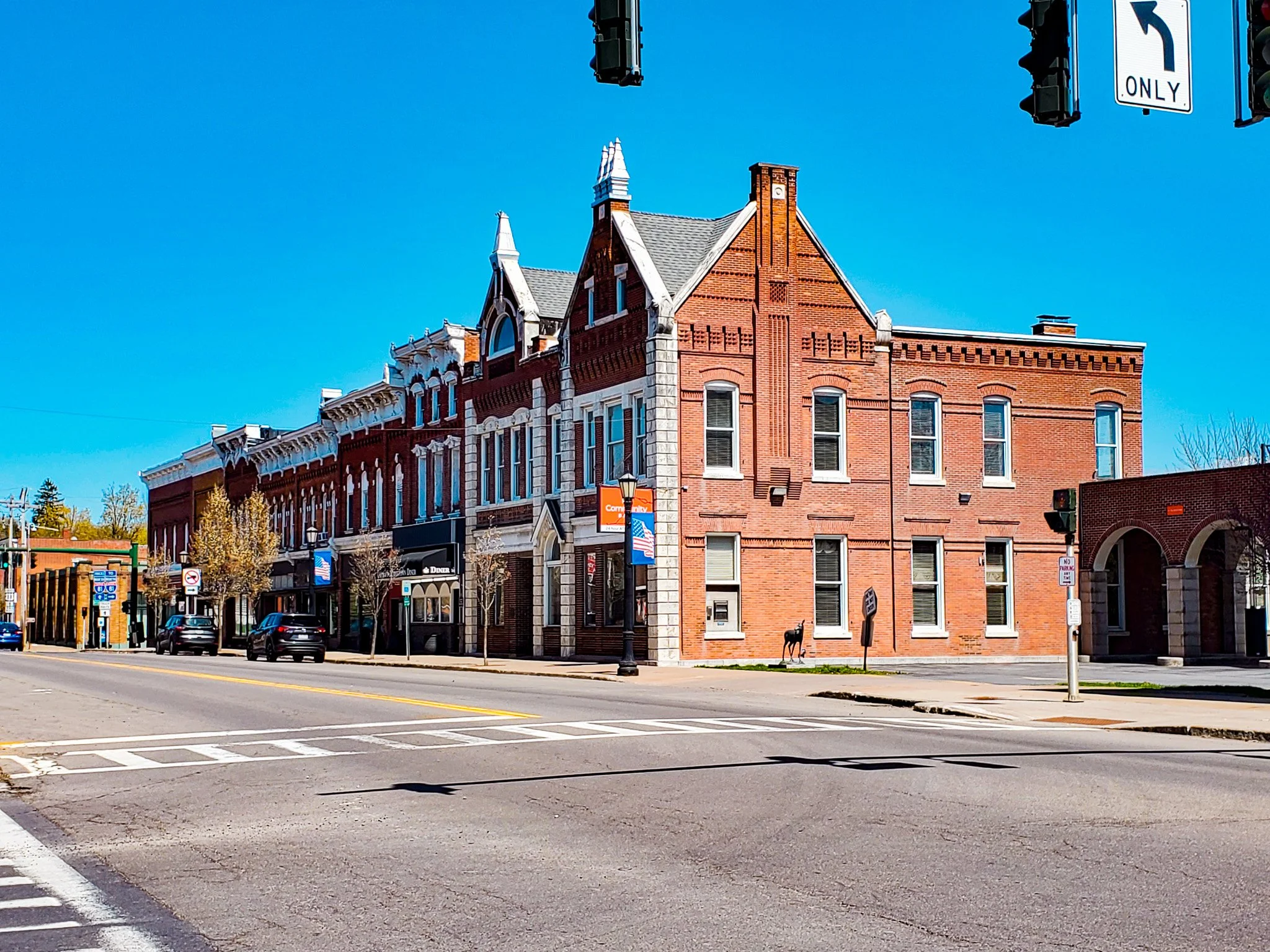
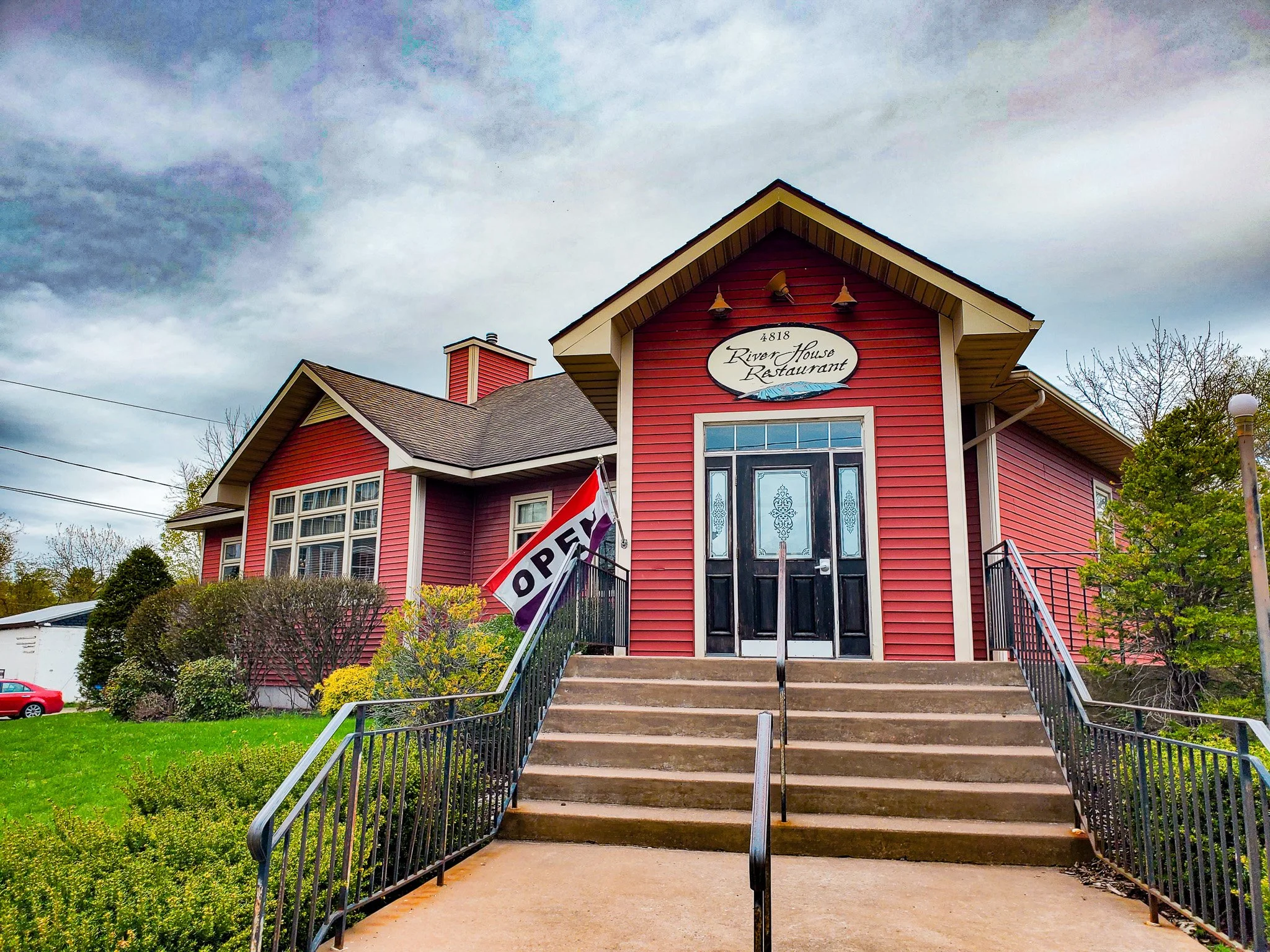
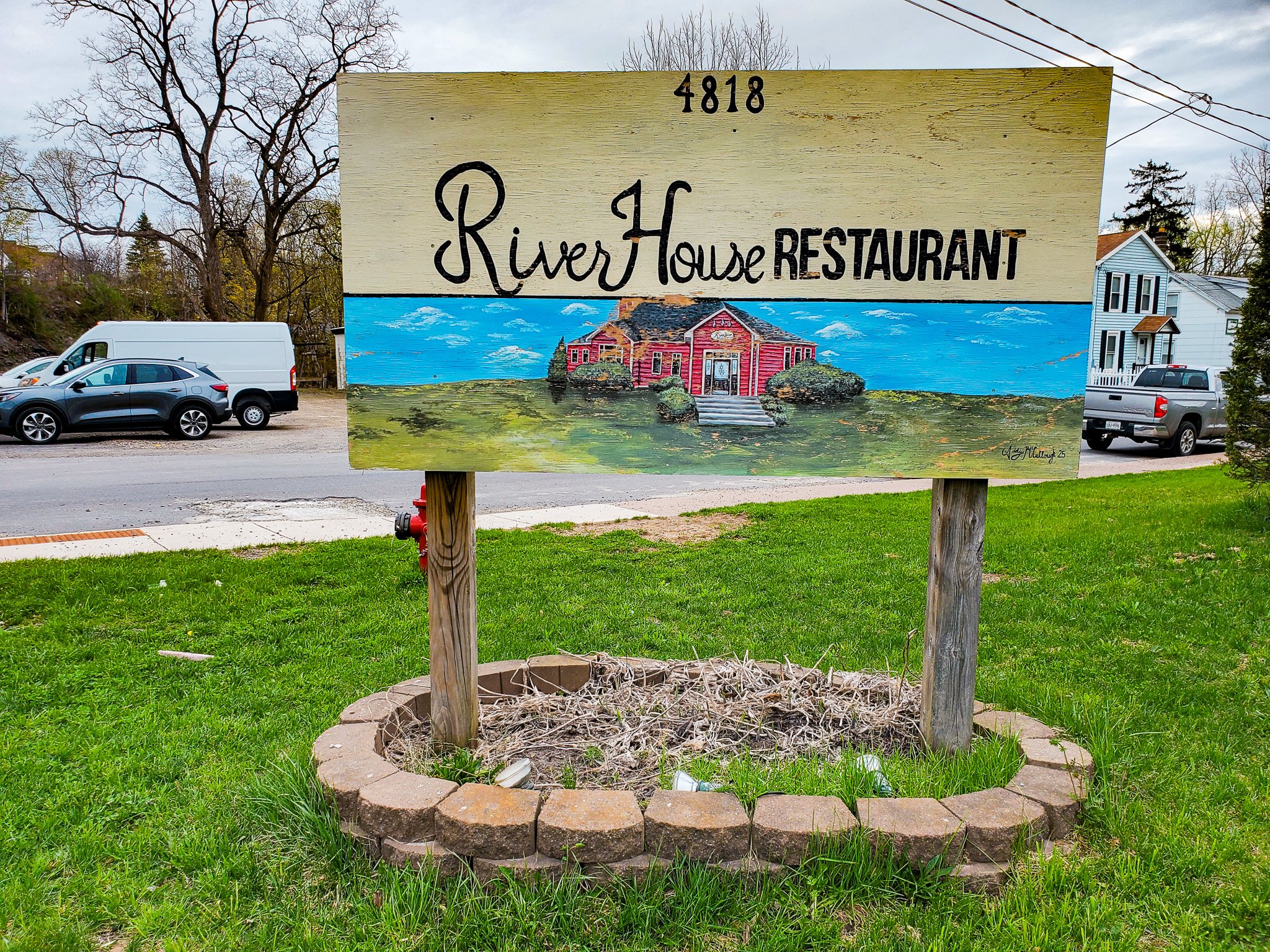
Incorporated in 1832, the town was named after Polish nobleman and military commander Brigadier General Casimir Pulaski, a celebrated leader in the Continental Army known as the “Father of the American Cavalry”. He revolutionized the US mounted forces, ultimately dying from wounds sustained at the 1779 Siege of Savannah. Pulaski is considered the “Salmon Fishing Capital of New York” with an historic downtown that includes the Kallet Theater, and Pulaski Historical Museum. A former town mascot, Bella the Deer, has a commemorative statue at 4854 Jefferson Street. Colosse Cheese is a family-owned cheese shop known for producing over 90 varieties of cheese and fresh cheese curds since 1934. The 1838 Selkirk/Salmon River Lighthouse is located to the west of town. The River House Restaurant on US 11 celebrates 200 years of hospitality in Pulaski.
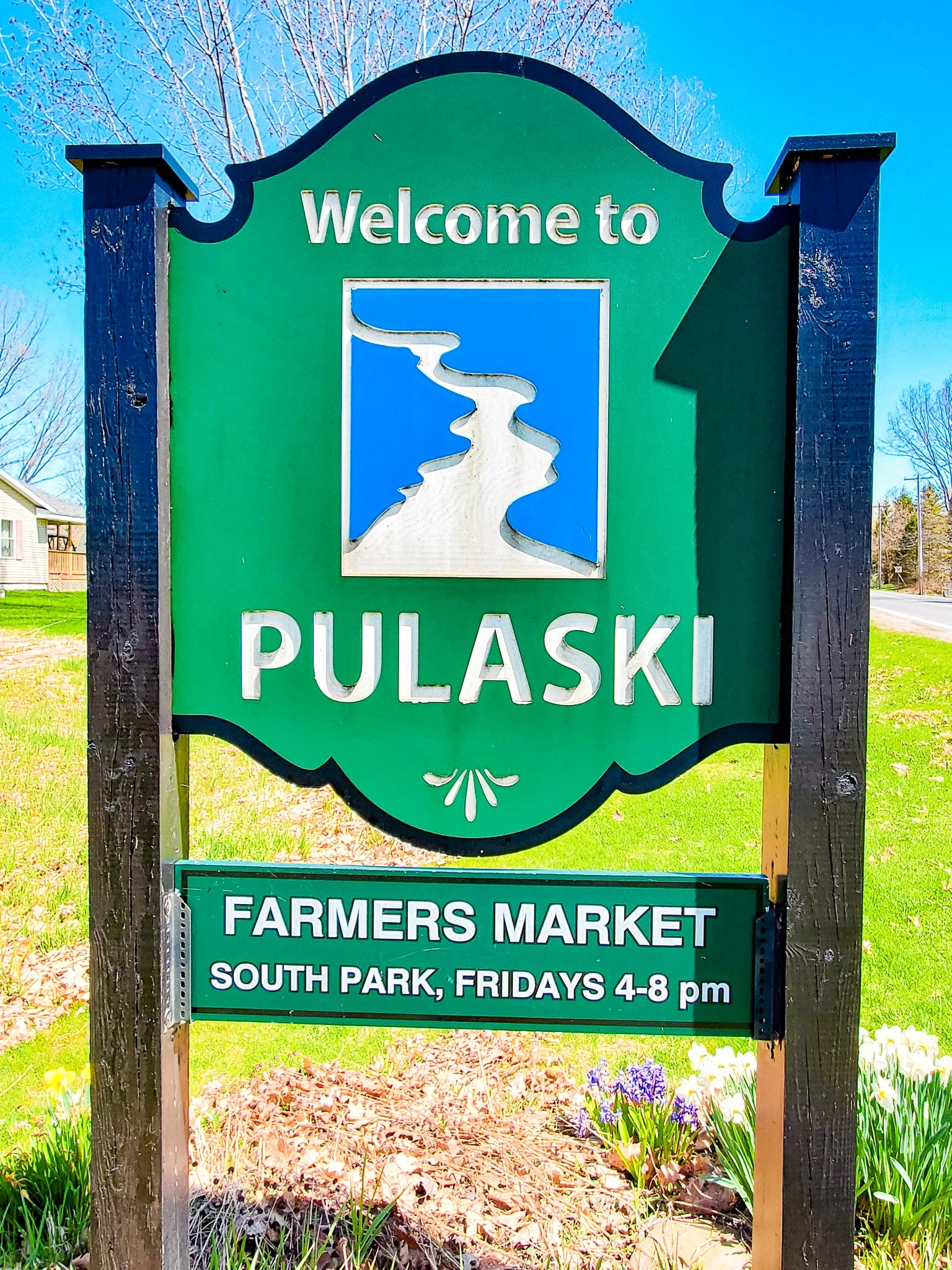
Welcome to Pulaski Sign
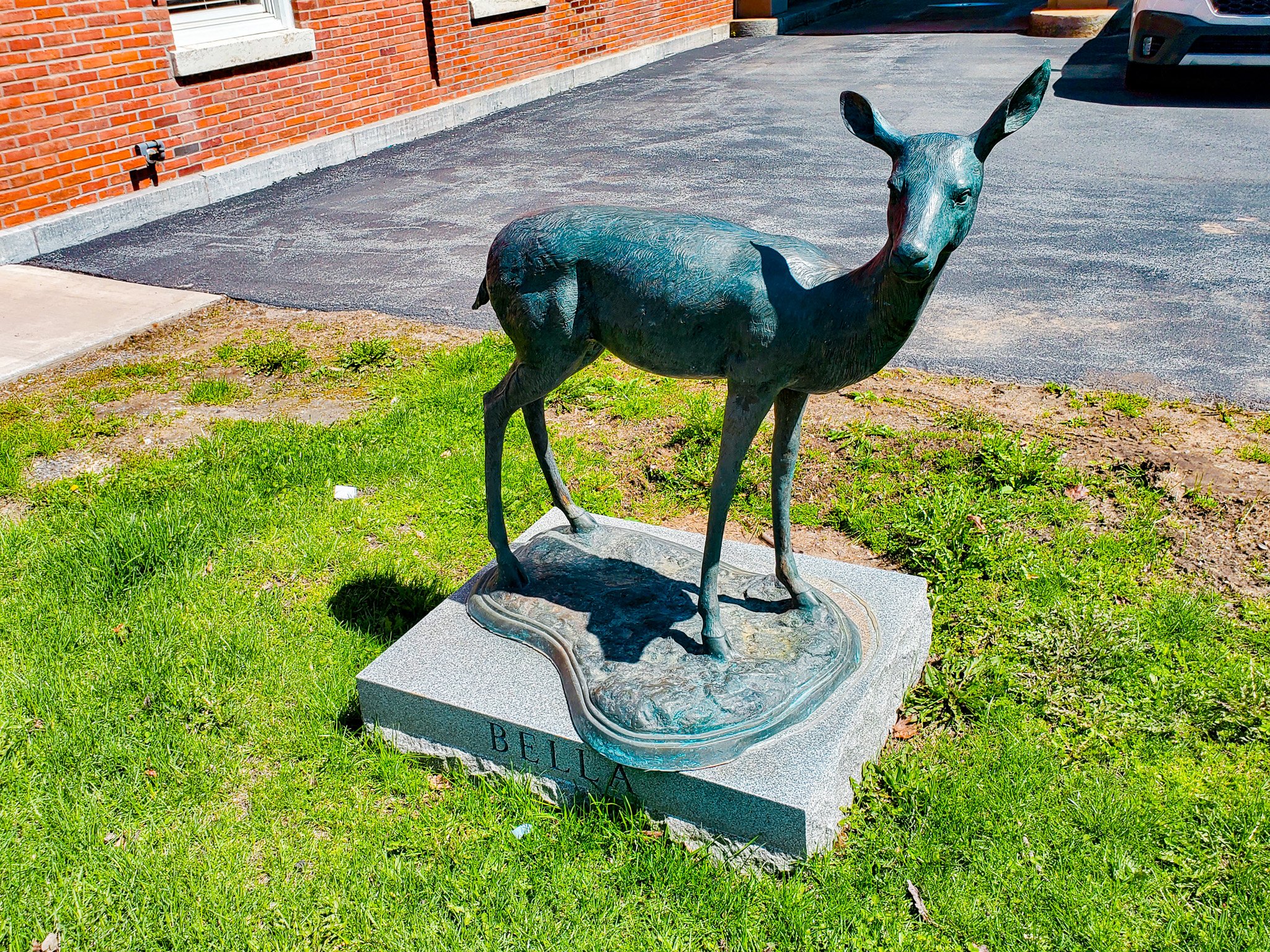
Bella the Deer Statue
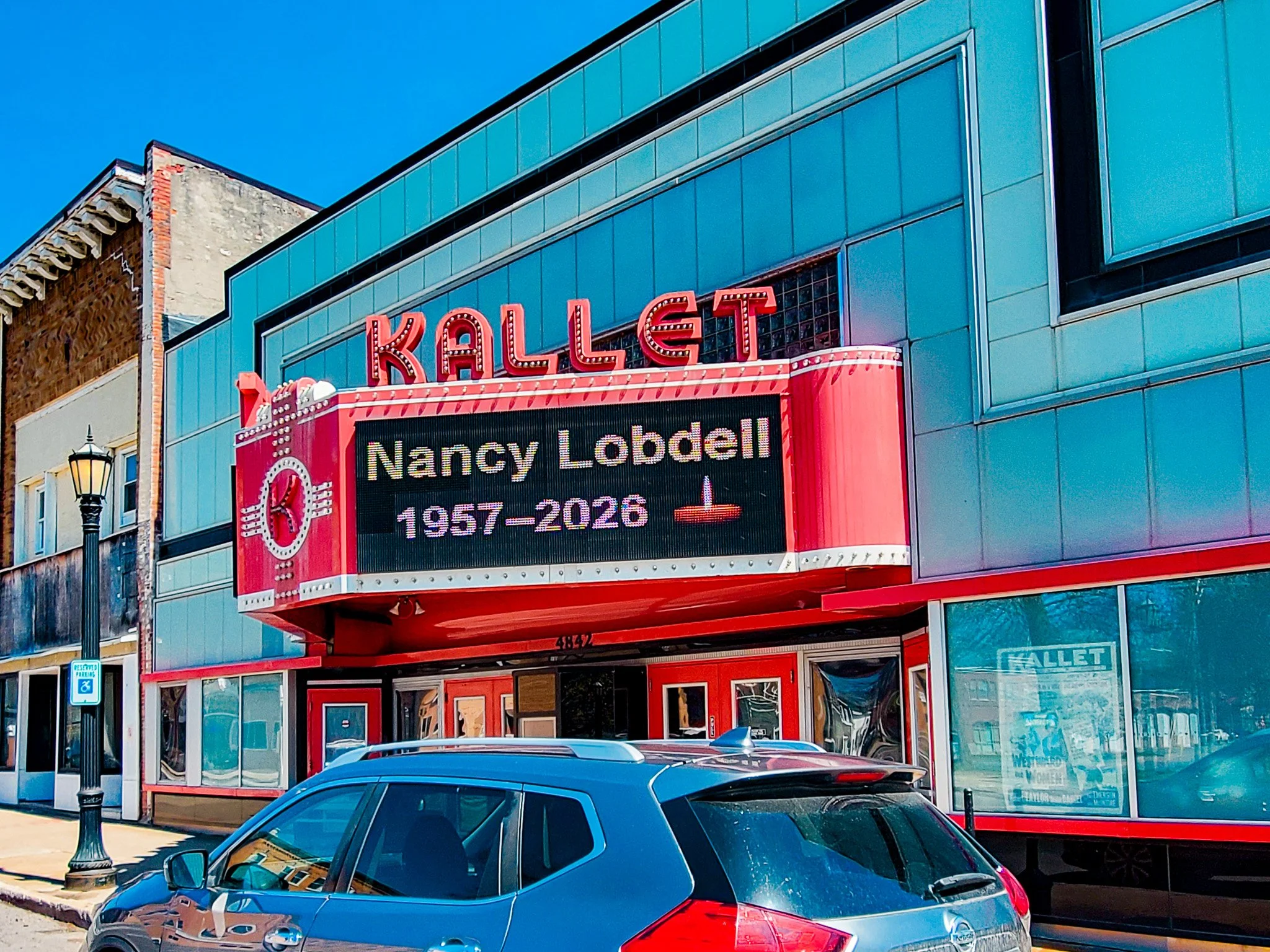
Kallet Theater
Log Tavern Marker
Downtown Pulaski
River House Restaurant
River House Restaurant
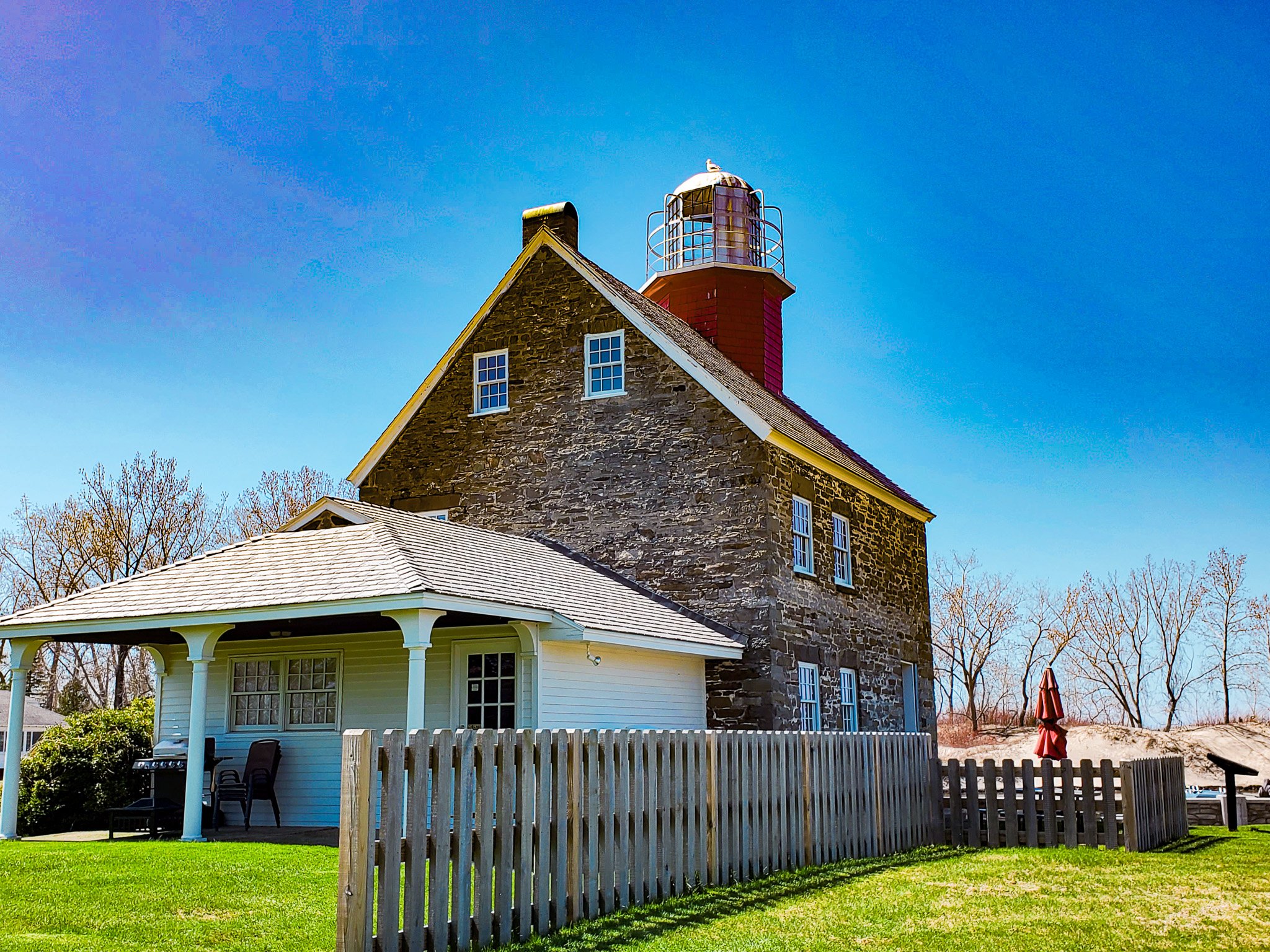
Lighthouse from 1838
SANDY CREEK
Sandy Creek was settled in 1803, and was the source of “The Big Cheese” made in 1835 for President Andrew Jackson. Weighing 1400 pounds, the round of cheddar was delivered to the White House where it remained for two years, until it was offered to the public (and eaten in 2 hours) in 1837. For comparison, the World’s Largest Cheese weighed 34,591 pounds, was made in Wisconsin for the 1964 World's Fair, and was displayed nationally in the "Cheesemobile".
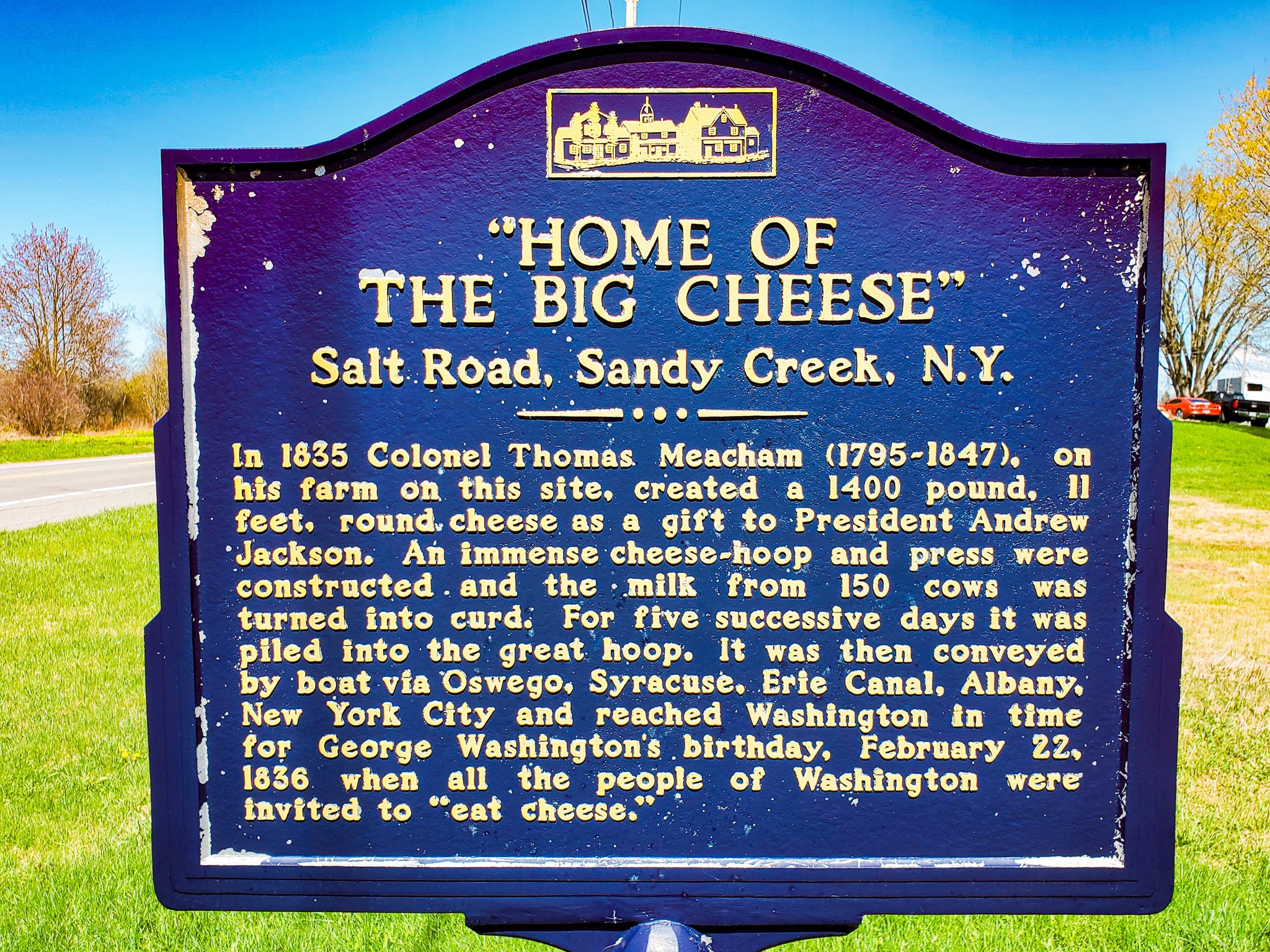
"The Big Cheese" Marker
MANNSVILLE
This town was settled around 1801 and named after early developer Barzillian Mann.
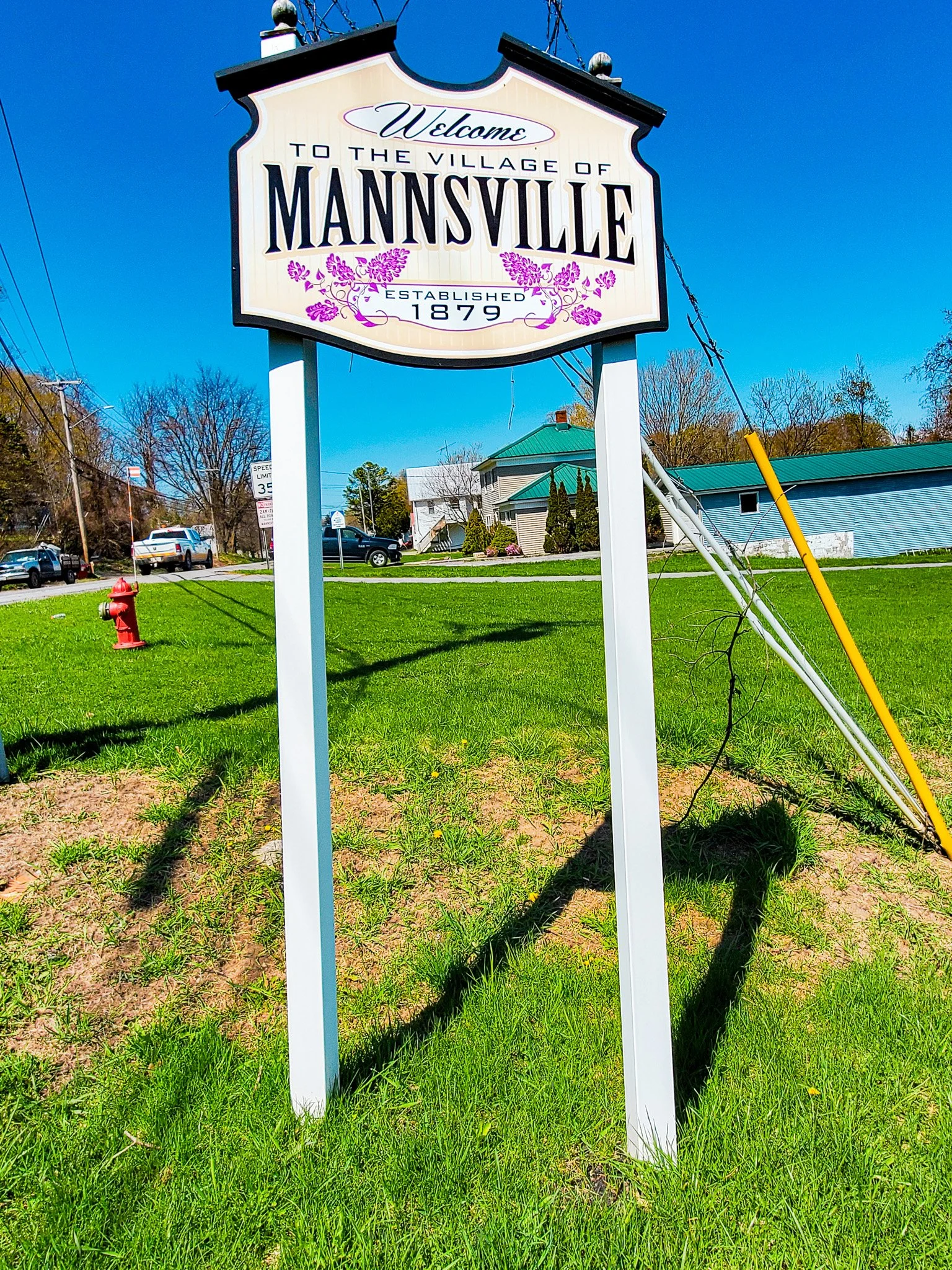
Welcome to Mannsville sign
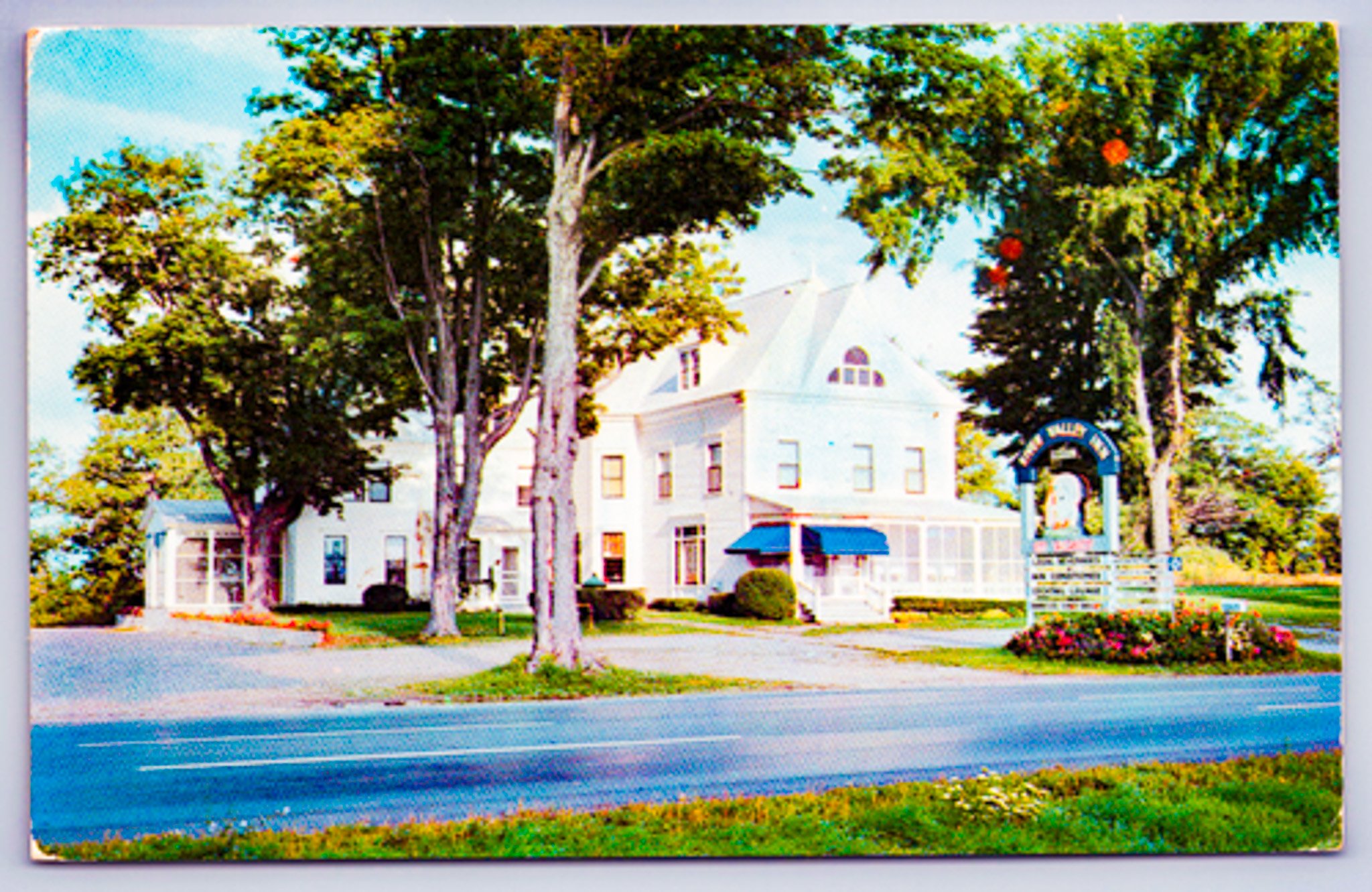
River Valley Inn Postcard
PIERREPONT MANOR
The hamlet was named for the Pierrepont family who built a significant estate there in the 1820's.
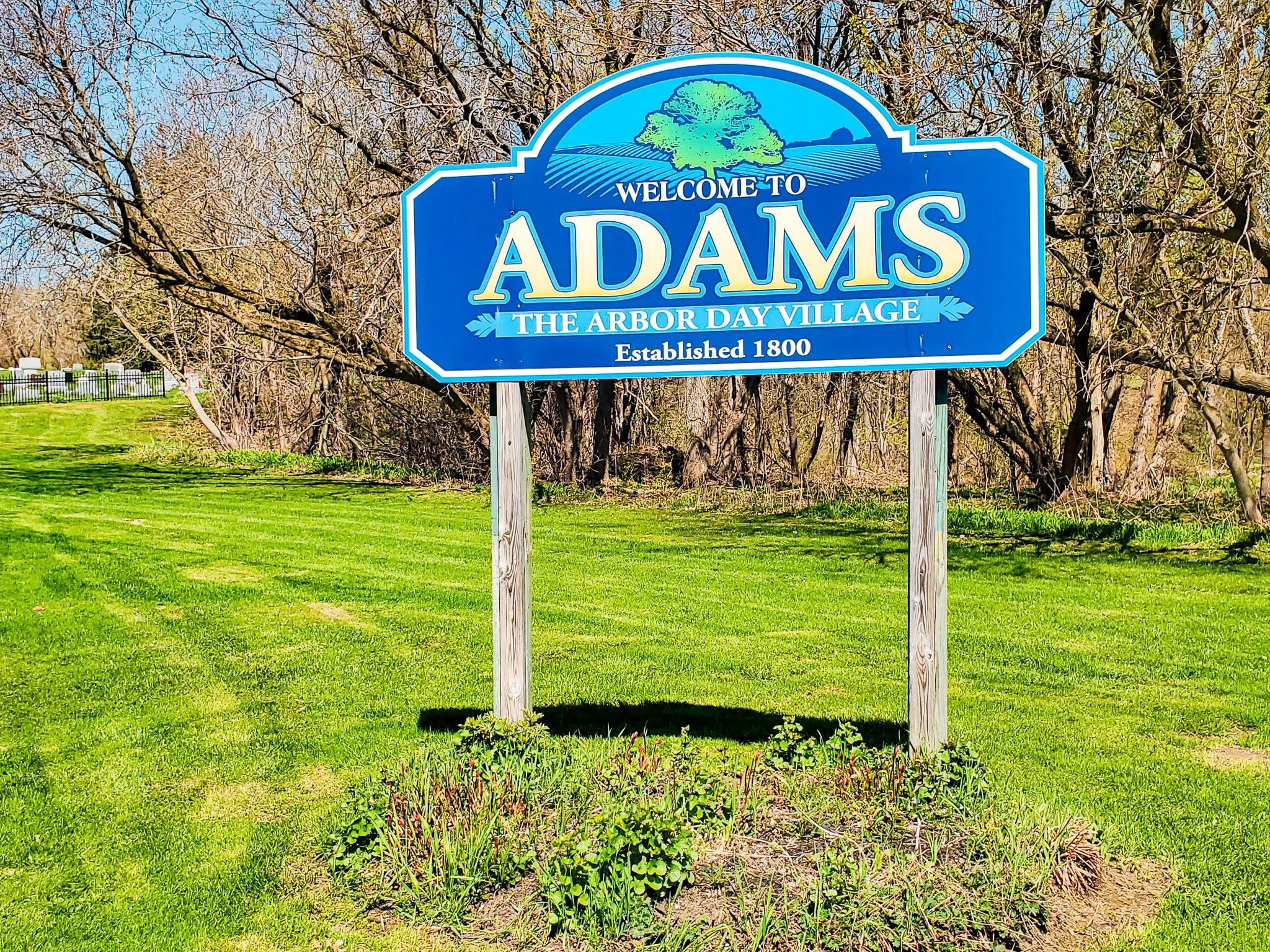
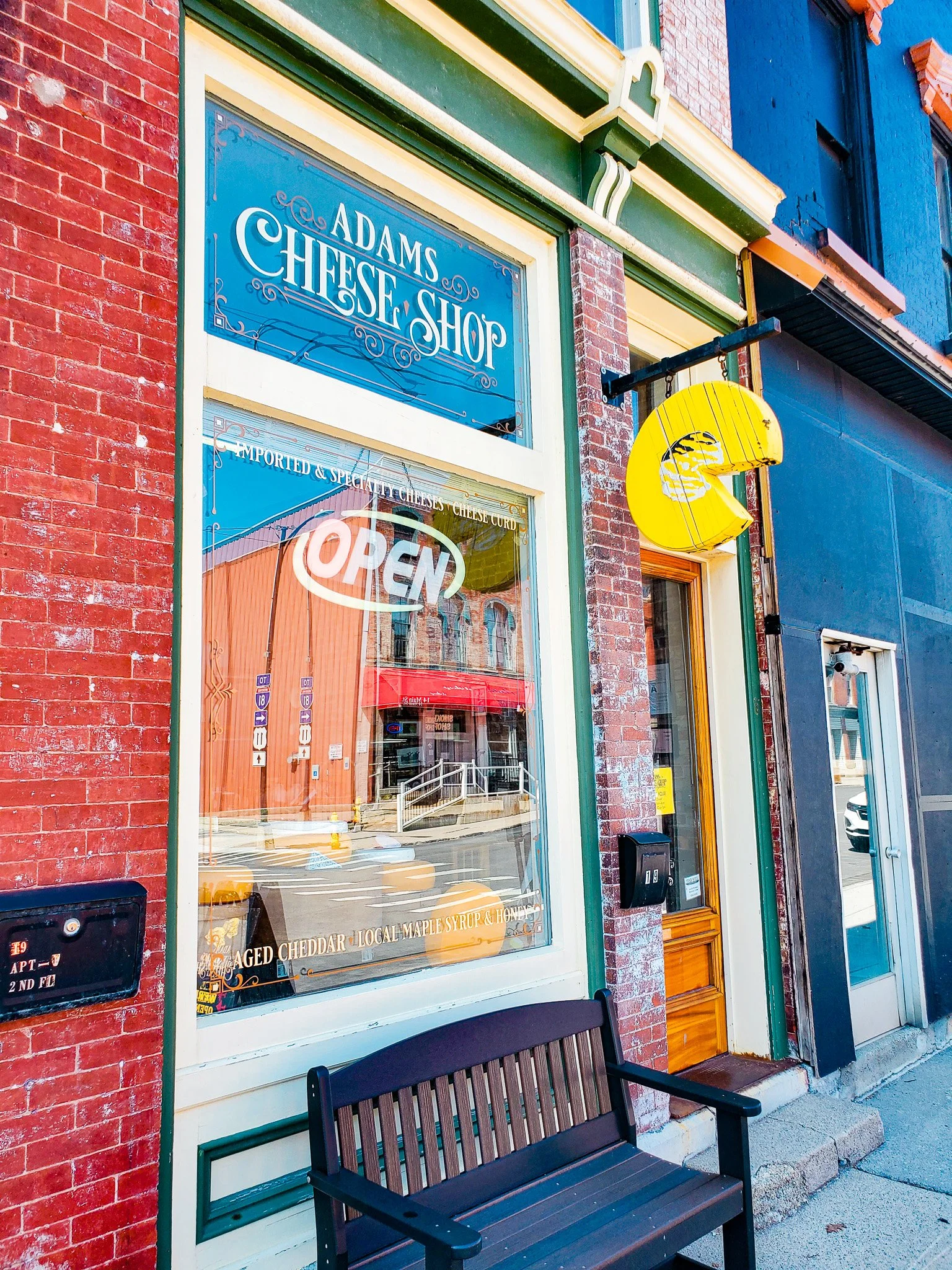
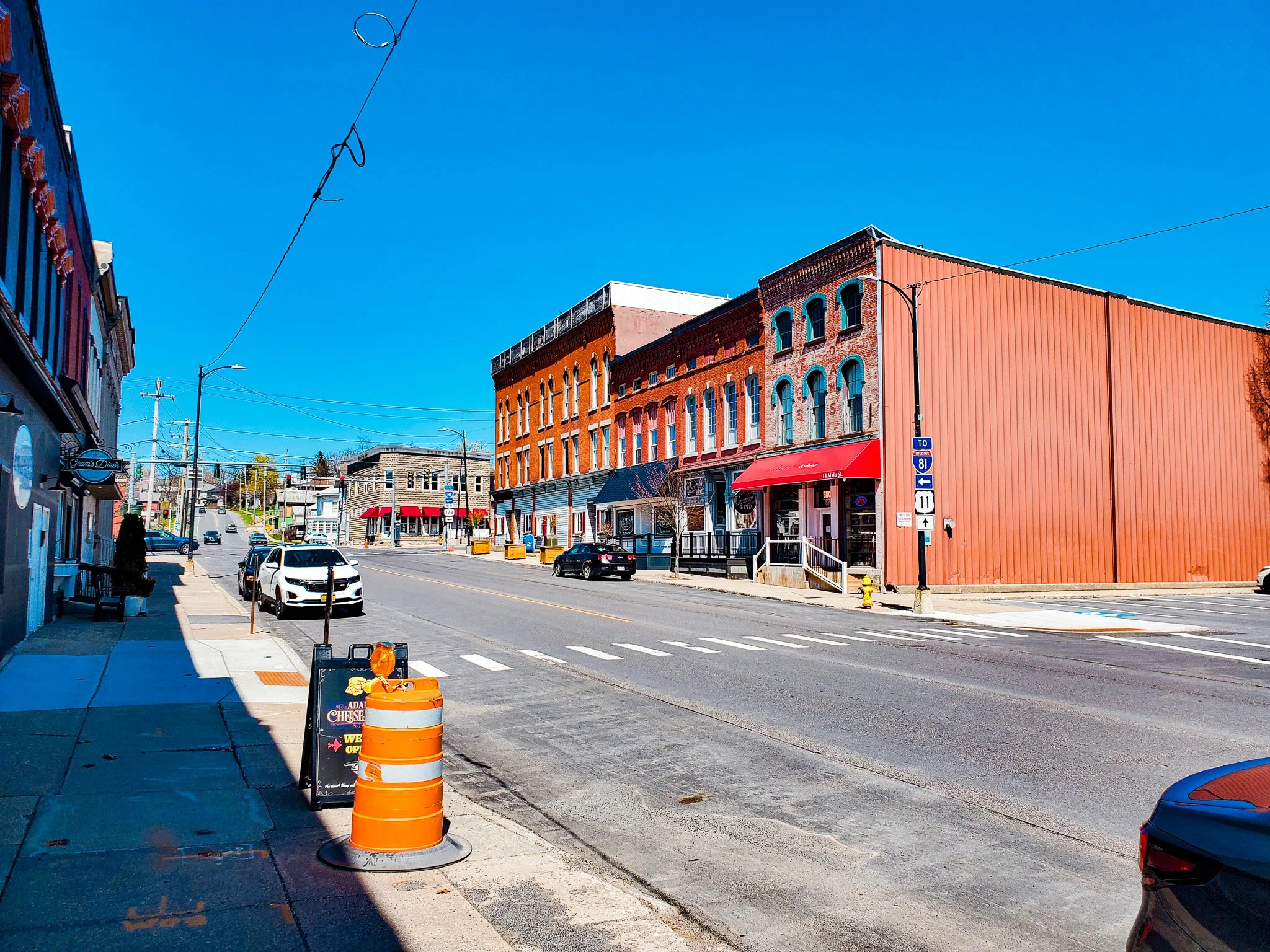
ADAMS
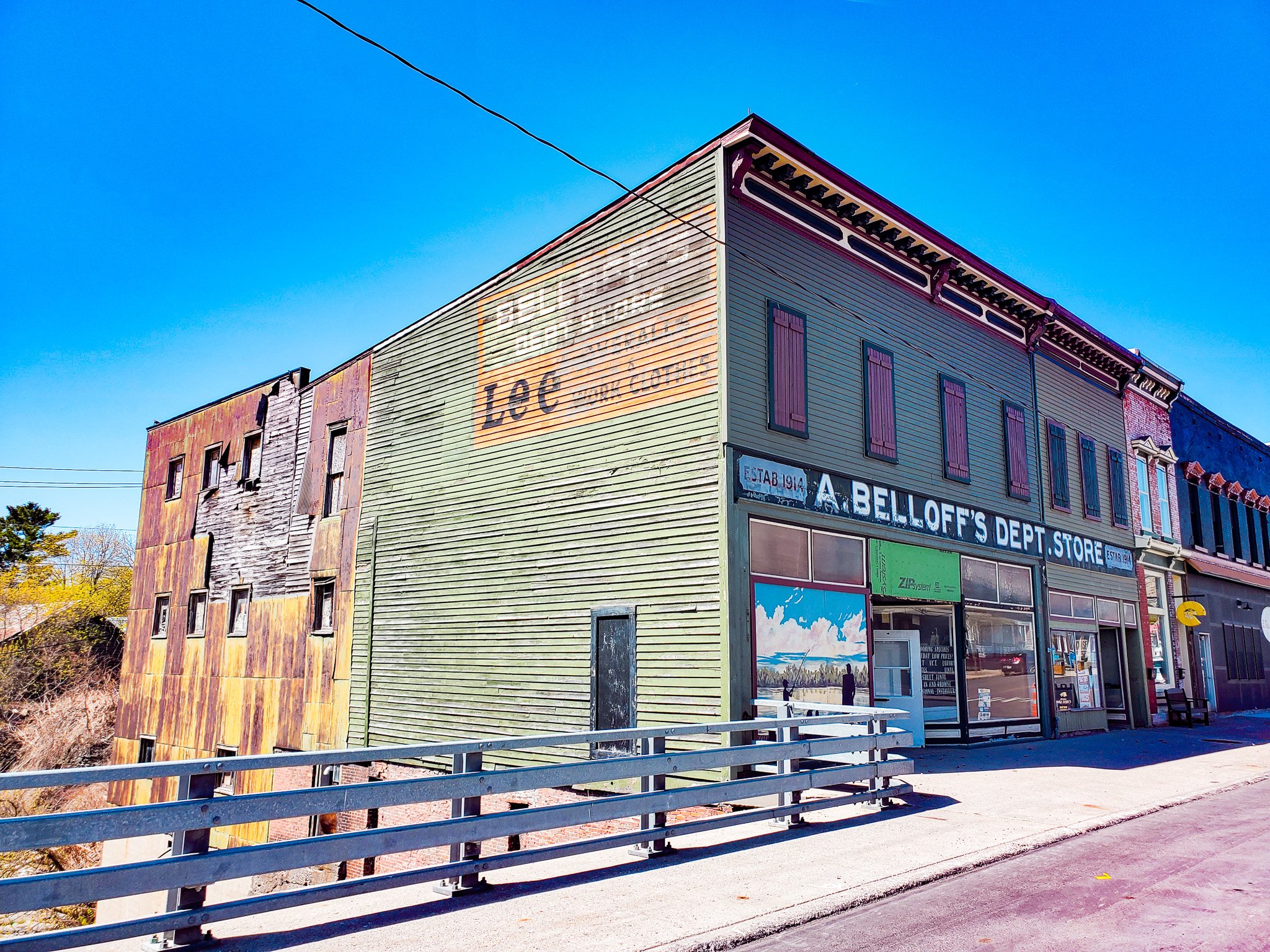
Adams was settled around 1800 and named for President John Adams. Downtown is an historic district and home to A. Belloff’s Department Store, founded by Kiev immigrant Aaron Belloff in 1914 and still maintained by his grand-son.
Welcome to Adams Sign
Adams Cheese Shop
Main Street
Belloffs Department Store
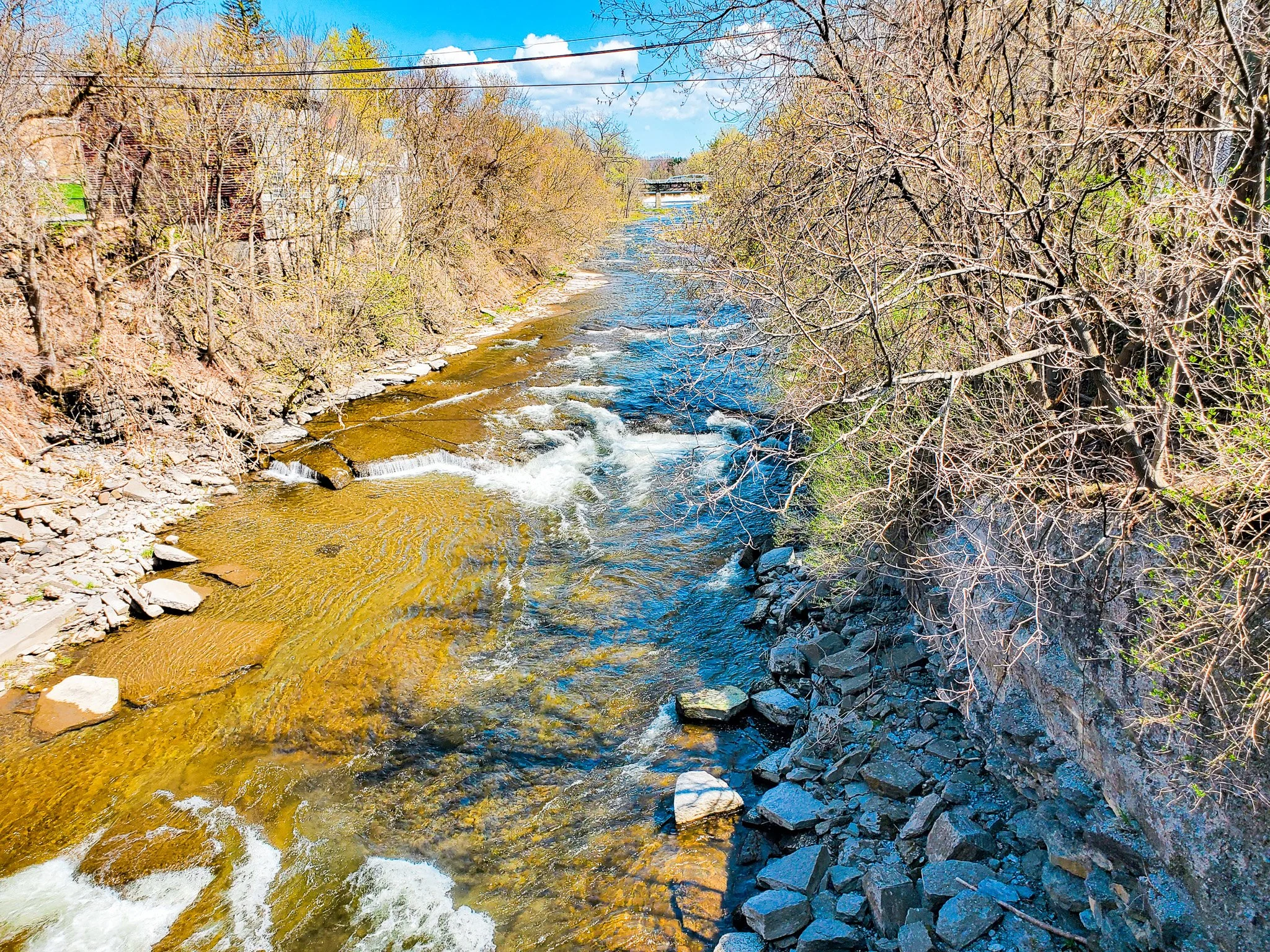
River Beside Belloff's Department Store
ADAMS CENTER
Melvil Dewey, inventor of the Dewey Decimal System, was born here in 1851. Just north of town, there is a small gravel pull-off where you can see Talcott Falls (on private property). Ramsey’s Pizzeria on US 11 has been serving pizza pies for over 30 years.
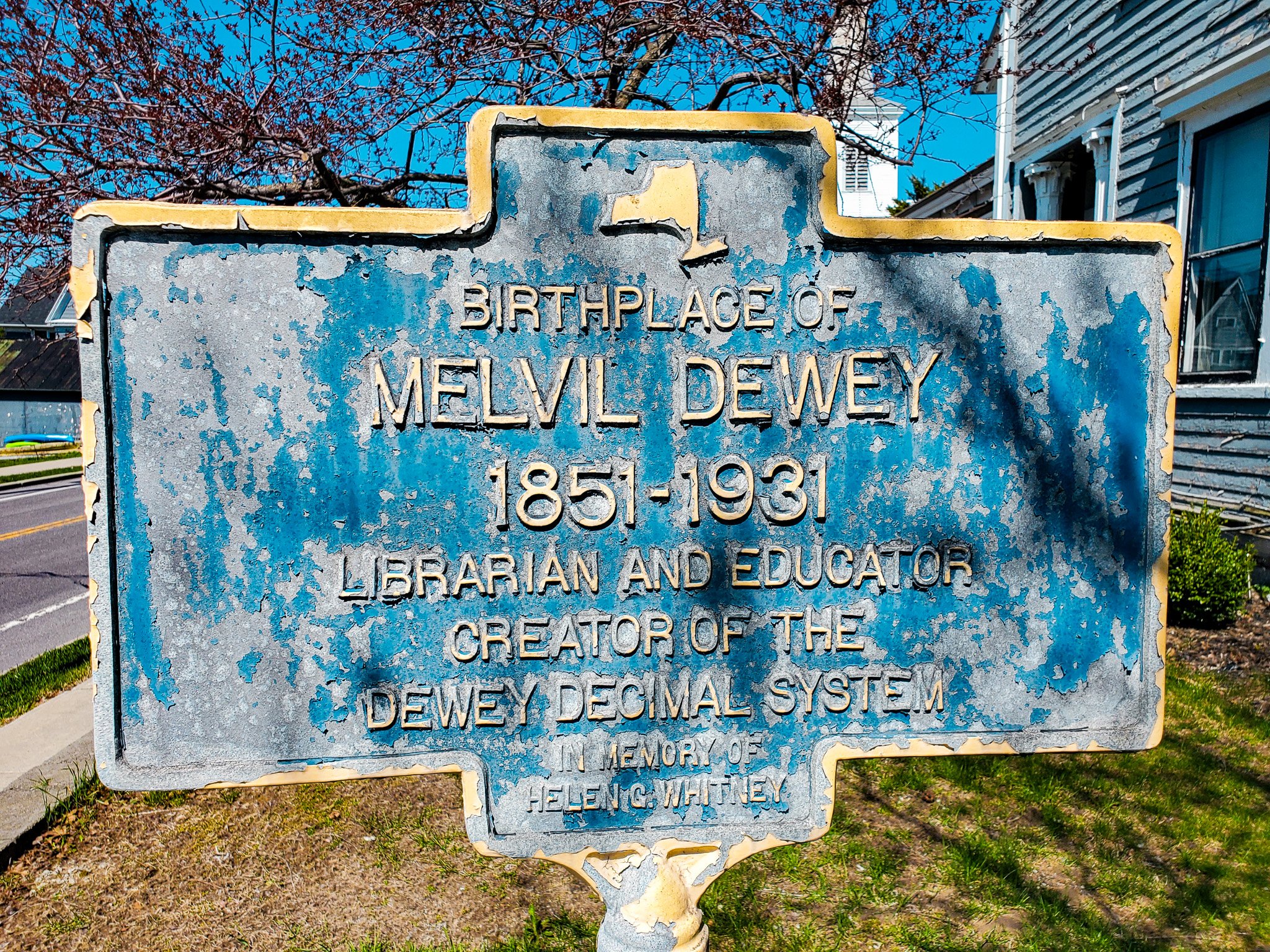
Melvil Dewey Marker
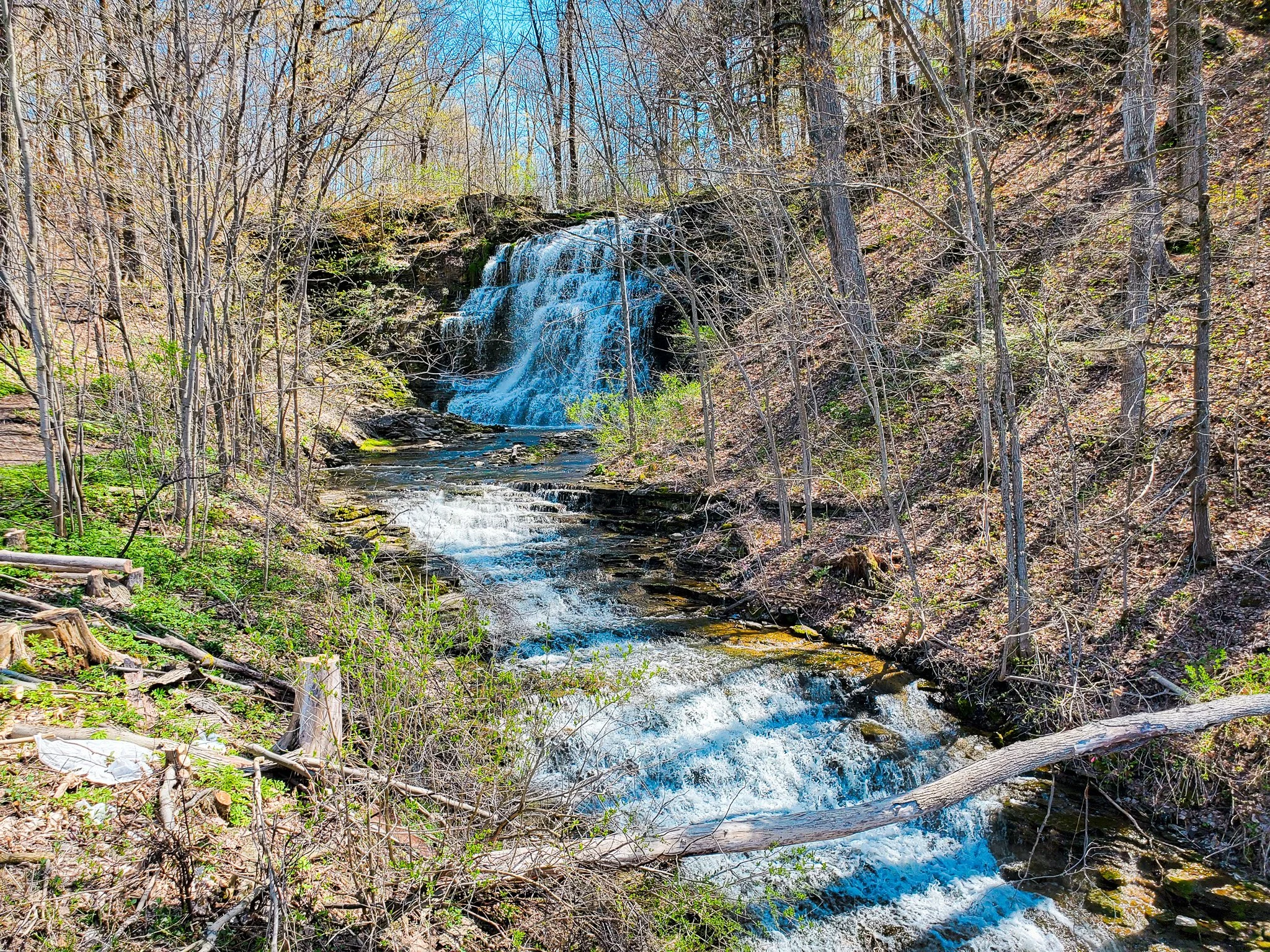
Talcott Falls
WATERTOWN
Settled in 1800, its name is derived from its position straddling the Black River and its ability to produce hydropower. Called “The Garland City” because of the late 1800’s/early 1900’s practice of local business owners to decorate their storefronts in the historic Public Square with festive garlands and drapery, the Little Tree Car Freshener was developed here in 1951. In the early 20th century, Watertown was reputed to have more millionaires per capita than any other city in the United States. The Governor Roswell P Flower monument, New York governor from 1892-1894, a Watertown native, is located downtown. The Paddock Arcade built in 1850 is the oldest continuously operating enclosed mall in the US. The New York State Zoo (now Zoo New York) is located in Thompson Park. Watertown is the birthplace of FW Woolworths Five and Dime stores, and is the location of the Jefferson County Historical Society, Burrville Cider Mill (built in 1801 famous for a 30 foot waterfall), and the Sci-Tech Museum of Northern New York. Fort Drum, home of the 10th Mountain Division, is 10 miles north of Watertown near the Canadian border. The Bad Apple Garage downtown offers vintage cars and automotive memorabilia to view as you enjoy American comfort food.
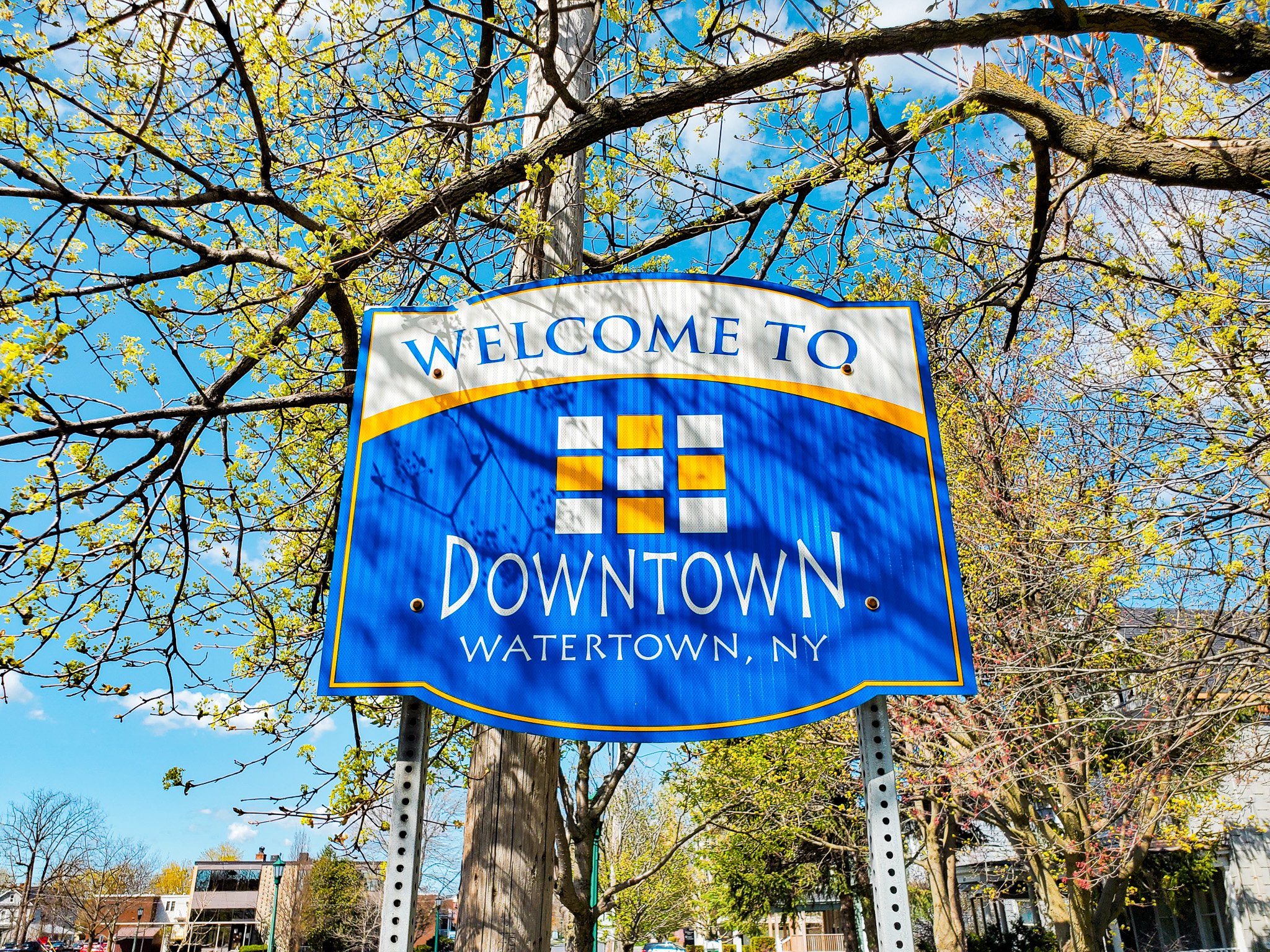
Welcome to Watertown Sign
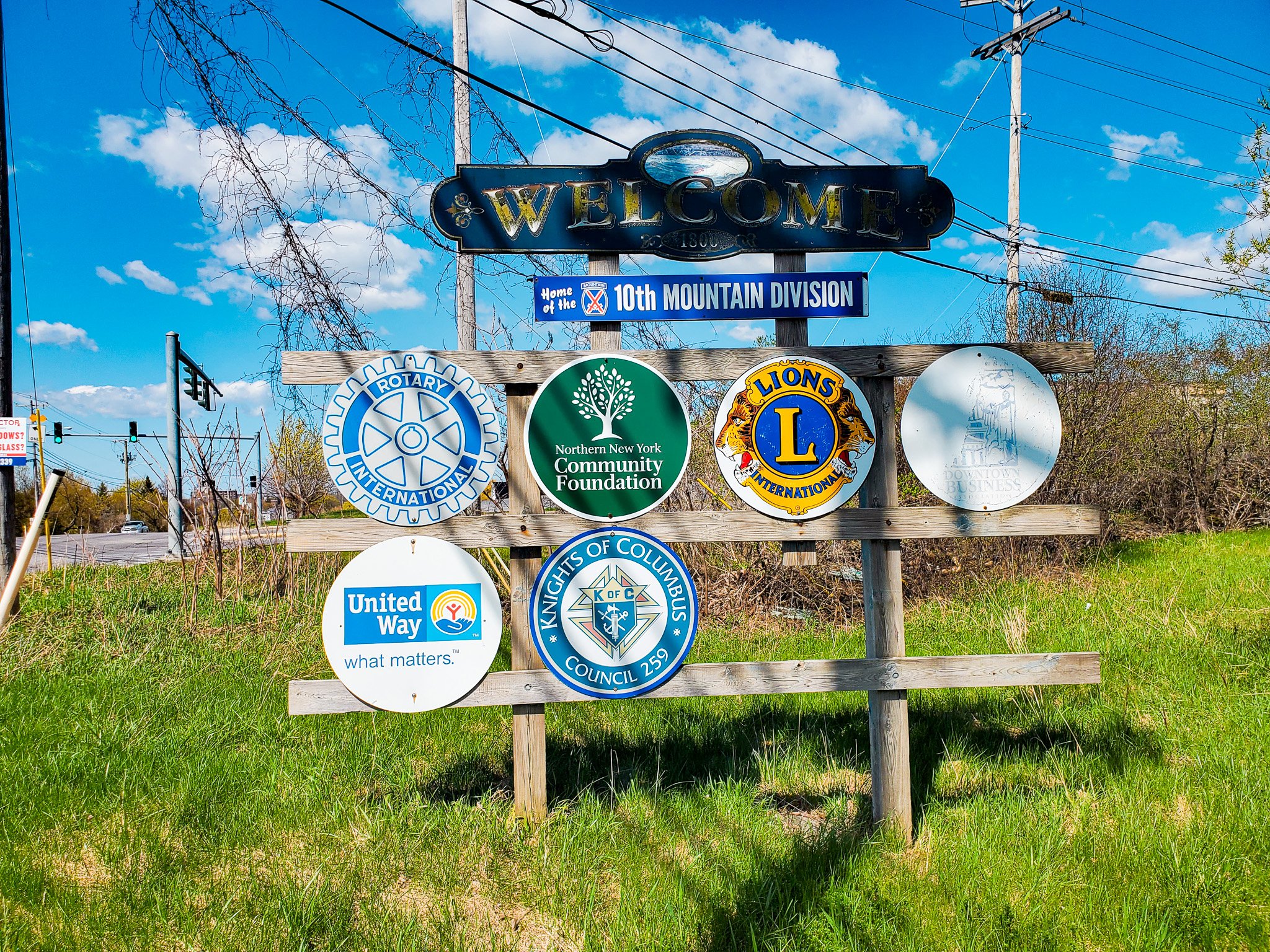
Watertown Welcome Sign
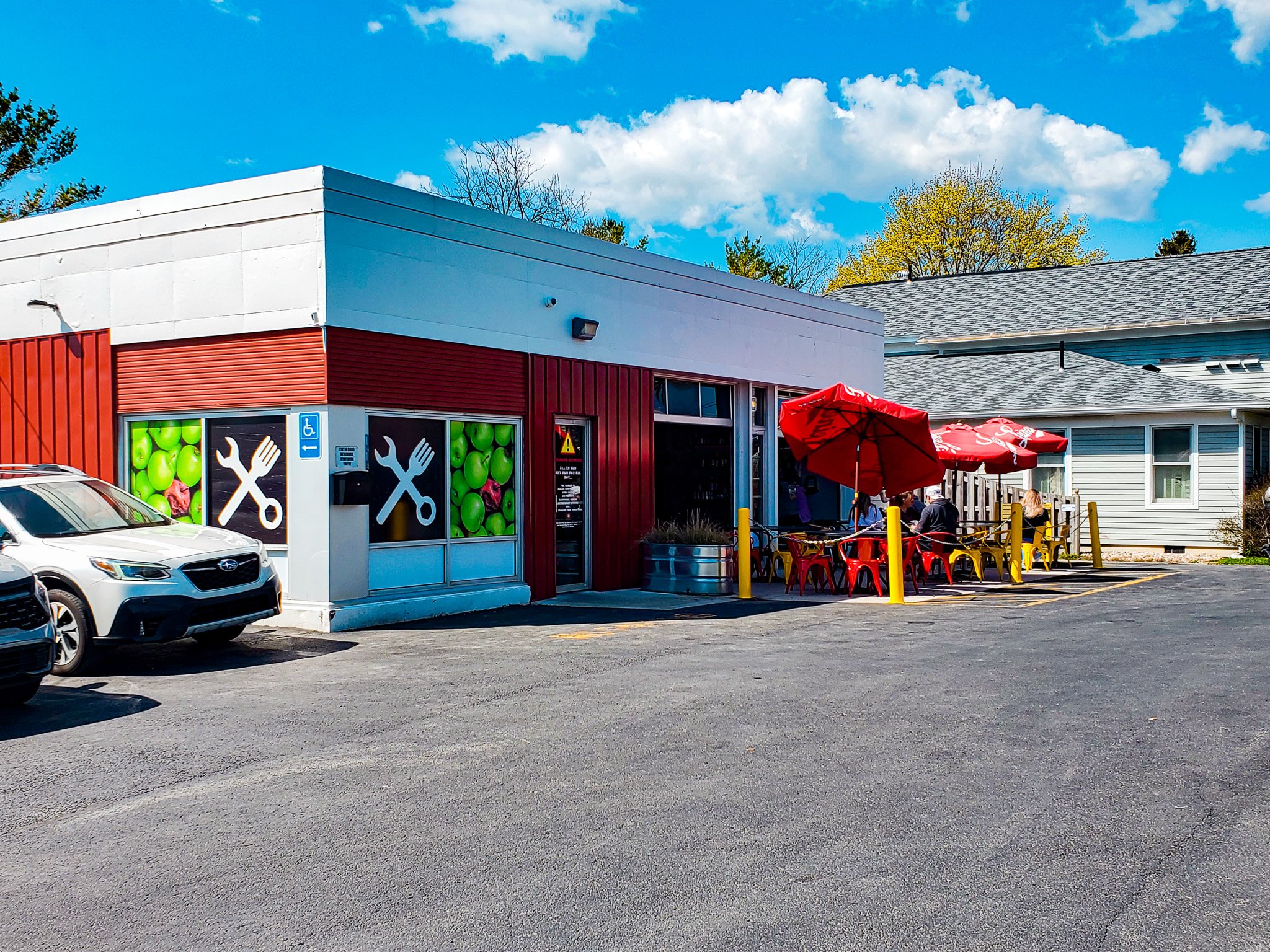
Bad Apple Garage Restaurant
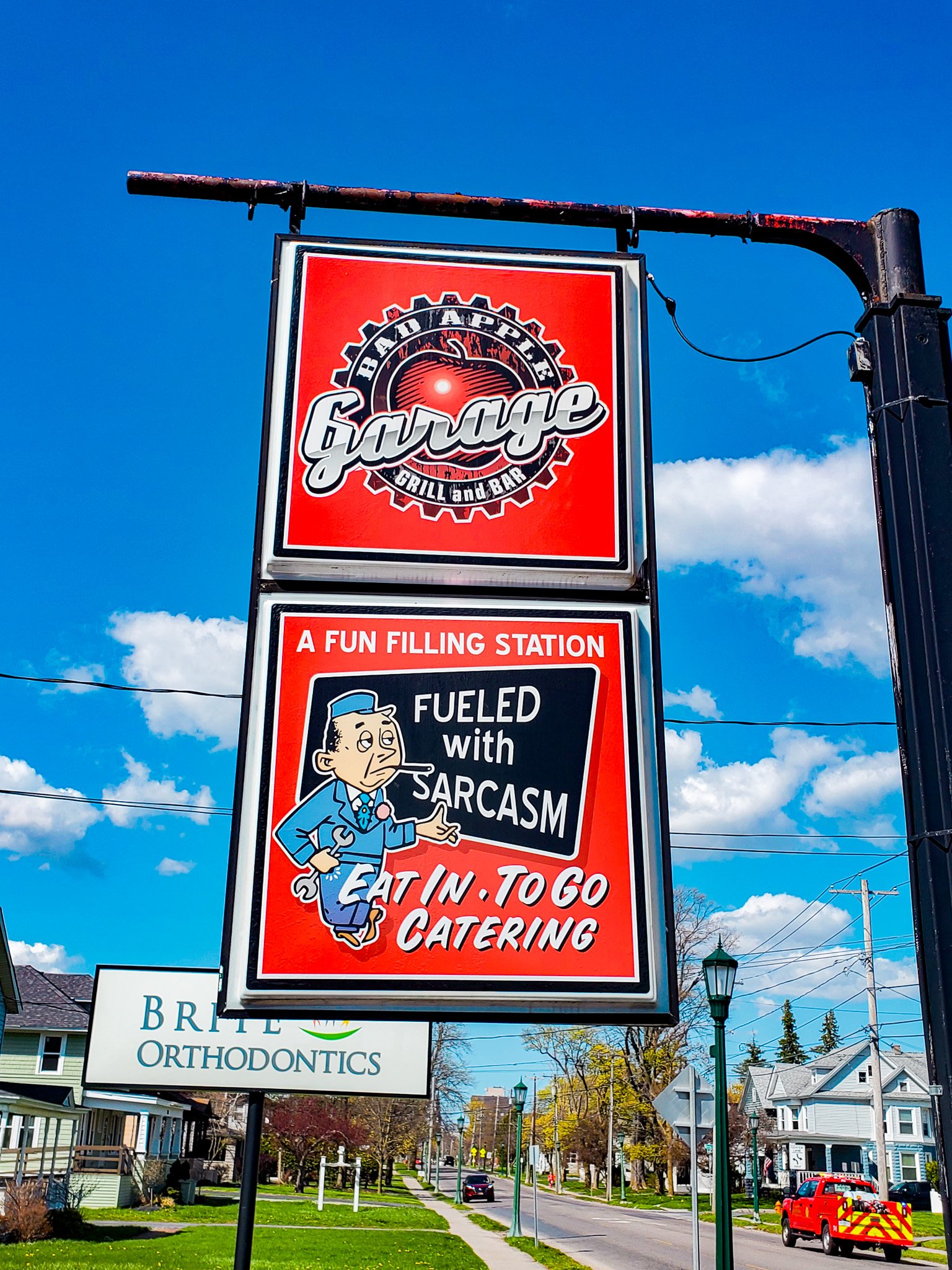
Bad Apple Garage Restaurant
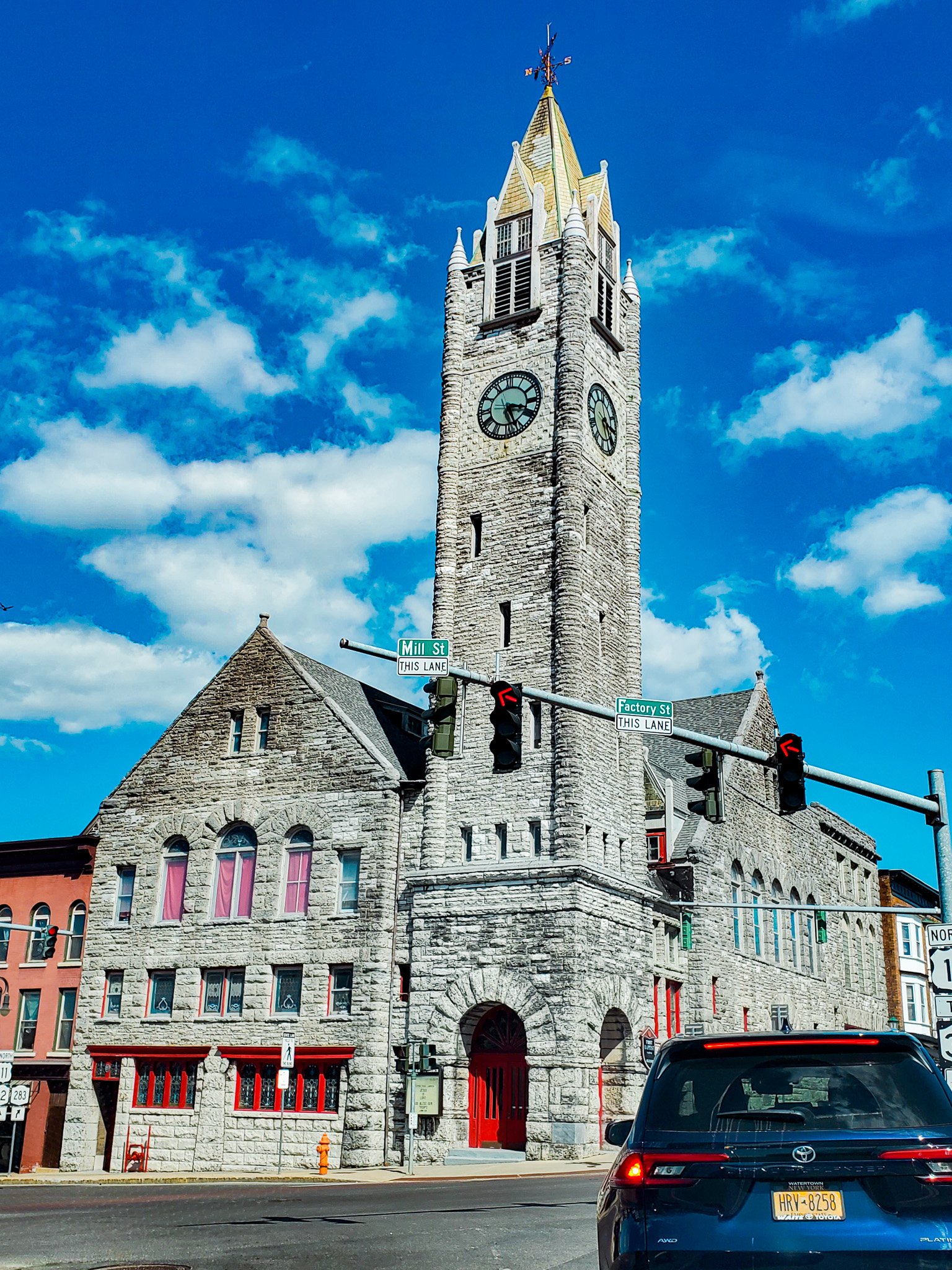
Church in Watertown
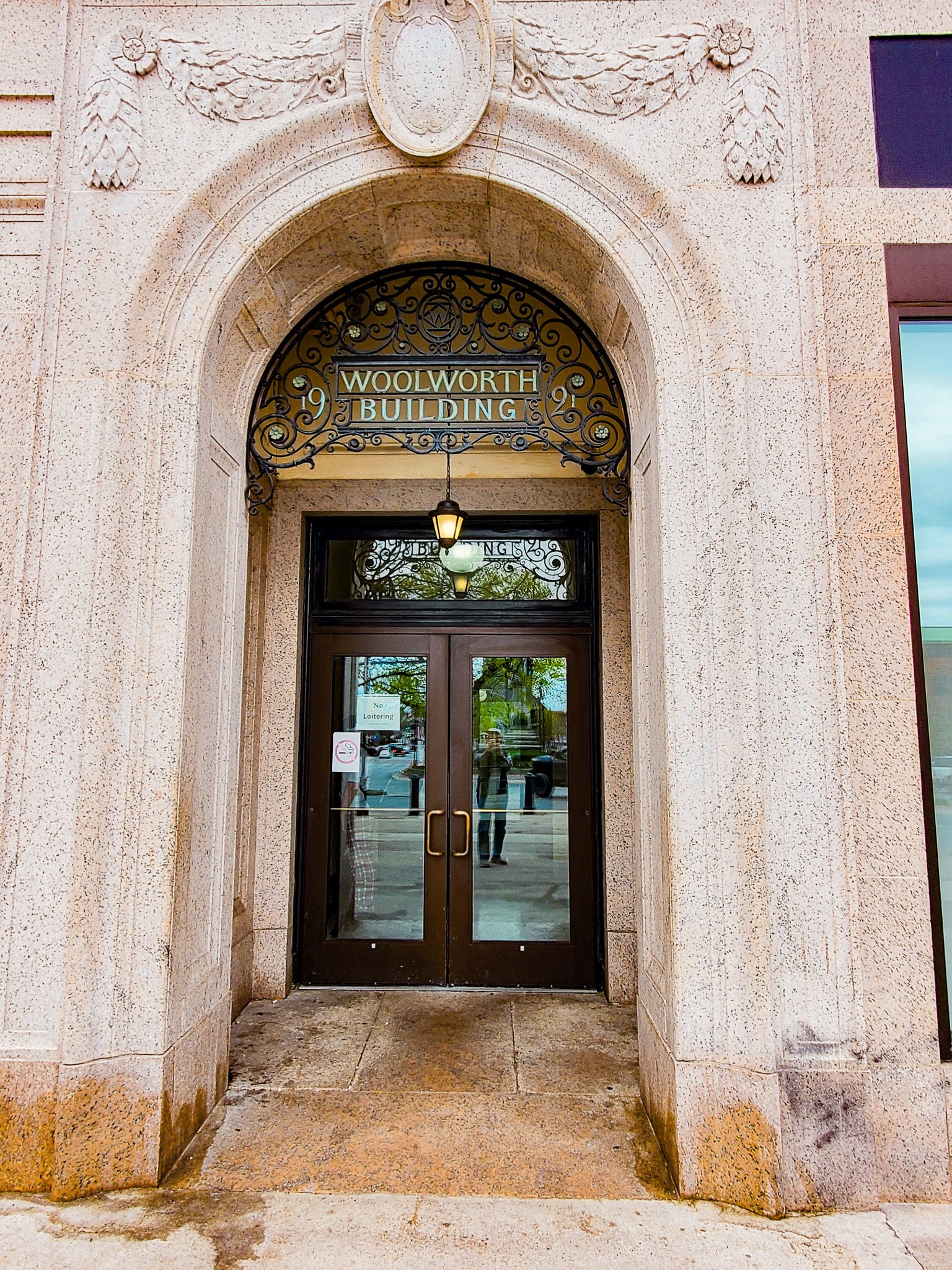
Woolworth Building
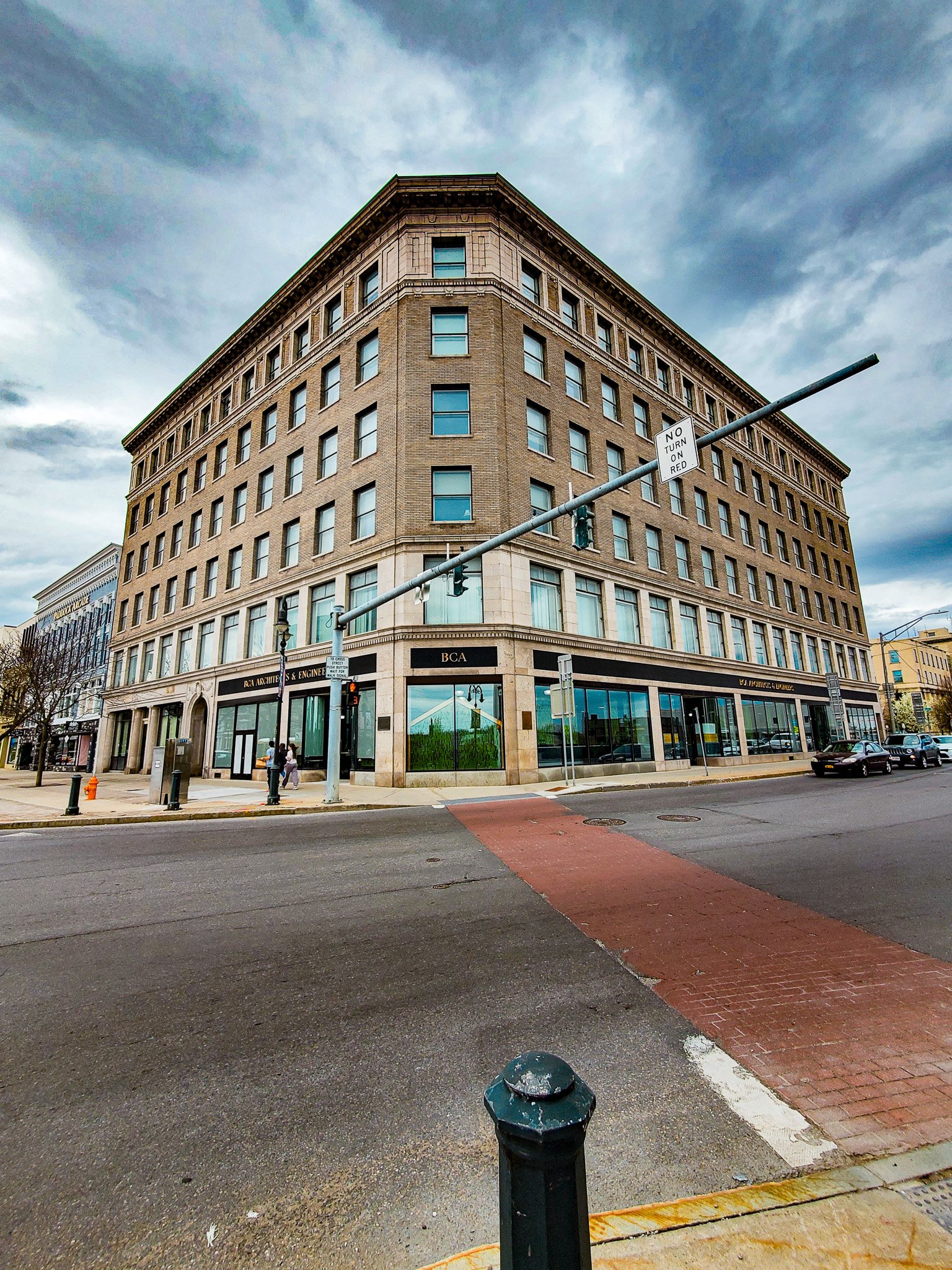
Woolworth Building
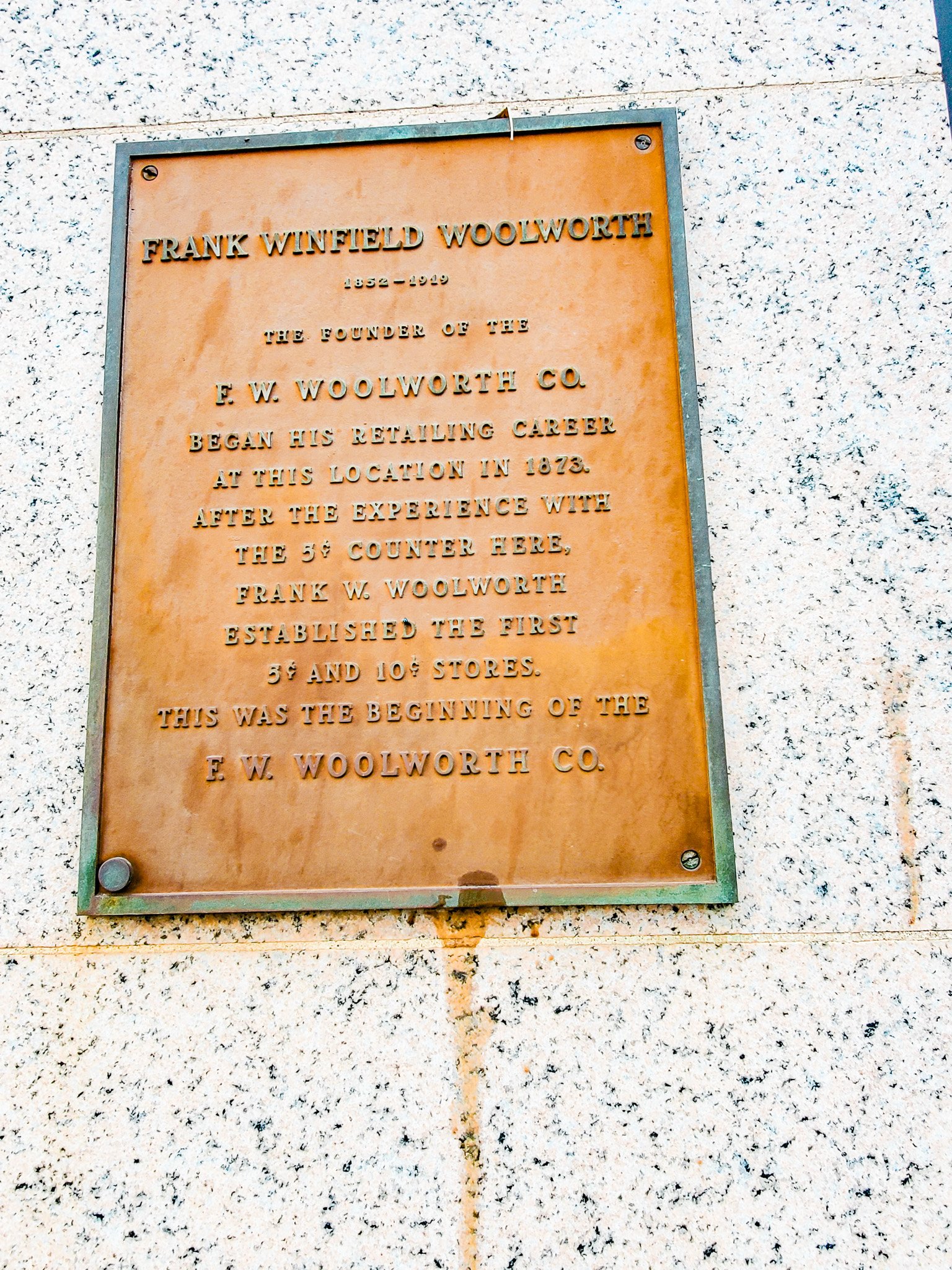
Woolworth Building Plaque
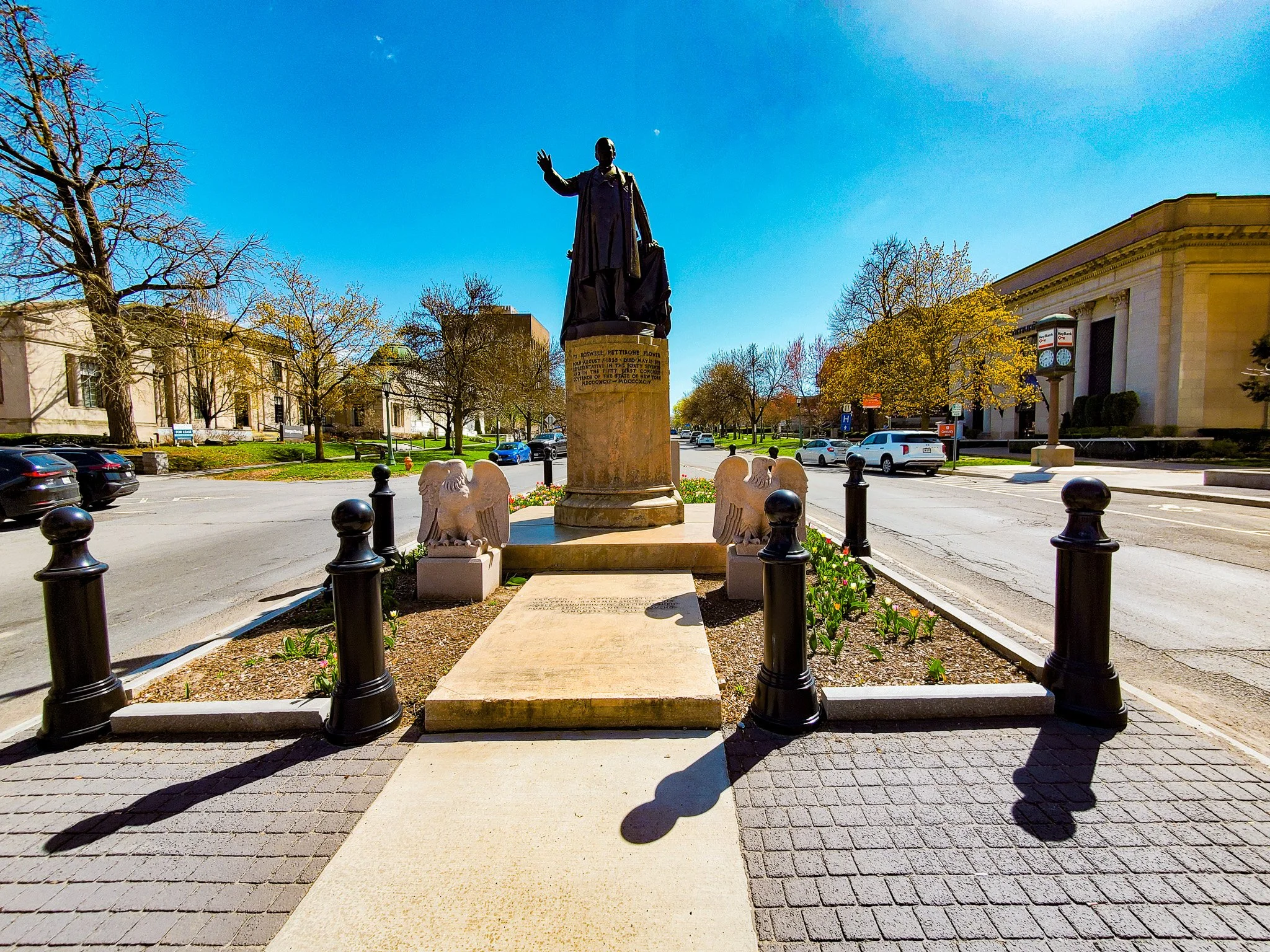
Gov Flower Monument
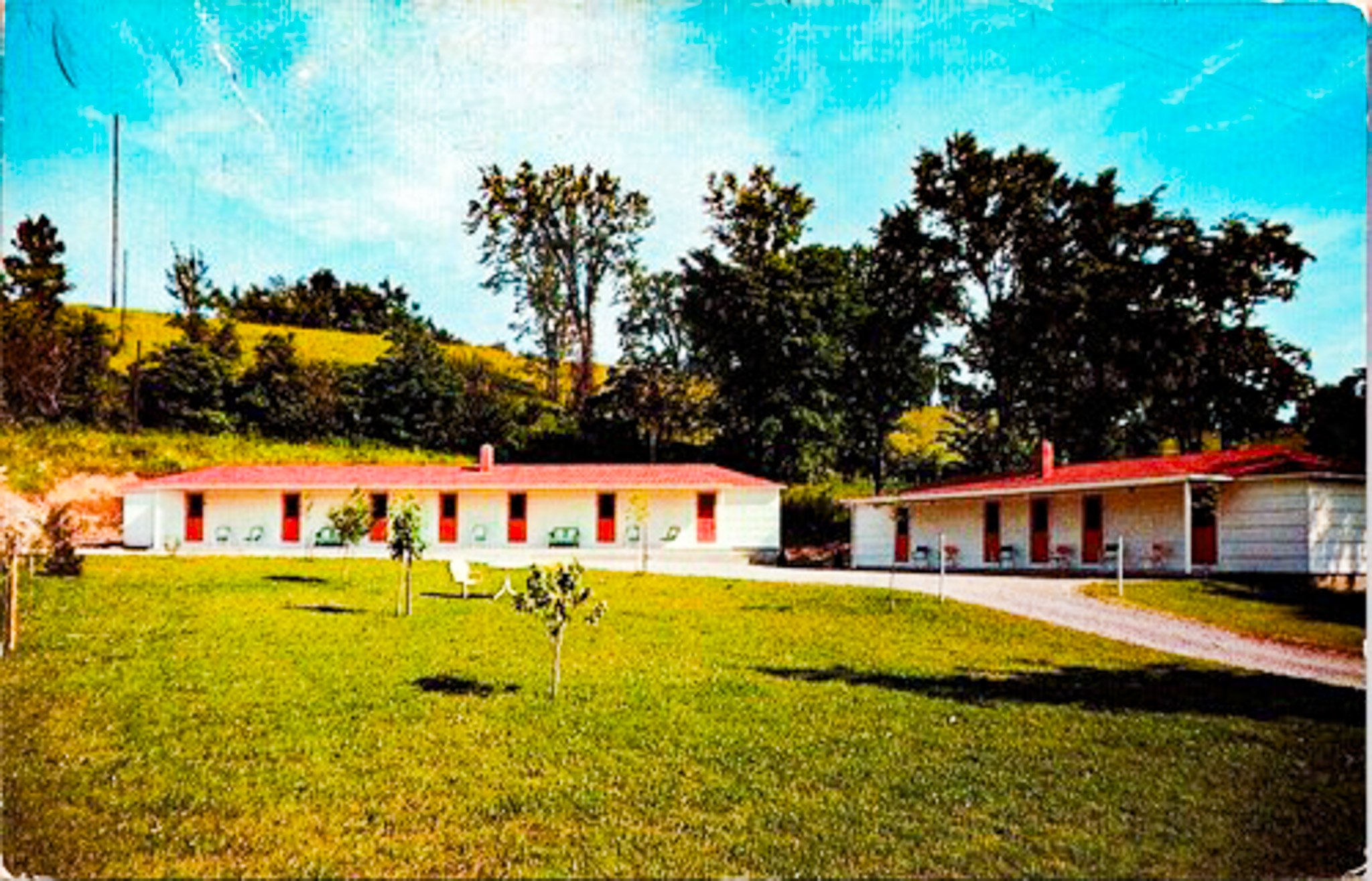
Hillside Motel Postcard
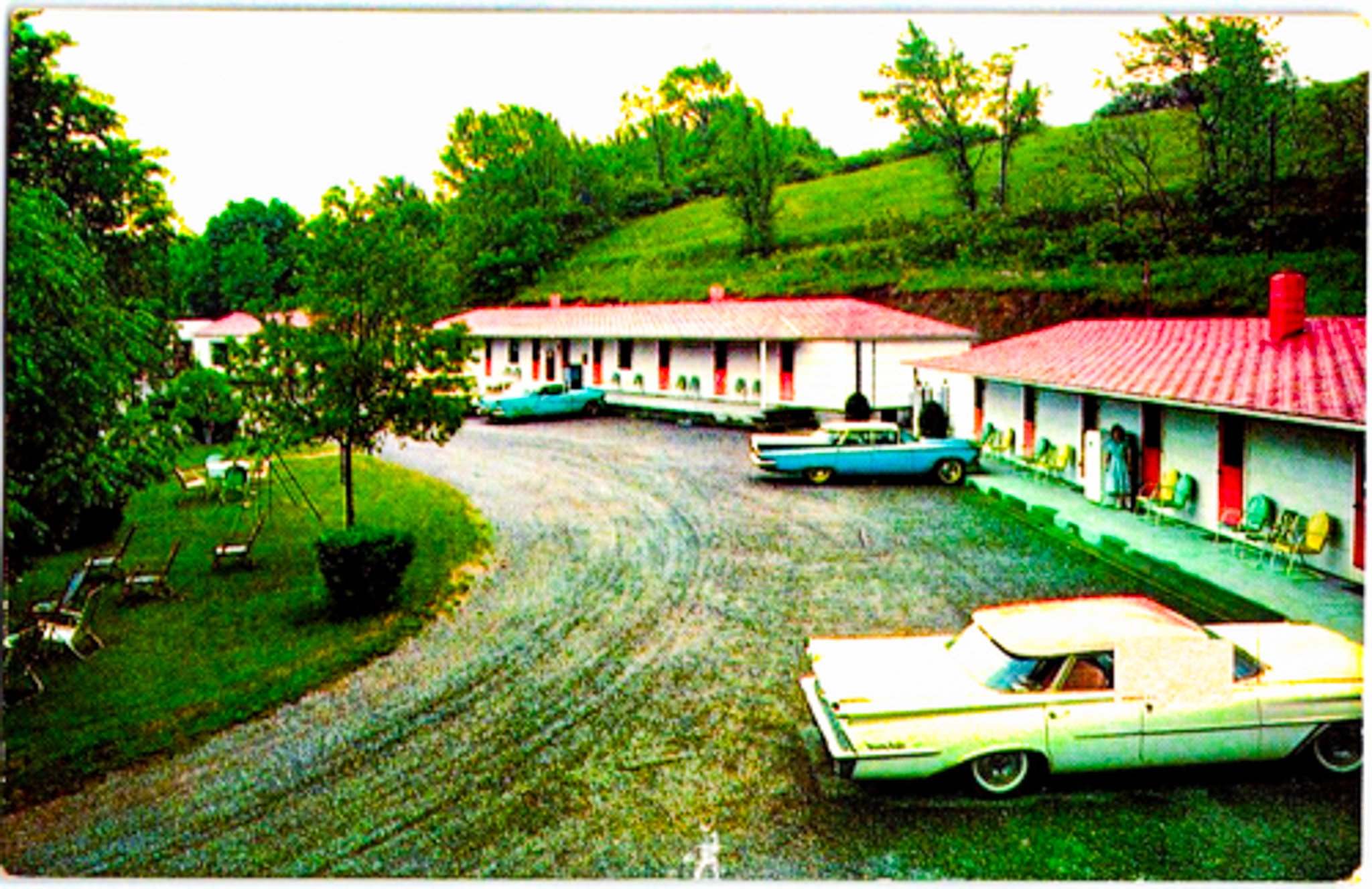
Hillside Motel Postcard
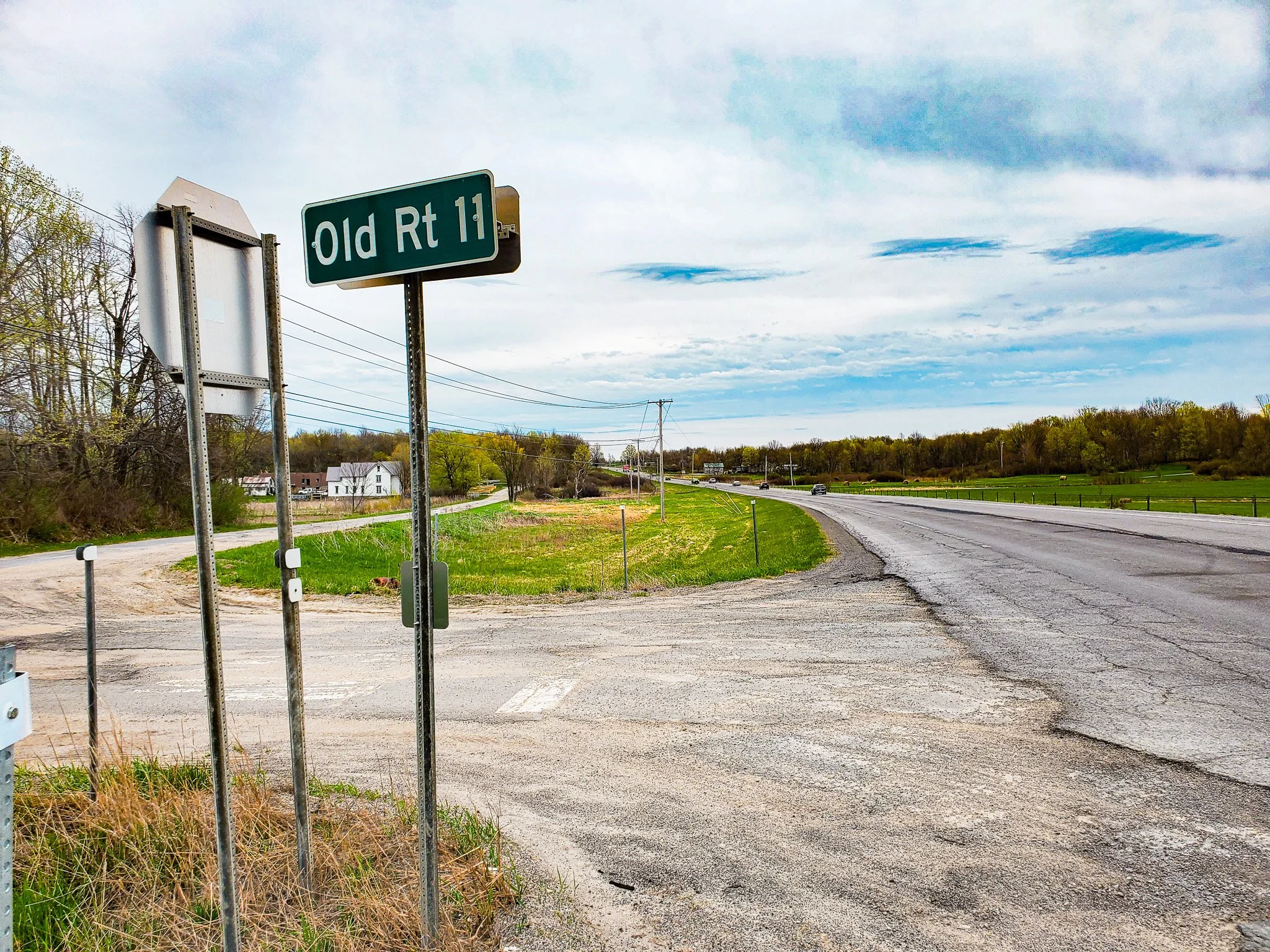
Old and New Route 11
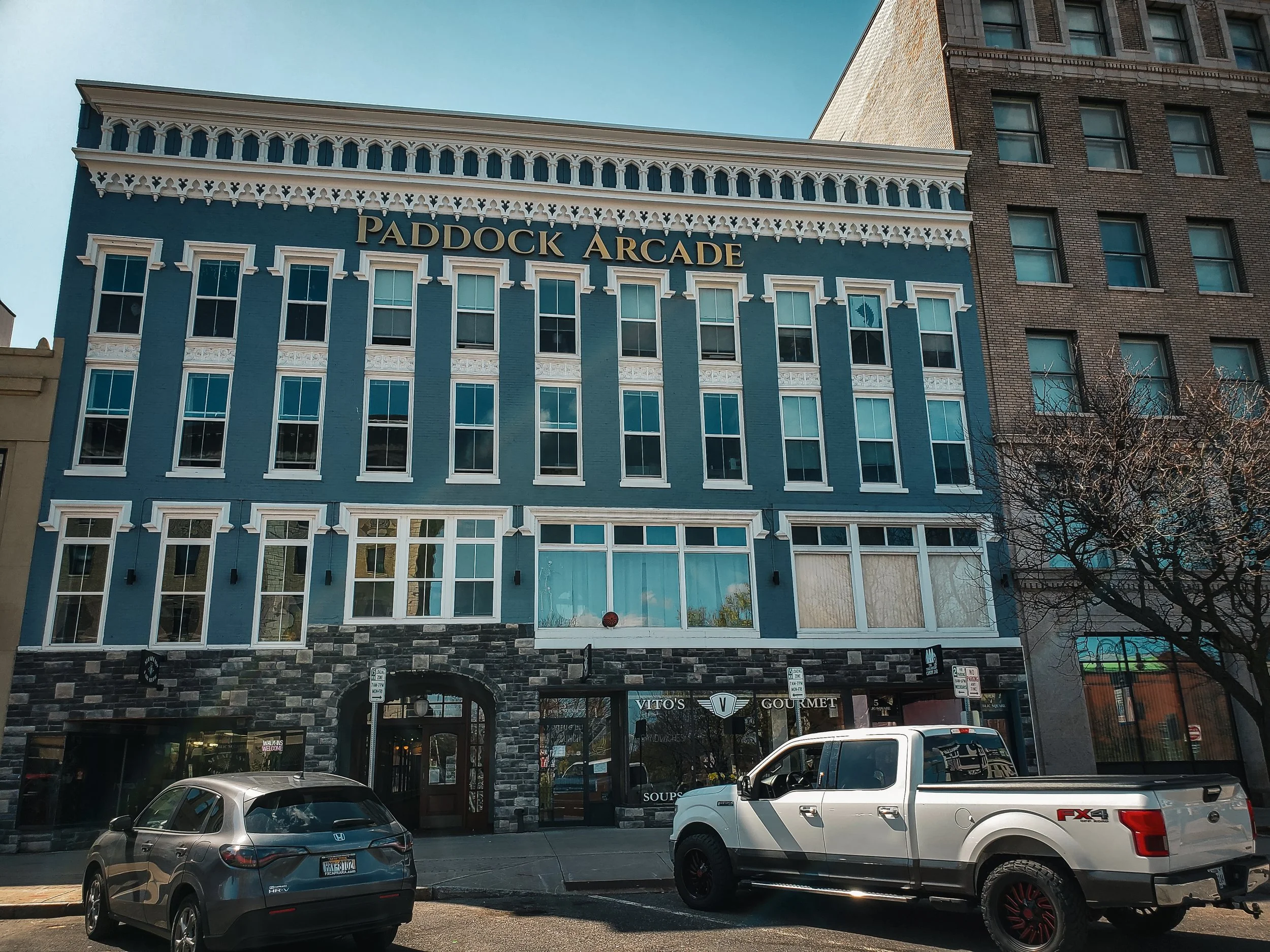
Paddock Arcade
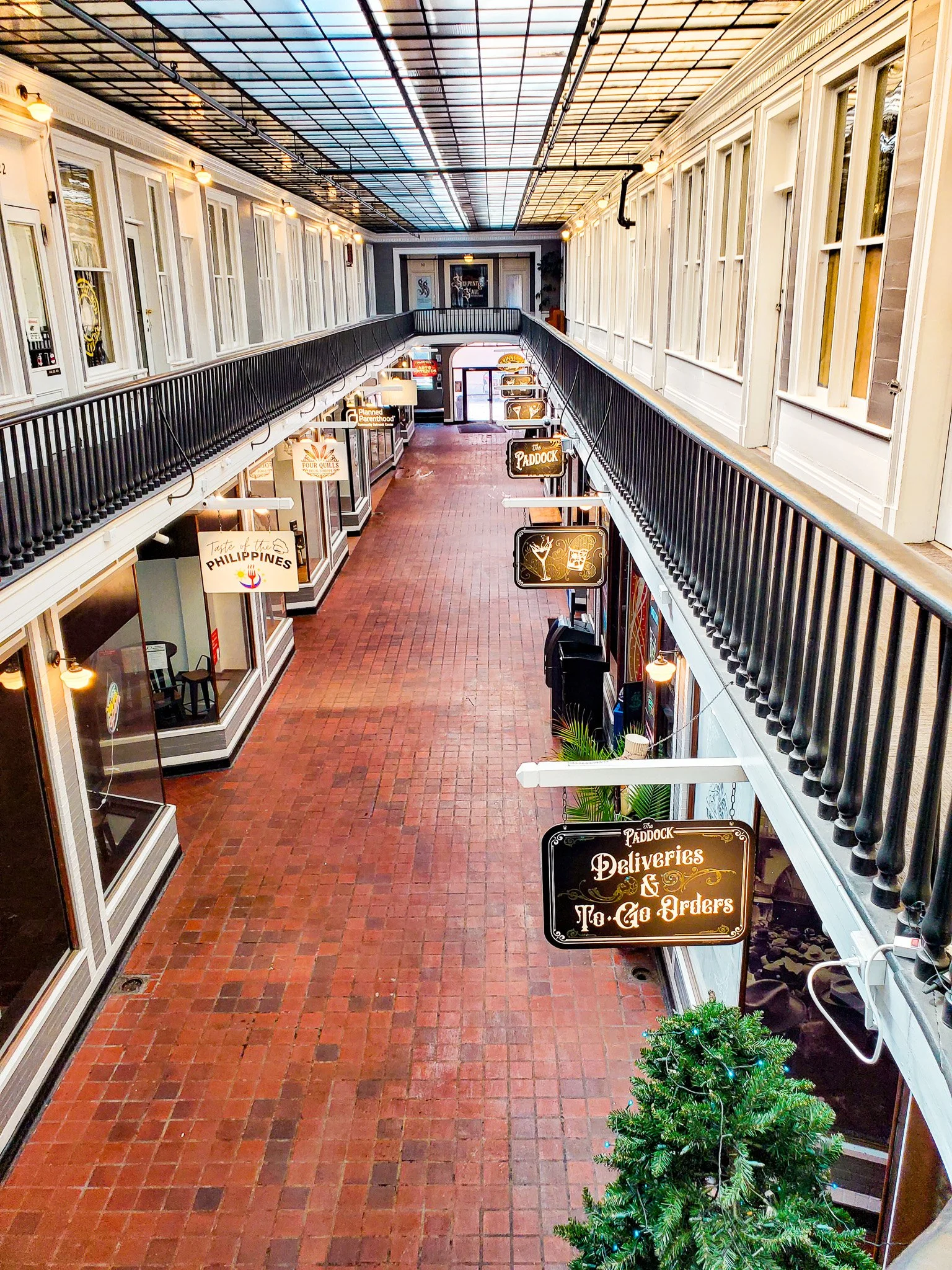
Paddock Arcade
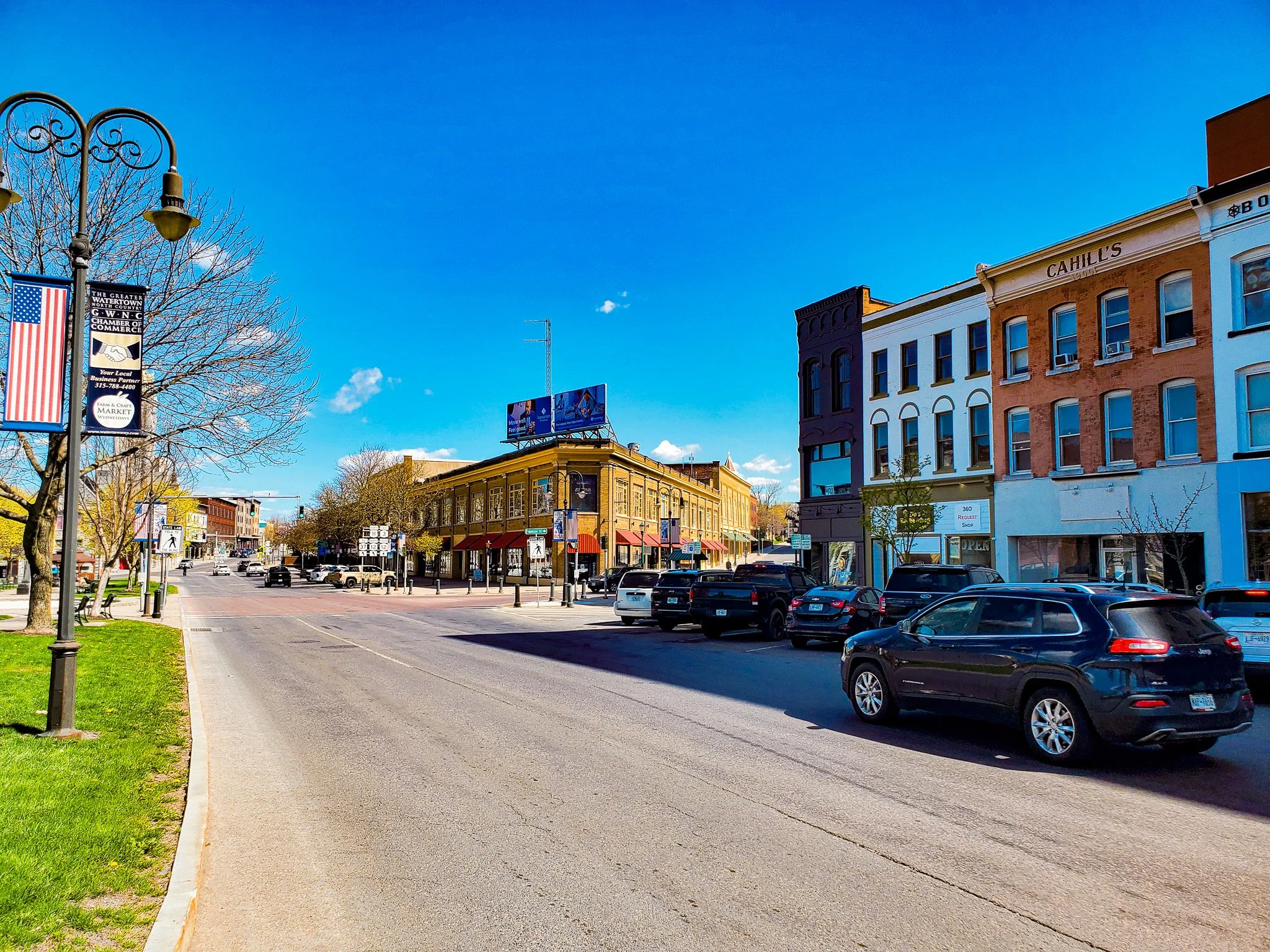
Main Street
CALCIUM
The town was named after the calcium chloride used in an early settler’s storage and refrigeration trade.
FORT DRUM
Home to the U.S. Army’s 10th Mountain Division, Fort Drum is named in honor of Lieutenant General Hugh A Drum, a distinguished Army officer who served as chief of staff for the First Army during World War I and later headed the Eastern Defense Command in World War II. Established in 1908 as Pine Camp, it became Fort Drum in 1951.
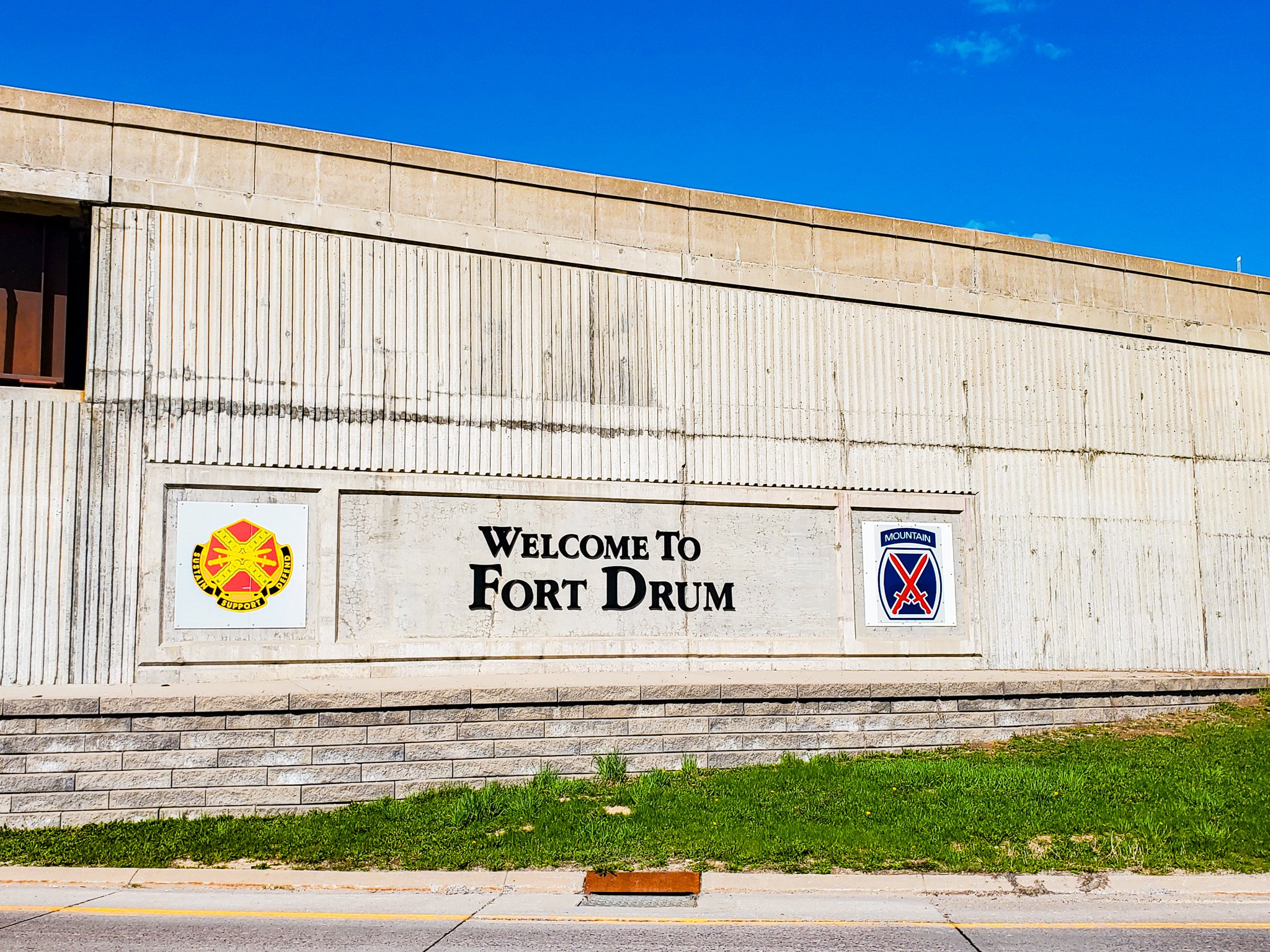
Fort Drum Bridge Welcome Sign
EVANS MILLS
Mr. Evans had a mill here. It is home to Evans Mills Speedway and the historic LeRay Hotel which was built in 1827.
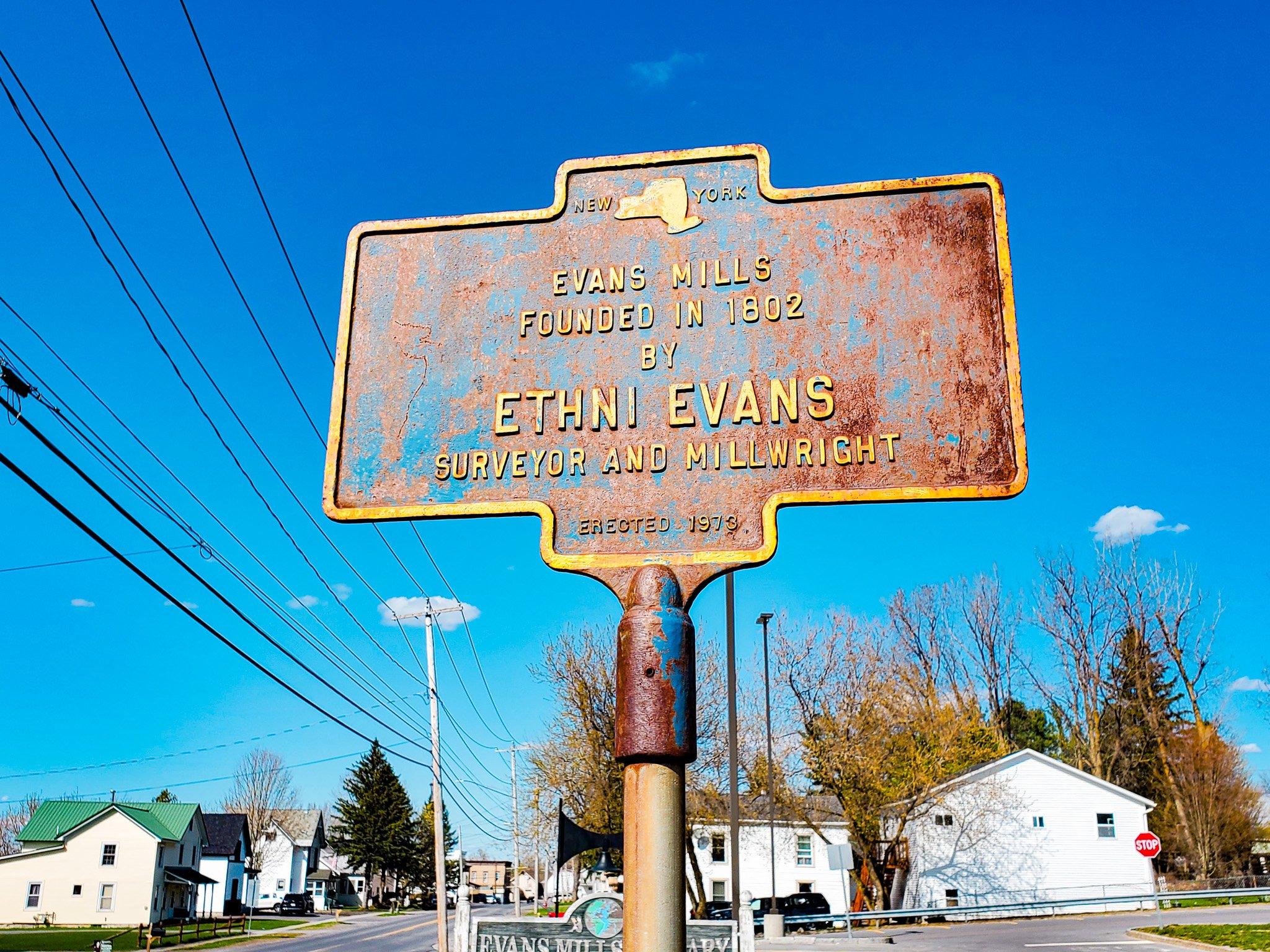
Evans Mills Welcome Sign
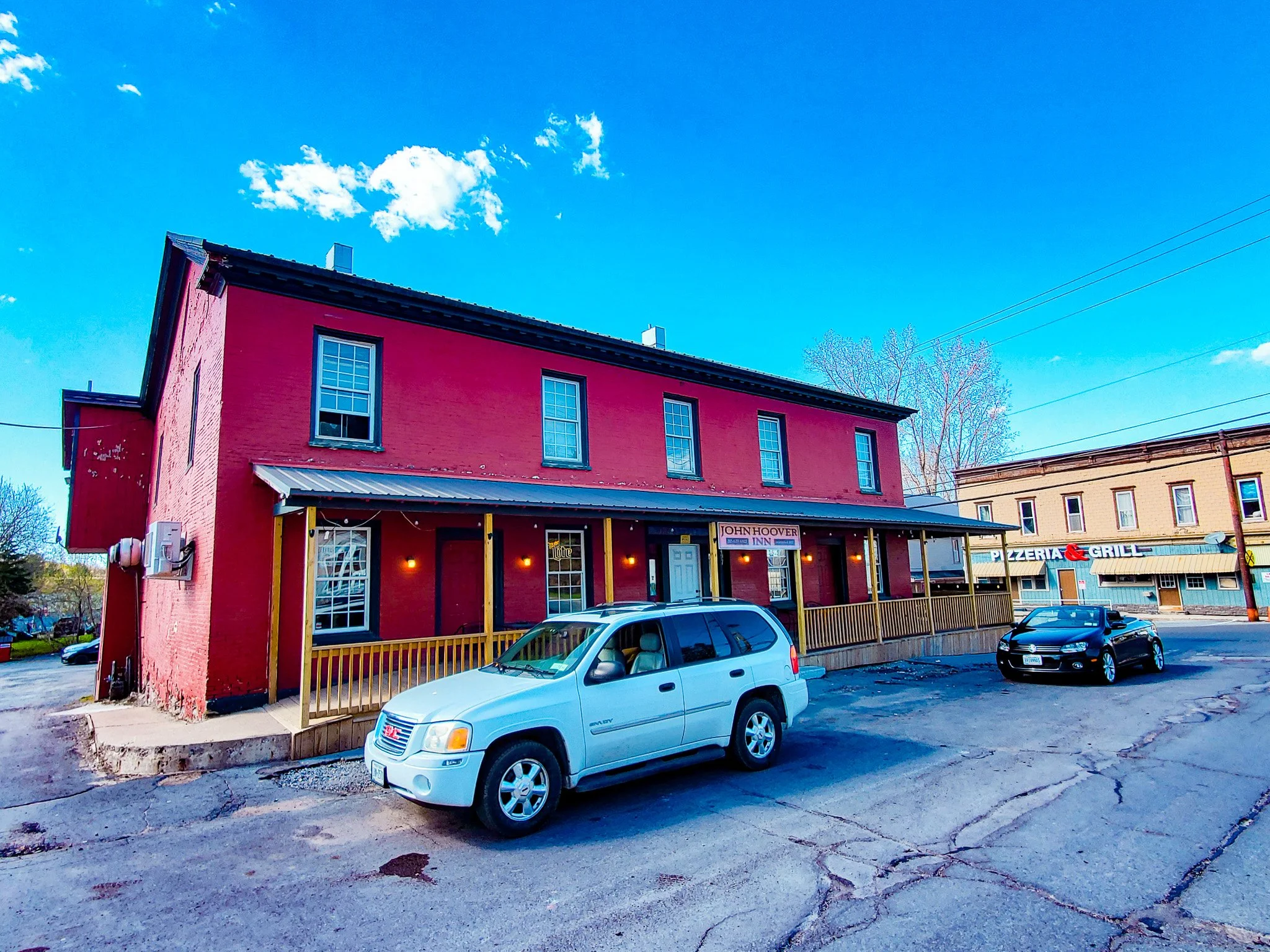
John Hoover Inn
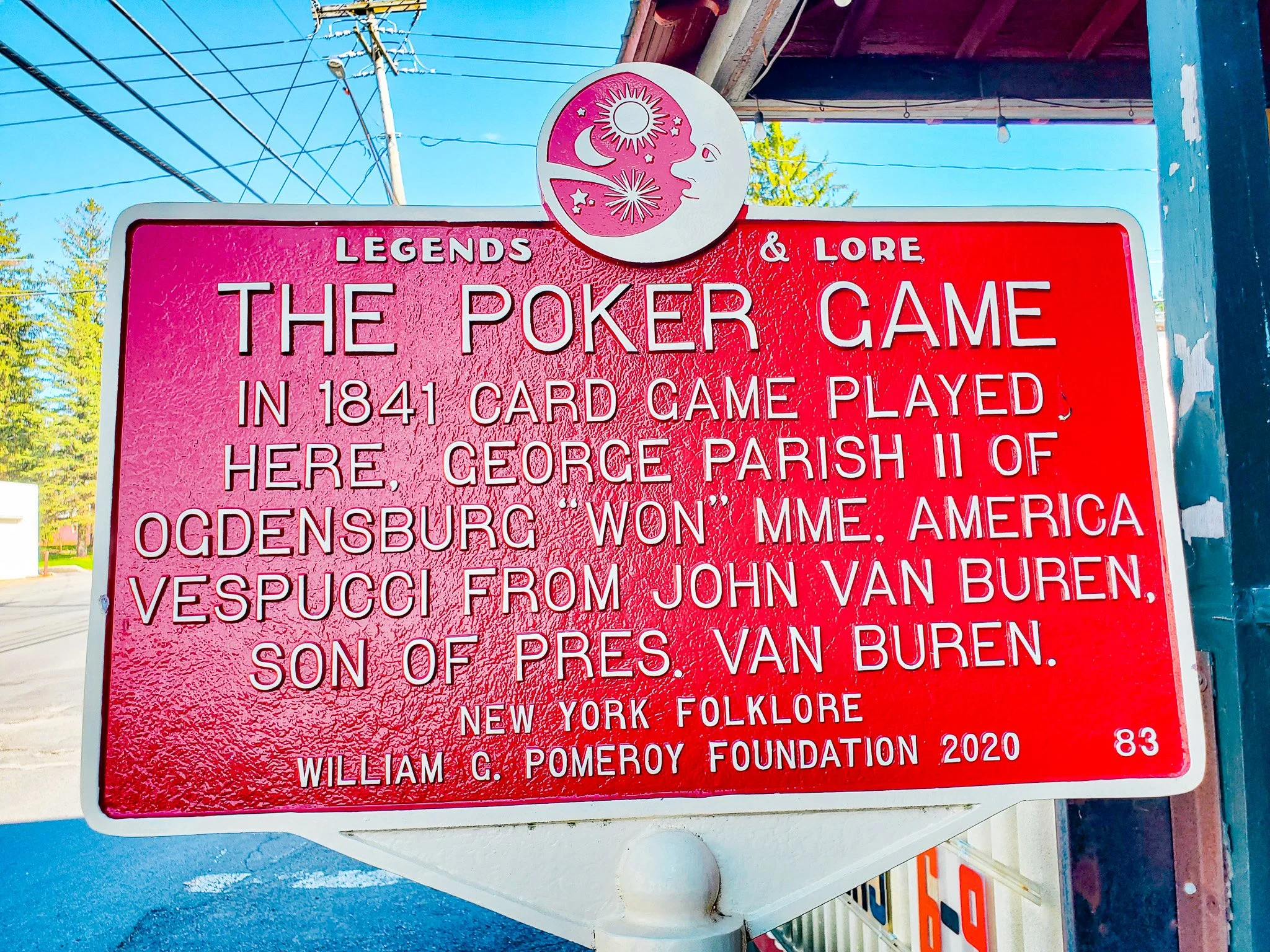
"The Poker Game" Marker
PHILADELPHIA
Settled in 1804, Philadelphia holds New York’s all time record low temperature in December of 53 degrees below zero. A small fiberglass replica of the Statue of Liberty is part of a memorial to victims of 9/11 located at 5 US Hwy 11 behind the Philly Fuels gas station.
Welcome to Philadelphia Sign
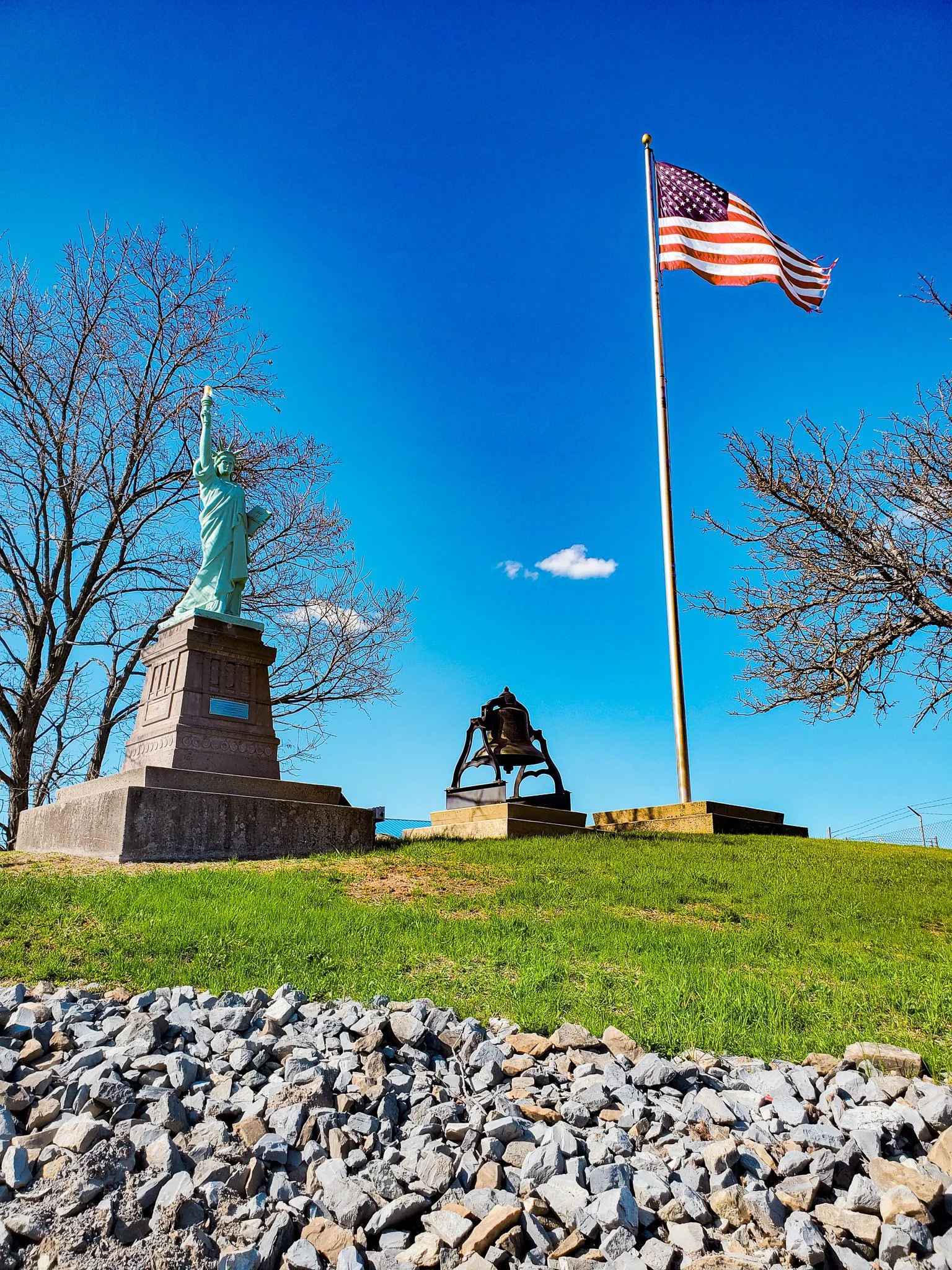
Liberty Replicas
ANTWERP
The town was named after Antwerp Belgium where the town’s original investors had come from. The entire village is listed on the New York State Historic Registry and includes a stone arch bridge and the Richardsonian Romanesque Town Hall, built between 1897-1901. Antwerp is the home of Cassius Marcellus Coolidge, painter famous for his “Dogs Playing Poker” paintings. He also invented the carnival cut-outs for face photos.
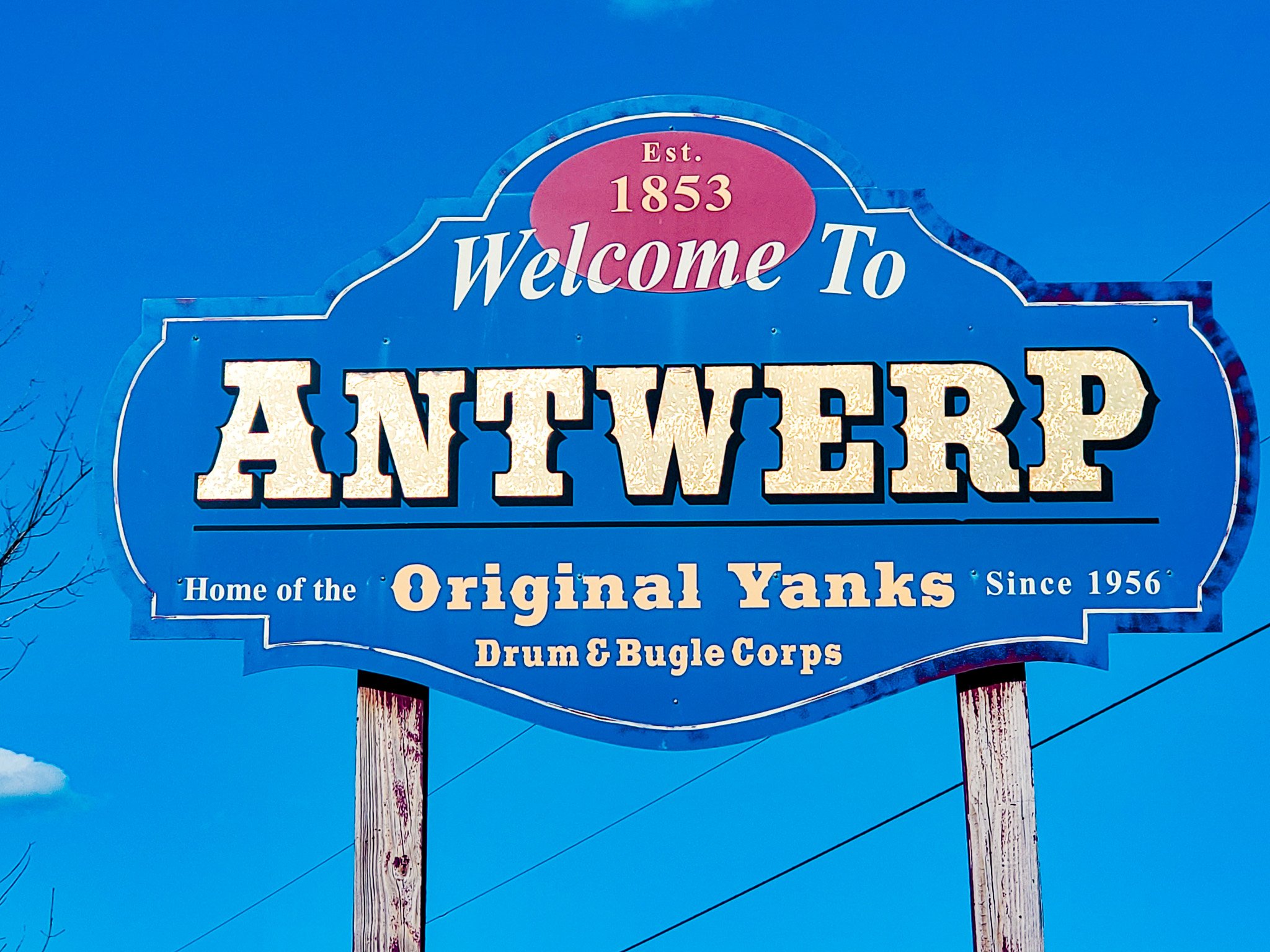
Welcome to Antwerp Sign
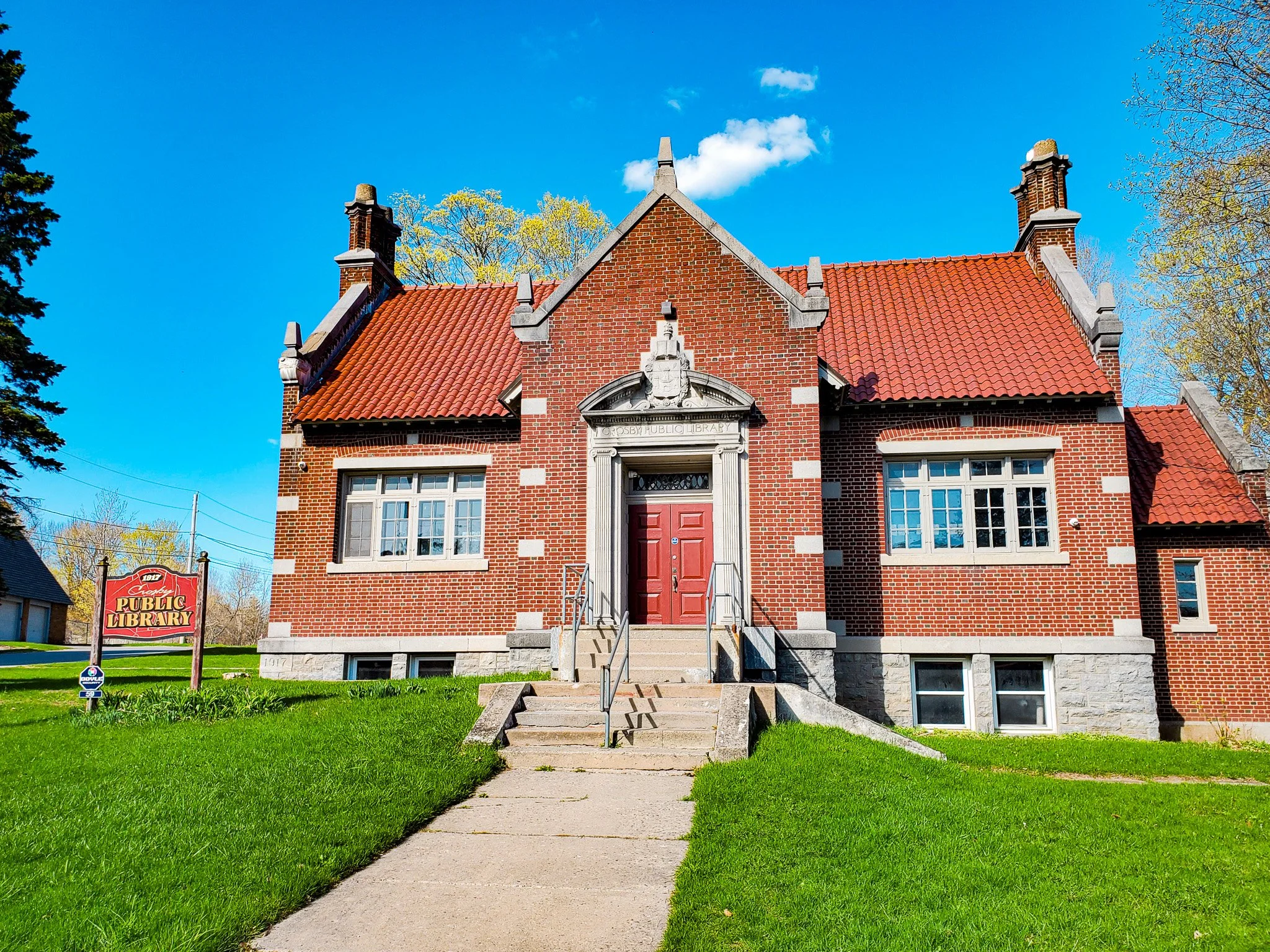
Crosby Public Library Building
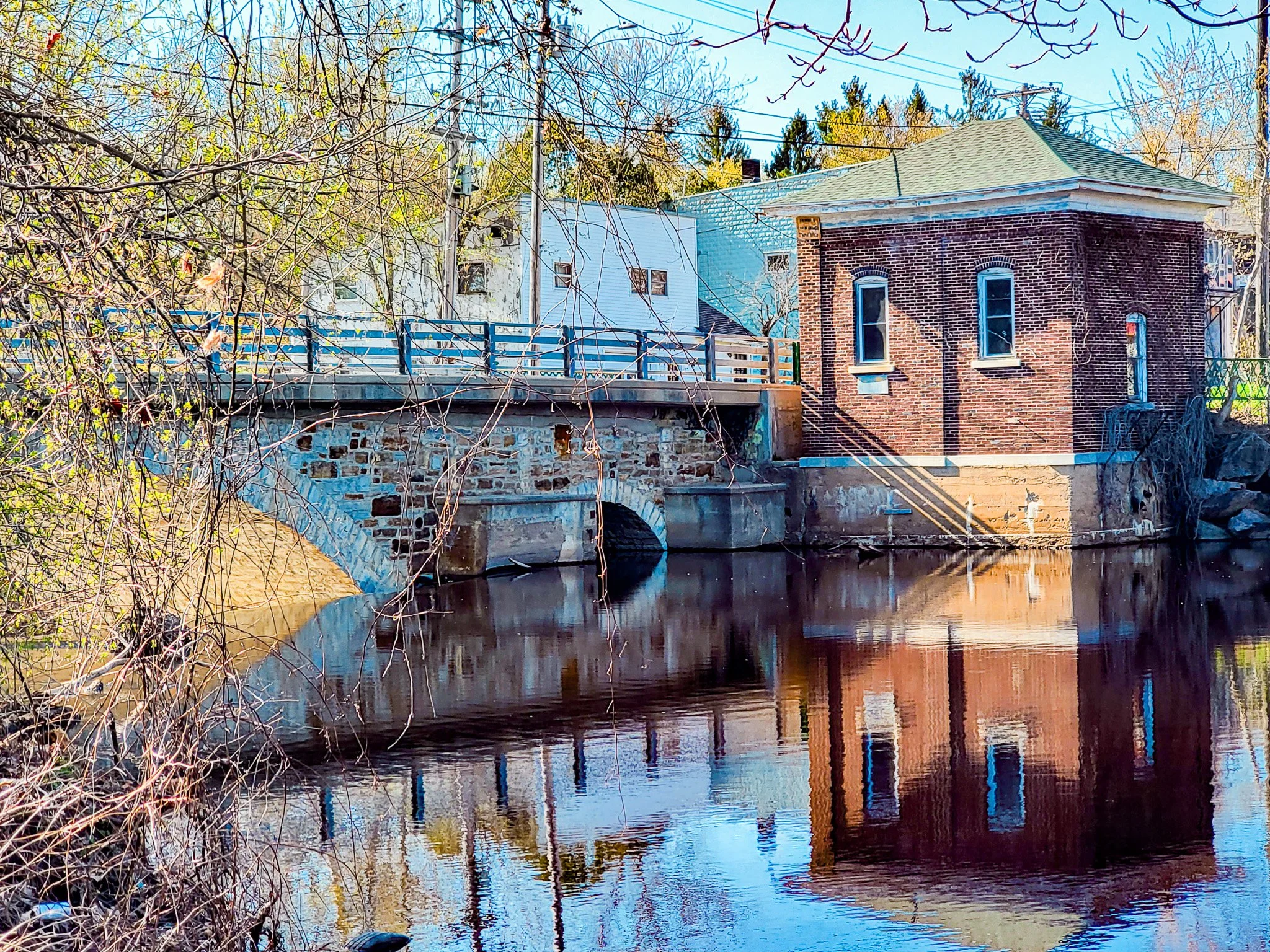
Stone Arch Bridge
ROSSIE
The hamlet was named after the sister of an early land owner. The Rossie Shot Tower still stands on private property.
GOUVERNEUR
The town was named after Gouverneur Morris, who was of French Huguenot descent and a Founding Father of the United States. Gouverneur was called "The Marble Village" for the structures made of marble and mining of marble in early days, and contains the Gouverneur Museum. In 1913, the Lifesaver Candy Company was started in the town, and currently the largest roll of Lifesavers in the world is located there.
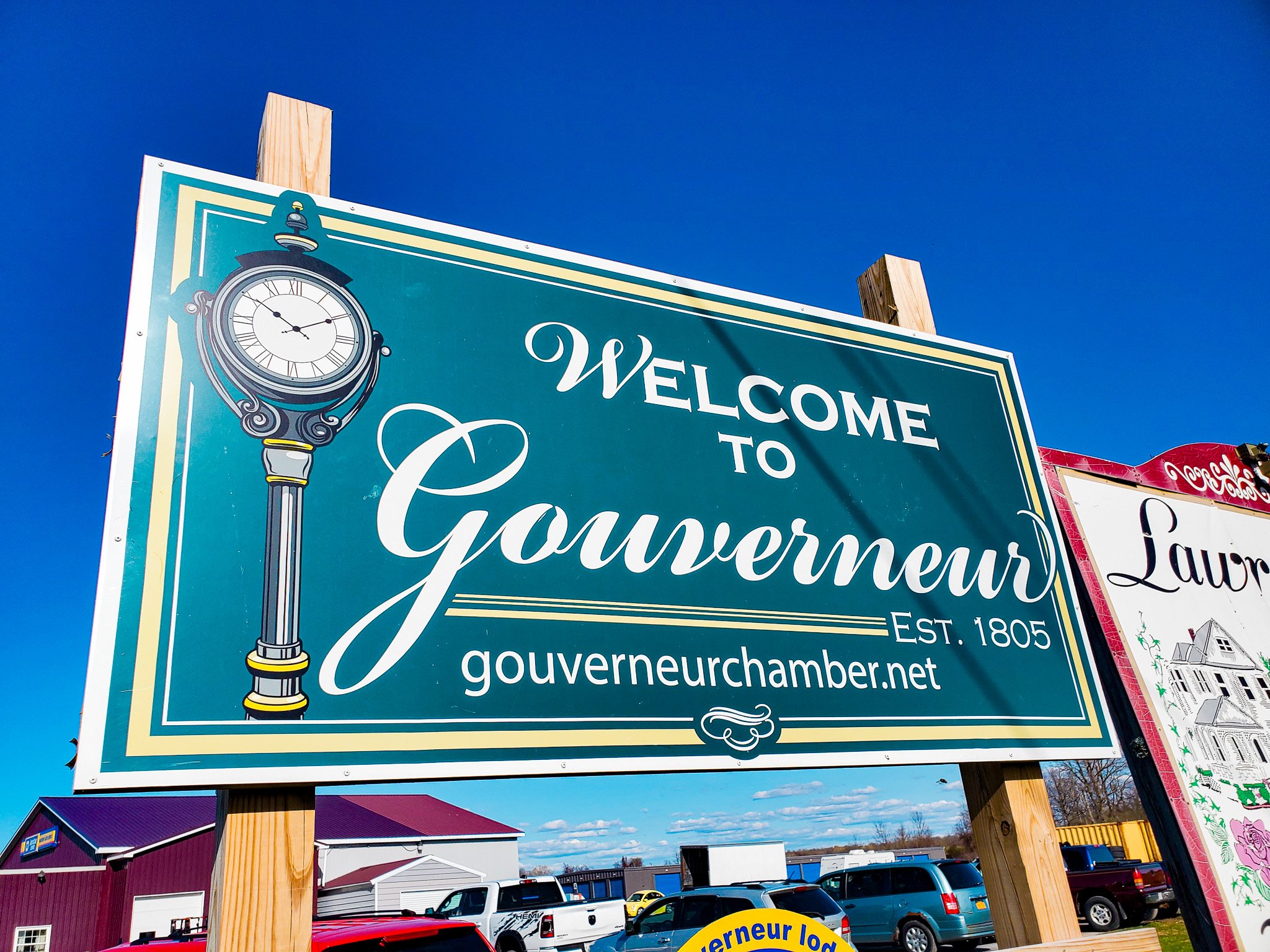
Welcome to Gouverneur Sign
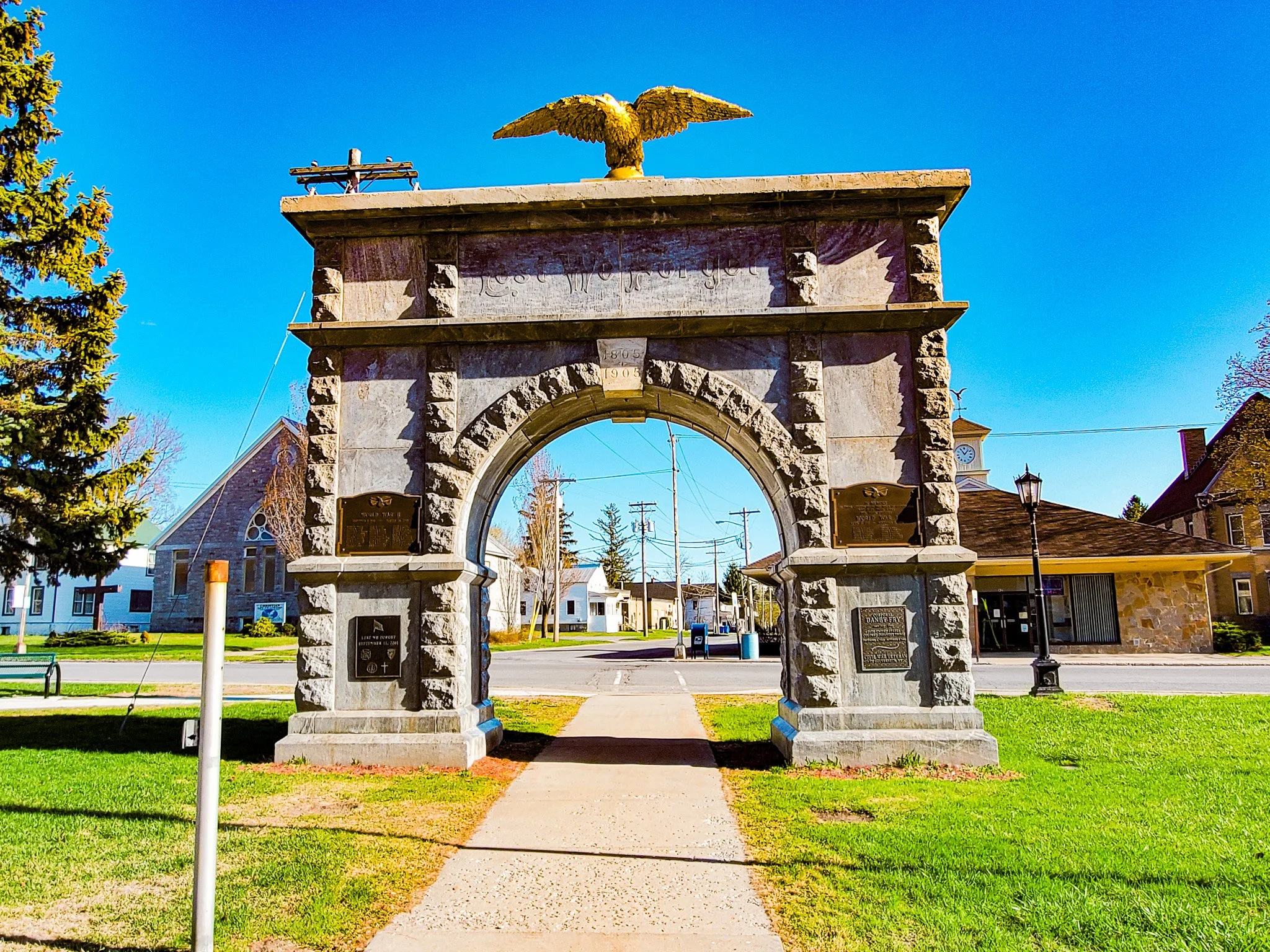
Gouverneur Memorial Arch

Custard Cottage
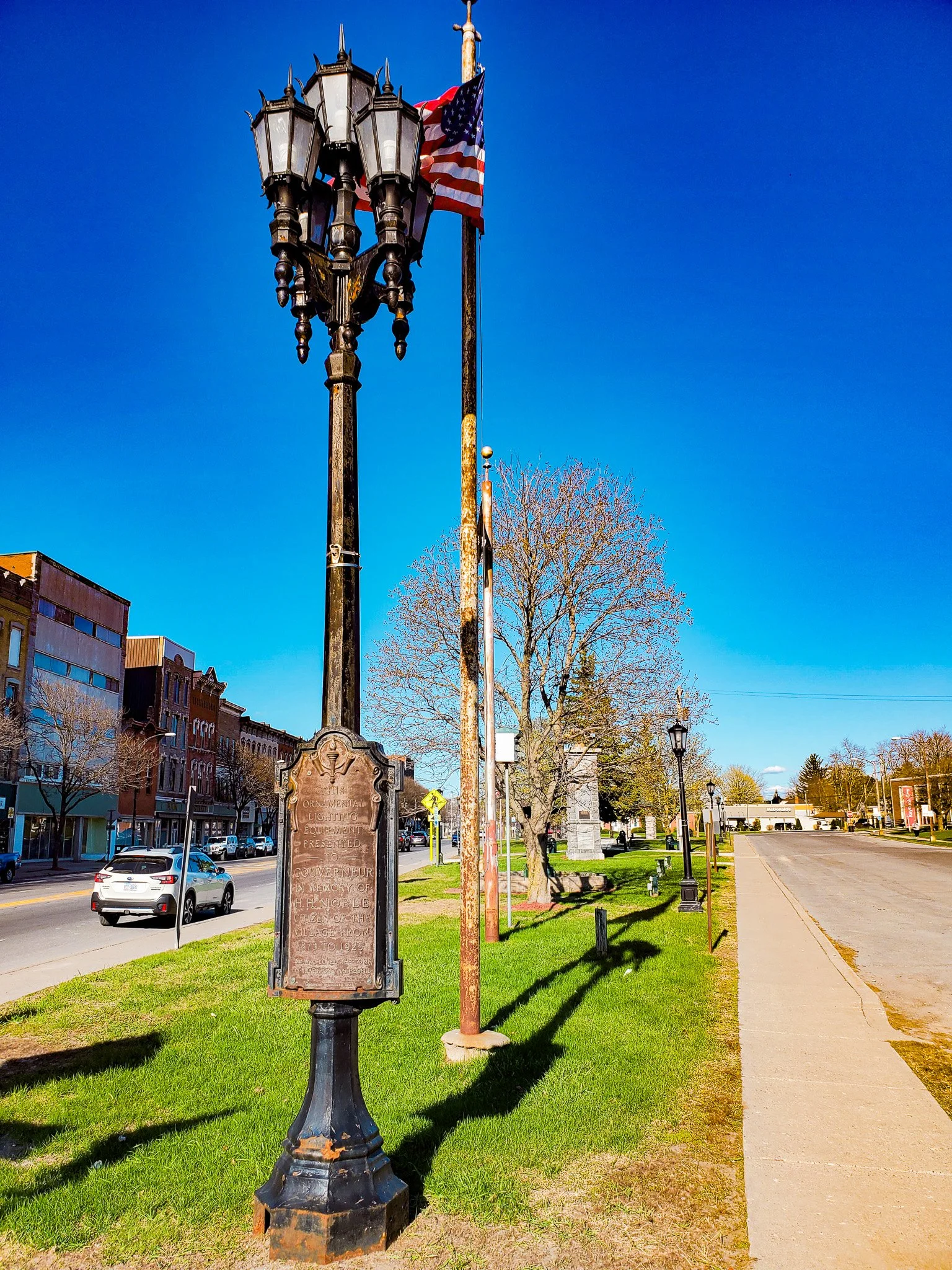
Donated Lightpost
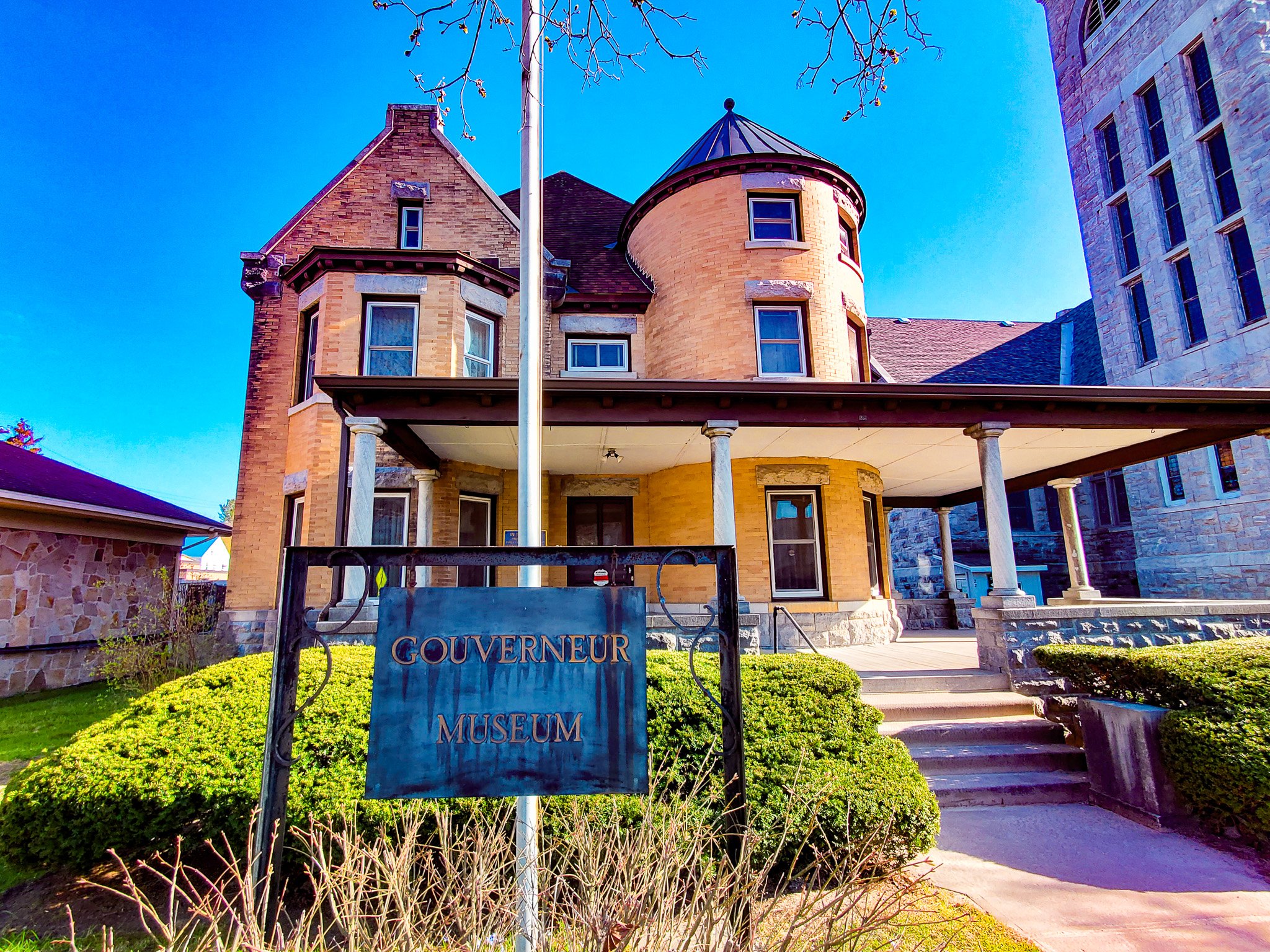
Gouverneur Museum
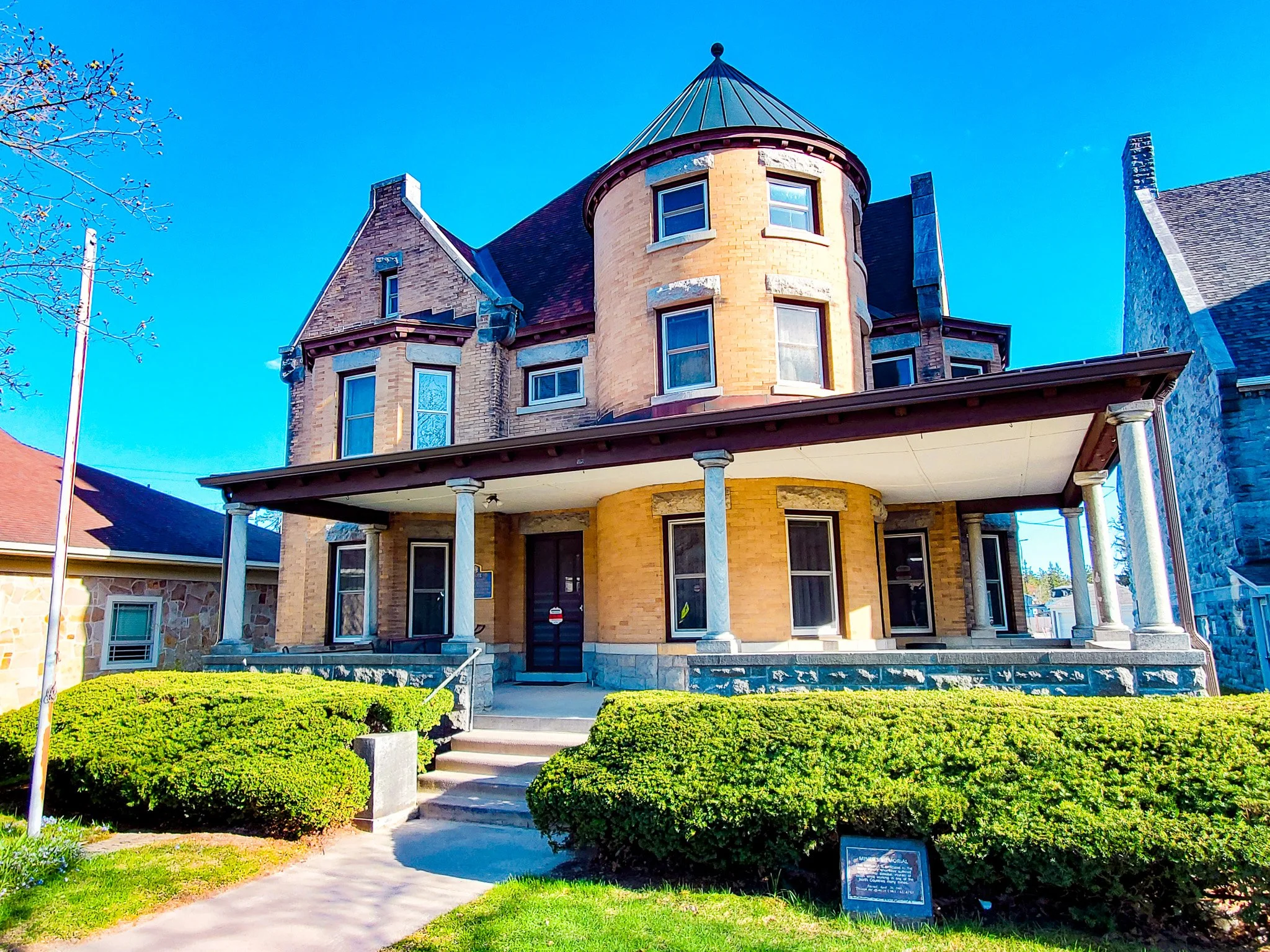
Gouverneur Museum
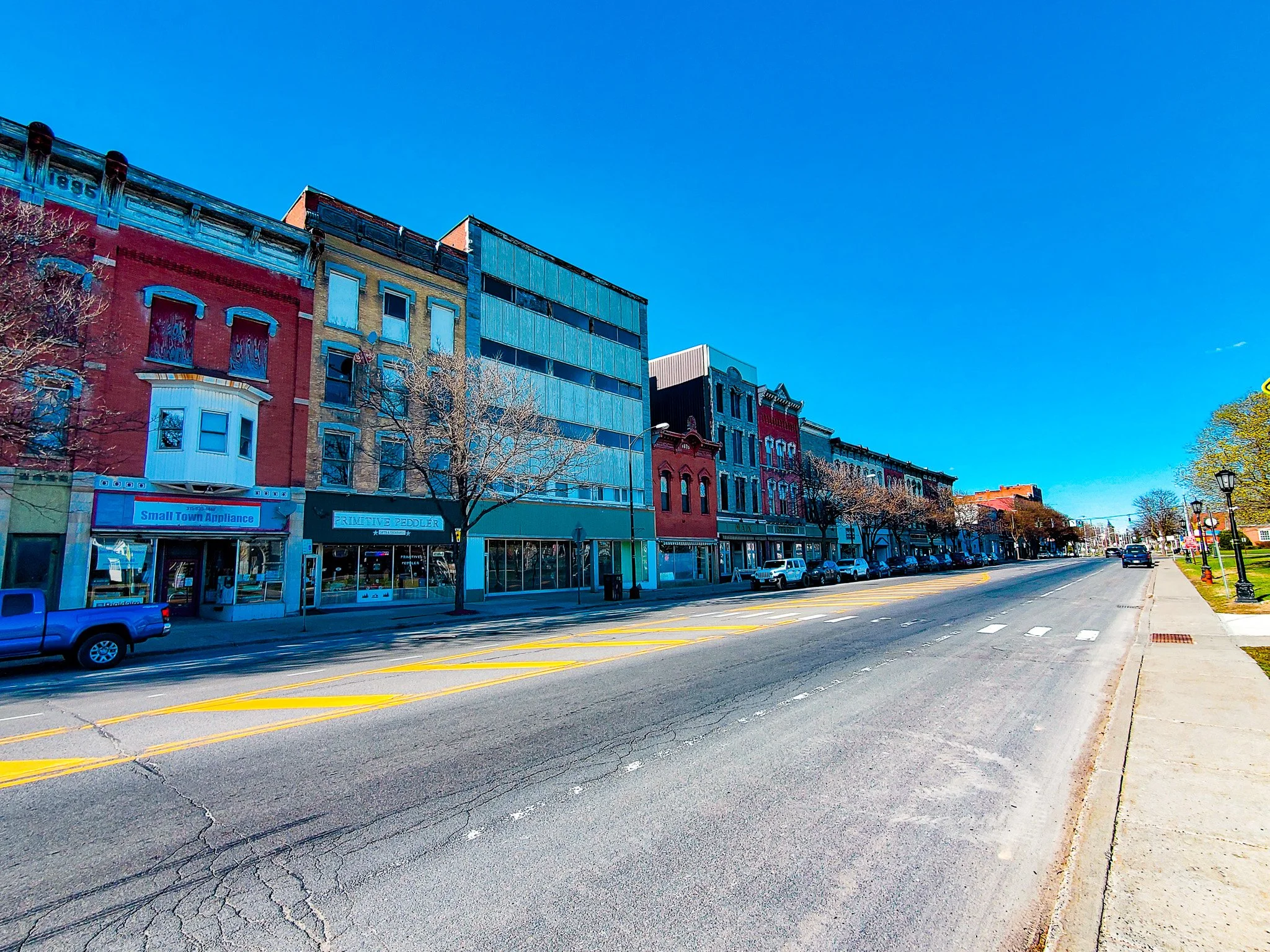
Main Street
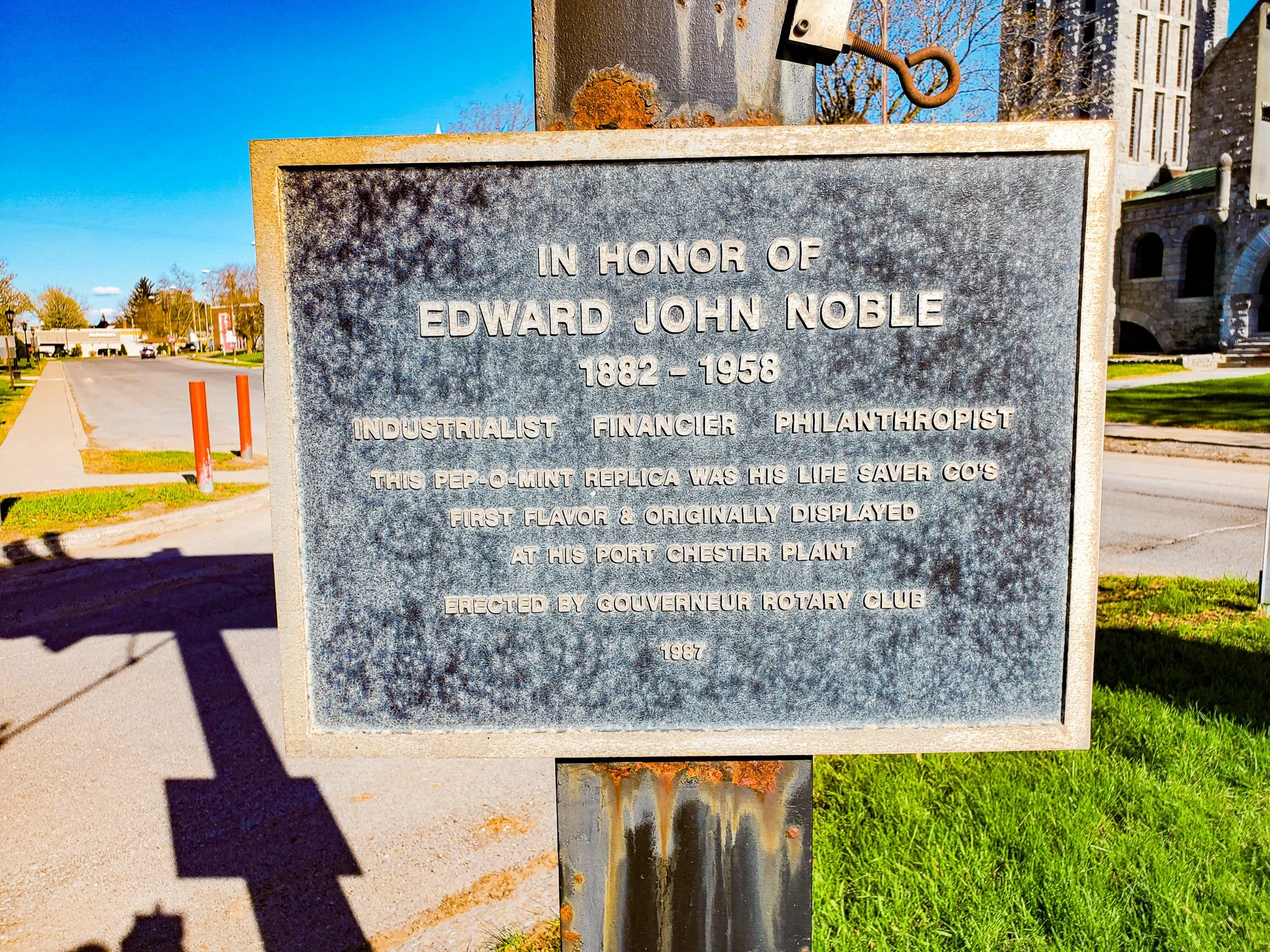
Edward Noble Plaque
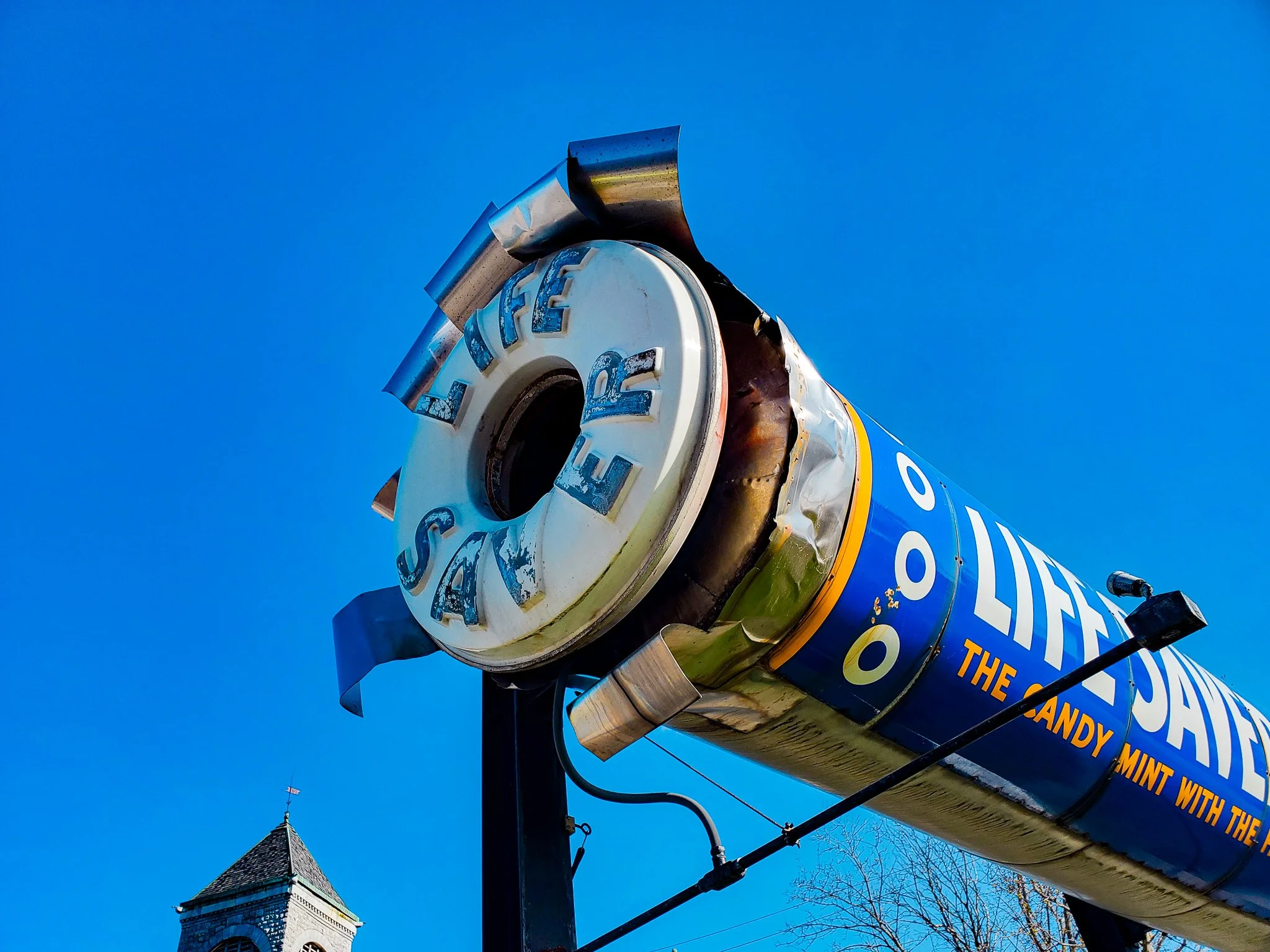
Life Savers Roll
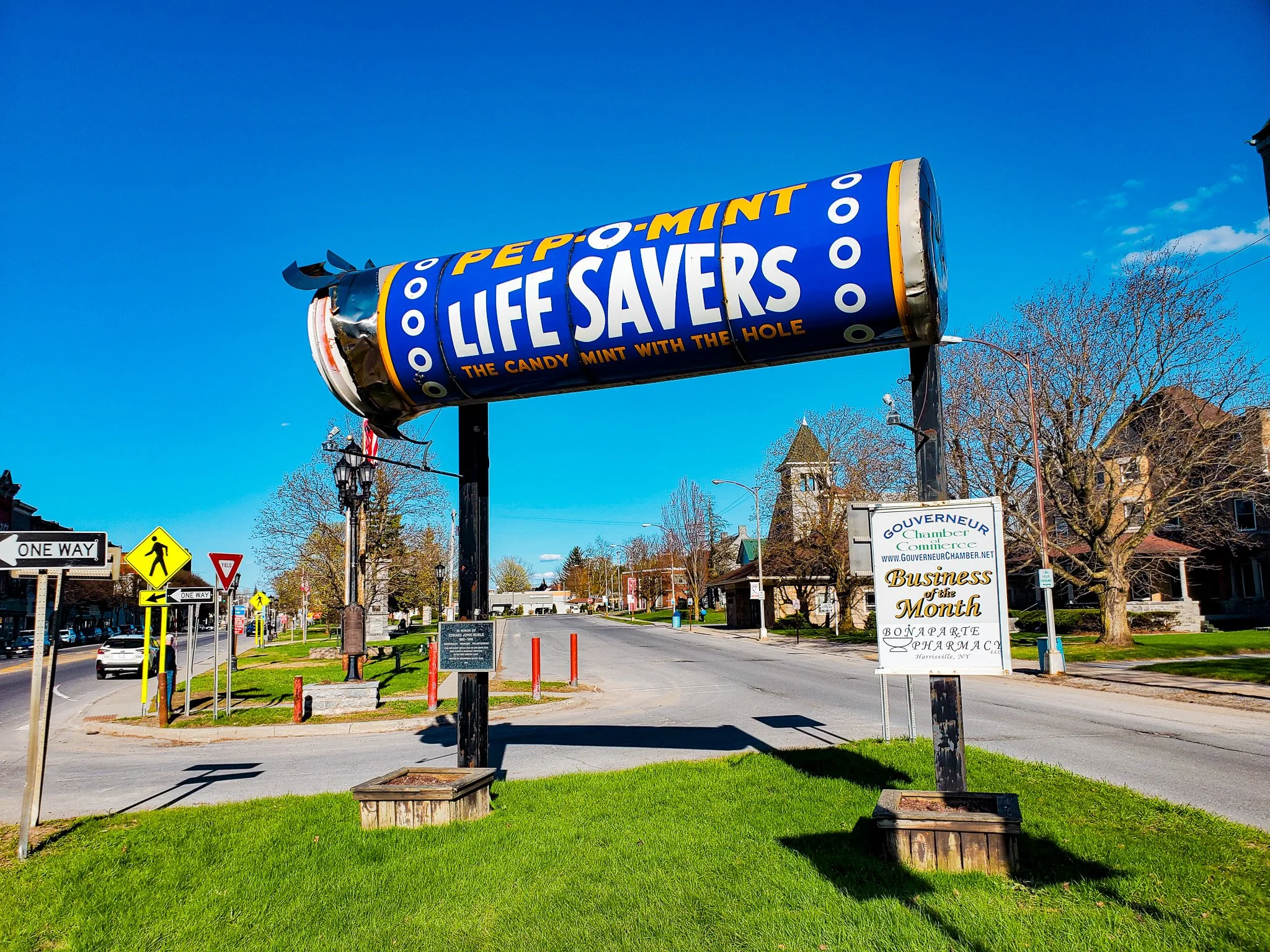
Life Savers Roll
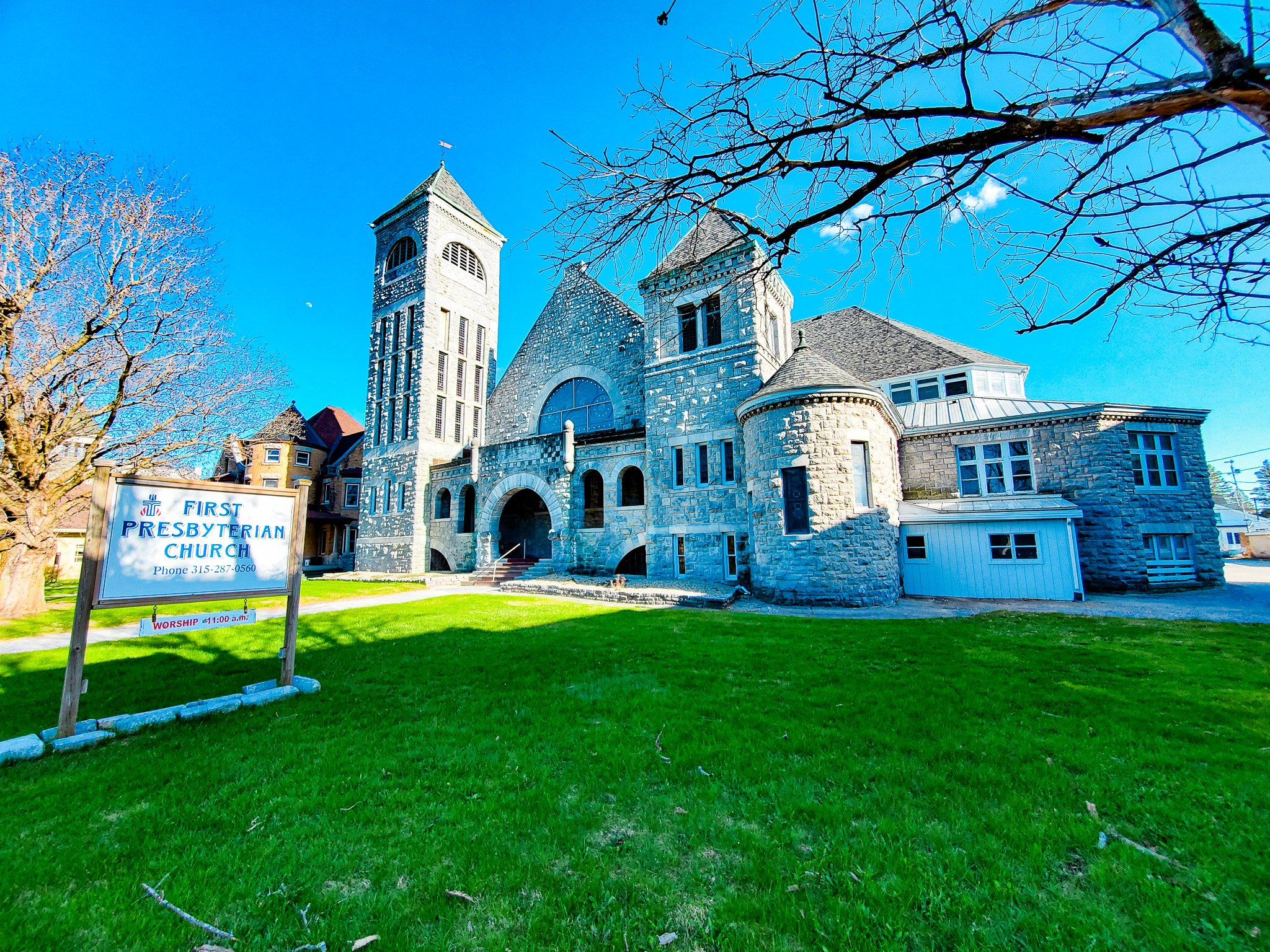
Marble Mansion
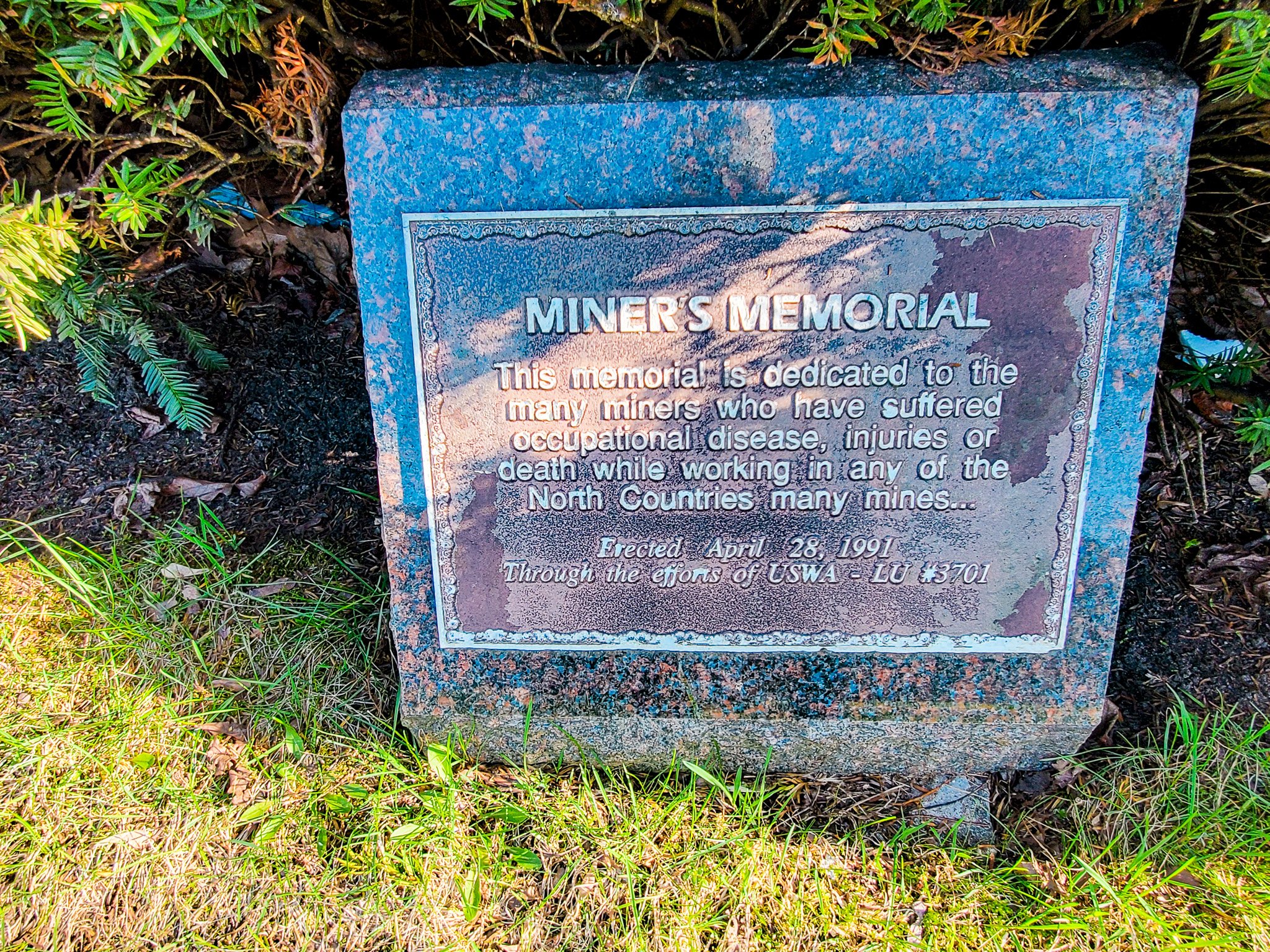
Miners Memorial Plaque
RICHVILLE
The town was founded by Salmon Rich in 1804.
DEKALB JUNCTION
The town was named for Baron DeKalb, a French military officer born in Germany, who served as a Major General in the Continental Army.
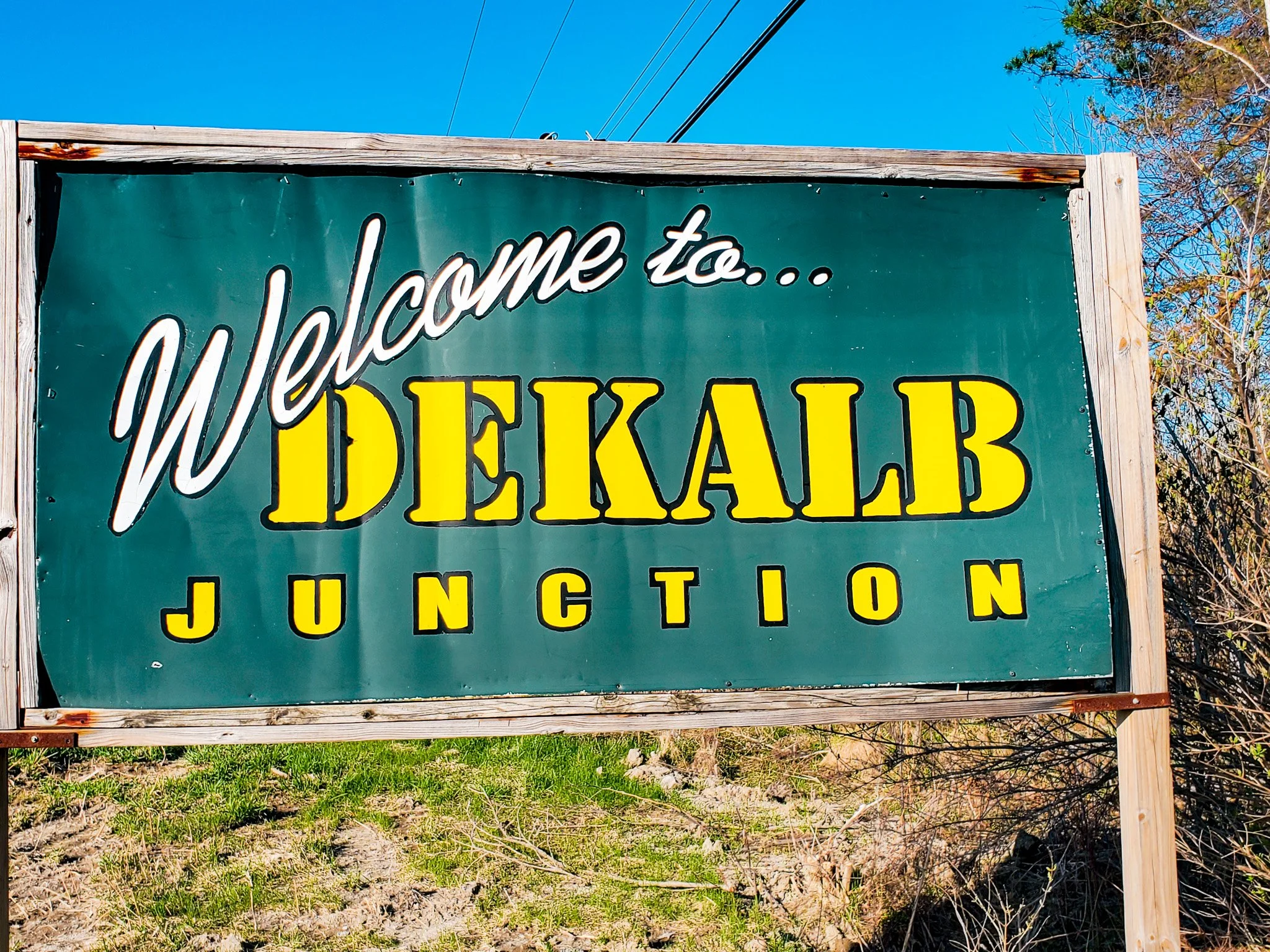
Welcome to Dekalb Junction Sign
CANTON
Canton was named after the major Chinese port city of Canton (now known as Guangzhou) and settled in the early 19th century. Home to SUNY-Canton and St. Lawrence University, Canton has an historic downtown with the classic American Theater built in 1921.
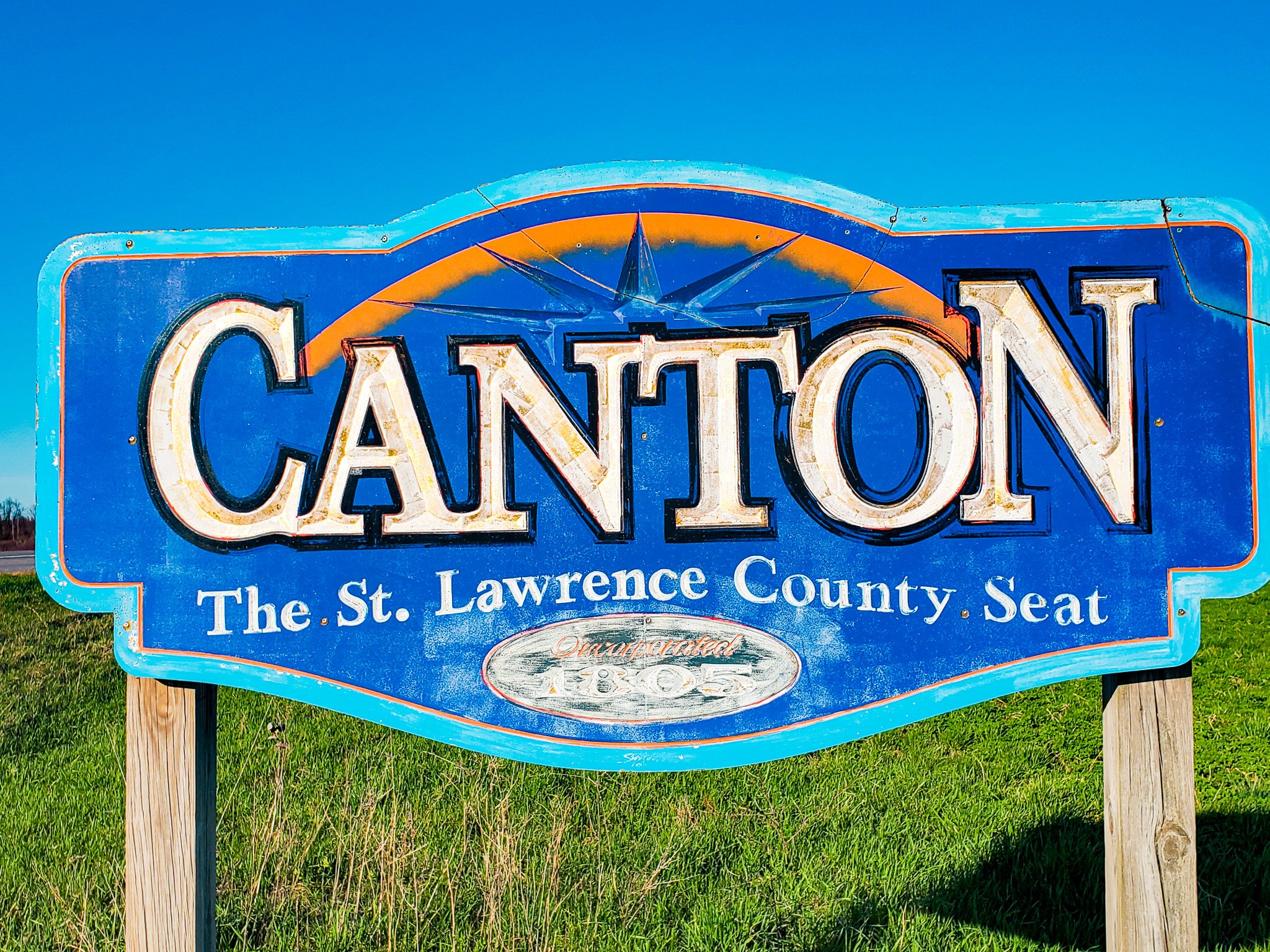
Welcome to Canton Sign
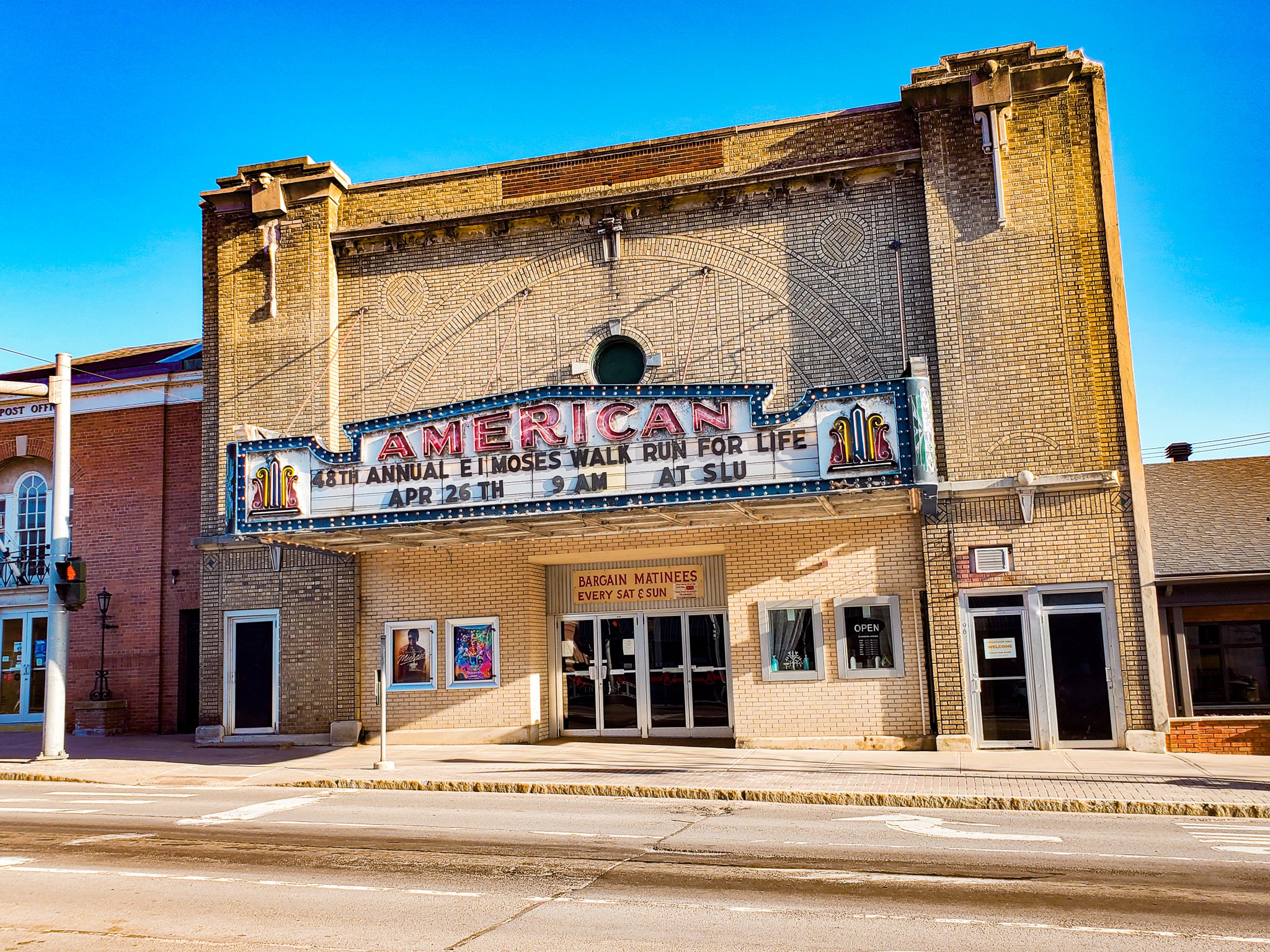
American Movie Theater
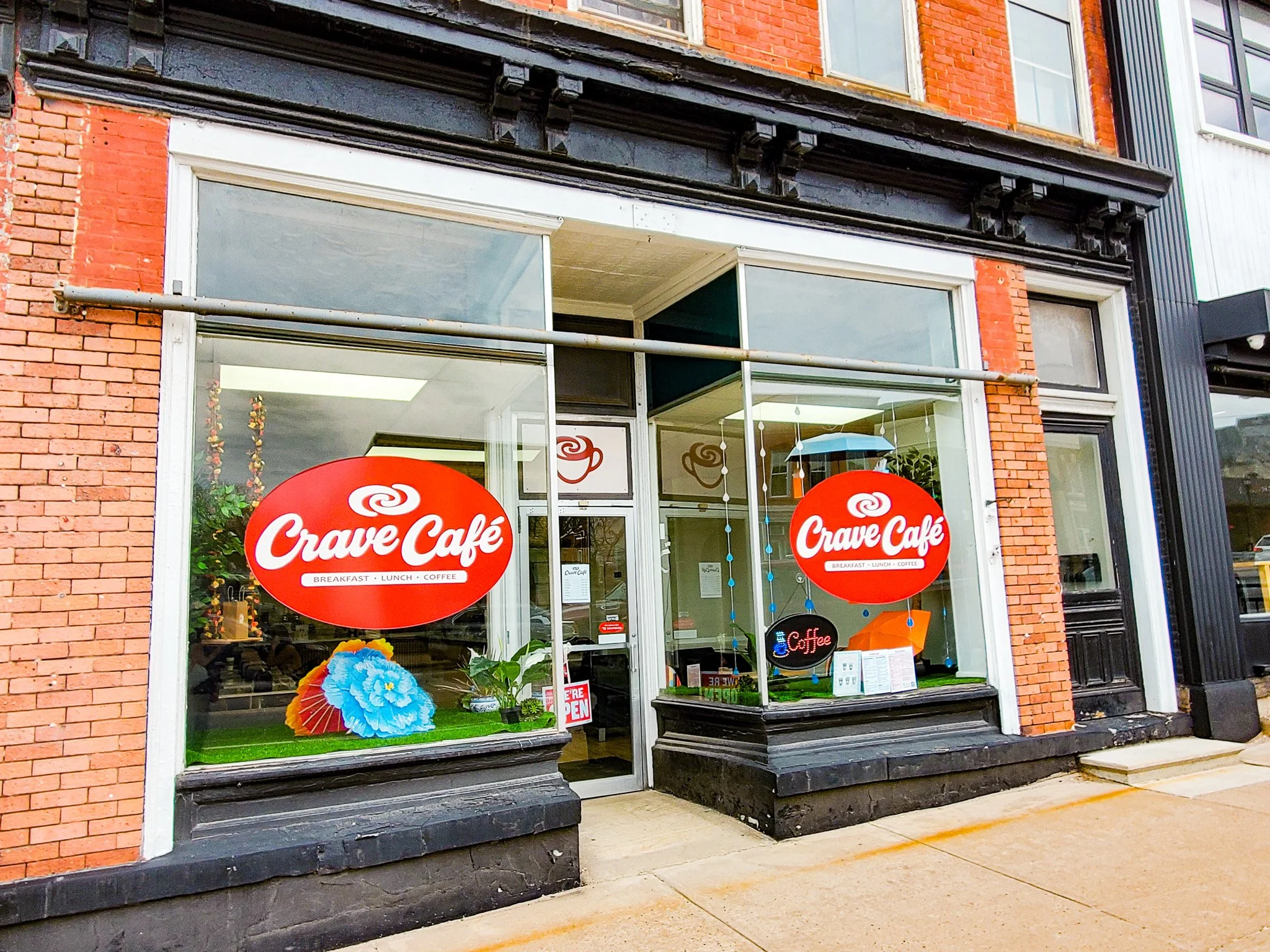
Crave Coffee Shop
POTSDAM
Established in 1806 and named after Potsdam Germany, it is home to Clarkson University and SUNY-Potsdam. The town is known for its reddish-pink Potsdam sandstone, and the Potsdam Little Italy Restaurant is located in the oldest standing sandstone structure in Potsdam. The Raquette River flows through town, and the “Potty Gardens”, the results of a disagreement between the town and a citizen, are located at 82 Market Street, and at 85 and 79 Maple Street. The Eben’s Hearth Restaurant on US 11 has been serving hearty American fare for over 35 years.
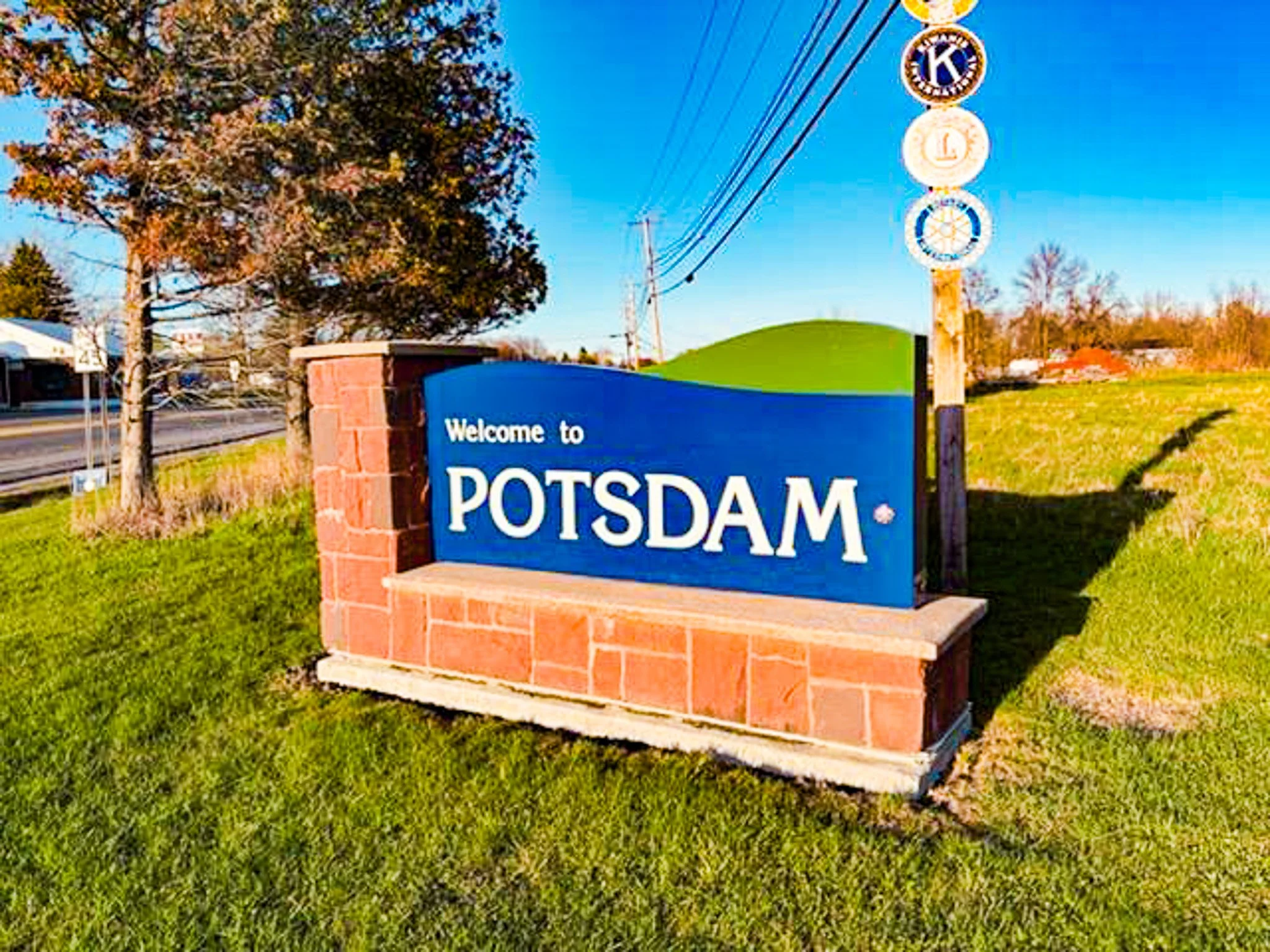
Welcome to Potsdam Sign
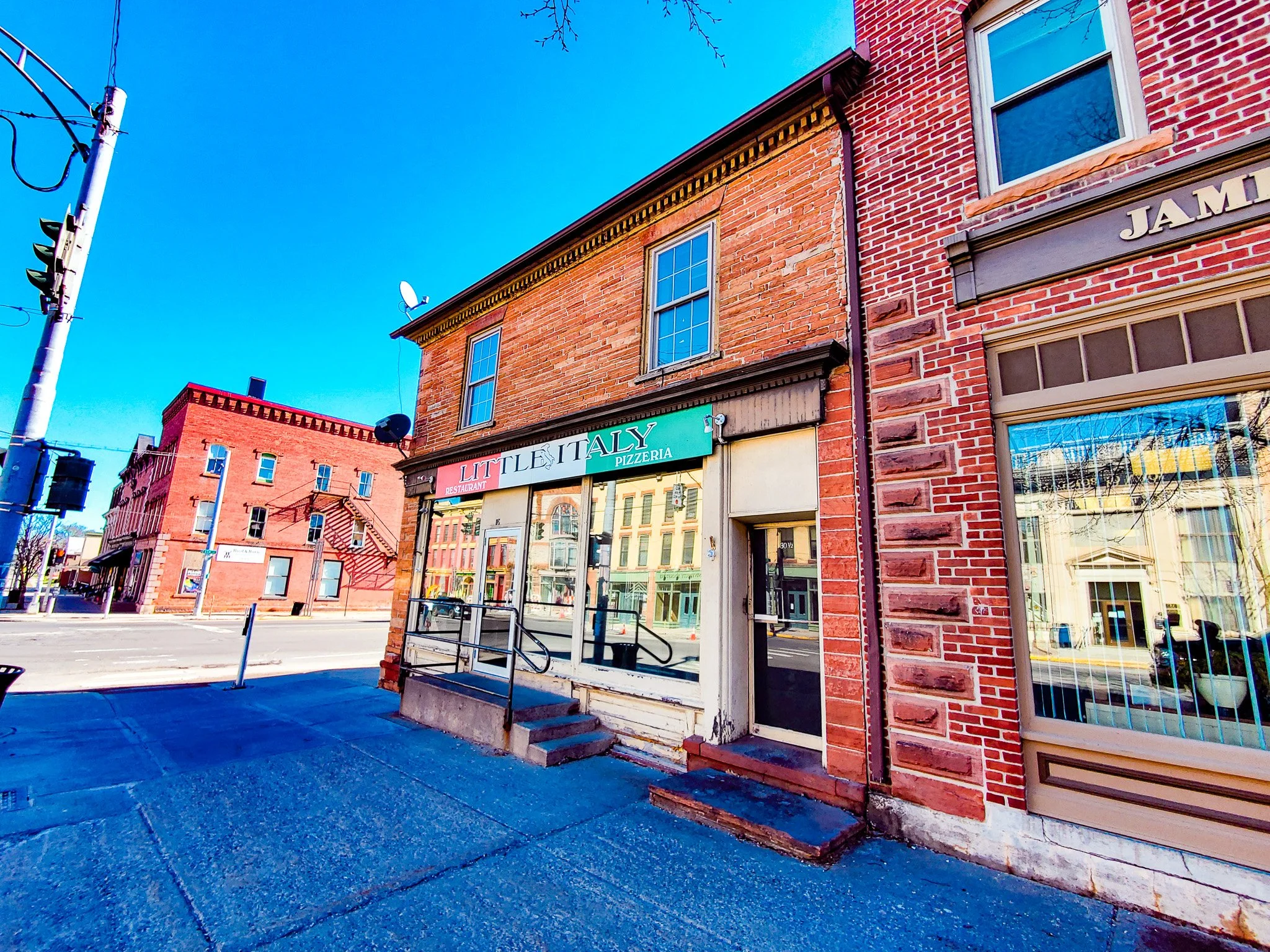
Little Italy RRestaurant
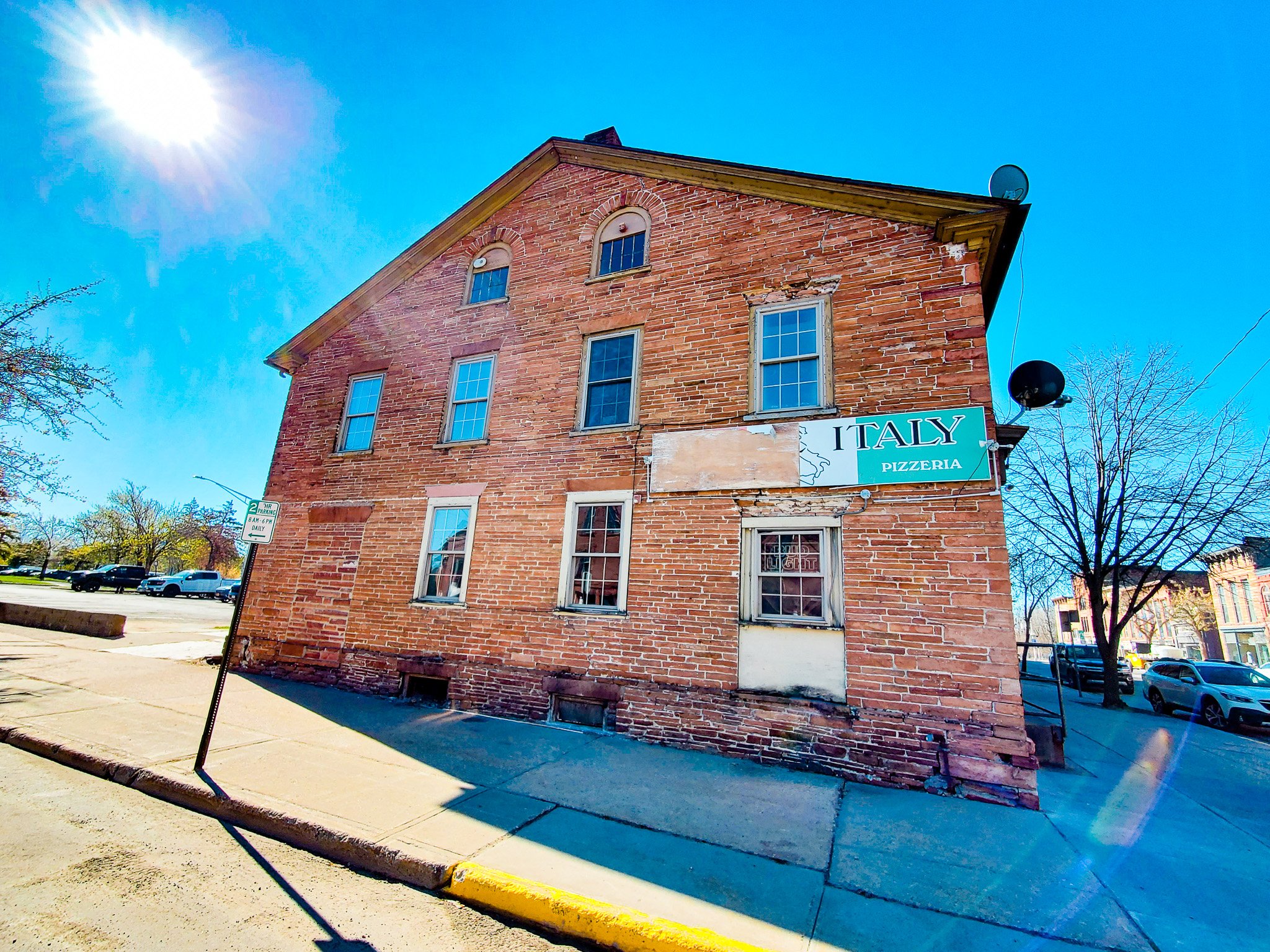
Little Italy Restaurant
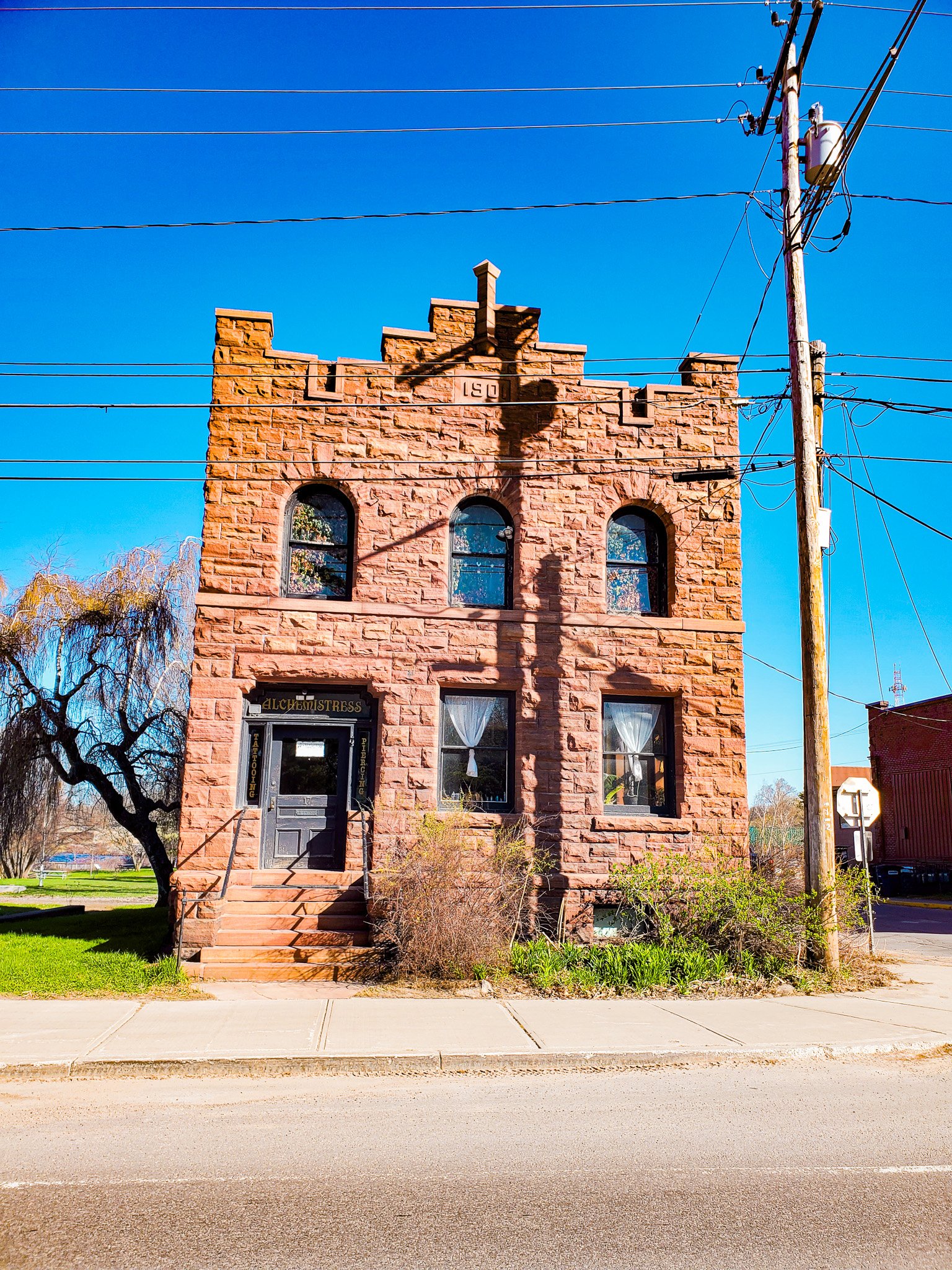
Old Building
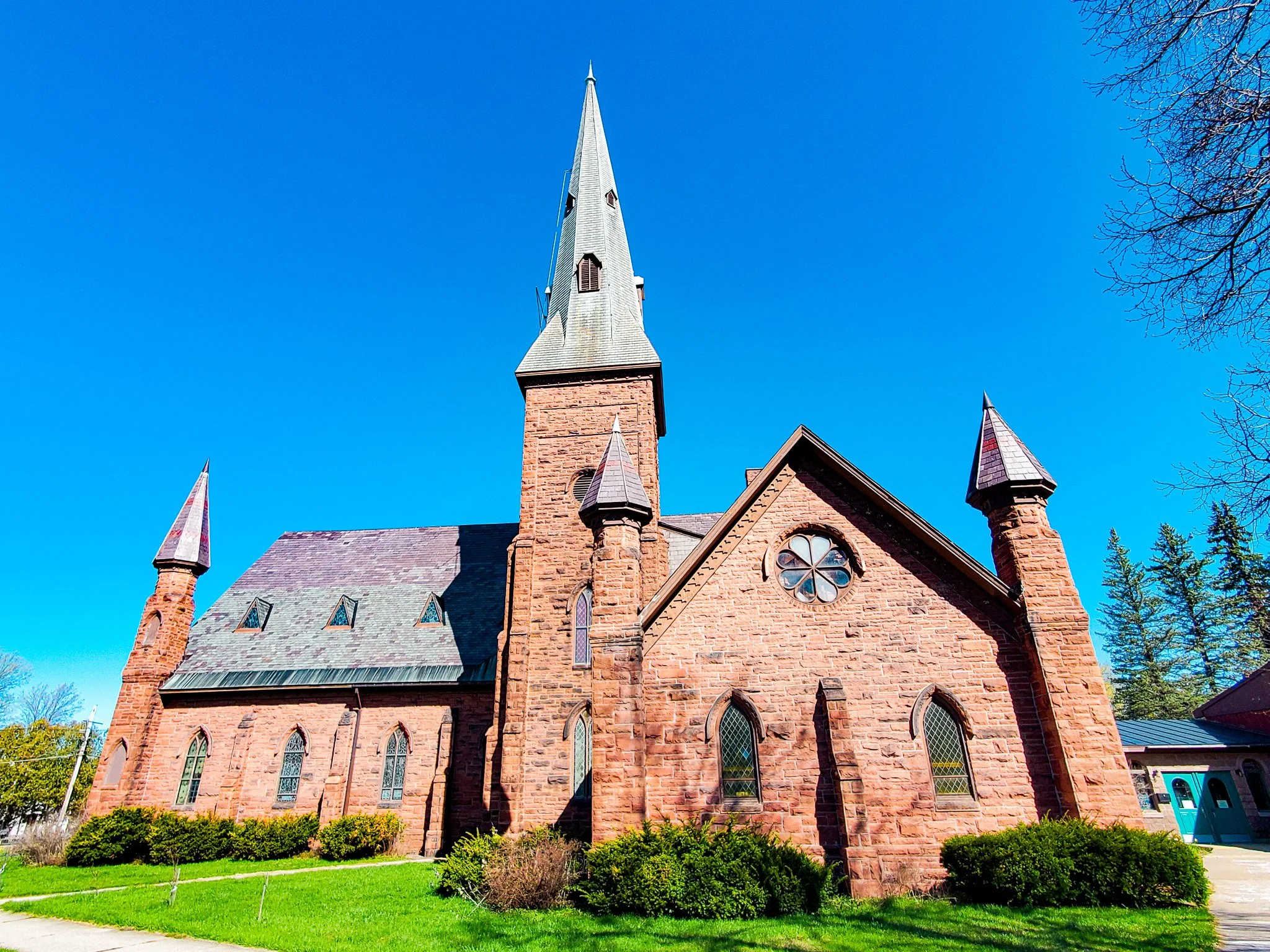
Potsdam Church
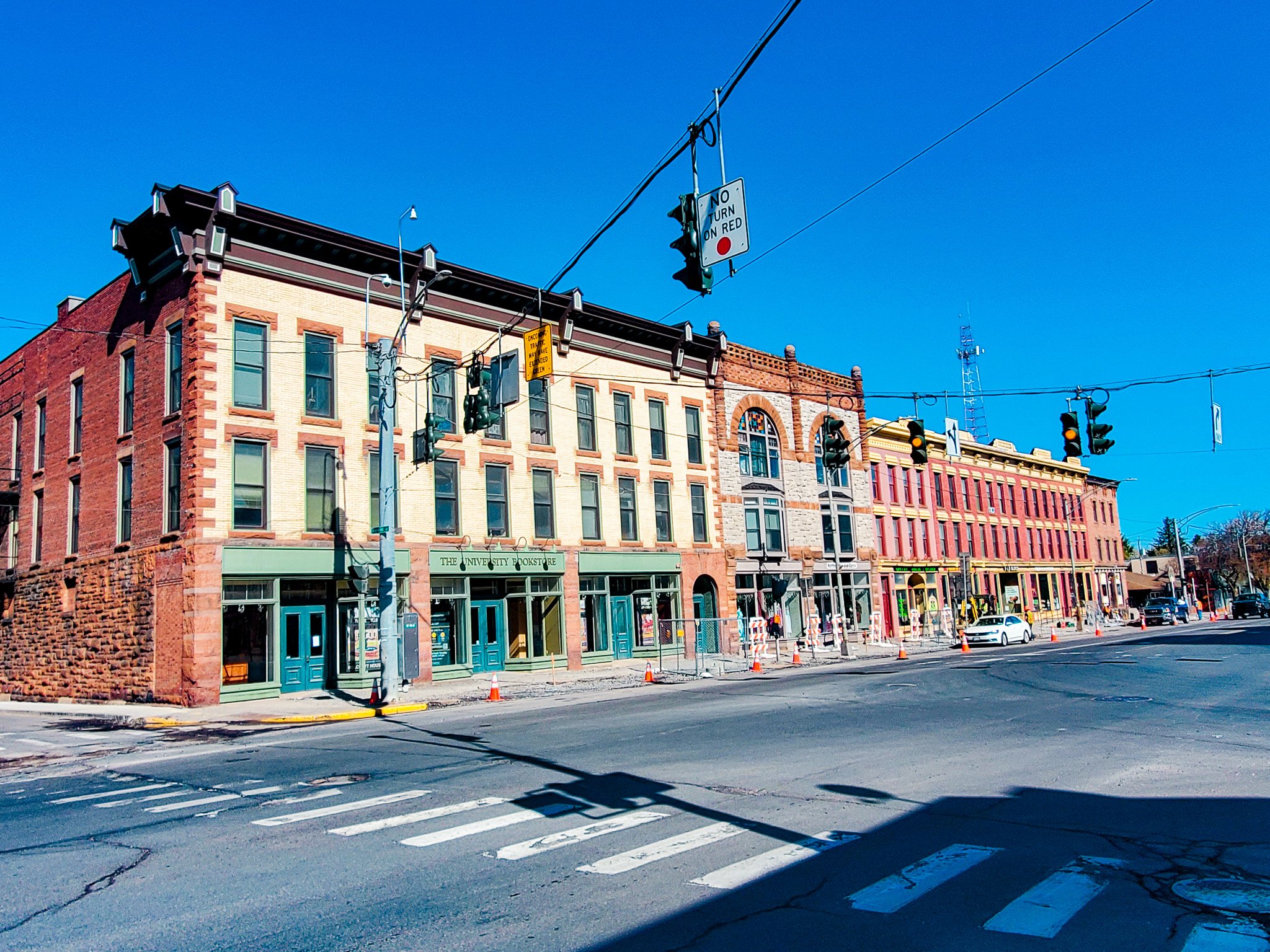
Main Street
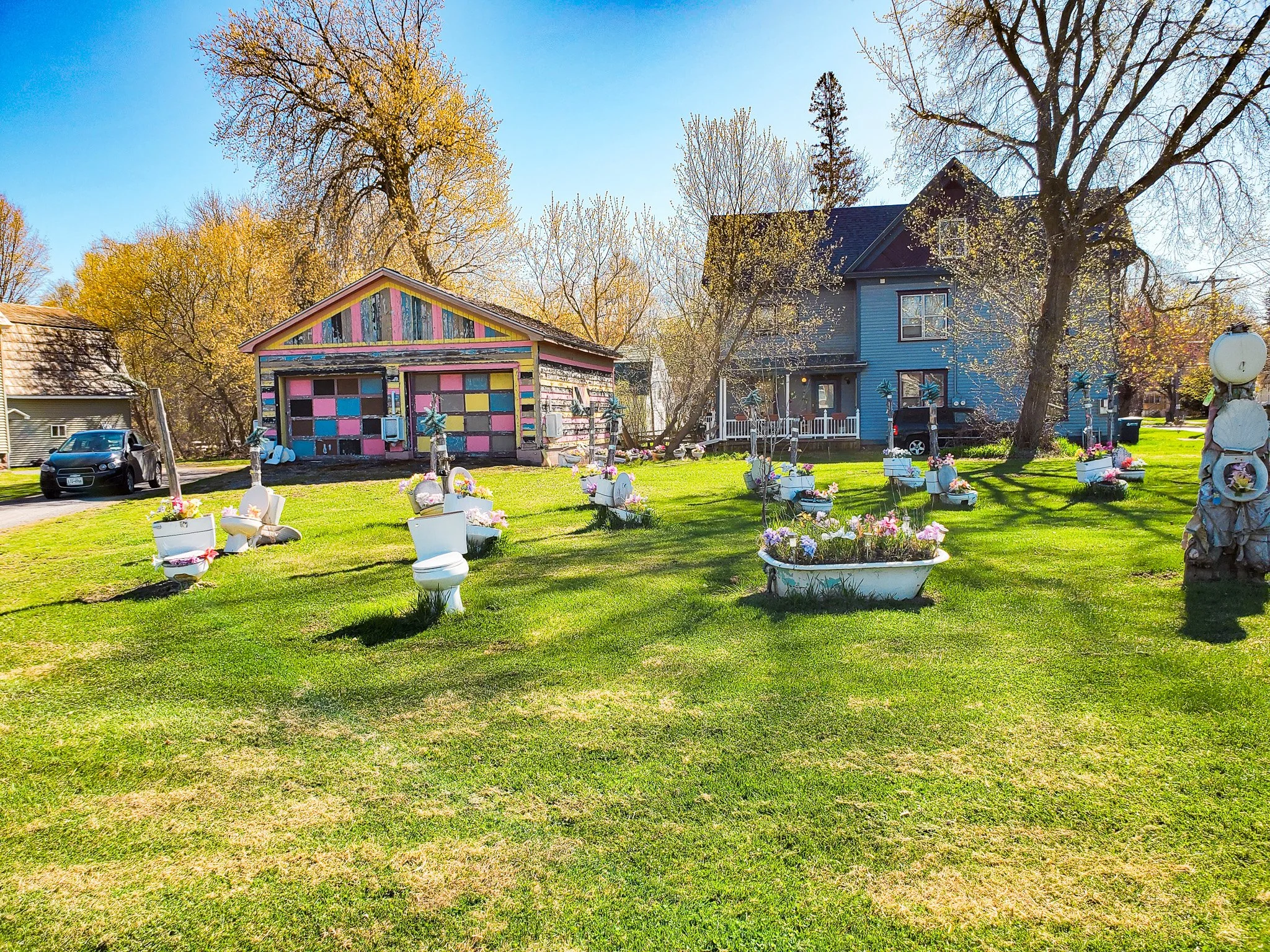
Potty Gardens
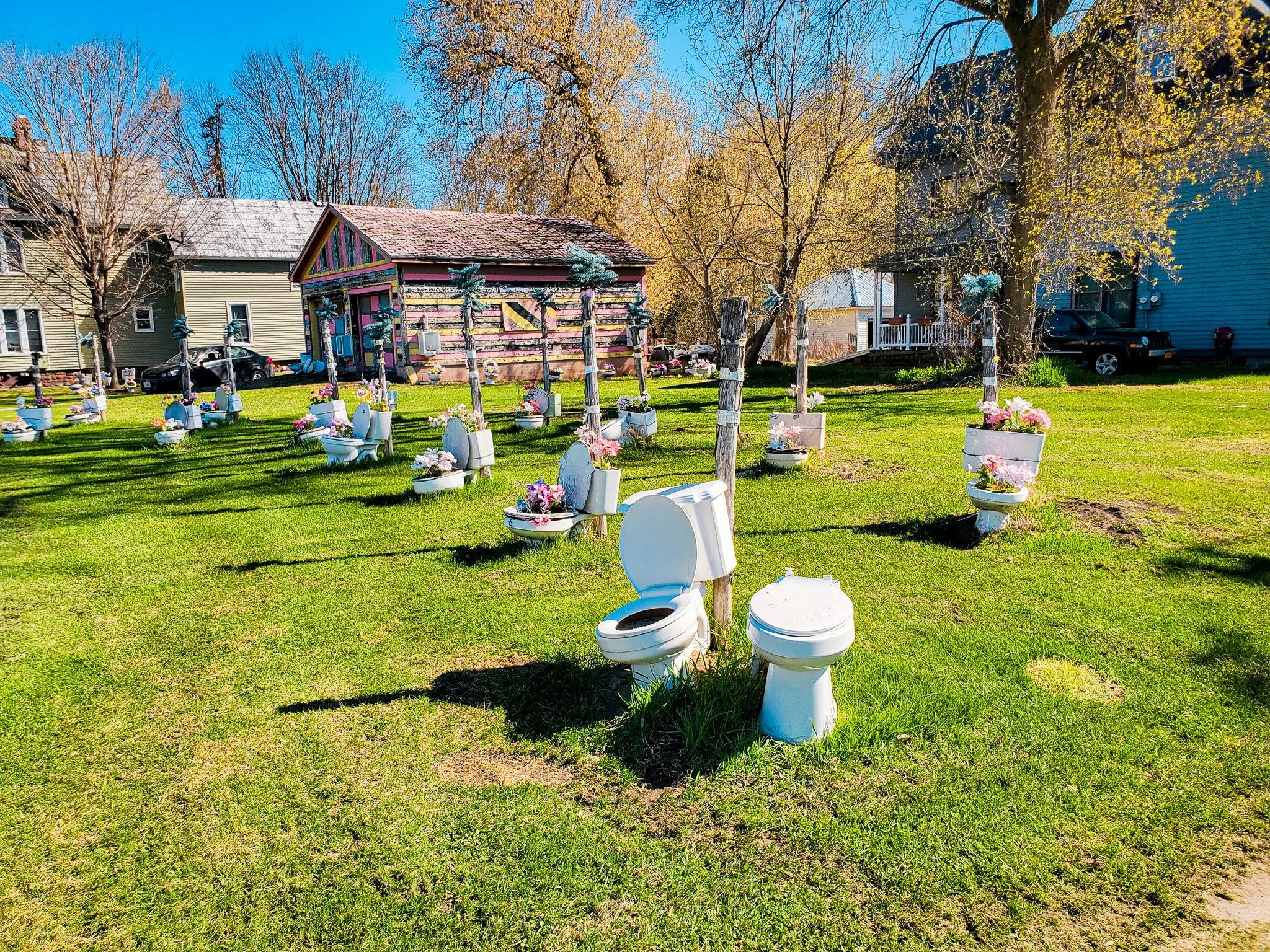
Potty Gardens
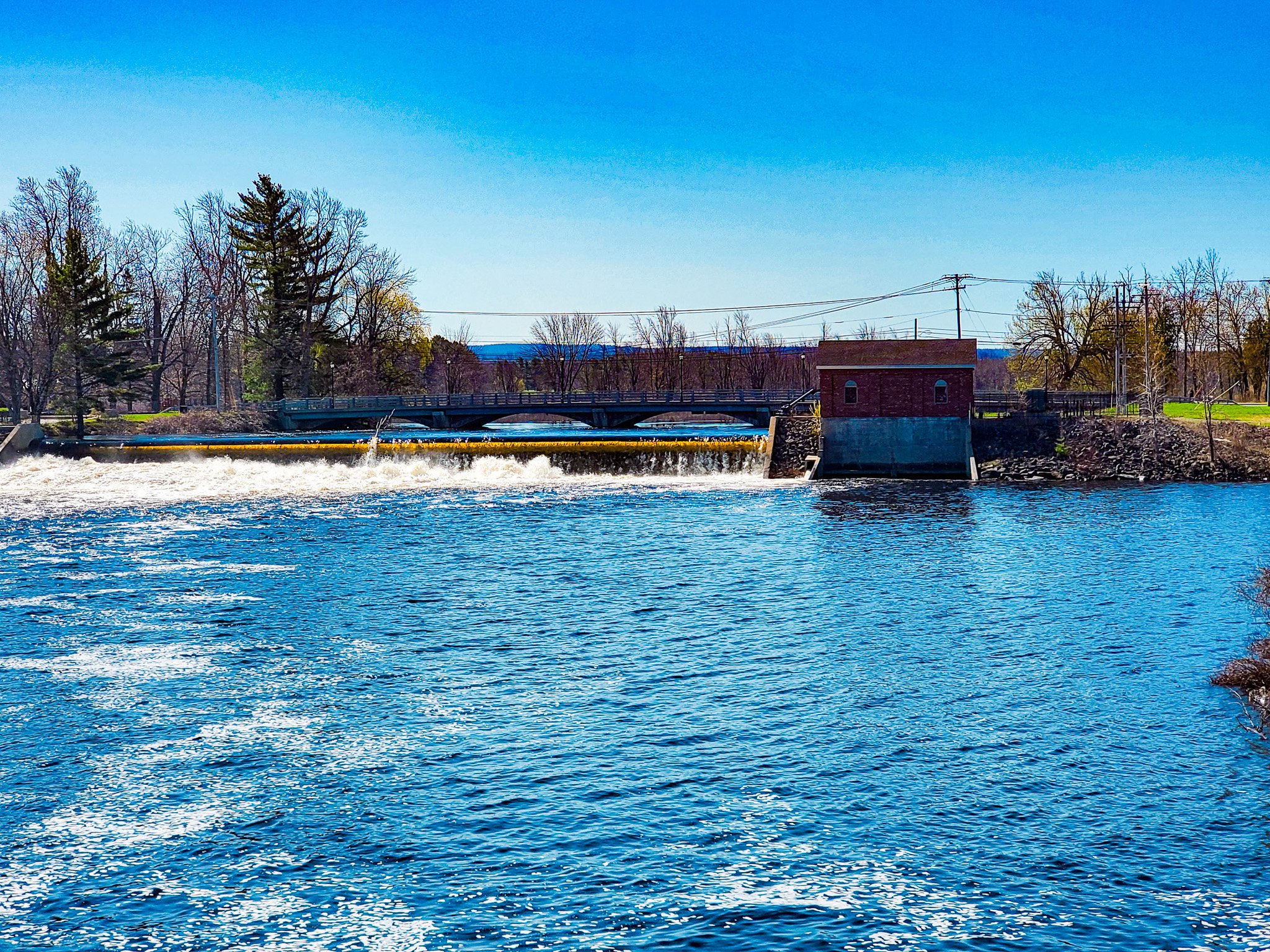
Raquette River
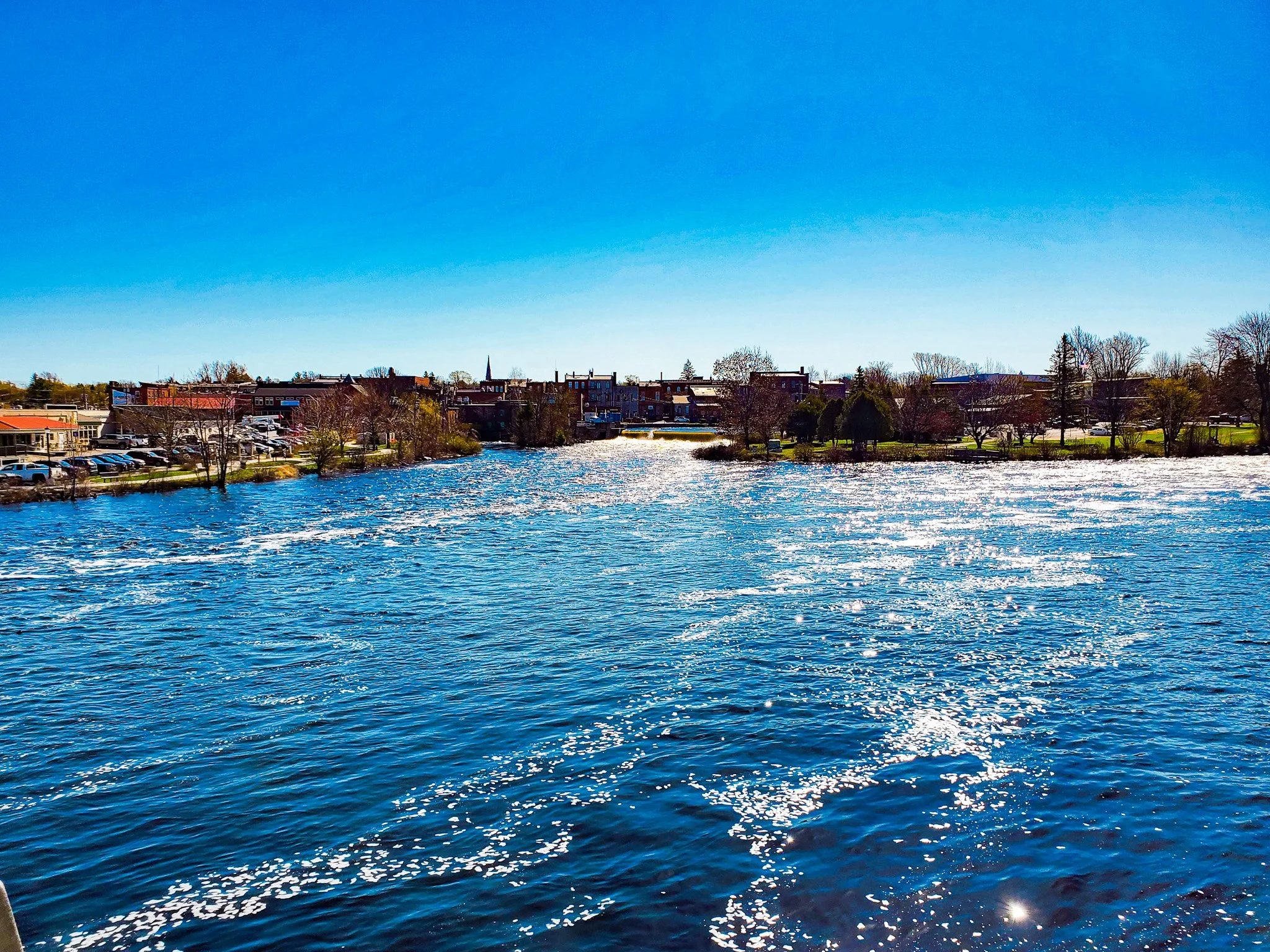
Raquette River
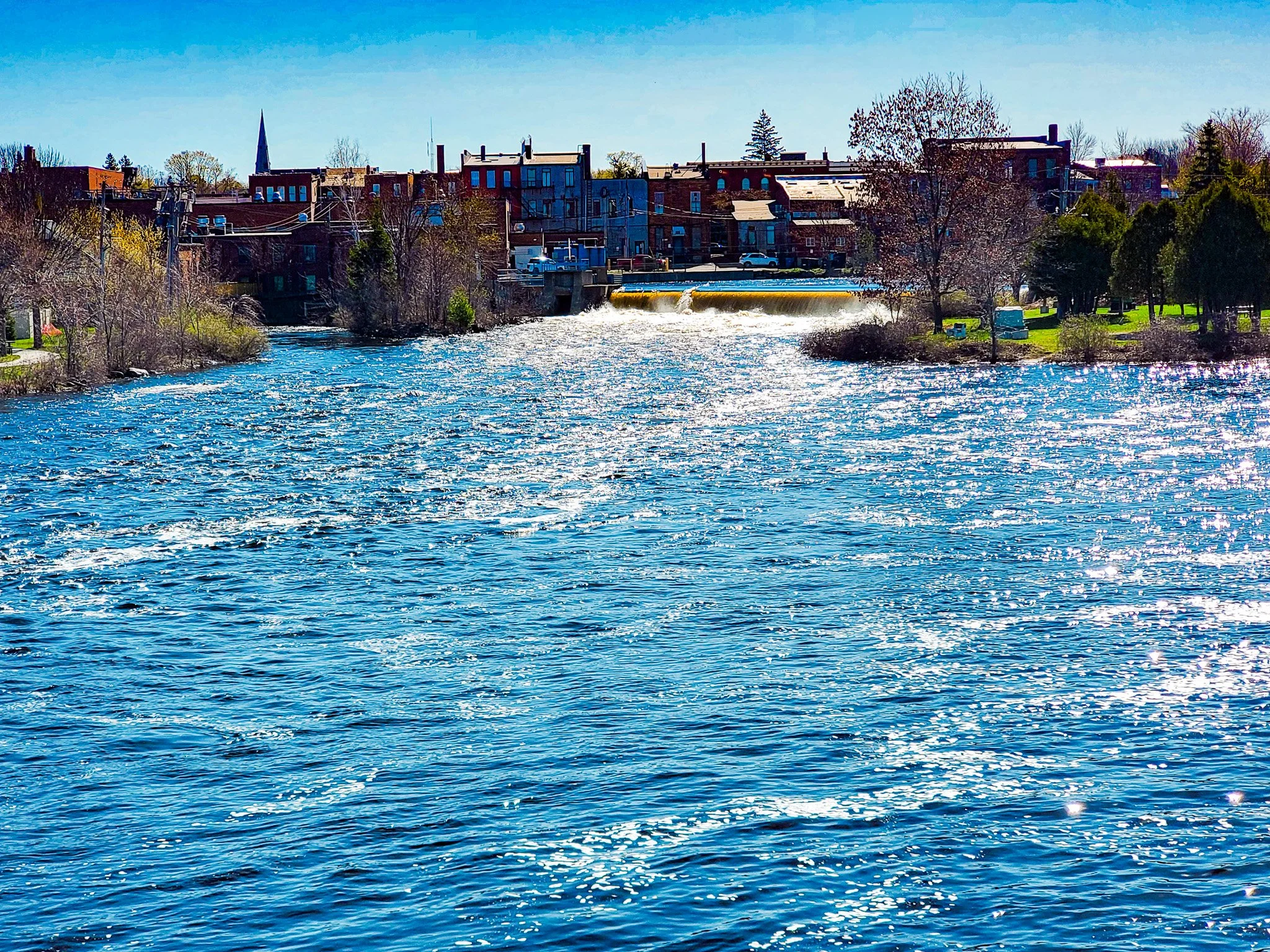
Raquette River
Raquette River
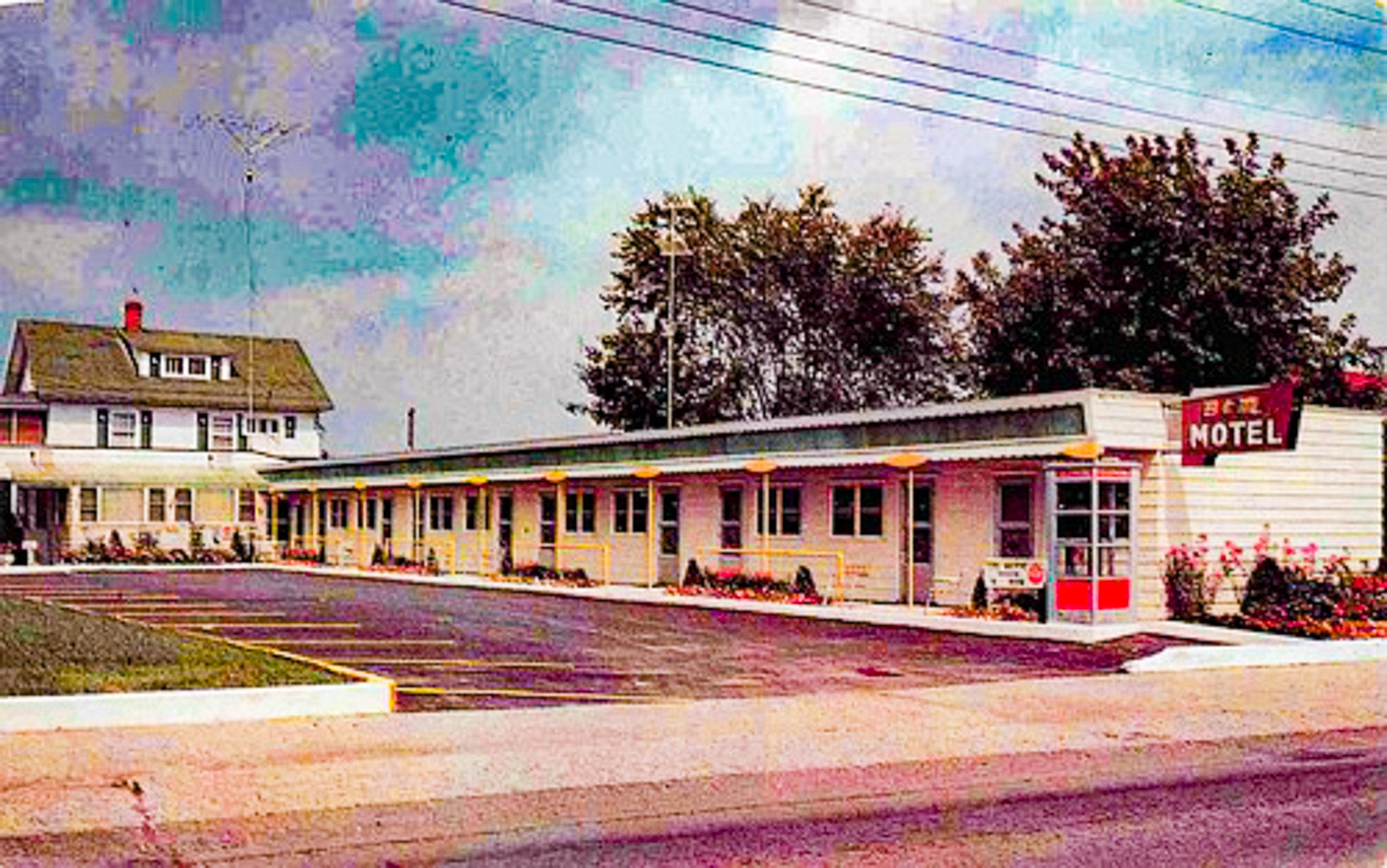
B & M Motel Postcard
STOCKHOLM
Stockholm was named by surveyors from that city in Sweden and established in 1806.
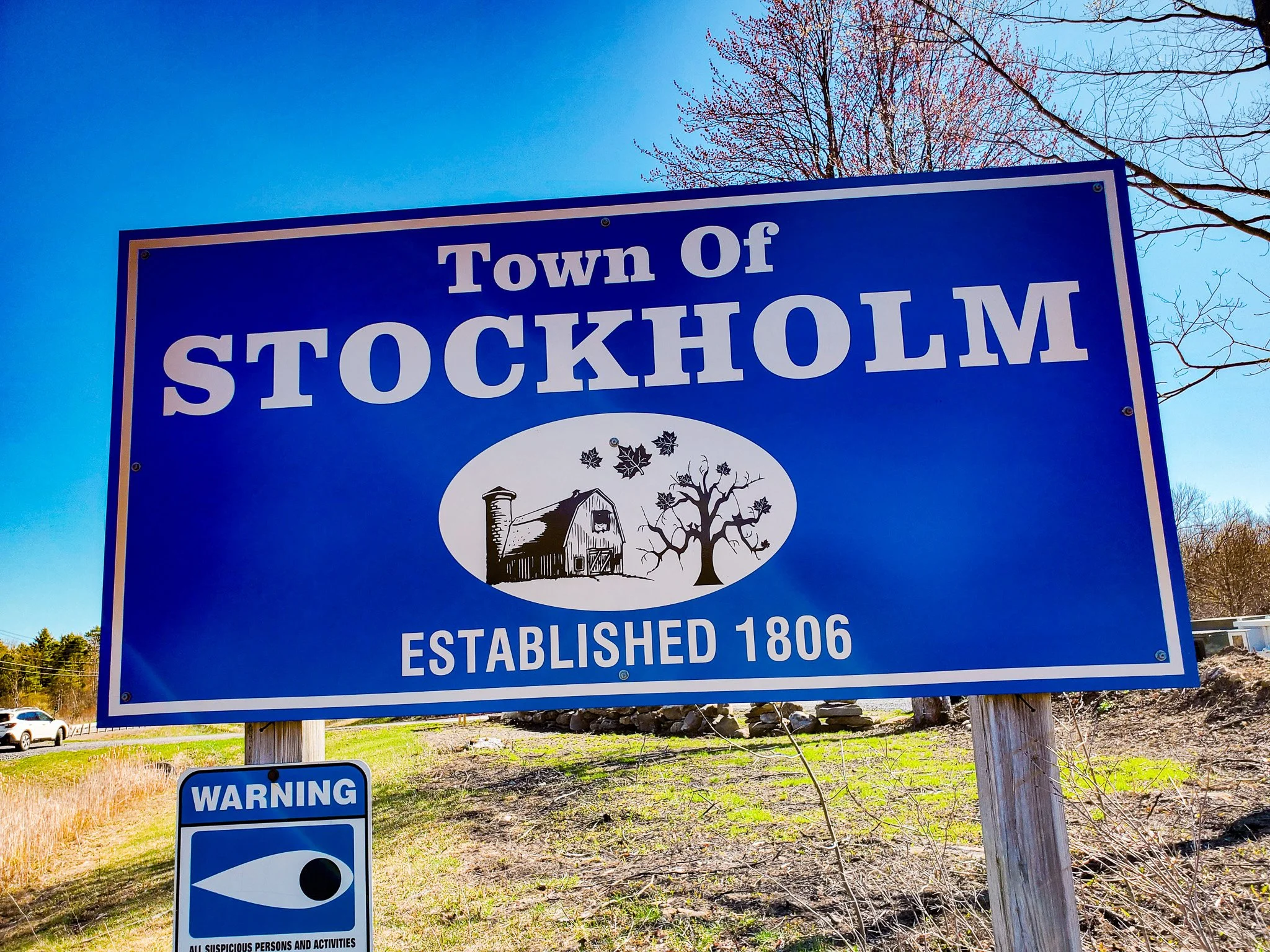
Welcome to Stockholm Sign
LAWRENCEVILLE
The town formed in 1828 and was named for William Lawrence, an early landowner.
MOIRA
The town was established in 1828 and named for the Earl of Moira, England. The Wilbur Austin Memorial Clock is on the corner of town, and a jet plane (a T38-Talon trainer) is on a monument on US 11 north of town. Martin’s Handmade Pretzels, which opened as a family business in the 1930’s, moved its manufacturing operations to Moira in 2020.
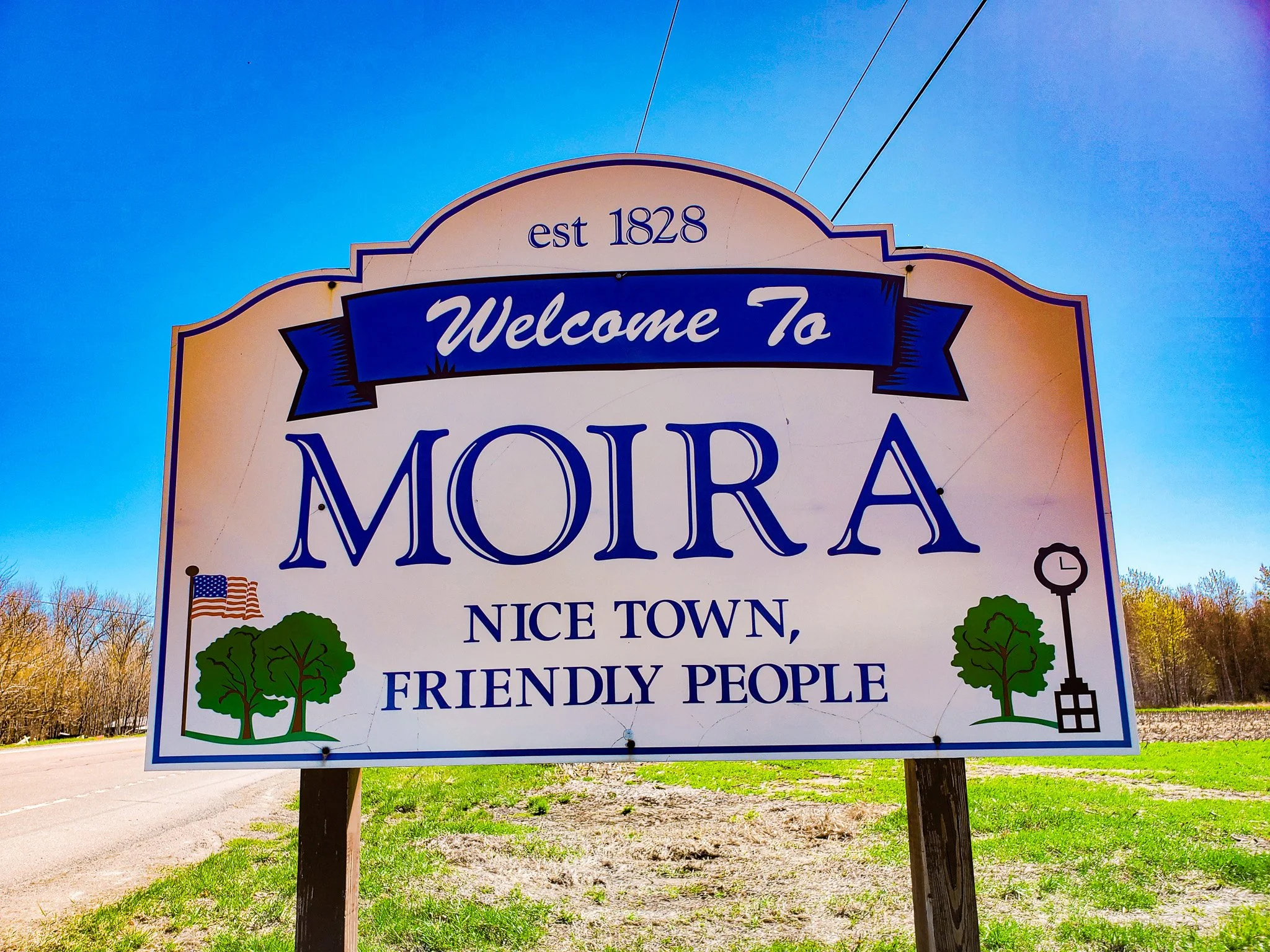
Welcome to Moira Sign
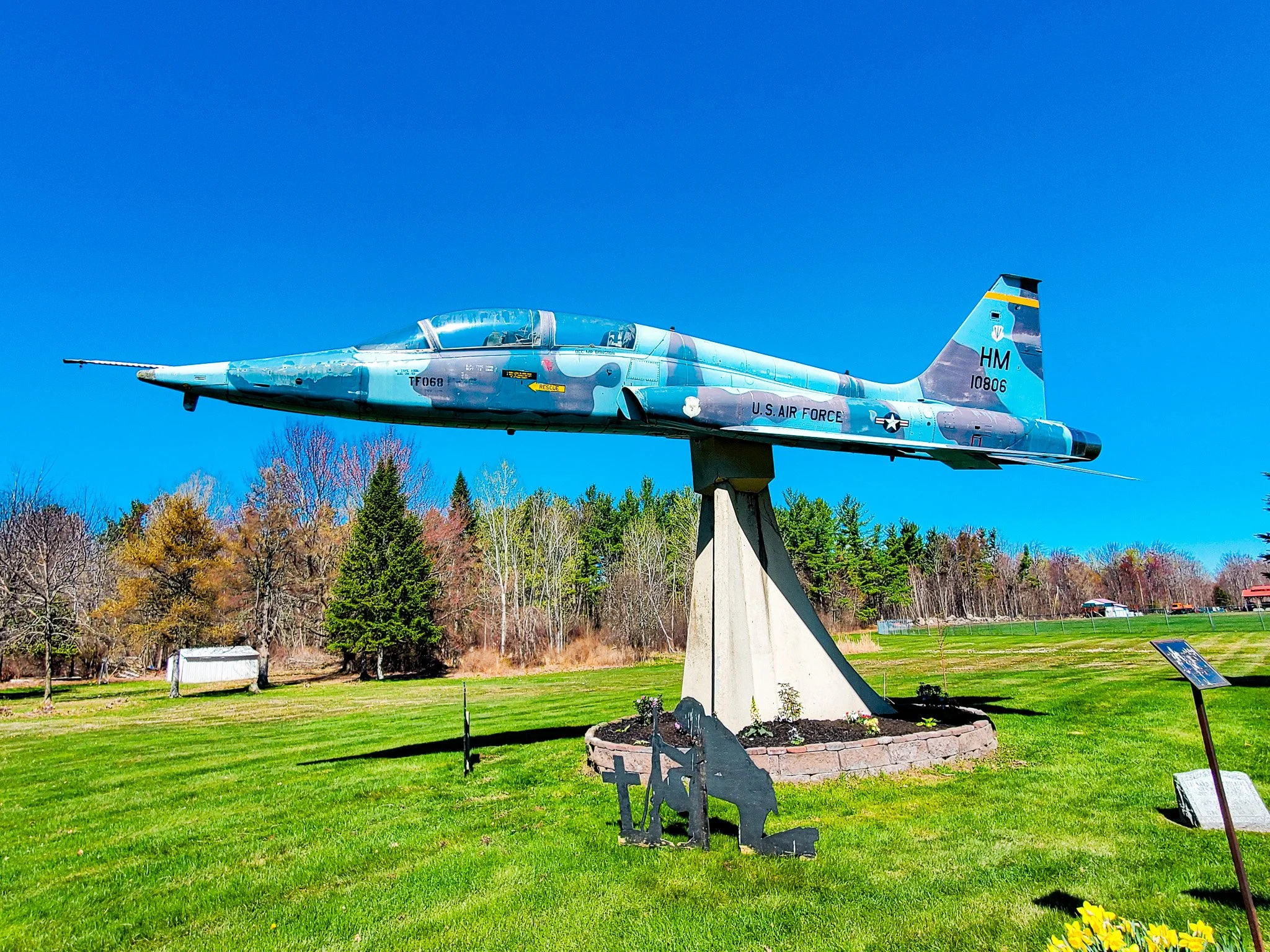
T-38 Talon Monument
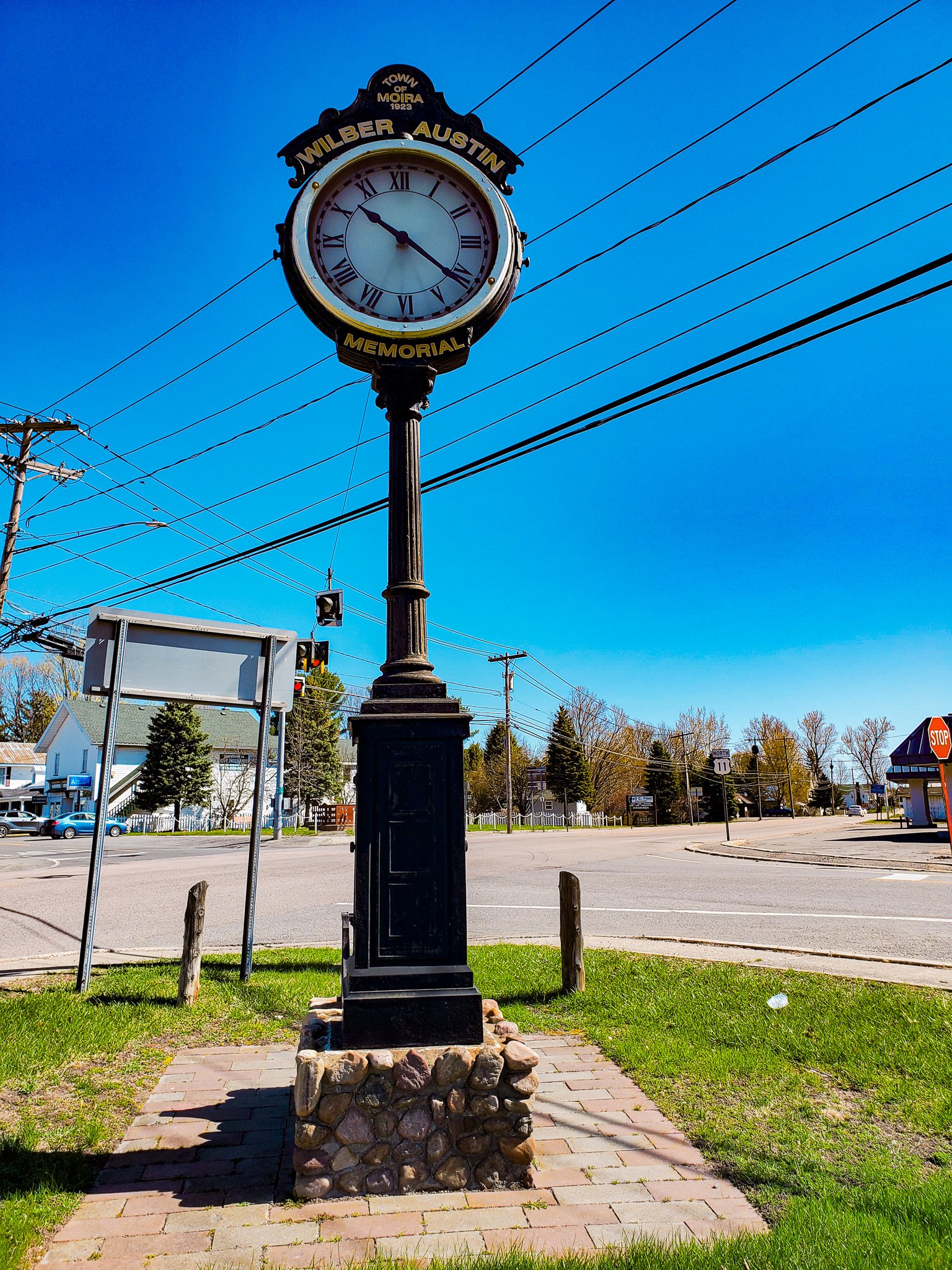
Wilbur Austin Clock
BRUSHTON
The town was named for Henry Brush who owned Salmon Mills on the Little Salmon River.
NORTH BANGOR
North Bangor was named for the oldest city in Wales. At the intersection of US 11 and County Route 22 is a memorial “In Memory to our Fallen Heroes, 1861-1865”. The Harrigan House B & B provides accommodations in a century-old house in North Bangor.
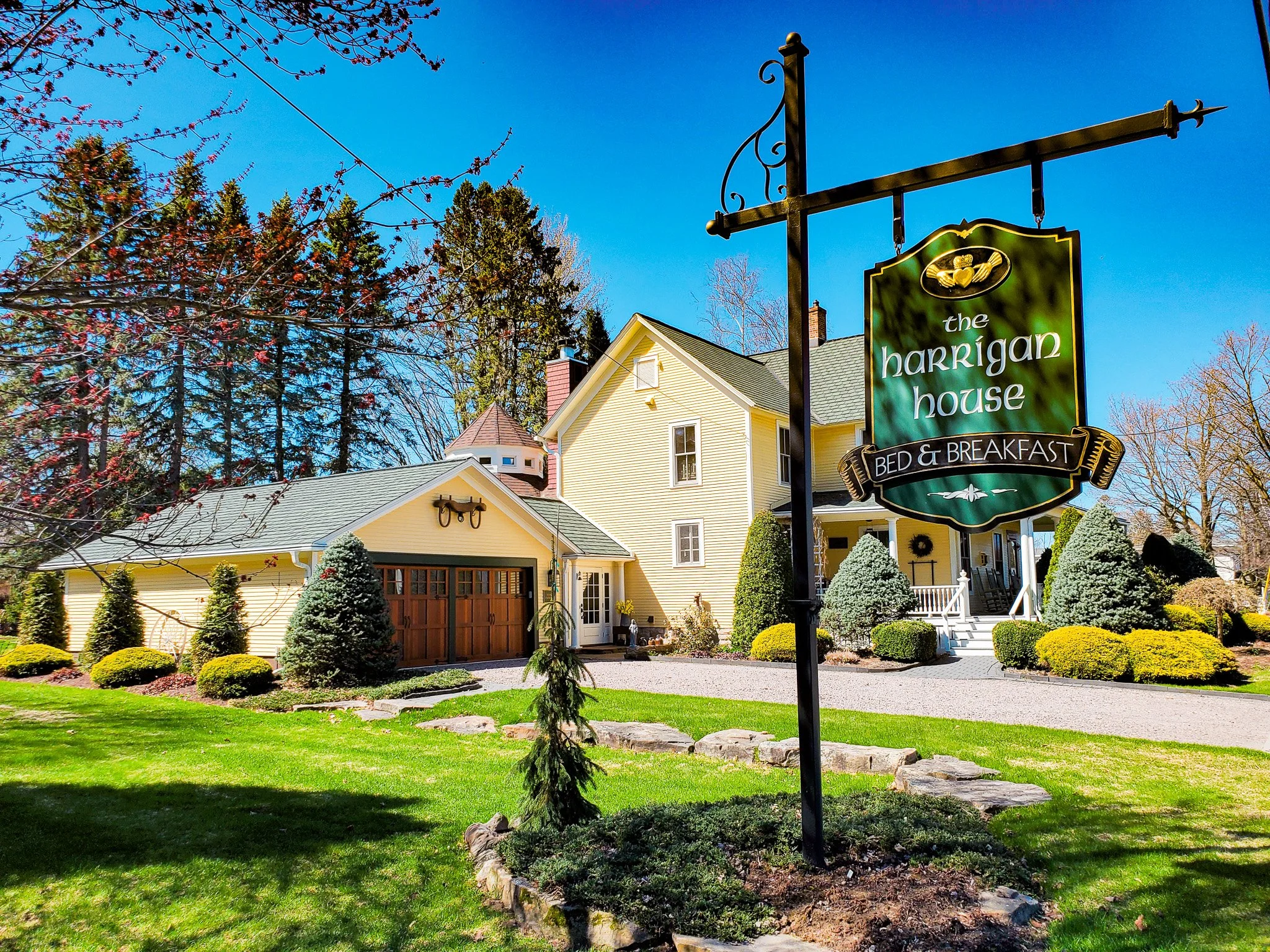
The Harrigan House
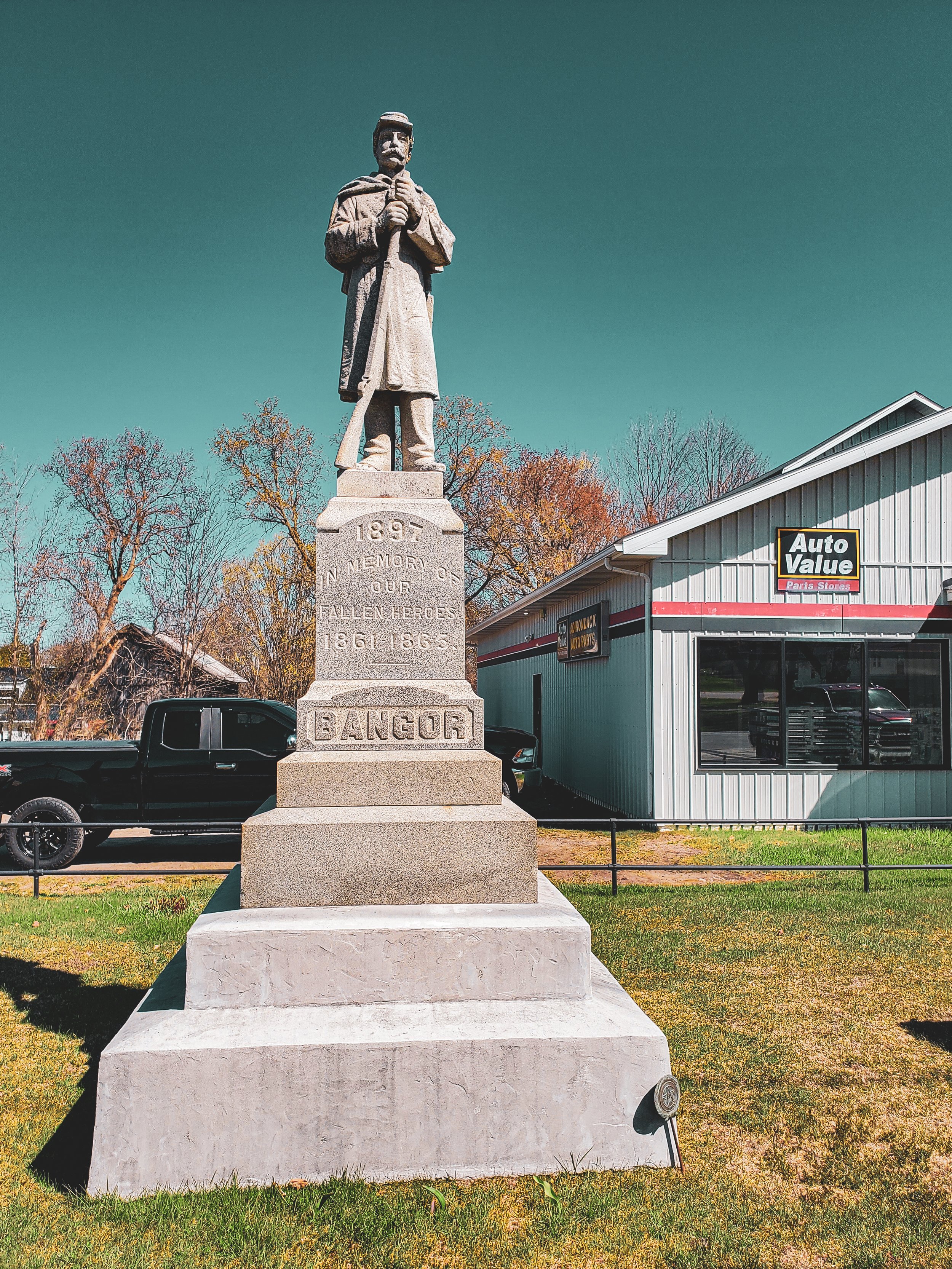
Union Monument
MALONE
Malone was first settled in 1802, and sacked by the British in the War of 1812. After the US Civil War, Malone served as a major staging ground and operational base for the Irish-American Fenian Brotherhood who were attempting to capture Canada to end British rule of Ireland. The First Congregational Church has a tunnel which was one of last stops on the Underground Railroad before Canada. AnB Classic Cars is a classic car and muscle car dealer located in Malone on US 11 that has provided classic rides to multiple continents for over three decades.
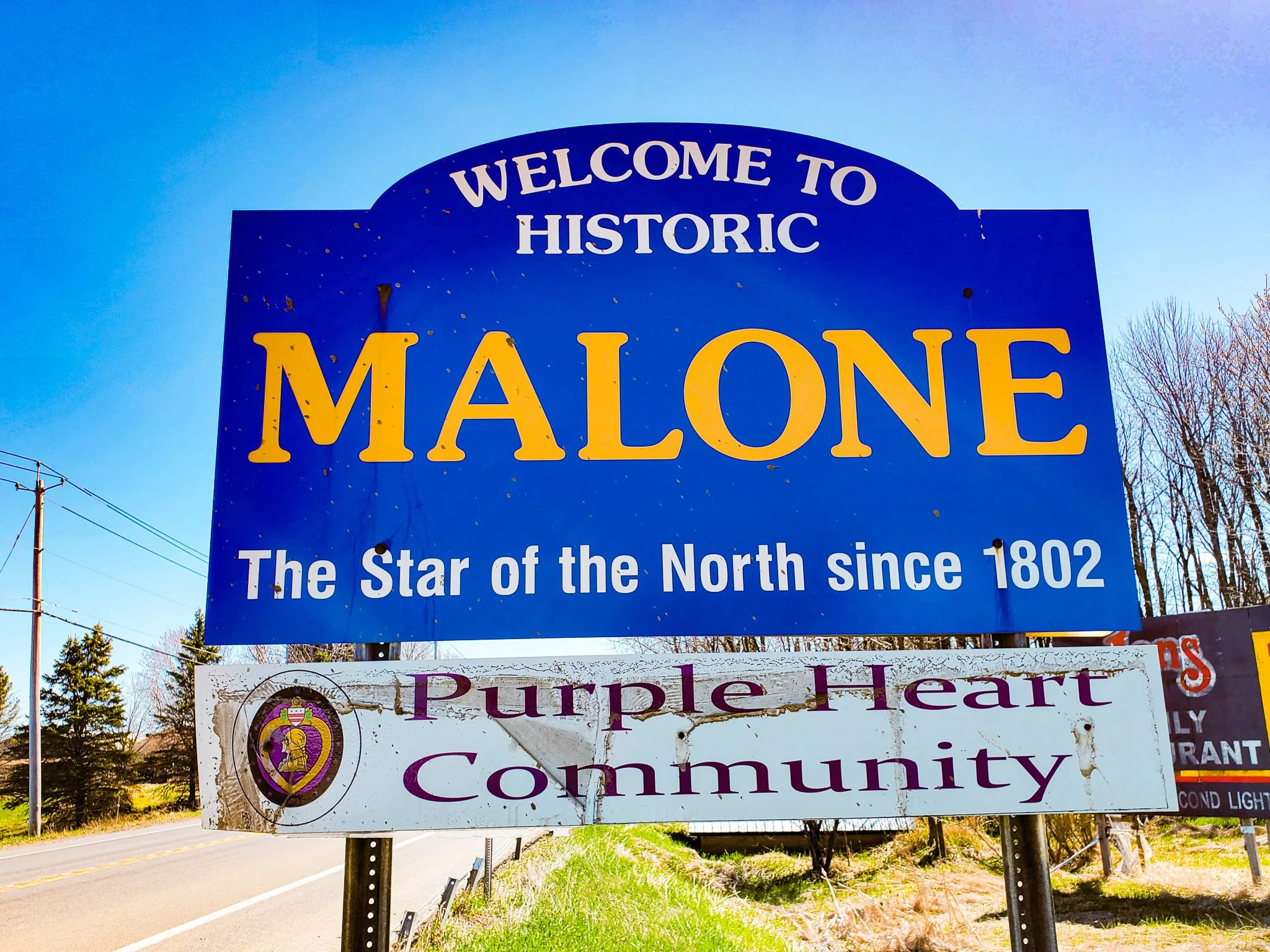
Welcome to Malone Sign
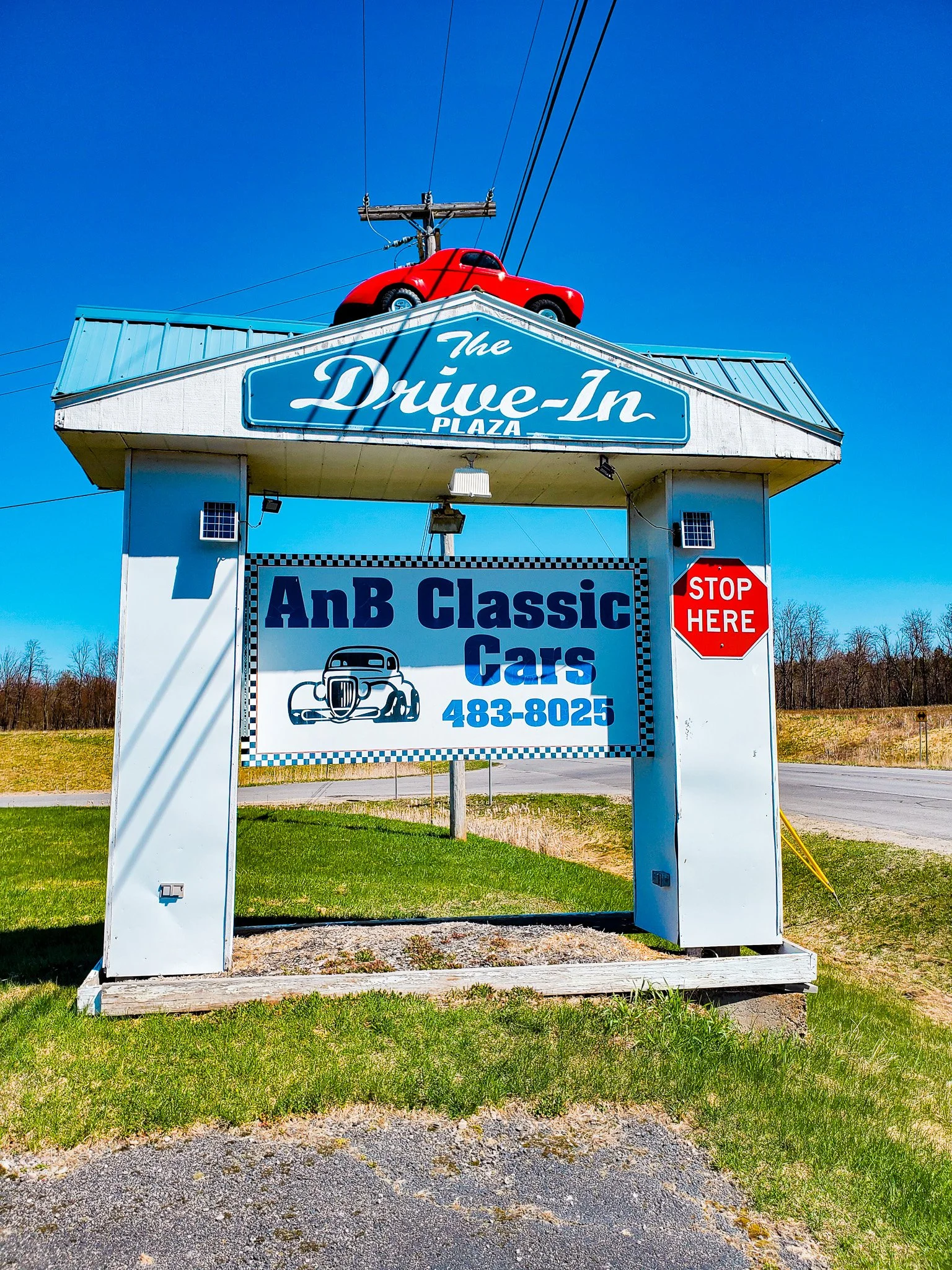
AnB Classic Cars Sign
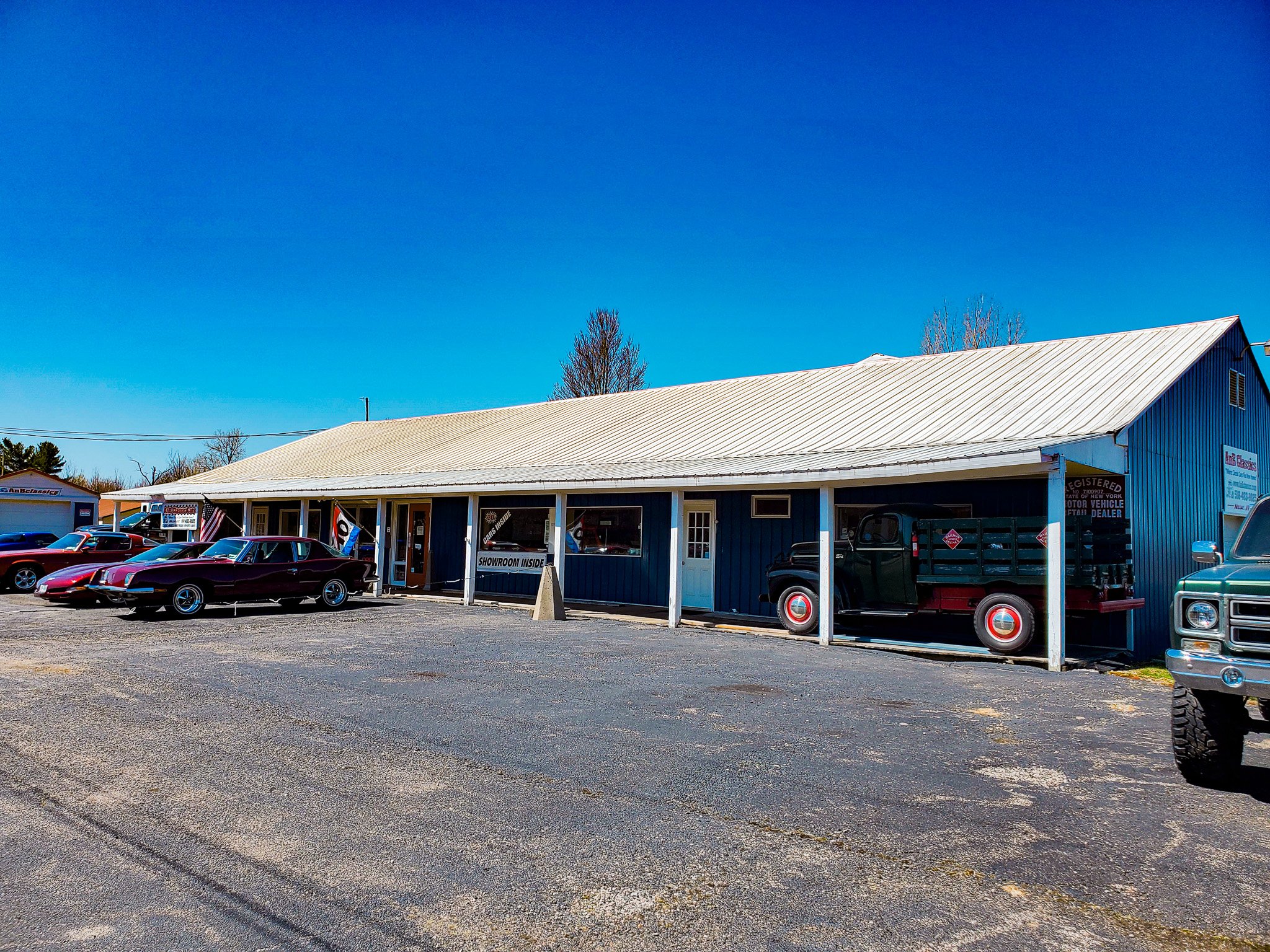
AnB Classic Cars
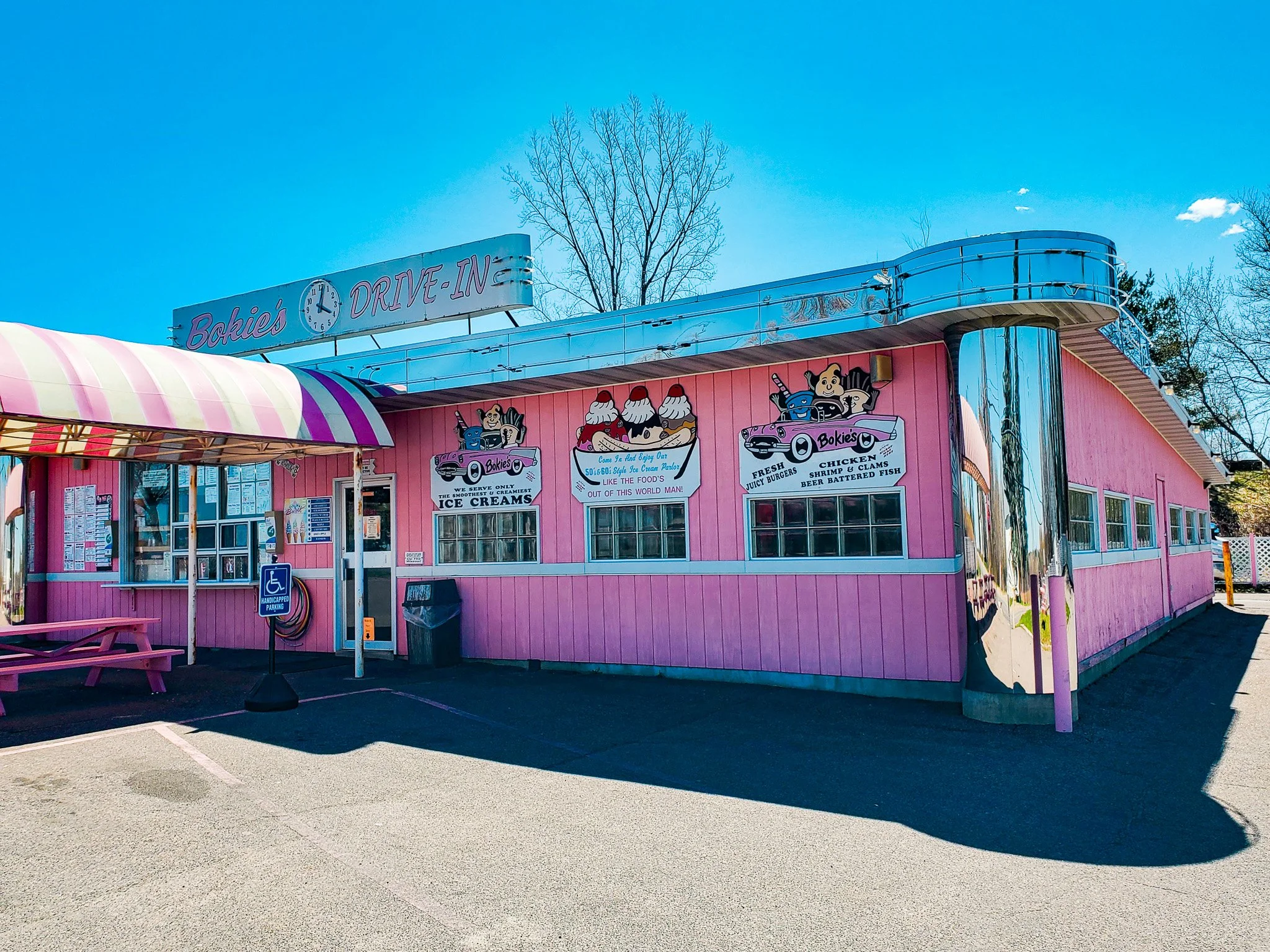
Bokie's Drive In Restaurant
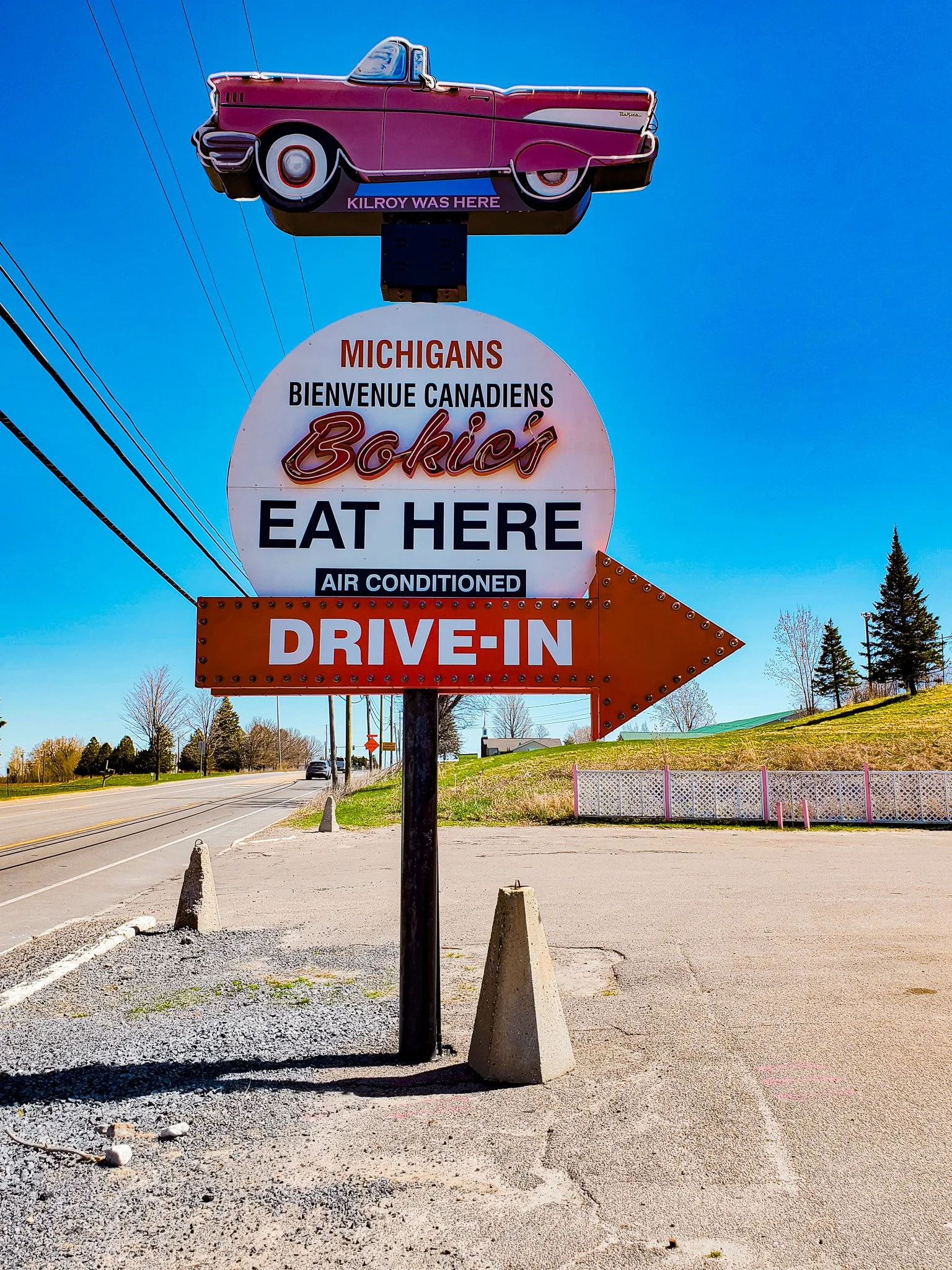
Bokie's Drive In Restaurant
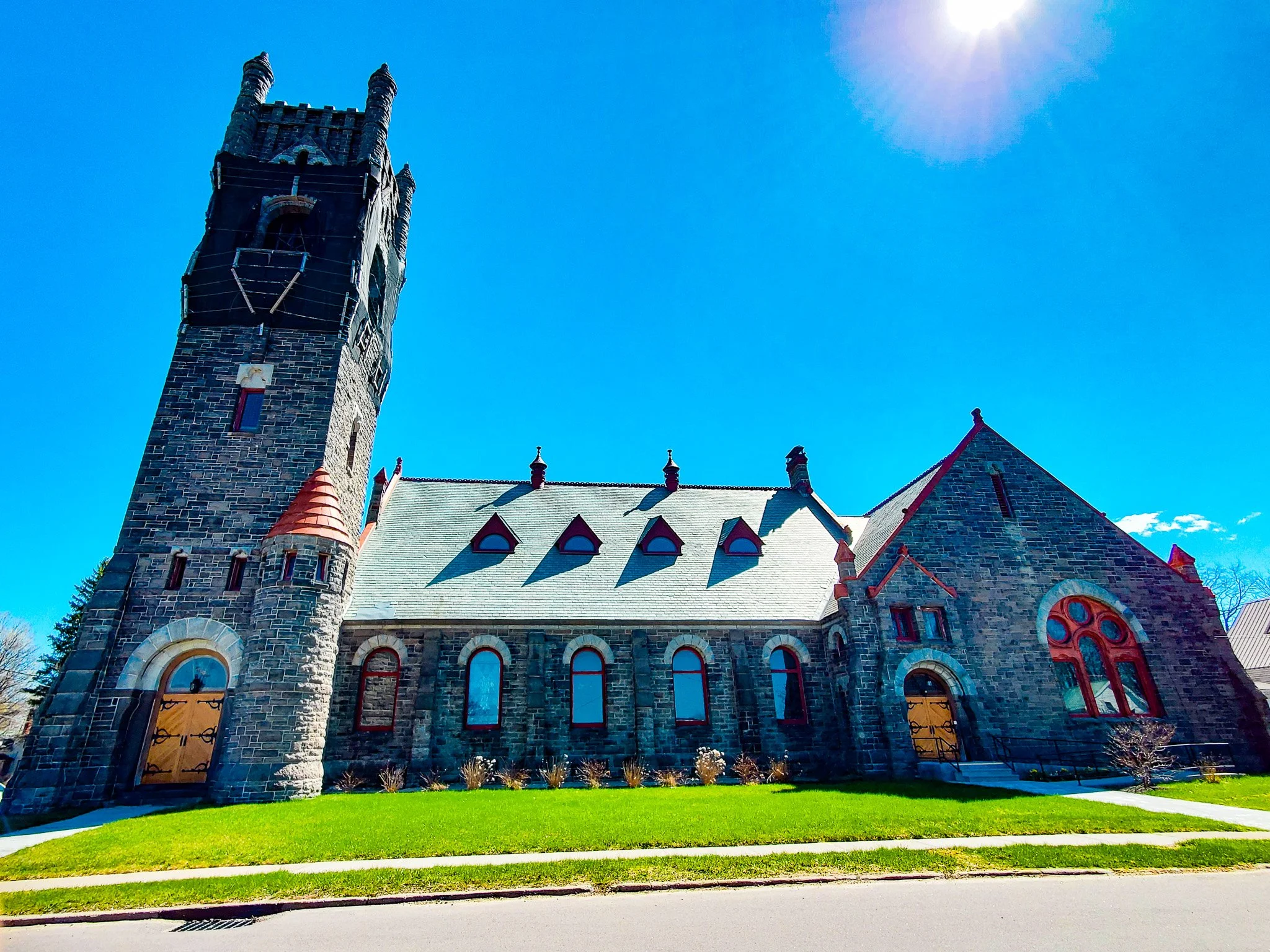
Congregational Church
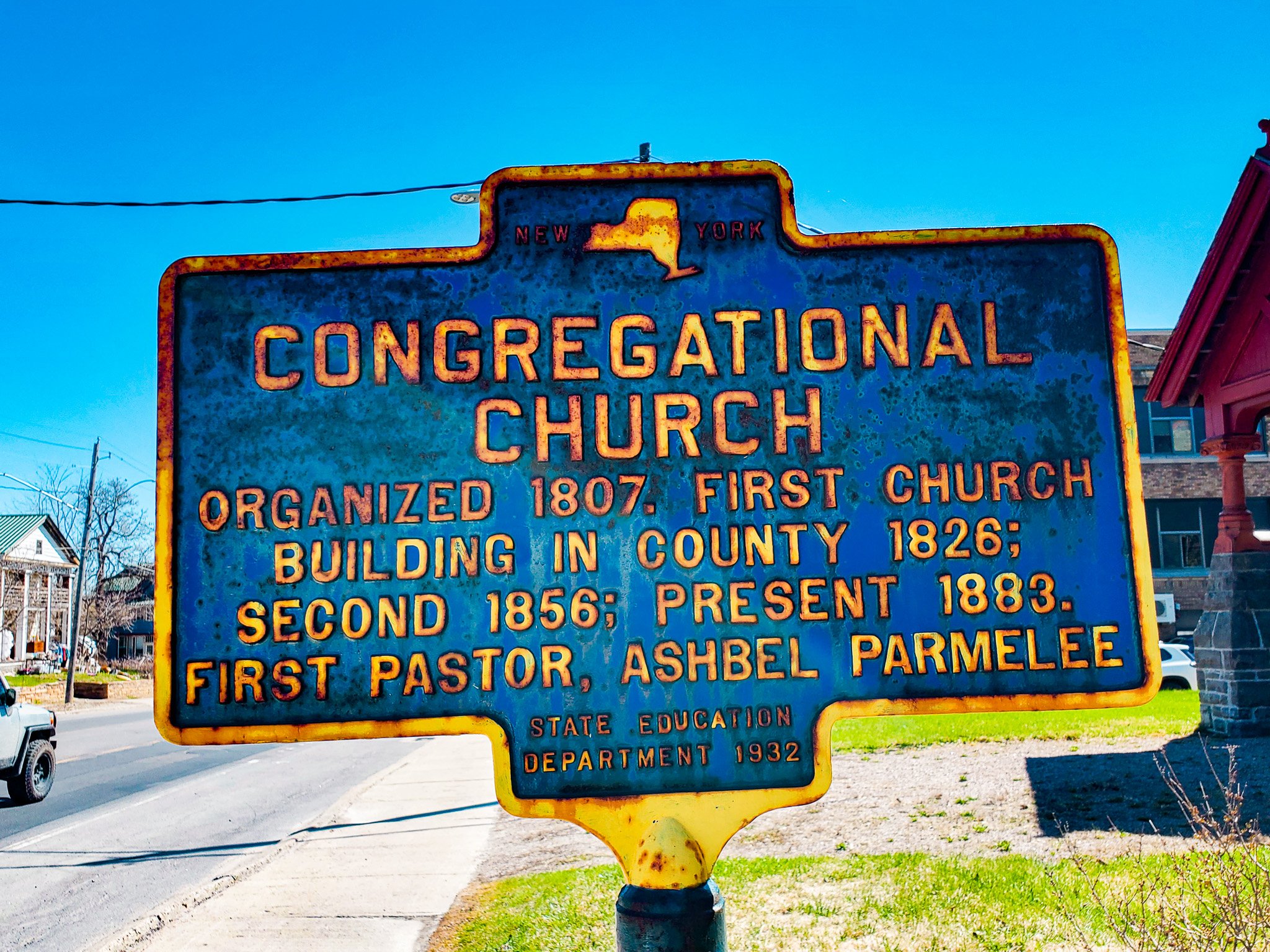
Congregational Church Marker
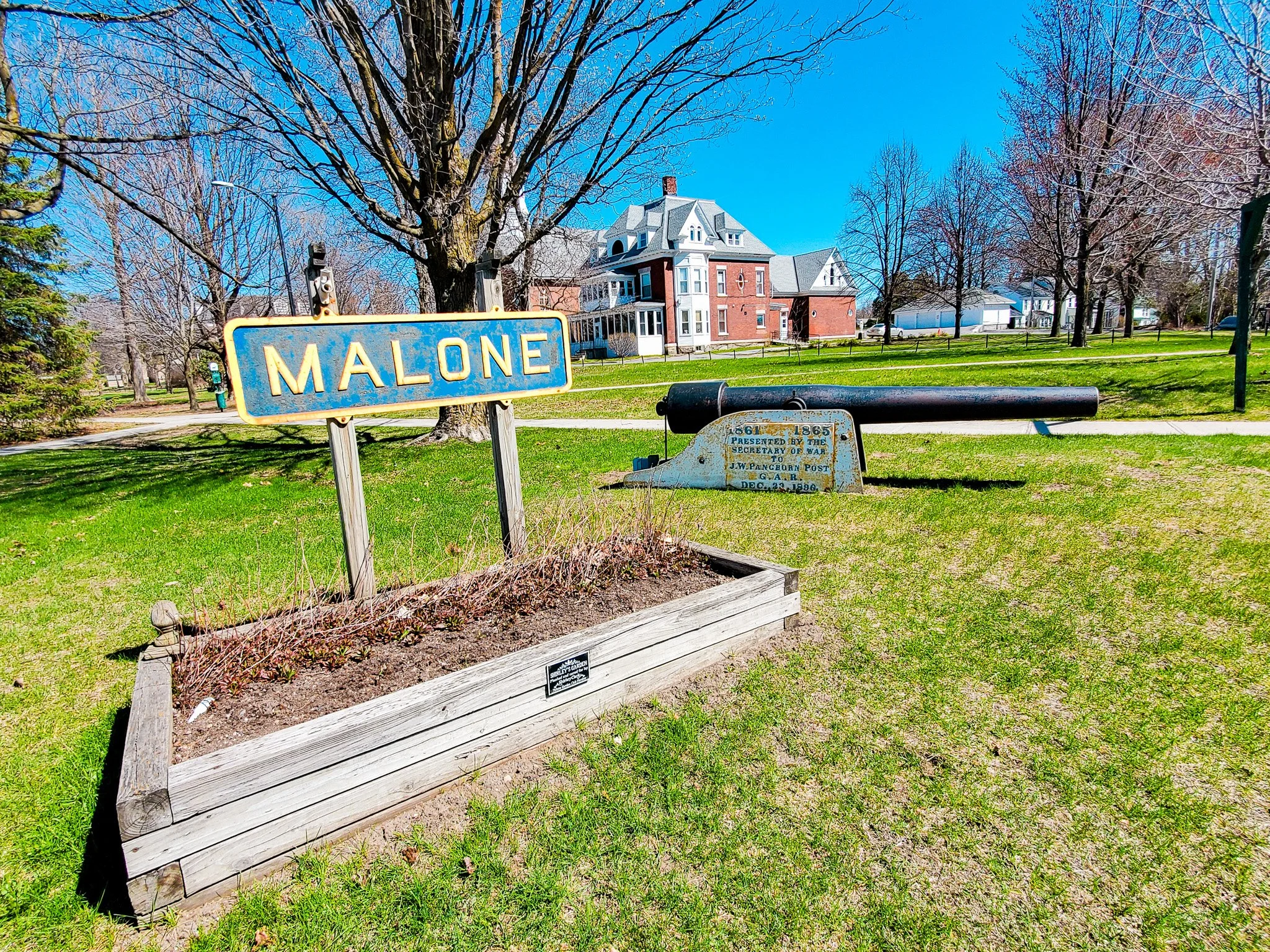
Malone Town Square
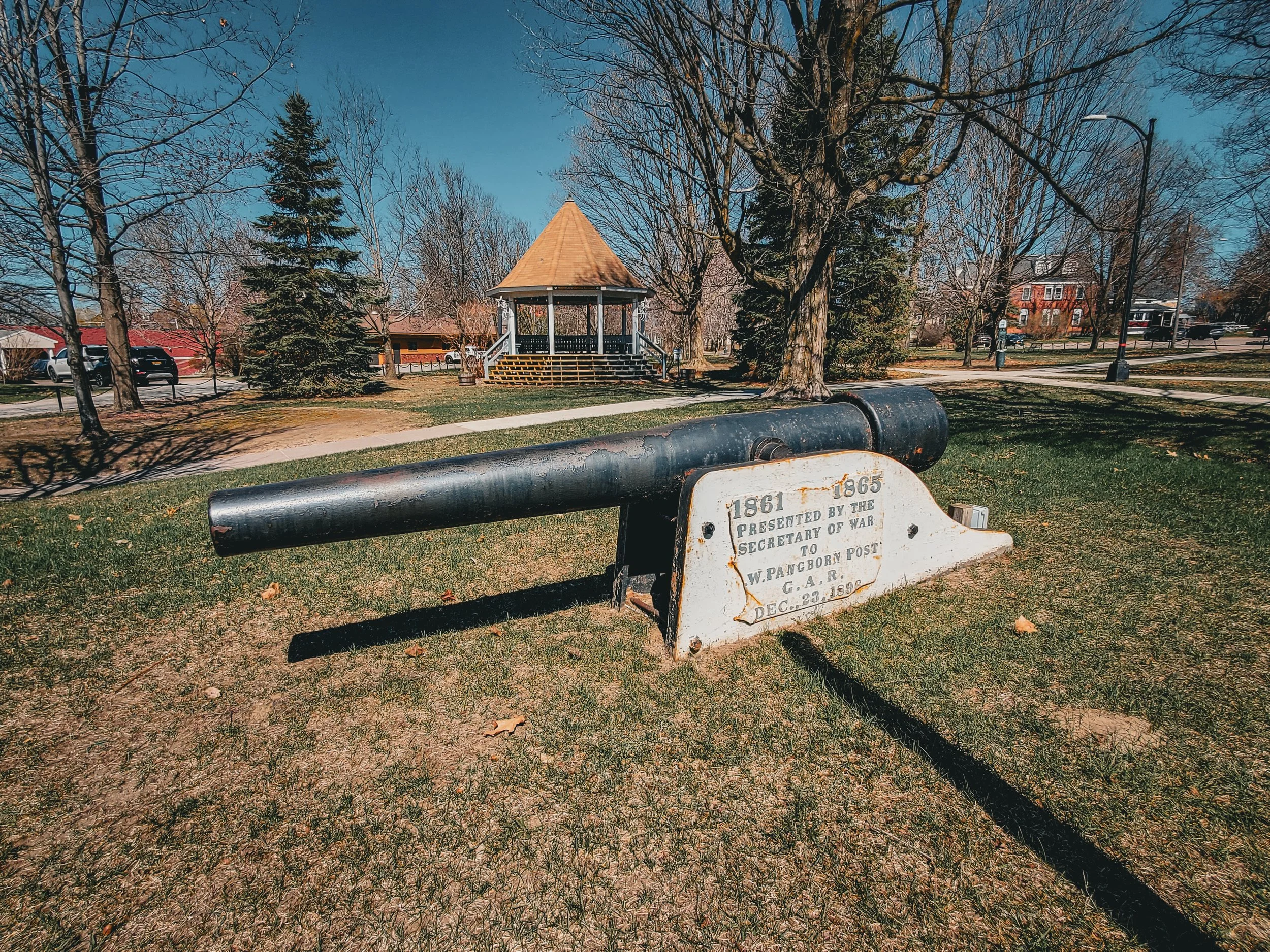
Cannon at Malone Town Square
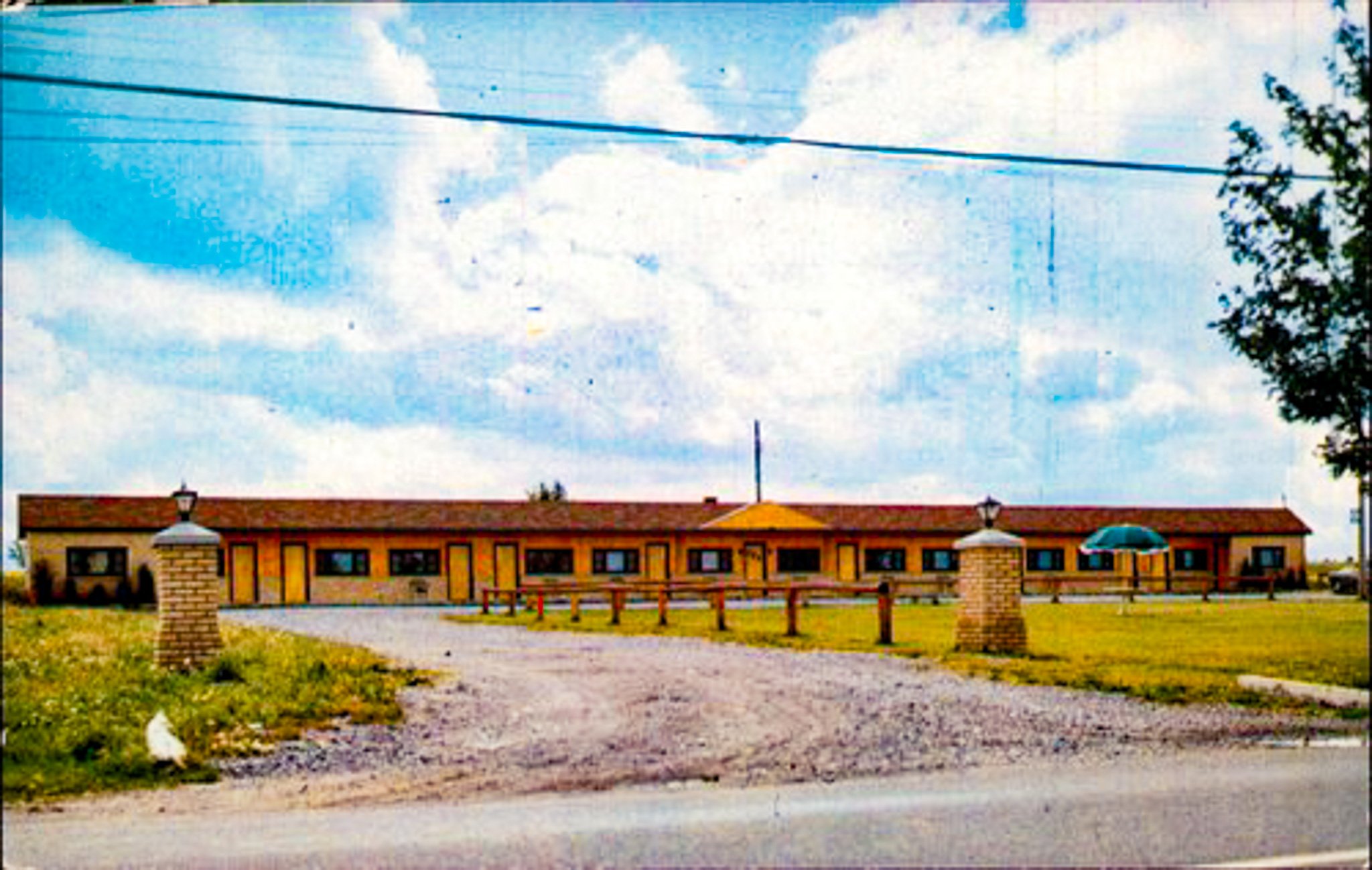
Pine Crest Motel Postcard
BURKE
Watch for Molly’s Ice Cream stand on US 11.
CHATEAUGAY
First settled in 1796, the town was named after a village in France near Lyons. Chateaugay is home to the Town Hall Theater in the historic downtown and the nearby High Falls/Chateaugay Chasm. McCadam Cheese has been producing cheddar in the area since 1876.
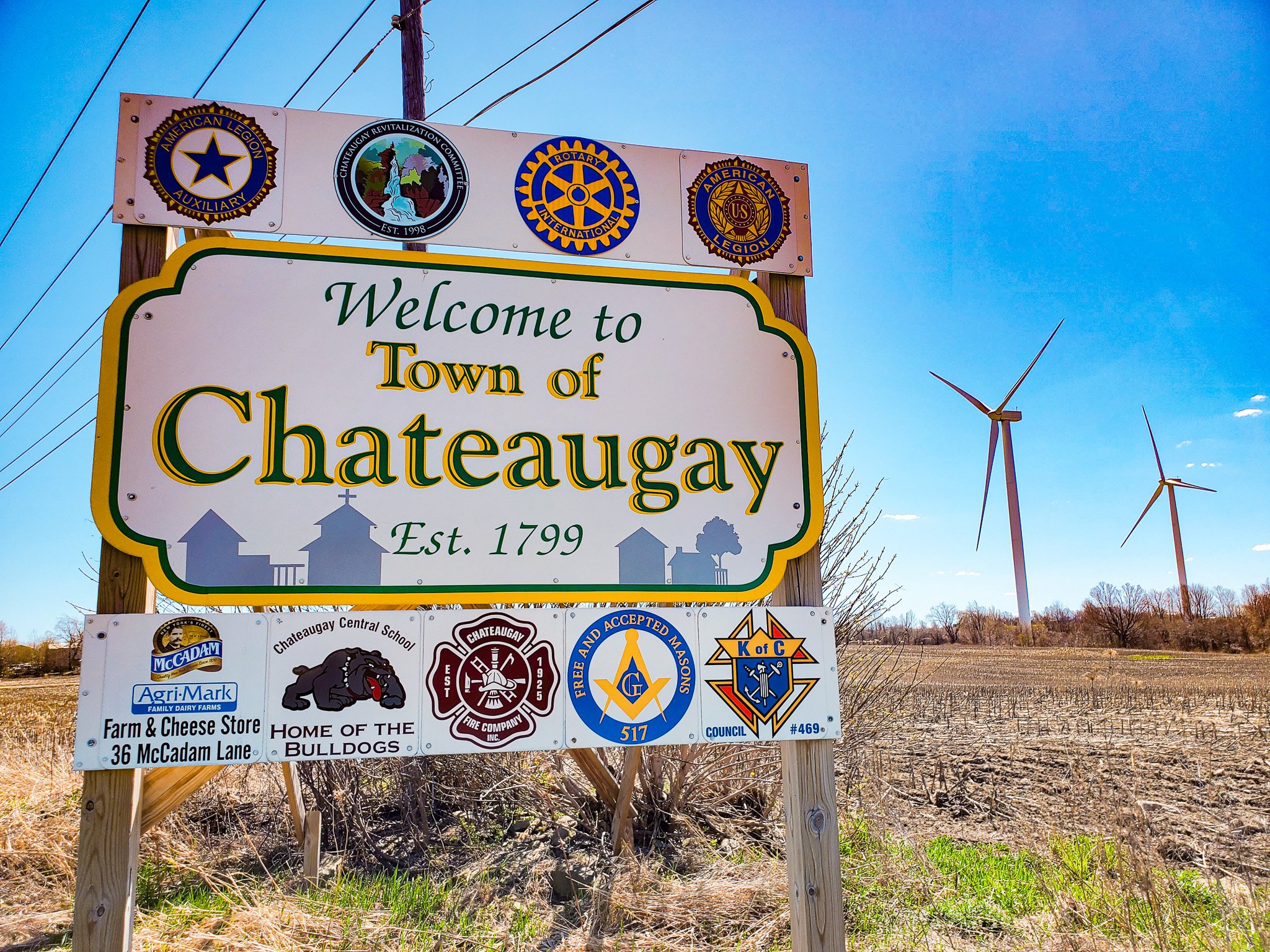
Welcome to Chateaugay Sign
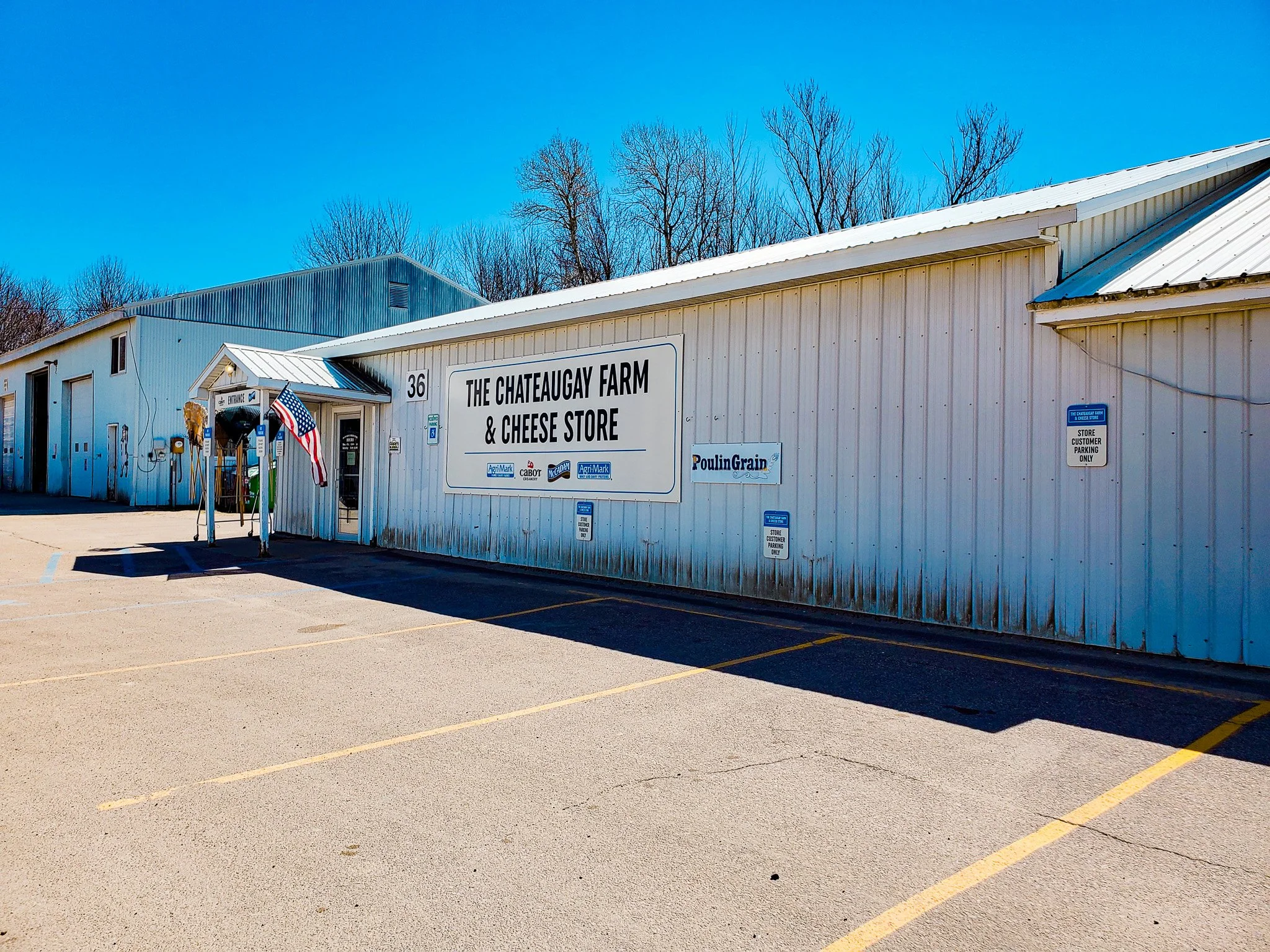
The Chateaugay Farm & Cheese Store
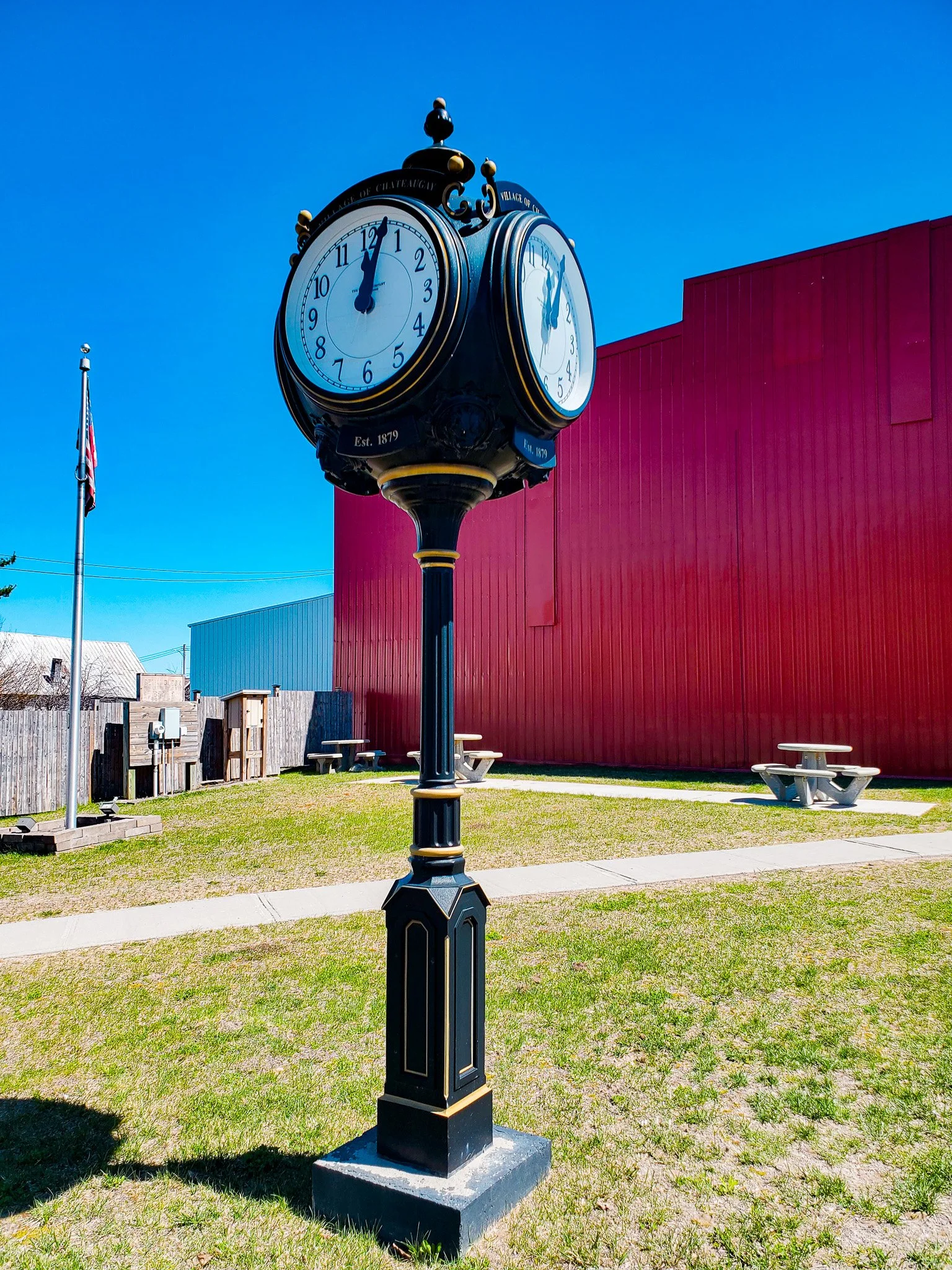
Downtown Clock
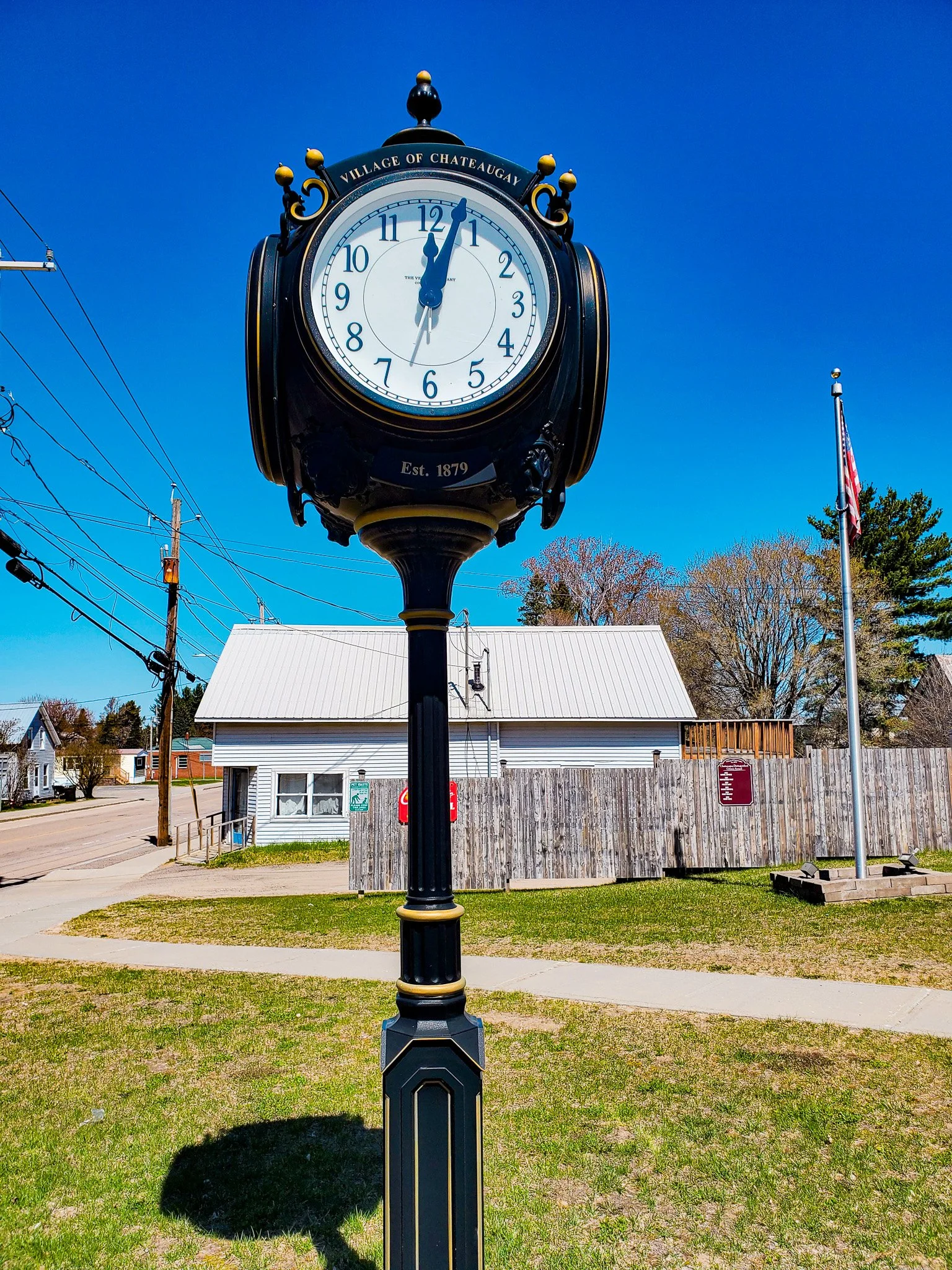
Downtown Clock
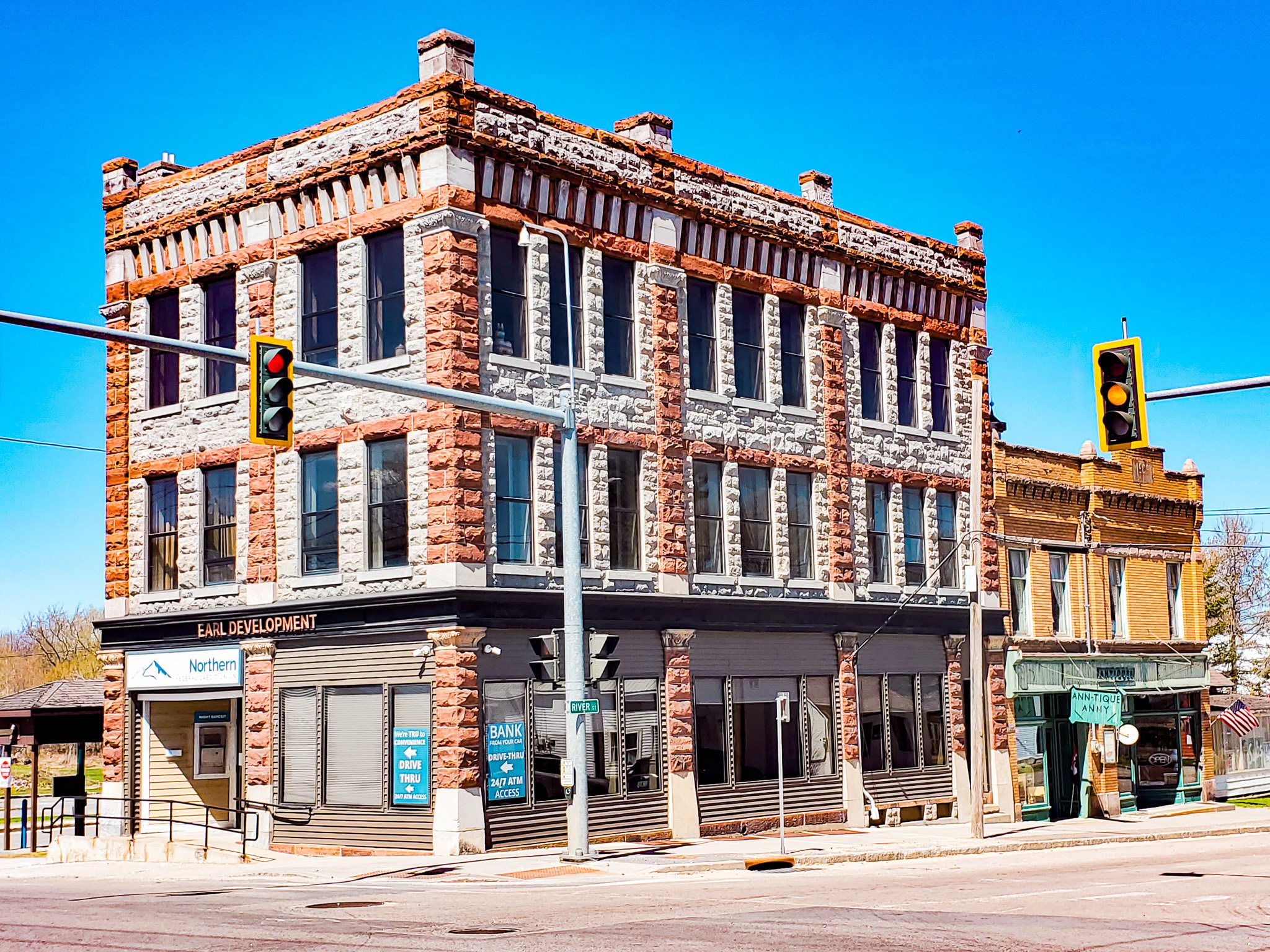
Old Building Downtown
CLINTON
George Clinton was New York’s first governor and Vice President under Thomas Jefferson. Don’t miss Dick’s Country Store and Music Oasis which has been in business since the early 1900's selling groceries, gas, guns, and guitars.
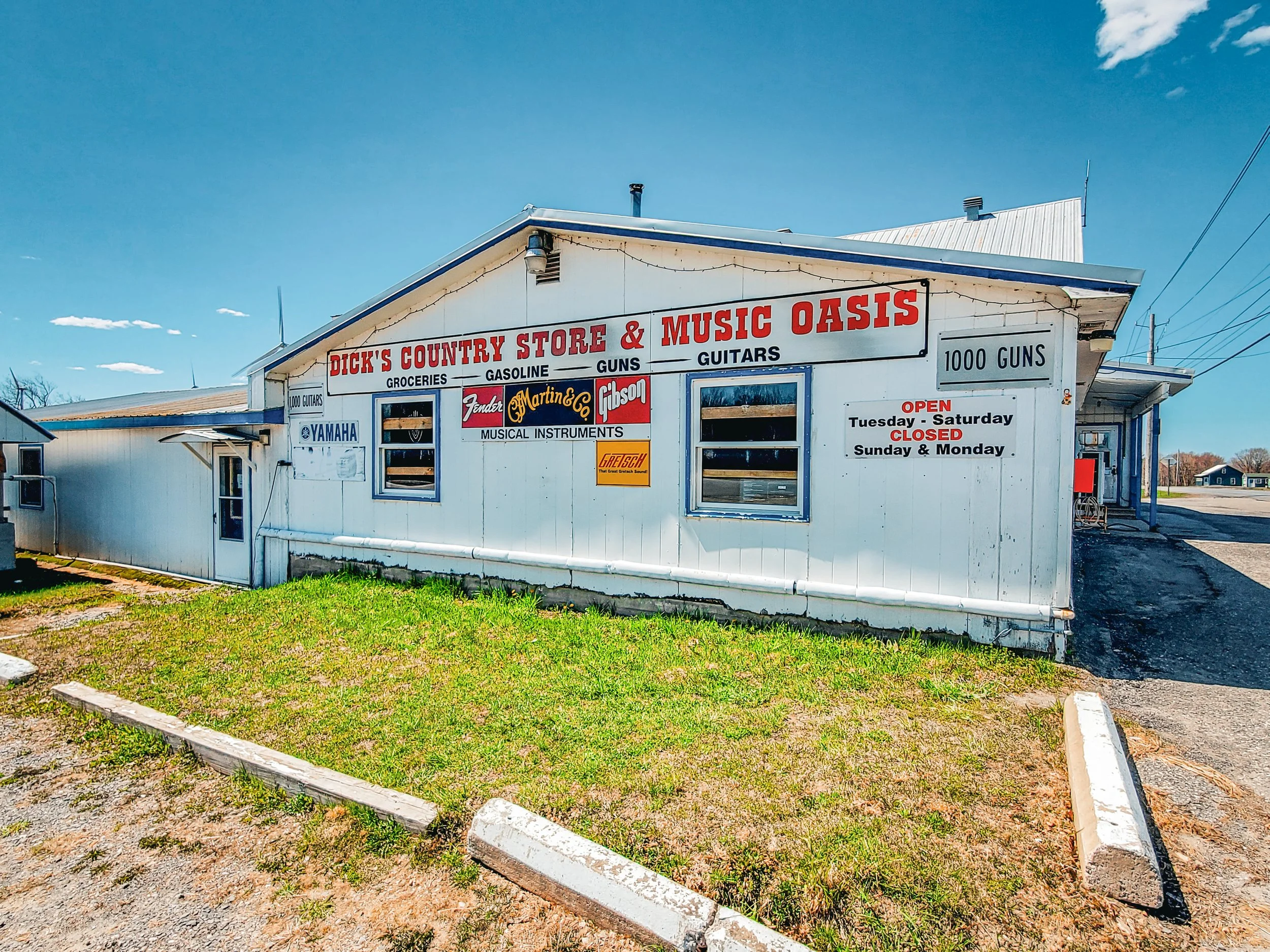
Dick's Country Store & Music Oasis
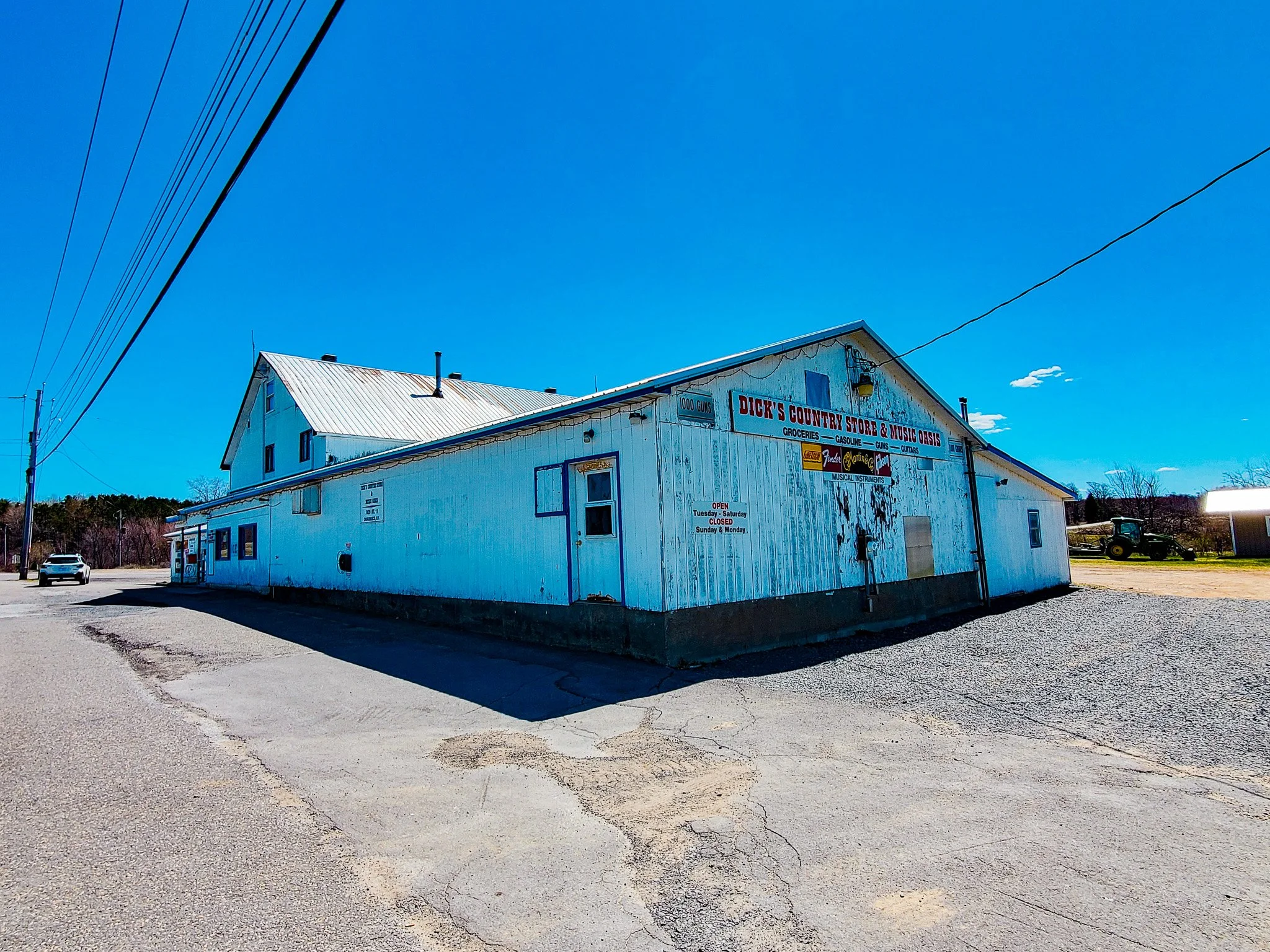
Dick's Country Store & Music Oasis
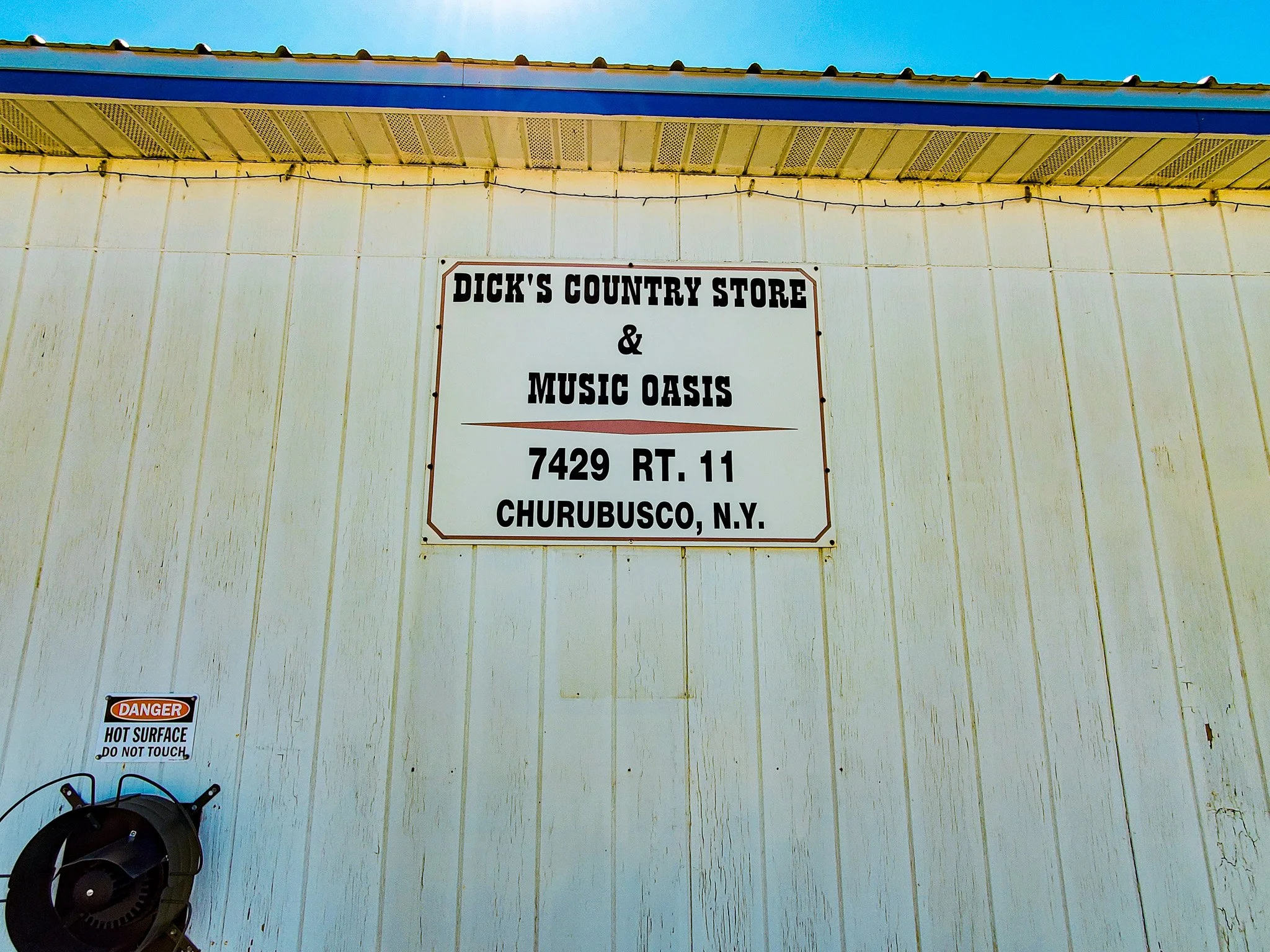
Dick's Country Store & Music Oasis
ELLENBURG
Ellenburg was named after Ellen Murray, daughter of John R. Murray, a principal landowner of the area.
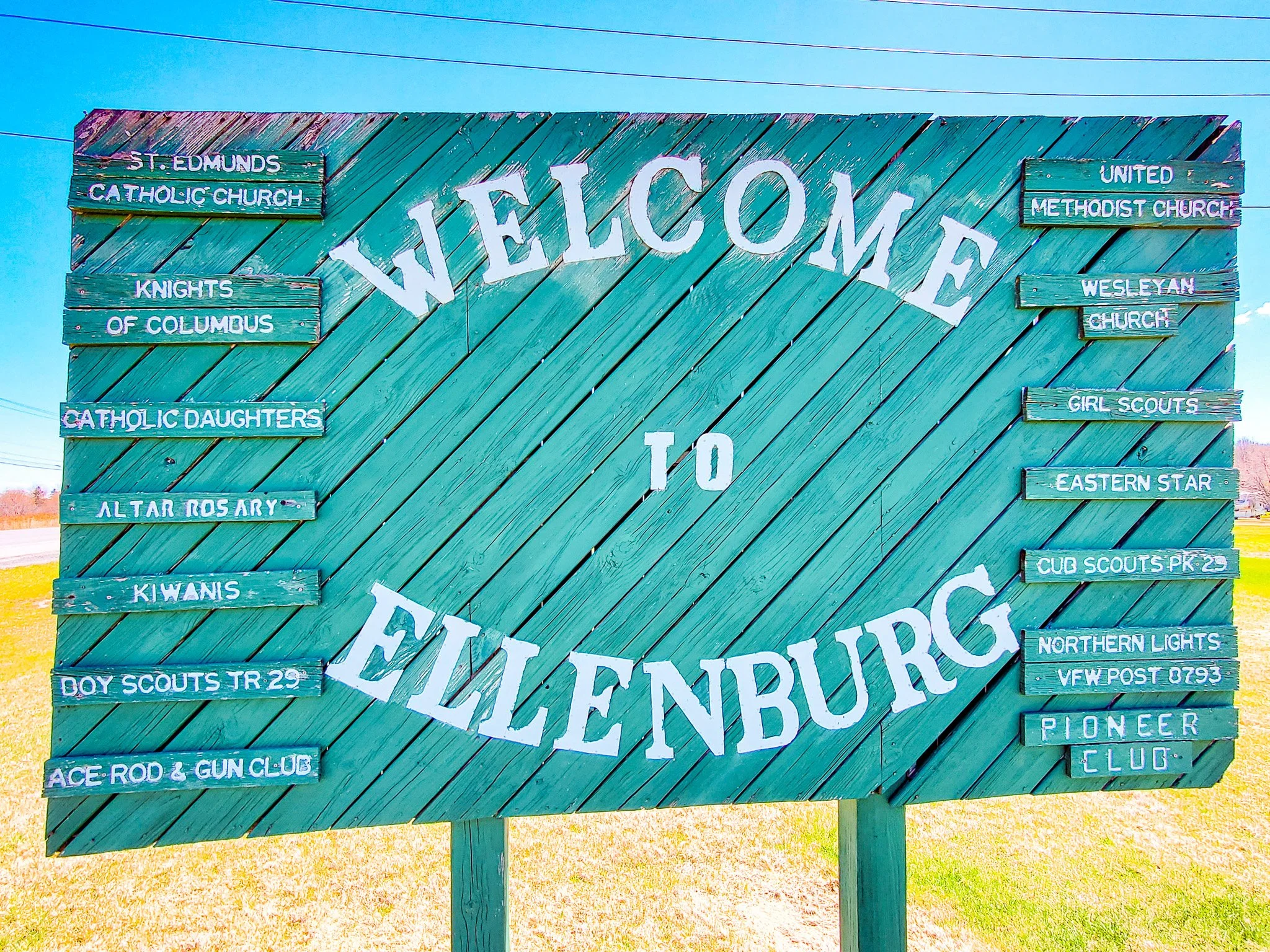
Welcome to Ellenburg Sign
ALTONA
Altona is home to the Altona Flat Rock, a rare 5,000 acre glacial landscape characterized by a vast, open expanse of Potsdam sandstone pavement and jack pine barrens. The area is also known for its large wild blueberry patches.
MOOERS
The town was named after the Sheriff of Clinton County, Benjamin Mooers.
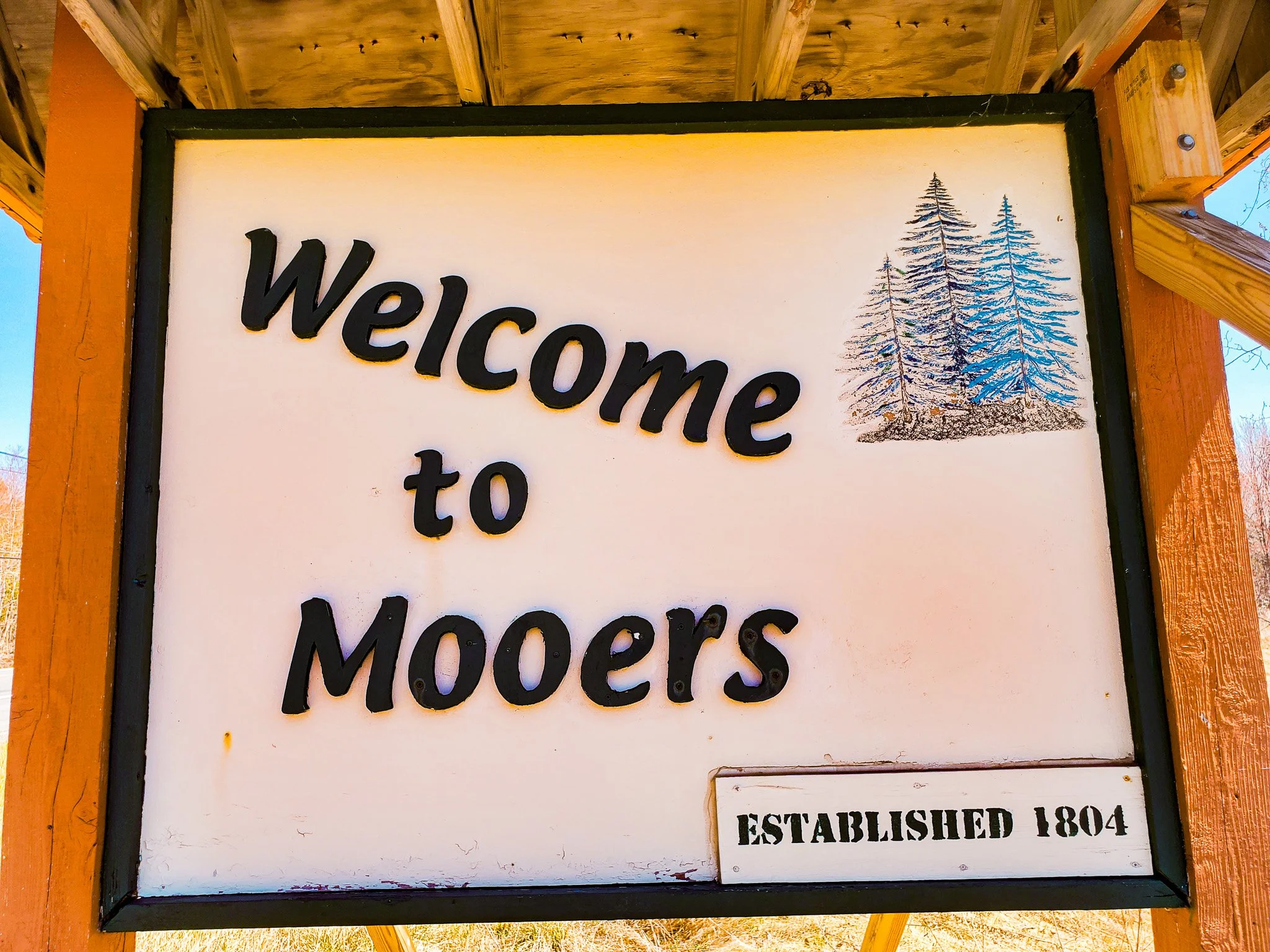
Welcome to Mooers Sign
CHAMPLAIN
The town formed in 1788 on the western shore of Lake Champlain. The first European to document the lake was Samuel de Champlain in July 1609 while traveling with Algonquin allies. He named the body of water after himself while mapping the region for France.
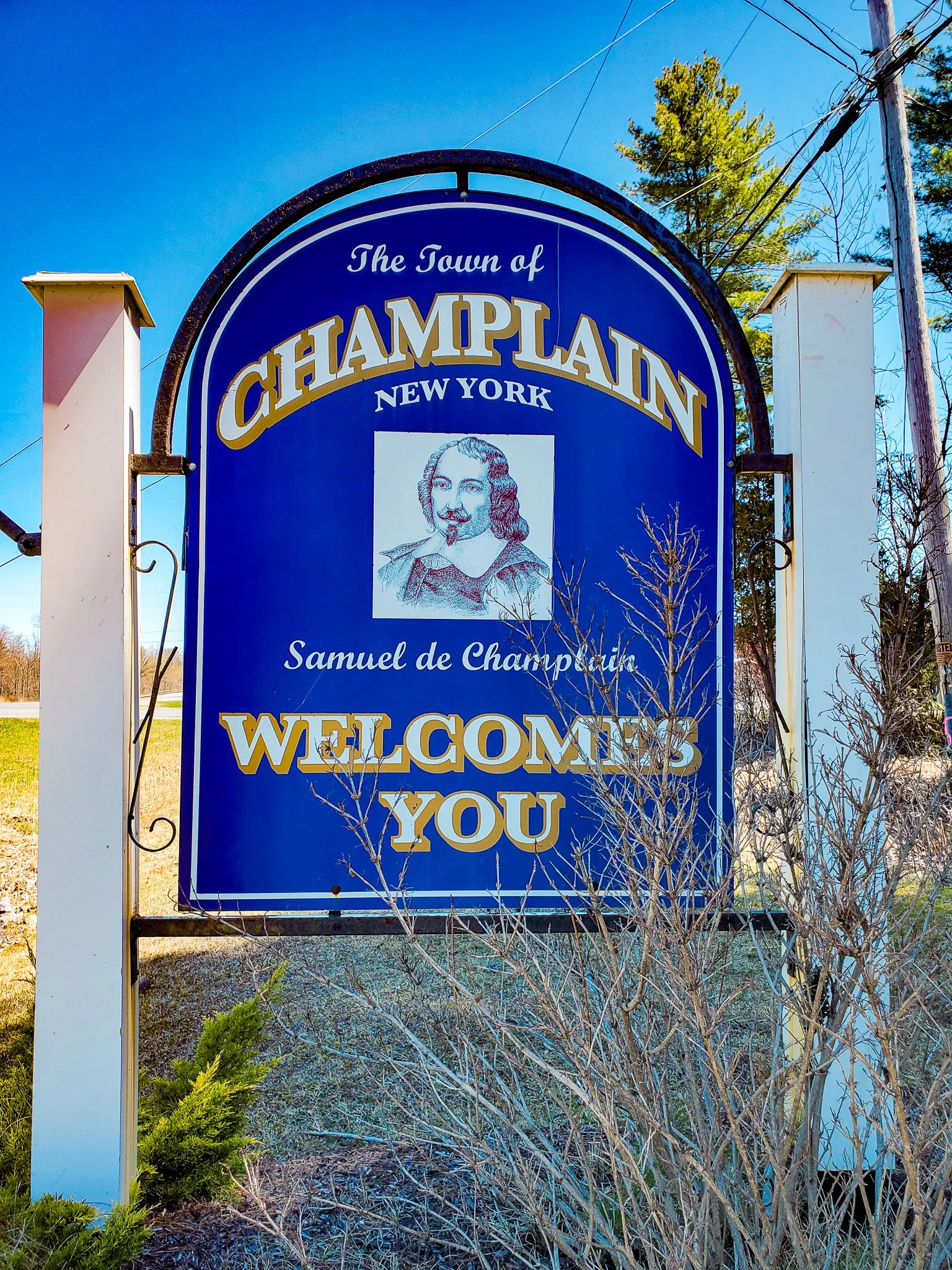
Welcome to Champlain Sign
ROUSES POINT
First settled in 1783, the town was named for Jacques Rouse, a French-Canadian soldier who fought for the American Continental army during the Revolutionary War and who founded the town. Fort Montgomery, built between 1844 and 1871, is also called “Fort Blunder” because, due to an early surveying error, the US accidentally built it in Canada. It was abandoned, later re-built, and abandoned again in 1910. The ruins of the fort, now on private property, are visible from the shore and the bridge in Rouses Point. If you’re hungry, visit Sandi’s Deli on US 11 or Lakeside Coffee downtown.
Rouses Point Welcome Sign
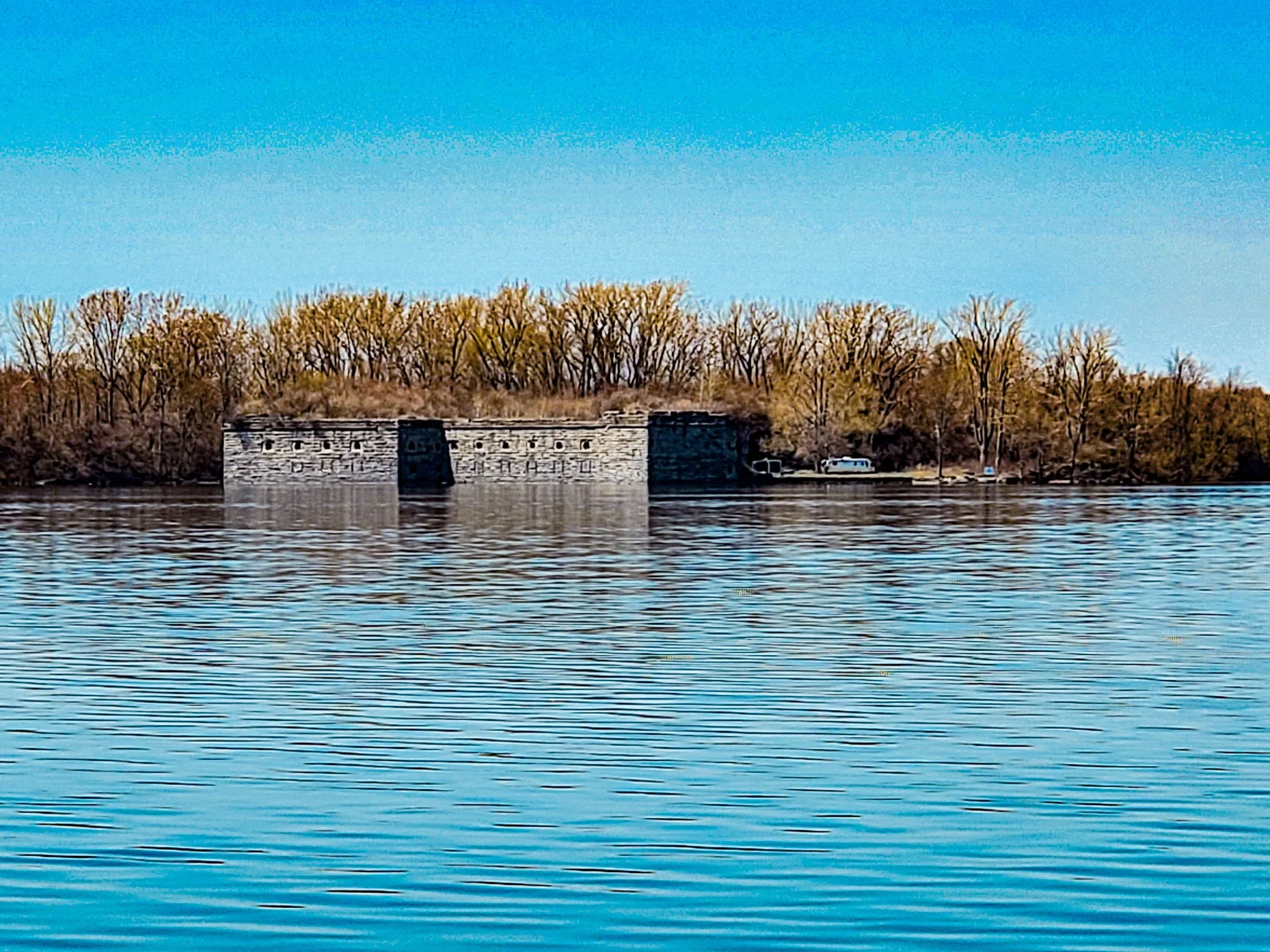
Fort Montgomery
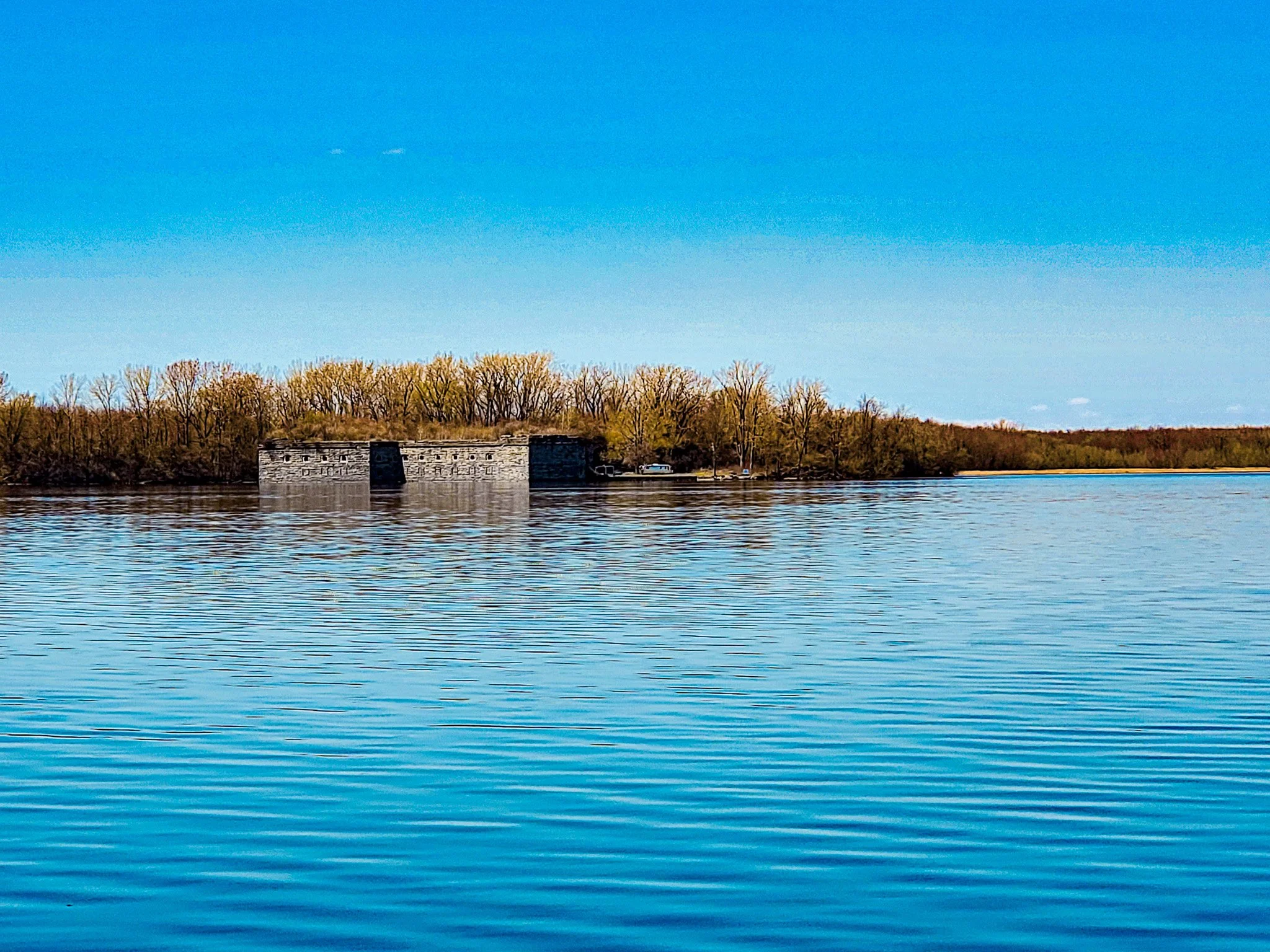
Fort Montgomery
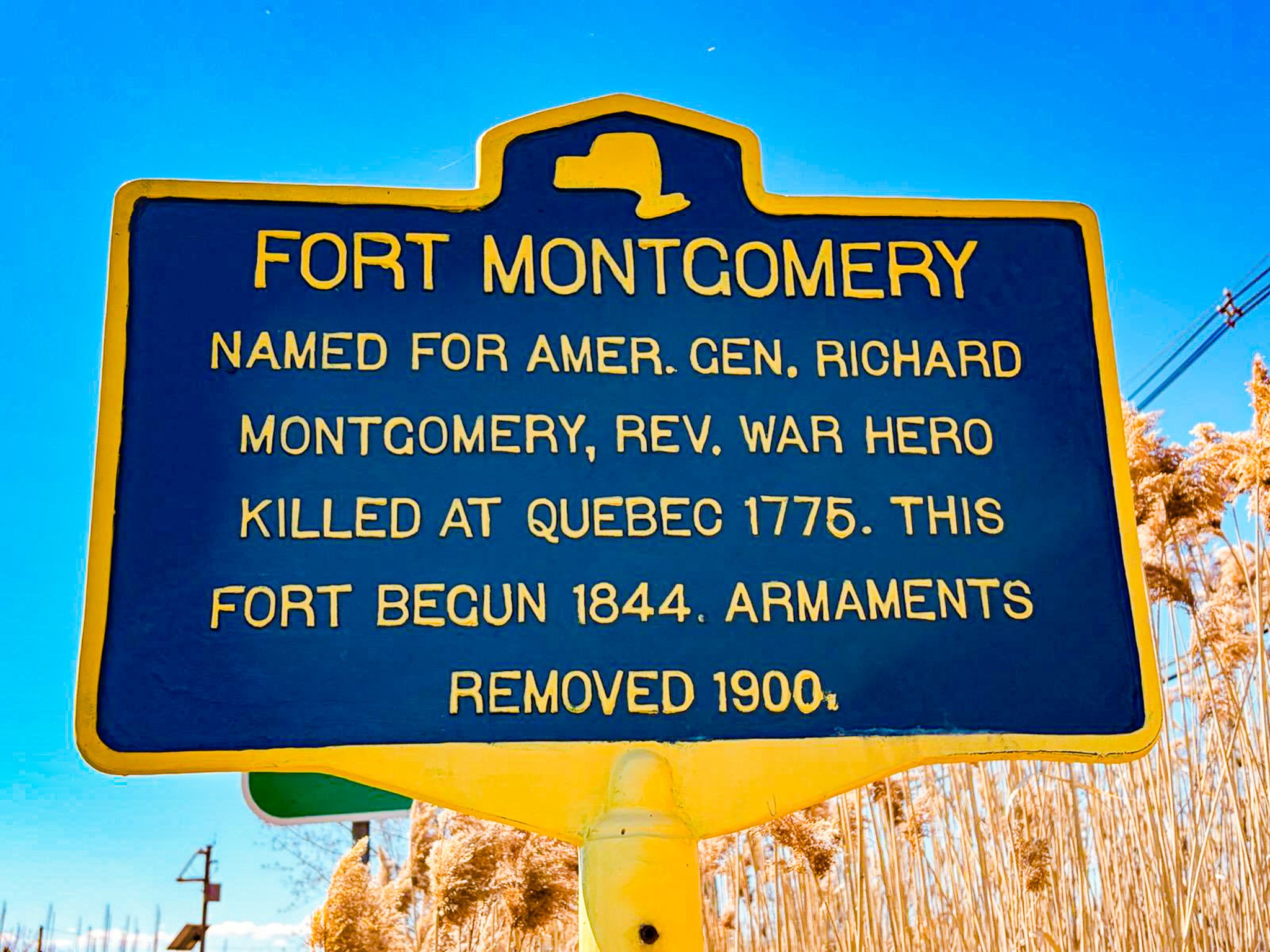
Fort Montgomery Plaque
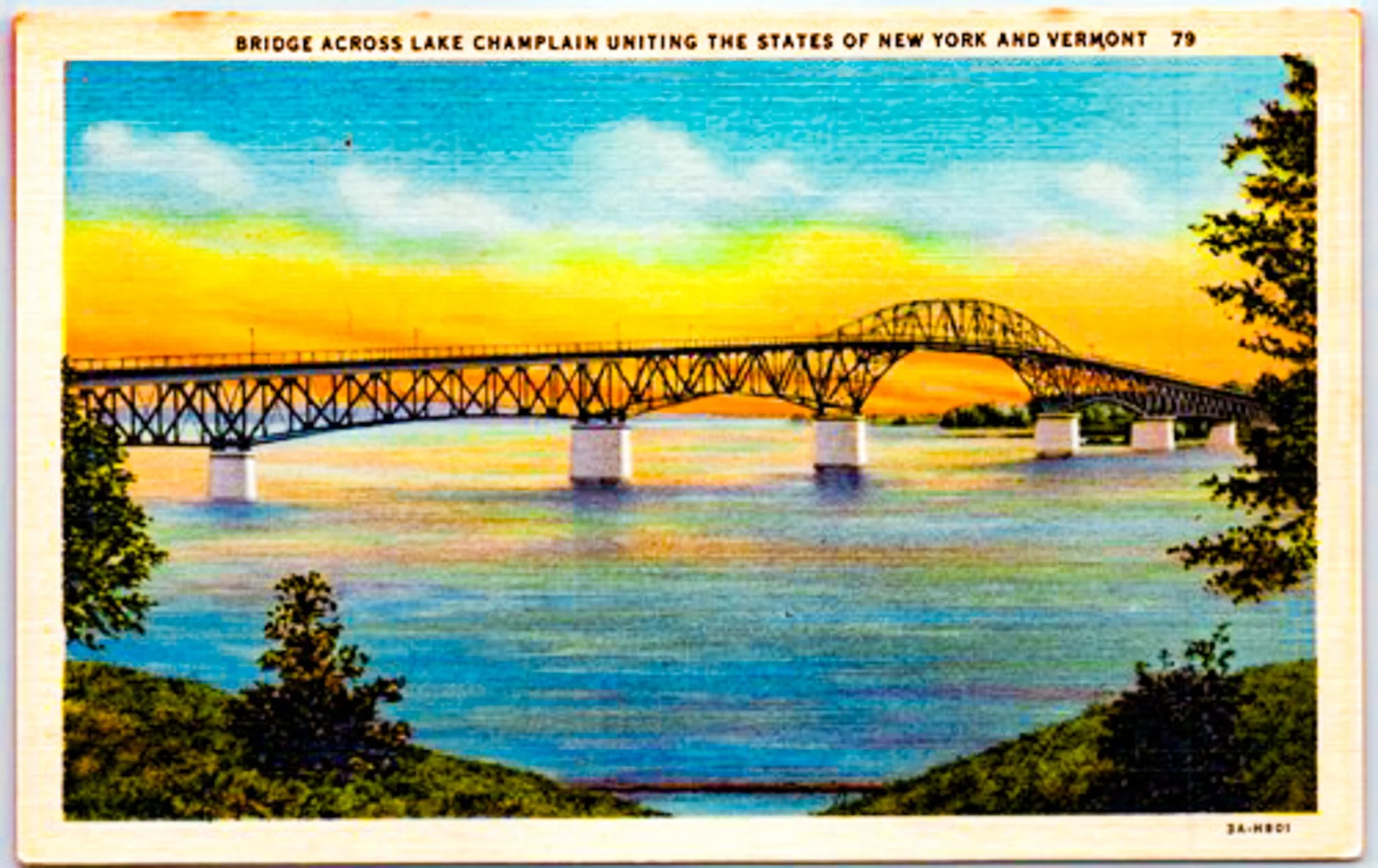
Lake Champlain Bridge Postcard
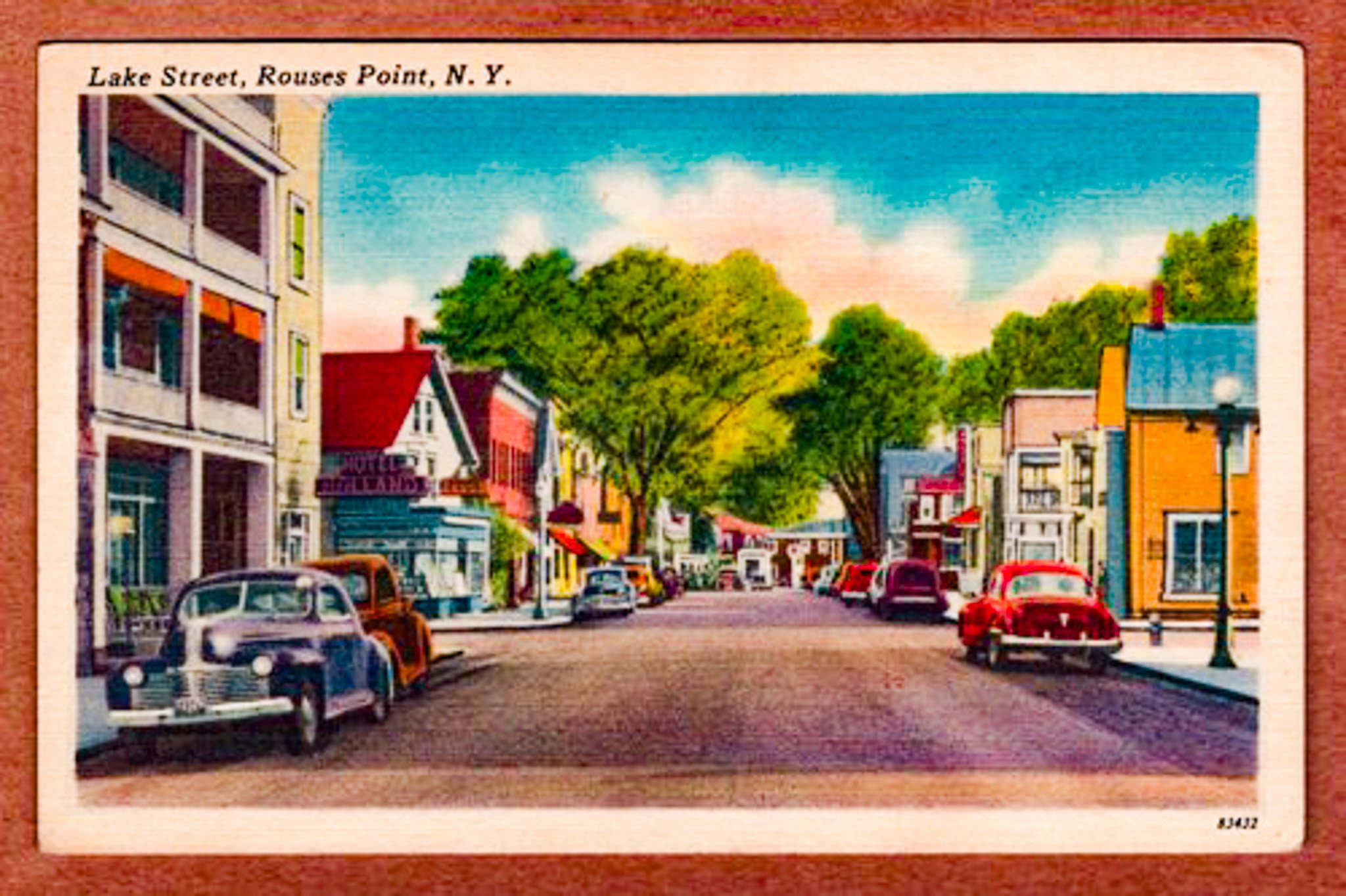
Lake Street Postcard
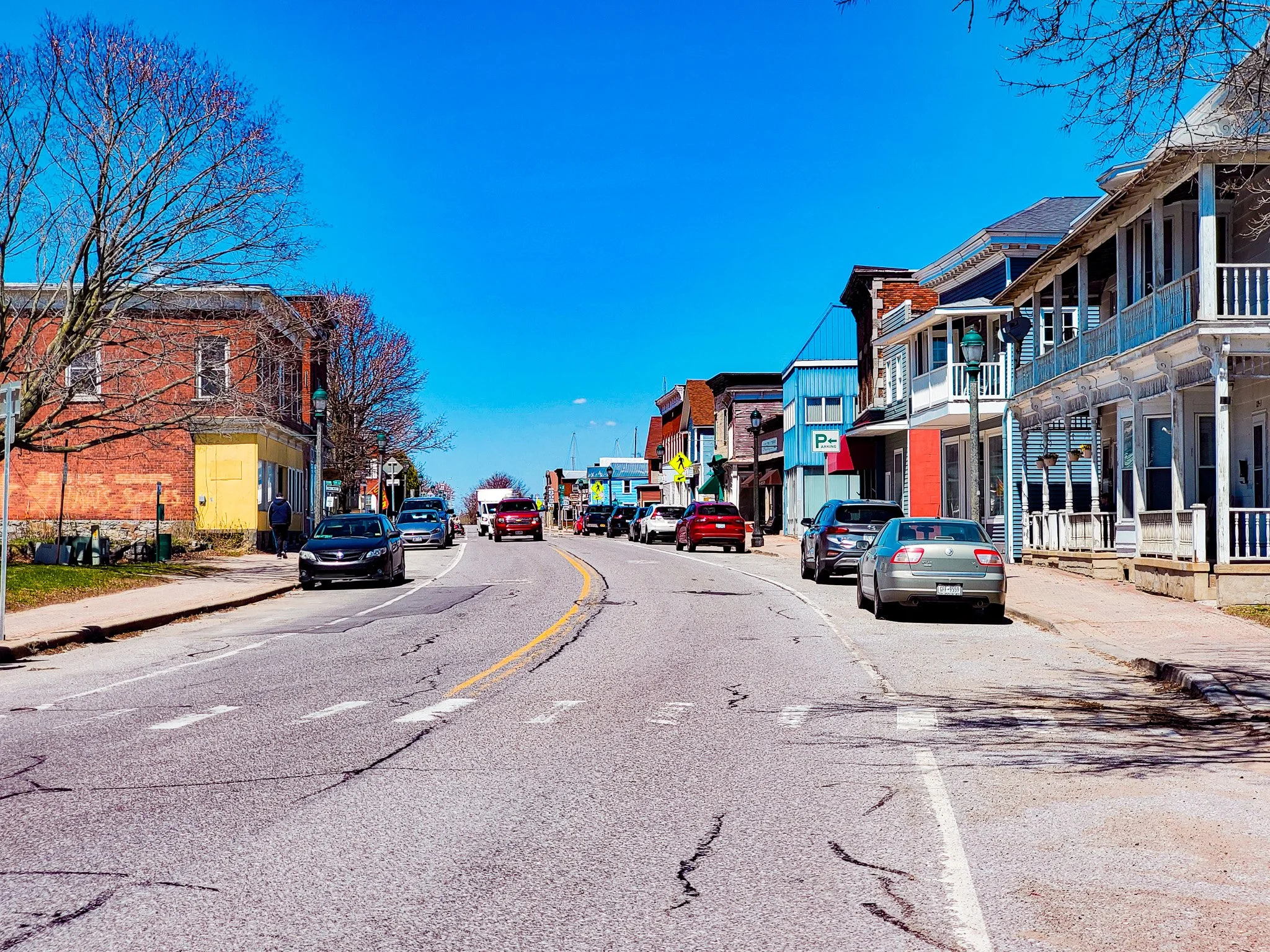
Main Street
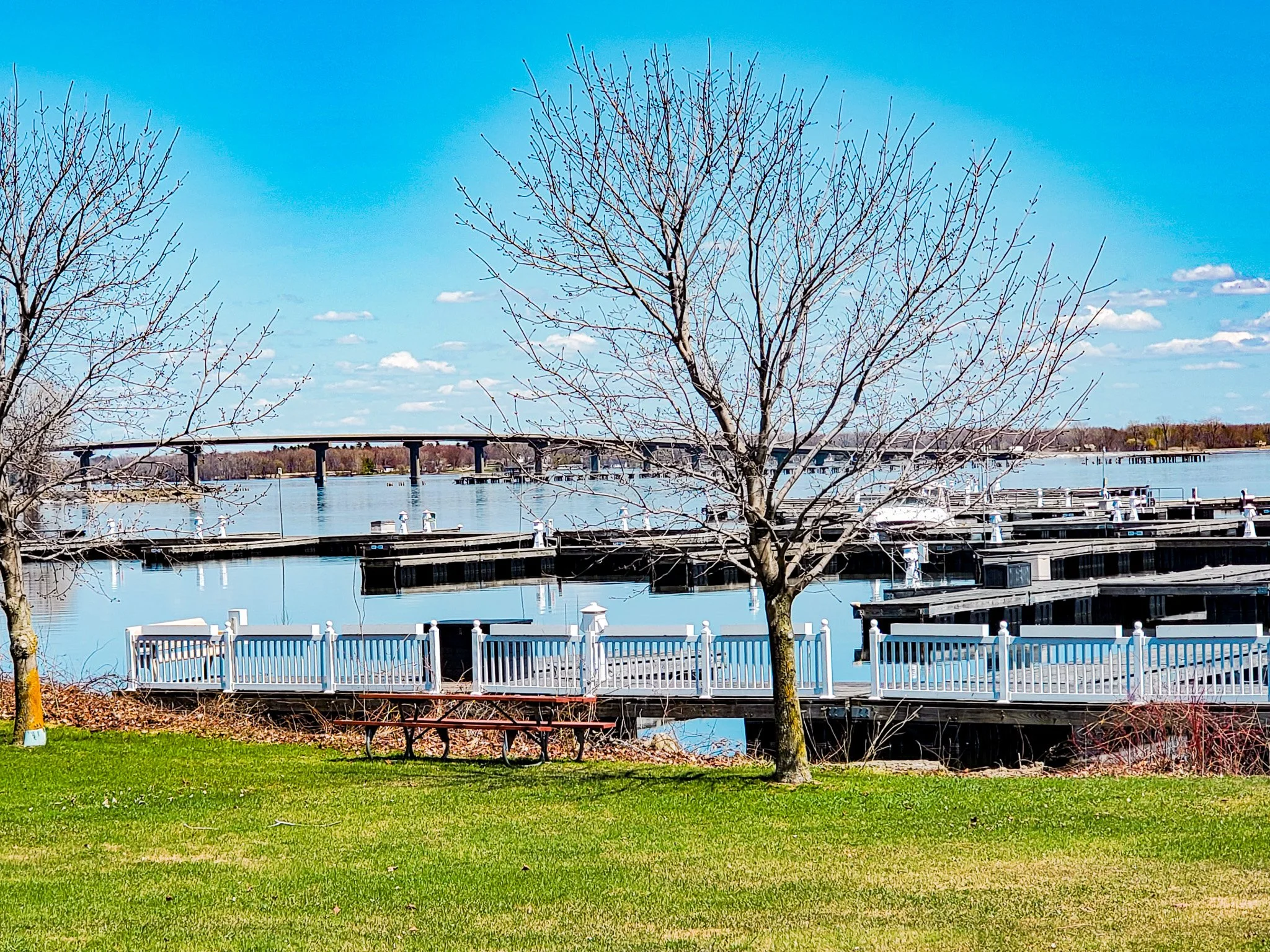
Marina at Rouses Point
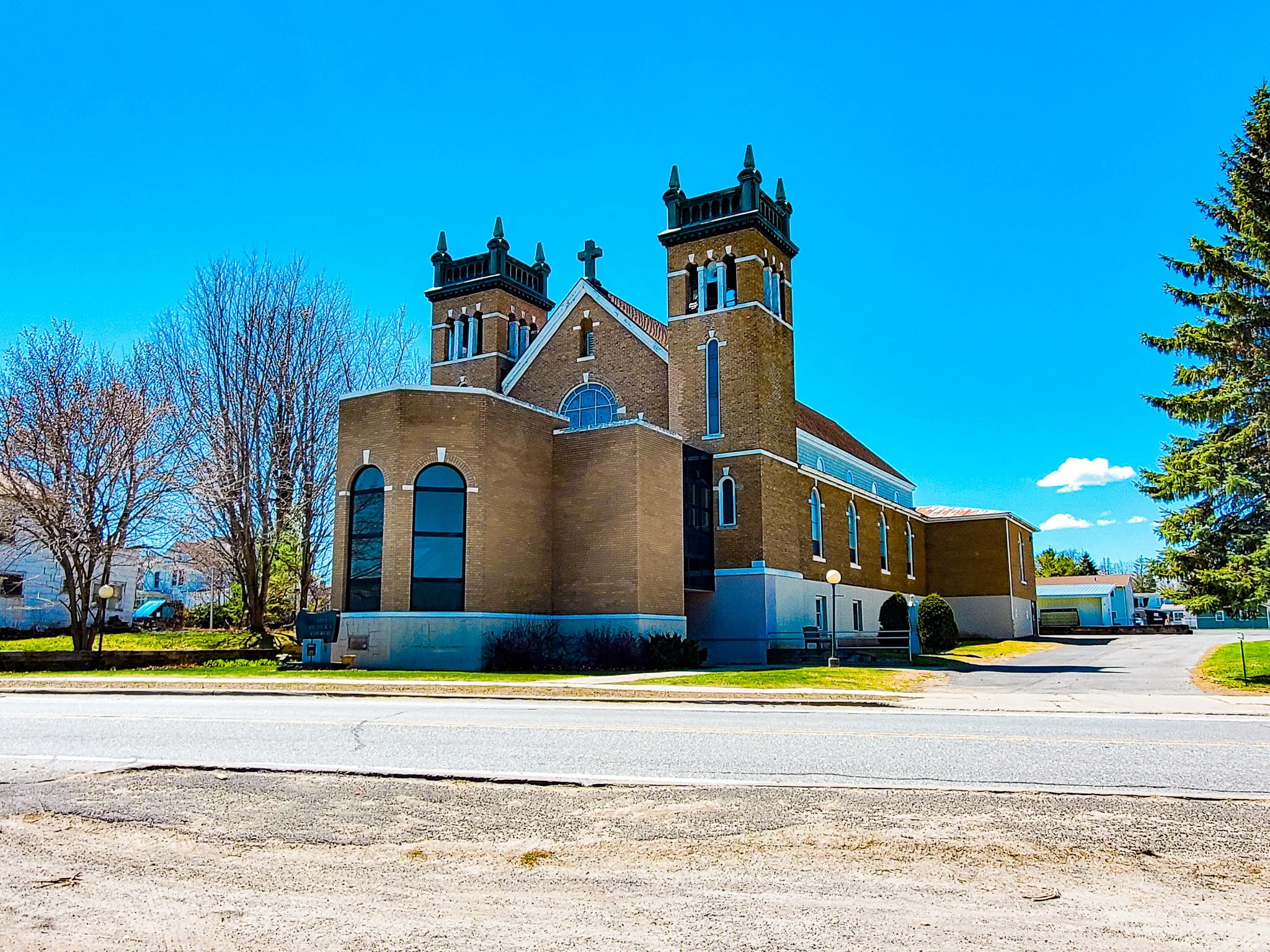
Rouses Point Church
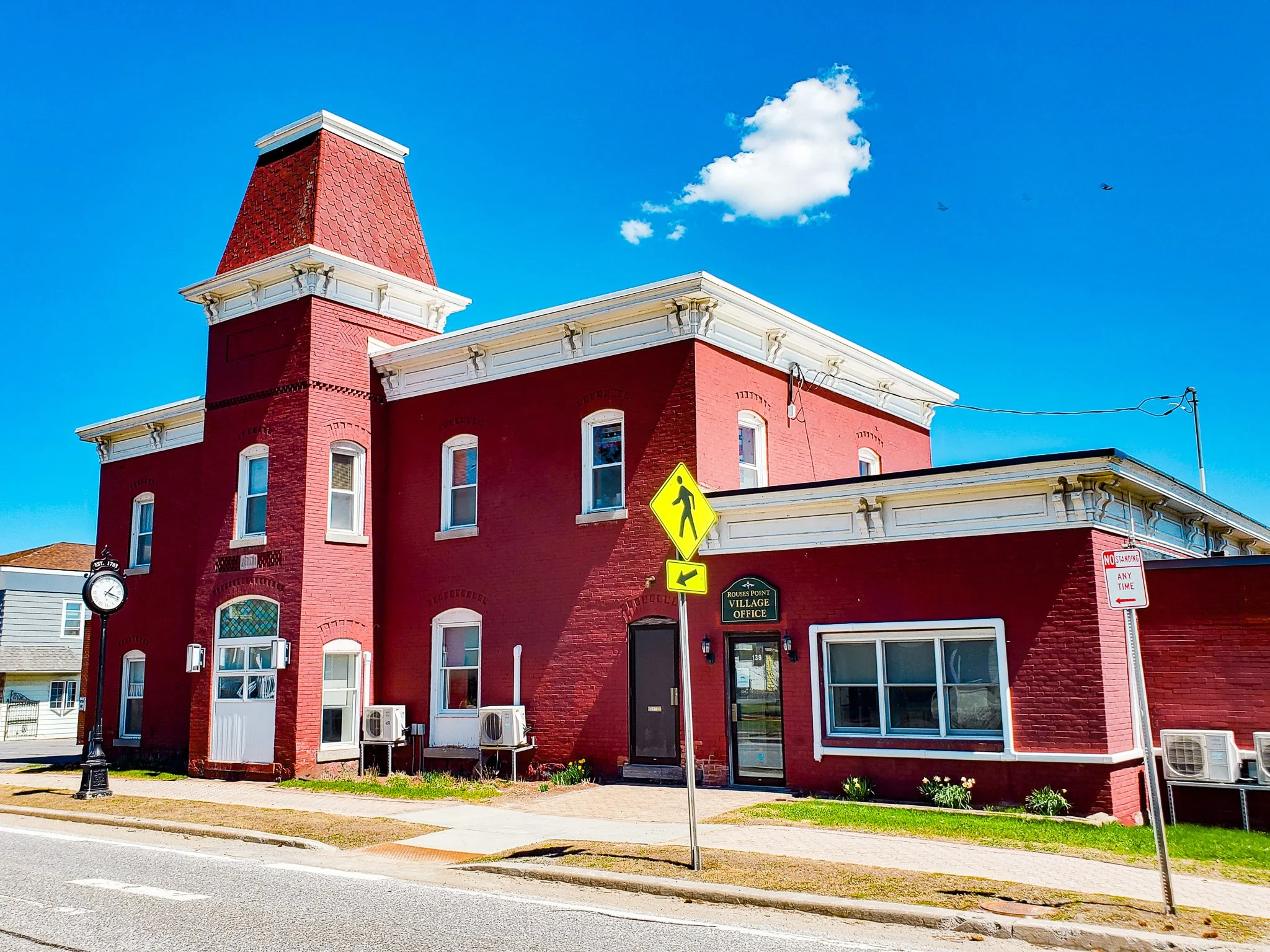
City Hall Building
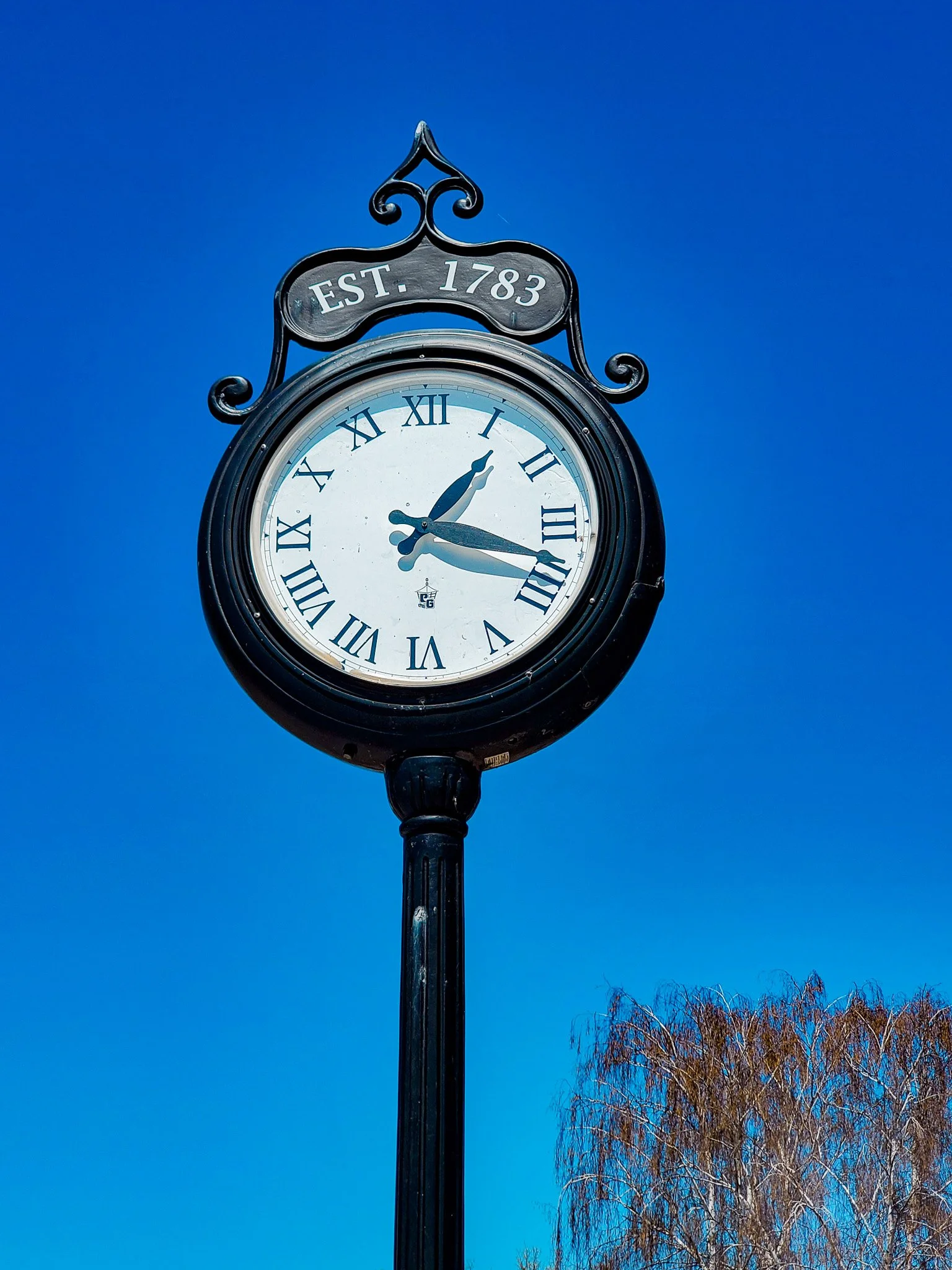
Downtown Clock
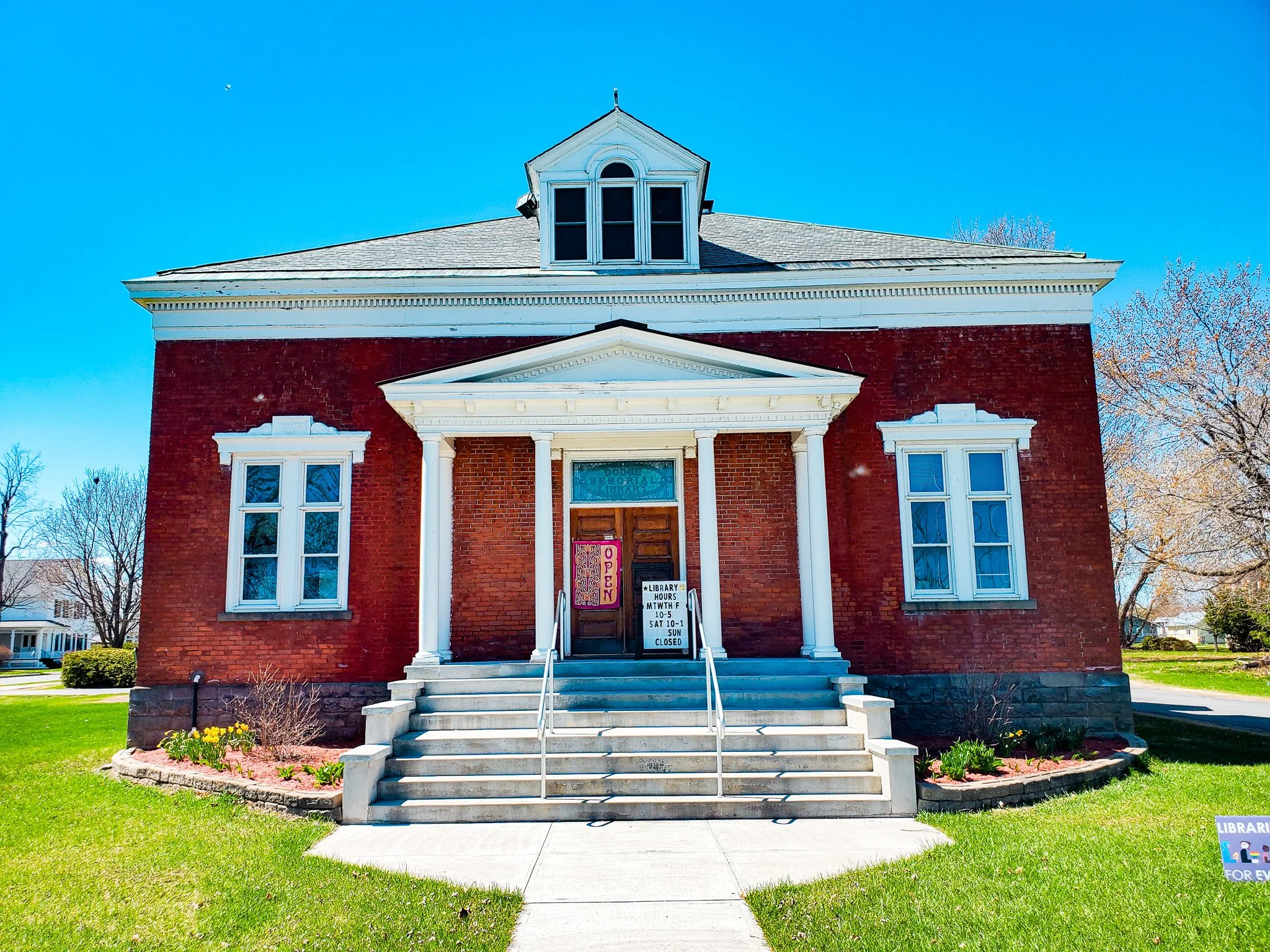
Public Library
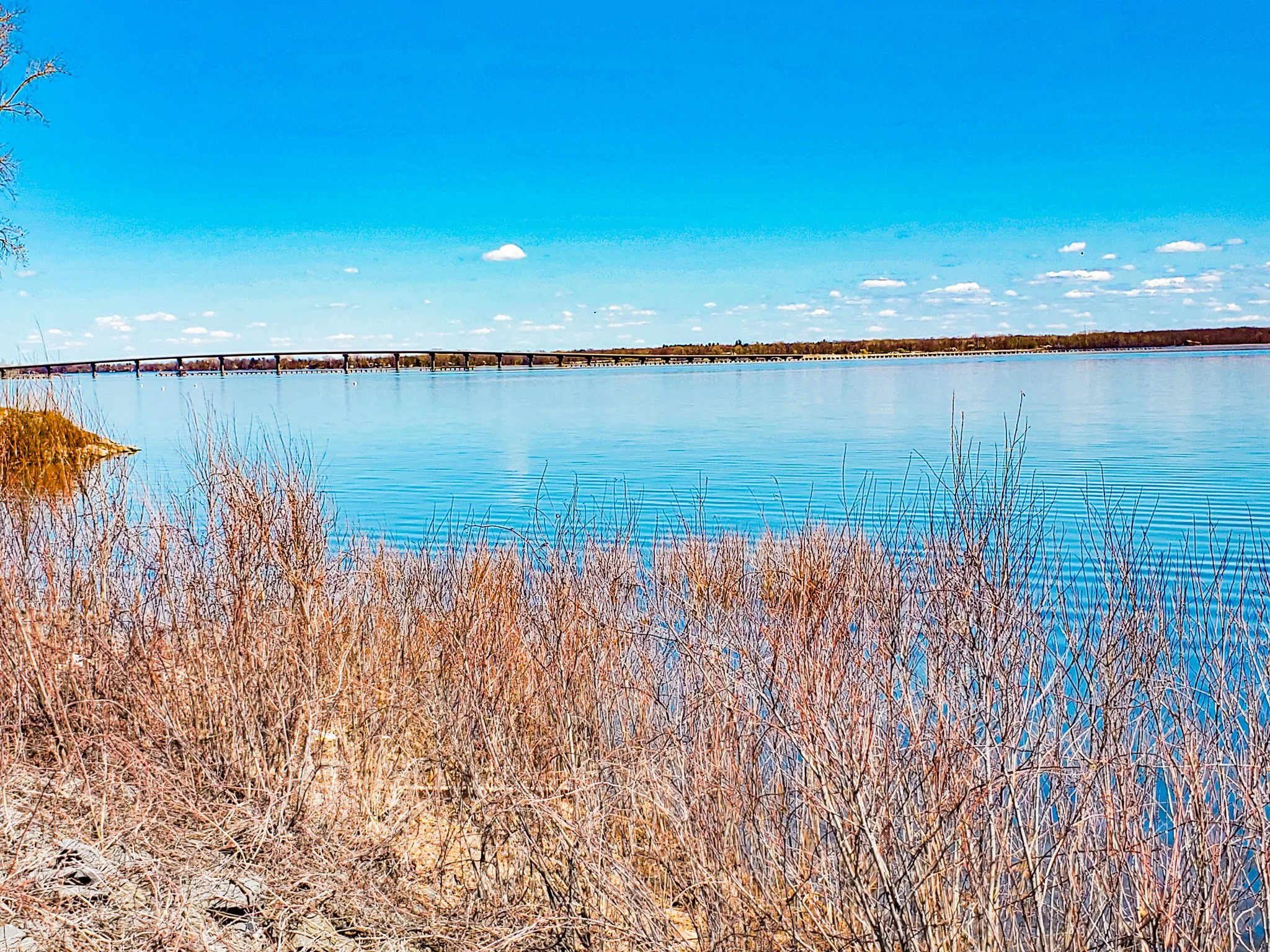
Vermont from Rouses Point
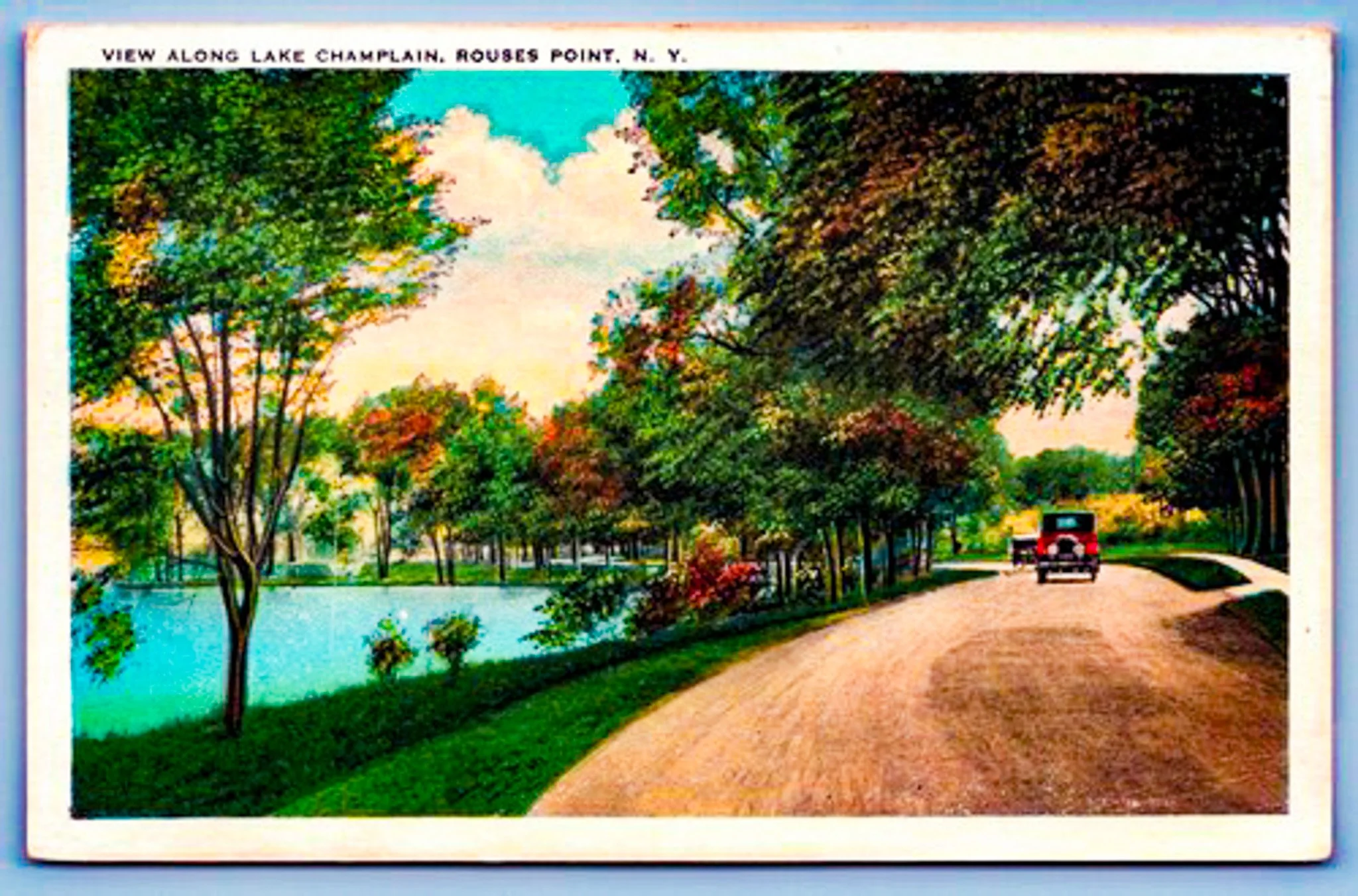
Lake Champlain Postcard
US 11 ends as Canadian Route 223 begins at the US-Canadian border just north of Rouses Point. US 2 turns to the east from US 11 in Rouses Point and crosses the Korean War Veterans Memorial Bridge (also known as the Rouses Point Bridge) into Vermont.